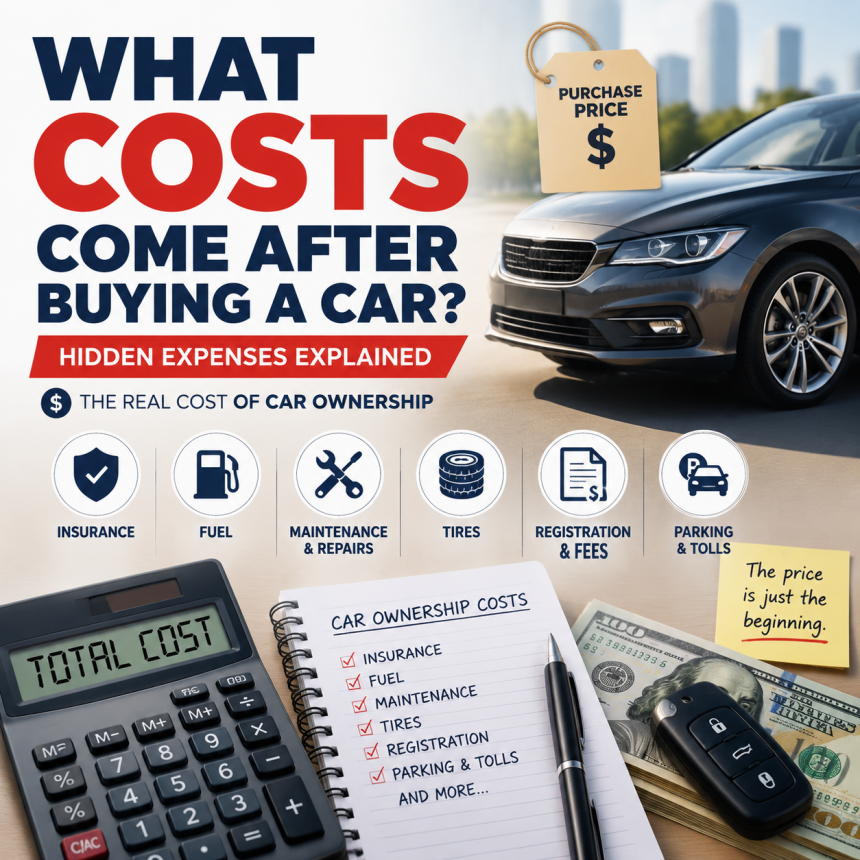
Car Ownership Costs after buying a car go beyond the sticker price. Once you’ve paid for the vehicle, your budget is still affected by insurance, fuel, maintenance, registration, taxes, and repairs—costs that can start hitting immediately and continue for years.
- The Biggest Ongoing Costs of Car Ownership
- Upfront Costs That Continue After the Sale
- Costs Many Drivers Forget to Budget For
- How to Plan for Post-Purchase Car Costs
- Build a monthly car budget
- Set aside an emergency repair fund
- Compare vehicles by total ownership cost
- Research state rules and local fees
- What First-Time Buyers Should Watch For
- Practical Ways to Lower Your Ownership Costs
- FAQ
- What are the main costs after buying a car?
- Is insurance required after buying a car?
- How much should I save for car maintenance?
- Why do car ownership costs matter so much?
- What is the most overlooked cost after buying a car?
- Conclusion
Understanding these expenses before you buy helps you plan a realistic ownership budget and avoid surprises after the sale is complete. If you want a deeper look at budgeting for the full lifecycle, review Cost to Own a Car: What You Really Need to Budget.
Table of Contents
The Biggest Ongoing Costs of Car Ownership
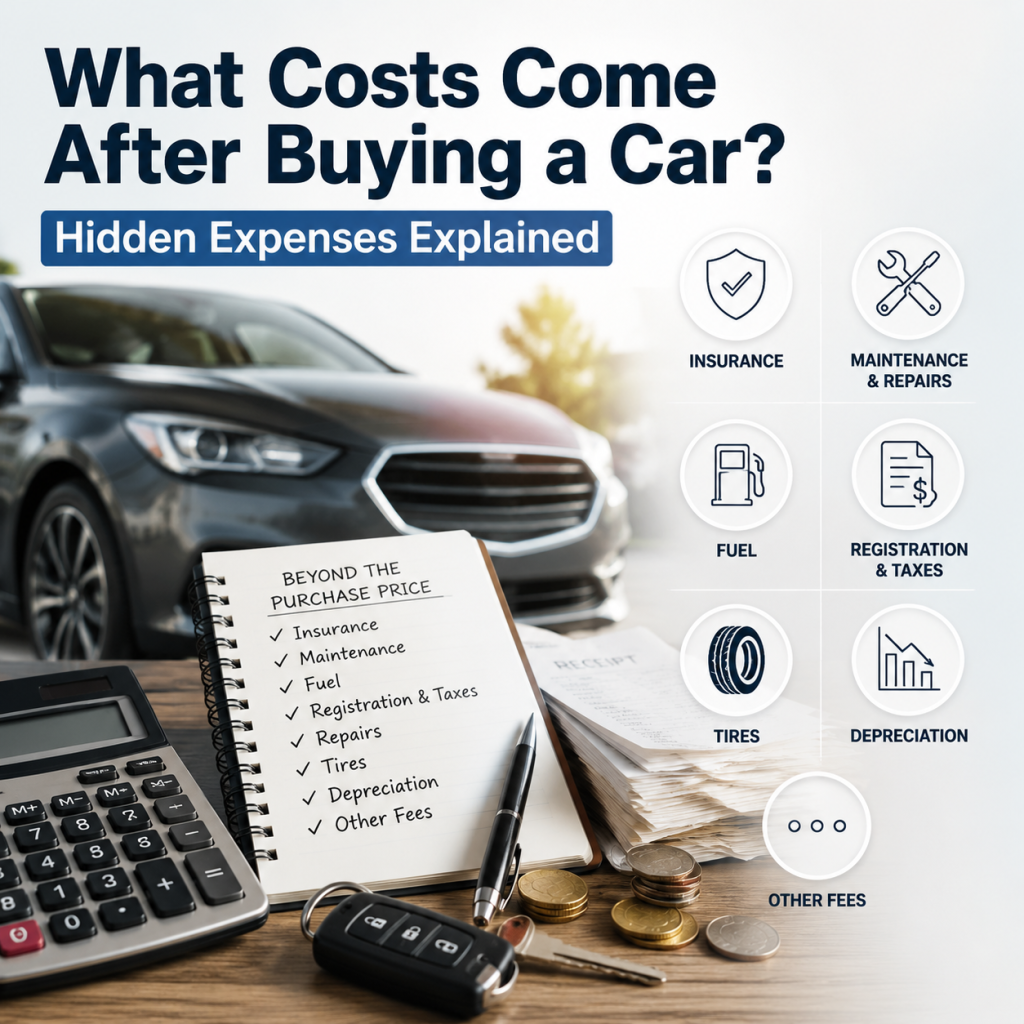
After you buy a car, ownership becomes a monthly and yearly financial commitment. Some costs are predictable, while others depend on how much you drive, where you live, and what type of vehicle you choose. The most important car ownership costs typically fall into a few recurring categories, even though the exact dollar amount varies from driver to driver.
Car insurance
Car insurance is usually one of the first ongoing expenses many owners face after buying a vehicle. In many cases, you need proof of insurance before you can legally drive the car home and register it.
The cost of insurance depends on factors such as:
- The vehicle’s make and model
- Your driving record
- Your age and location
- Coverage level
- How often you drive the car
Newer vehicles, luxury models, and cars with advanced parts can cost more to insure. If you finance the vehicle, the lender may also require comprehensive coverage. For general consumer guidance and rules of thumb, the USA.gov car insurance resource is a helpful place to start.
In real life, insurance is often one of the biggest car ownership costs because it repeats every month. If you’re in a high-traffic area or still building your driving history, request quotes before you finalize a purchase.
Fuel or charging costs
Gasoline, diesel, or electricity becomes part of your regular transportation budget. Fuel costs can vary based on commuting distance, traffic patterns, and how efficiently the vehicle uses energy.
For electric vehicles, charging costs may be lower than fuel in some cases, but they still add up over time. Home charging equipment, public charging fees, and local electricity rates all influence your total.
Drivers commonly underestimate fuel and charging when they focus only on the purchase price. A car that seems affordable upfront can become expensive if it has poor mileage or requires premium fuel. Over a full year, energy costs are among the most noticeable car ownership costs because they change with gas prices, commute length, and how often you travel.
Maintenance and repairs
Every car needs ongoing maintenance to stay safe, reliable, and efficient. These costs are easier to ignore early on—especially with a new vehicle—but they matter throughout ownership.
Common maintenance expenses include:
- Oil changes
- Tire rotations
- Brake service
- Air filters
- Battery replacement
- Fluid top-offs
- Wheel alignment
As the car ages, repair costs may increase. Wear-and-tear items eventually need replacement, and unexpected issues can appear even in well-maintained vehicles. Some brands and models have lower upkeep, while others can cost more to service due to specialized parts or labor.
This is where planning makes a difference. Maintenance is often more predictable, but repairs are less predictable. Setting aside money each month for service can reduce the impact of larger bills later. If you want help thinking about the monthly side of ownership, reading Monthly Car Payments: What Americans Really Spend on New Cars in 2026 can complement your budget.
Depreciation
Depreciation is the loss of value a vehicle experiences over time. It isn’t a direct monthly payment, but it’s one of the biggest financial costs of owning a car.
New cars often lose value faster during the first few years. That matters if you plan to trade in or sell later. Choosing a vehicle with strong resale value can reduce the long-term impact, but depreciation is still a real part of car ownership costs. Even when you aren’t paying a bill each month for it, depreciation continues quietly in the background.
Upfront Costs That Continue After the Sale
Some expenses show up right away after buying a car and can continue during the first year. These charges are easy to overlook because they don’t always appear in the same way as the vehicle price or loan payment, but they still affect your total cost.
Sales tax and registration fees
Depending on where you live, sales tax can be a significant added cost. It is often due at the time of purchase and may be calculated based on the vehicle’s price.
Registration fees are another common expense. These fees allow the car to be legally operated on public roads and are usually renewed annually or periodically. In many places, registration costs may also include local taxes or administrative charges.
Because these charges happen close to the purchase date, they can be easy to forget in your planning. That’s why they should be included on every checklist of car ownership costs before you sign the paperwork.
Title and licensing fees
After the sale, you may need to pay for title transfer and licensing. These fees are often smaller than sales tax, but they still count toward the real total cost of ownership.
If you buy from a private seller, you may handle more of the paperwork. Dealer purchases may include some of these tasks in the transaction, but that doesn’t mean the costs disappear—they’re usually built into the final amount due.
Dealer add-ons and documentation fees
Some buyers are surprised by extra fees added at closing. These can include documentation fees, preparation fees, or other dealer services.
Not every fee is unnecessary, but it’s important to review the final contract carefully. Ask what each charge covers so you understand the total amount you’re paying. Even a vehicle that looks affordable can become more expensive once additional charges are included.
These aren’t usually the most talked-about car ownership costs, but they can impact the total you pay in the first days or weeks after buying.
Costs Many Drivers Forget to Budget For
Beyond the typical monthly bills, there are less obvious costs that can affect car ownership. These are often the categories that make a budget feel tight even when the loan payment seems manageable.
Tires
Tires don’t last forever. They wear down due to mileage, road conditions, weather, and driving style. Replacing a full set can be a meaningful expense—especially for larger vehicles or specialty tire sizes.
Regular tire care can help extend tire life, but replacement is unavoidable over time. It’s smart to plan for this before tread gets too low. Among the less obvious car ownership costs, tire replacement is one of the easiest items to delay and one of the hardest to ignore once it becomes urgent.
Parking and tolls
If you live or work in a city, parking fees can become a major ongoing expense. Daily garage rates, monthly parking permits, and street parking permits can all affect your transportation budget.
Tolls are another cost that adds up quickly for commuters or frequent travelers. Even smaller tolls become noticeable over a month or year when they repeat.
Cleaning and detailing
Keeping your car clean is more than appearance. Regular washing helps protect paint, wheels, and underbody parts from dirt and road salt. Interior cleaning also helps preserve upholstery and can support resale value.
Some drivers do it themselves, while others pay for professional detailing. Either way, cleaning is part of realistic car ownership costs if you want the vehicle to last and hold value better.
Depreciation and resale value
Depreciation isn’t the only long-term concern. Resale value matters too because it can offset some of the money you lose when the vehicle is no longer new. Vehicles that keep value well can reduce the impact of depreciation over time.
If you’re trying to reduce long-term expense, it helps to think about the full ownership cycle from the beginning. A car with strong reliability and resale performance may keep future car ownership costs lower, even if the sticker price is a bit higher.
Unexpected repairs
Even dependable cars can surprise you. A starter, alternator, sensor, hose, or electronic module can fail without much warning. Older vehicles are more likely to need occasional repairs, but newer cars aren’t immune.
This is why a repair fund matters. Unexpected repairs are among the most stressful car ownership costs because they can happen at the worst time. A small reserve can help you avoid high-interest debt or rushed decisions.
How to Plan for Post-Purchase Car Costs
The best way to avoid financial stress after buying a vehicle is to plan for total ownership costs before you sign the paperwork. Once you understand likely car ownership costs, it becomes easier to choose a vehicle that truly fits your budget.
Build a monthly car budget
Start by estimating the full monthly cost of owning the car. Include:
- Loan payment
- Insurance
- Fuel
- Routine maintenance
- Parking or tolls
- Savings for repairs
This creates a more realistic picture of what you’ll spend each month, not just what you owe on the loan.
If you want a deeper view of budgeting across the vehicle’s life, the guide to Cost to Own a Car: What You Really Need to Budget can help you estimate the big picture beyond monthly payments.
Set aside an emergency repair fund
Even a reliable car can need unexpected work. A repair fund helps cover sudden expenses without forcing you to rely on credit.
You don’t have to save a large amount overnight. Consistent contributions can build a buffer for tires, brakes, batteries, and other unplanned issues. This reserve is one of the most practical ways to manage car ownership costs without getting caught off guard.
Compare vehicles by total ownership cost
A lower purchase price does not always mean lower overall cost. A vehicle that’s cheap to buy but expensive to insure, maintain, or fuel may end up costing more than a slightly pricier option with lower operating costs.
This is especially important for first-time buyers. Looking at the whole ownership picture helps you match a car to your lifestyle and your budget. When you’re comparing options, it can also help to read Used Car to Buy: Top Reliable Picks and Best Age to Buy a Used Car for Maximum Value to identify choices that may come with lower risk.
Research state rules and local fees
Registration, taxes, and title charges vary by location, so check the rules where you live before buying. A small price difference can turn into a bigger gap once local charges are added.
Government and consumer resources can be useful for understanding how insurance and registration affect total cost. Checking official information before you buy keeps your estimate realistic and reduces the chance that hidden car ownership costs will catch you by surprise.
What First-Time Buyers Should Watch For
First-time buyers often focus on monthly loan affordability and overlook the related costs. A car may feel manageable until insurance, registration, fuel, and maintenance are added in.
Research ownership costs early. Compare vehicles not only by price and features, but also by likely upkeep, fuel economy, and insurance expectations. If you’re choosing between options, the best match is the vehicle that leaves more room in your budget after the purchase—not just the one with the lowest payment.
It’s also important to consider how driving habits change expenses. Short commutes, long highway trips, city parking, and seasonal weather can all affect your monthly total. For example, a driver who parks downtown every day may face very different car ownership costs than someone who mainly uses the car on weekends.
New drivers should also be cautious about stretching to a vehicle just because the payment seems possible. A loan that looks manageable on its own can become stressful once premiums and fuel are added. That’s why total cost matters more than any single line item in your budget.
Practical Ways to Lower Your Ownership Costs
There are several practical ways to keep ownership expenses under control without sacrificing reliability or convenience. These steps don’t eliminate car ownership costs, but they can help make them more manageable over time.
- Choose a vehicle with strong fuel economy.
- Get insurance quotes before buying.
- Stick to the manufacturer’s maintenance schedule.
- Drive smoothly to reduce wear on brakes and tires.
- Avoid unnecessary add-ons and fees at the dealership.
- Compare financing offers before choosing a loan.
- Buy a car that fits your real needs rather than your wish list.
These habits are especially useful if you want long-term transportation expenses to stay within your budget. Even small savings in fuel, maintenance, and insurance can add up over several years and reduce the strain of car ownership costs.
FAQ
What are the main costs after buying a car?
The main costs usually include insurance, fuel, maintenance, registration fees, taxes, and repairs. Depending on your location, you may also pay parking fees, tolls, and title or licensing charges.
Is insurance required after buying a car?
In many places, yes. You typically need insurance before you can register or legally drive the vehicle. If you finance the car, the lender may also require specific coverage.
How much should I save for car maintenance?
It depends on the vehicle, mileage, and age, but it’s wise to save regularly for routine service and unexpected repairs. Older vehicles often require a larger repair cushion.
Why do car ownership costs matter so much?
They matter because the purchase price is only one part of the total expense. A car that fits your loan budget may still strain your finances if insurance, fuel, and maintenance are high.
What is the most overlooked cost after buying a car?
Many drivers overlook maintenance, repair buffers, and depreciation. These may not feel urgent at the moment of purchase, but they often shape long-term affordability the most.
Conclusion
Car buying is only the beginning of the financial commitment. Insurance, fuel, taxes, registration, maintenance, and repair costs all continue after the sale, and they can shape your monthly budget more than the purchase price itself. When you plan for these car ownership costs in advance, you make a smarter buying decision and reduce the chance of financial stress later. Before choosing your next vehicle, take time to evaluate the full cost of ownership so you can drive with more confidence and fewer surprises.