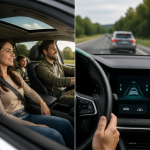
Choosing a vehicle for an older family member involves more than finding a comfortable seat. The car features for elderly passengers affect how easily someone can enter, ride in, and exit the vehicle without unnecessary strain. A suitable car should combine accessible doors, supportive seating, a comfortable ride, simple controls, and practical safety technology.
- Car Features for Elderly Passengers: Table of Contents
- How to Evaluate Car Features for Elderly Passengers
- Easy Entry and Exit Should Be the First Priority
- Seat Comfort Is About Support and Adjustability
- Ride Quality Can Matter More Than Performance
- Space Must Be Usable, Not Merely Measurable
- Seat Belts and Doors Need Careful Evaluation
- Safety Features That Benefit Older Passengers
- Automatic Emergency Braking
- Blind-Spot and Rear Cross-Traffic Alerts
- Lane and Speed Assistance
- Nighttime and Poor-Visibility Awareness
- Simple Controls Reduce Stress and Distraction
- Comfort Features That Are Easy to Overlook
- Choosing Among Sedans, Crossovers, SUVs, and Minivans
- A Practical Test-Ride Checklist
- Consider Ownership Costs and Long-Term Needs
- Frequently Asked Questions
- What is the easiest type of car for an elderly passenger to enter?
- Are leather or cloth seats better for older passengers?
- Is a larger SUV safer and more comfortable for seniors?
- Which driver-assistance feature is most important?
- How can long car journeys be made more comfortable?
- Should I add an aftermarket seat cushion or handle?
- Make the Decision Around Real Daily Use
No single model or body style works for everyone. Mobility, height, joint flexibility, vision, hearing, and sensitivity to motion all influence what feels comfortable and secure. Prioritizing the right car features for elderly passengers requires an unhurried test ride based on the passenger’s real needs before making a buying decision.
Car Features for Elderly Passengers: Table of Contents
- Evaluate the Passenger’s Needs
- Easy Entry and Exit
- Seat Comfort and Adjustability
- Ride Quality
- Usable Passenger and Cargo Space
- Seat Belts and Doors
- Safety Features
- Simple Controls
- Overlooked Comfort Features
- Choosing a Body Style
- Test-Ride Checklist
- Ownership Costs and Future Needs
- Frequently Asked Questions
How to Evaluate Car Features for Elderly Passengers
Vehicle brochures can tell you about seat materials, screen sizes, and driver-assistance systems. They cannot tell you whether a passenger can lower themselves into the seat without pain or reach the grab handle without twisting.
Before comparing cars, identify the passenger’s everyday challenges:
- Do they have difficulty bending their knees or hips?
- Do they use a cane, walker, wheelchair, or portable oxygen equipment?
- Is stepping upward easier than lowering into a low seat?
- Are long journeys uncomfortable because of back or neck pain?
- Do bright displays, complex controls, or road noise cause confusion or fatigue?
- Will they usually sit in the front or rear?
- Does a caregiver need space to help them enter and fasten the seat belt?
These questions turn a broad car search into a practical assessment. They also prevent buyers from assuming that a large vehicle is automatically accessible. Some tall SUVs require a difficult climb, while certain compact cars have narrow door openings and low seats. The most useful car features for elderly passengers depend on usable geometry rather than vehicle size alone.
Easy Entry and Exit Should Be the First Priority
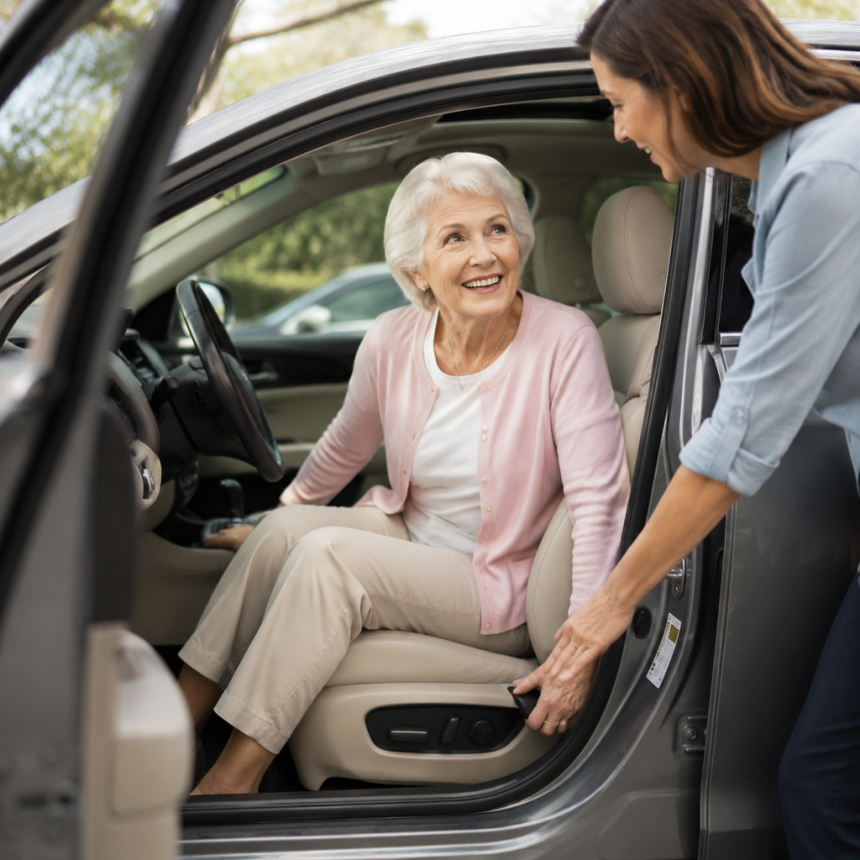
For many older adults, getting into and out of a car is the most physically demanding part of the journey. Among the most important car features for elderly passengers are a manageable seat height, a wide doorway, a low sill, and stable grab handles.
A Moderate Seat Height
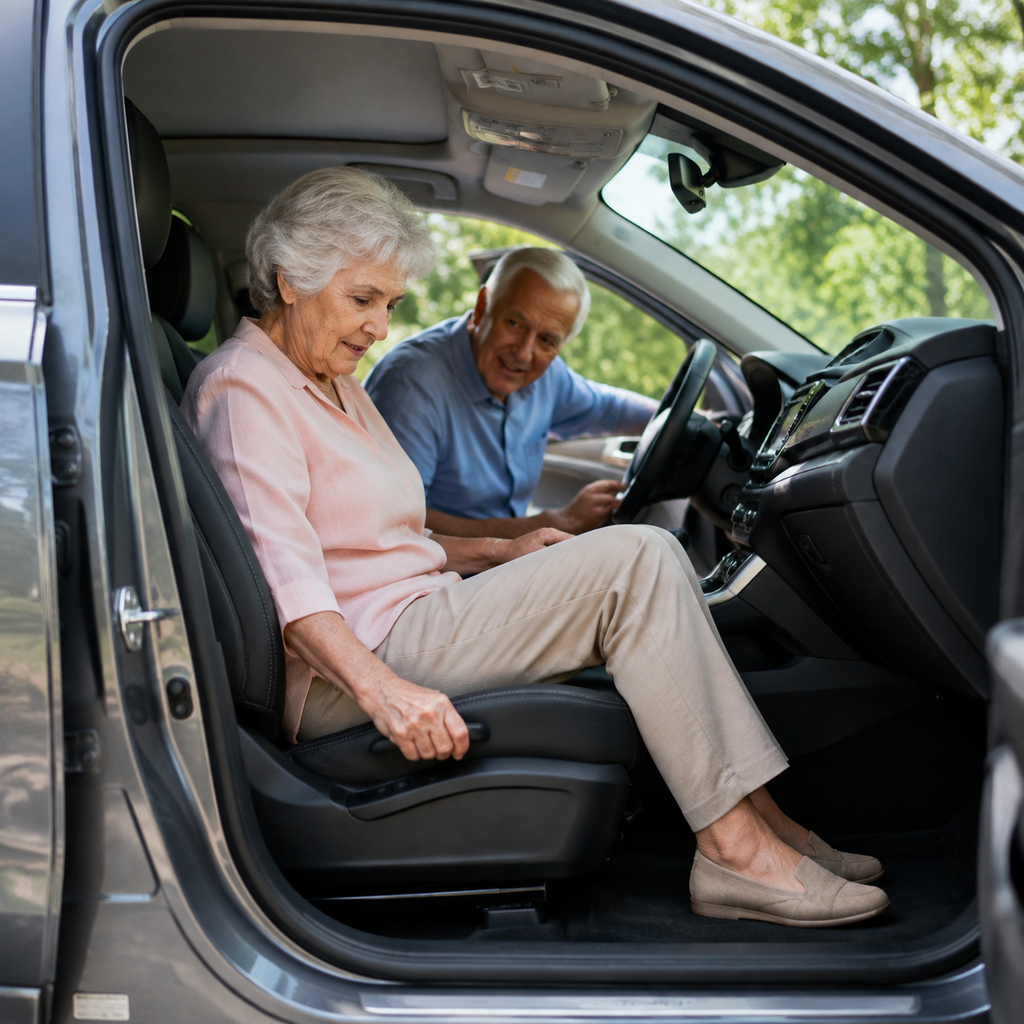
The ideal seat is usually close to the passenger’s hip level. If it is too low, the person may have to drop into it and push hard with their legs to stand again. If it is too high, they may need to climb onto the seat or use a running board.
A compact crossover or small multipurpose vehicle often provides a useful middle ground, but body style alone is not a guarantee. Compare the vertical distance between the ground and seat cushion while the vehicle is parked on a level surface.
During a test:
- Have the passenger stand with their back near the seat.
- Check whether they can sit without dropping sharply.
- Observe whether their head clears the roof opening.
- Ask them to bring both legs into the cabin.
- Repeat the process when getting out.
Do not rush or physically pull the person unless assistance is normally part of their routine. Testing car features for elderly passengers should reproduce the way the vehicle will be used each day.
Wide Doors and Generous Openings
A door that opens widely can make more difference than a spacious cabin. The shape of the doorway should allow the passenger to move their head, shoulders, hips, and knees without severe twisting. These practical car features for elderly passengers can reduce strain during every trip.
Rear-door access deserves special attention. Some cars have large front openings but narrow rear doors, sloping rooflines, or intrusive wheel arches. If the older passenger will travel in the back, test that seat directly.
Sliding doors can be helpful because they provide a broad opening and require less clearance in a narrow parking space. However, powered sliding doors may move slowly, and their controls should be easy for the passenger or caregiver to operate.
Low, Flat Door Sills
A high or wide sill creates a trip hazard and forces the passenger to lift a foot farther than expected. Look for a low step-over height and enough foot space to place both feet securely before standing.
Running boards may assist with tall vehicles, but narrow, wet, or poorly positioned steps can make access harder. A useful step needs a slip-resistant surface and a height the passenger can manage confidently.
Well-Placed Grab Handles
Strong, sensibly located handles provide stability during entry and exit. Roof-mounted handles can help, but some passengers need a fixed handle near the door pillar or dashboard because lifting an arm above shoulder height is uncomfortable.
The passenger should be able to reach the handle before shifting their weight. Avoid relying on a moving door, head restraint, or loose accessory as a support point.
Seat Comfort Is About Support and Adjustability
When comparing car features for elderly passengers, look beyond soft upholstery. A seat that allows the hips to sink deeply can make standing difficult and may provide inadequate support on a long journey.
Firm, Supportive Cushions
Look for a seat base that distributes pressure without collapsing. The cushion should support the thighs without pressing sharply behind the knees, and the backrest should follow the passenger’s back without forcing the shoulders forward.
Very pronounced side bolsters may hold occupants securely during cornering, but they can obstruct sideways movement during entry. A flatter cushion edge is often easier for someone who sits first and then pivots their legs into the cabin.
Useful Seat Adjustment
Power-adjustable front seats can help establish a comfortable height, backrest angle, and distance from the dashboard. They are especially valuable when several family members use the same vehicle.
Check whether the controls are visible and reachable after the door closes. Complicated multidirectional switches may be difficult for someone with reduced finger strength or sensation. Memory settings are useful when the passenger regularly occupies the same front seat after another person has moved it.
A height-adjustable passenger seat is preferable, but it is not fitted to every vehicle, even when the driver’s seat has extensive adjustment. Confirm the actual equipment on the specific trim level because these car features for elderly passengers can vary within the same model range.
Heating, Ventilation, and Climate Control
Heated seats can improve comfort in cold weather, while ventilated seats may help during hot journeys. These systems are comfort aids rather than medical treatments, and passengers with reduced temperature sensitivity should use them cautiously.
Dual-zone or multi-zone climate control allows the older passenger to choose a comfortable temperature without forcing the driver to use the same setting. Rear vents also matter, particularly in larger cabins where airflow from the dashboard may not reach the back effectively.
Physical buttons and clear labels are easier to use than climate functions hidden several layers deep in a touchscreen. Straightforward climate controls are practical car features for elderly passengers because they provide obvious feedback when a setting changes.
Ride Quality Can Matter More Than Performance
Ride comfort should be considered alongside other car features for elderly passengers. A stiff suspension, large wheels, and low-profile tires may sharpen handling, but they can also transmit more bumps and vibration into the cabin. For a passenger with back pain, arthritis, or limited neck movement, repeated impacts can make even a short trip unpleasant.
During the test ride, include more than a smooth main road. Drive over patched pavement, speed humps, expansion joints, and an uneven parking area at appropriate speeds. Pay attention to:
- How sharply the cabin reacts to bumps
- Whether the passenger’s head moves excessively
- How much road and tire noise enters the cabin
- Whether the vehicle rocks or continues bouncing
- How smoothly it starts, stops, and changes direction
Wheel and tire choice can affect comfort. The largest optional wheels are not necessarily the most suitable; a tire with a taller sidewall may absorb small road imperfections more effectively. Tire condition and correct inflation also influence ride quality, so maintain them according to the vehicle manufacturer’s guidance.
Smooth driving remains essential regardless of suspension design. Gentle acceleration, progressive braking, wider steering inputs, and extra following distance help the car features for elderly passengers deliver their intended comfort benefits.
Space Must Be Usable, Not Merely Measurable
Published legroom and cargo figures provide a starting point, but they do not describe how easily a person can use that space. Practical car features for elderly passengers must work with the passenger’s posture, mobility aids, and normal seating position.
Legroom and Foot Placement
An older passenger should be able to sit with supported thighs, comfortably bent knees, and both feet placed securely on the floor. A bulky center console or seat rail can obstruct movement even when the official legroom figure appears generous.
For rear passengers, check whether the front seatback leaves enough knee clearance in its normal driving position. Also inspect the floor. A high central tunnel can make it difficult to enter from one side and move across the rear bench.
Headroom and Window Visibility
A sharply sloping roof may require the passenger to bend their neck during entry. Once seated, adequate glass area can make the cabin feel less confined and may reduce motion discomfort by giving the passenger a clear view outside.
Dark privacy glass can limit outward visibility at night. Panoramic roofs may brighten the interior during the day, although they can reduce headroom and add heat in strong sunlight. A powered shade provides more flexibility.
Cargo Space for Mobility Equipment
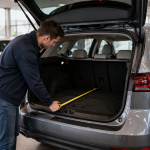
A large cargo volume is useful only if the opening and loading height are manageable. When comparing car features for elderly passengers, bring any walker or wheelchair to the dealership and test whether it fits.
Check:
- Whether the equipment fits without dismantling
- Whether it can be loaded without excessive lifting
- Whether the cargo lip obstructs movement
- Whether the parcel shelf must be removed
- Whether there is space for luggage alongside it
- Whether the equipment can be secured so it does not move
A powered tailgate can reduce effort, but the buttons and hands-free sensor should be easy to understand. Adjustable opening height is one of the more useful car features for elderly passengers in low garages or when users cannot comfortably reach a fully raised hatch.
Seat Belts and Doors Need Careful Evaluation
Seat-belt fit is one of the essential safety-related car features for elderly passengers. The shoulder belt should cross the center of the chest rather than the neck, and the lap portion should sit low across the pelvis.
Height-adjustable upper anchors can improve the fit in front seats. In the rear, examine whether the buckle is visible, stable, and easy to reach. Buckles buried deep in the cushion can be frustrating for people with limited hand movement.
Do not use unapproved belt extenders or accessories that alter belt routing. Questions about fit should be discussed with the vehicle manufacturer, an appropriate mobility specialist, or another qualified professional.
Door operation deserves similar attention. A heavy door may be difficult to control on a slope or in windy weather. Powered doors can help some users but introduce different concerns, including operating speed, emergency release procedures, and the need to keep the opening clear.
Child locks should be understood by anyone transporting an older adult. Accidental activation may prevent the rear passenger from opening the door from inside, which can cause distress even when there is no immediate danger. Door weight, interior releases, and lock controls therefore deserve attention when reviewing car features for elderly passengers.
Safety Features That Benefit Older Passengers
Many modern safety technologies primarily support the driver, but their benefits extend to everyone in the car. When assessing safety-oriented car features for elderly passengers, distinguish between technology that improves awareness and systems that directly intervene. The National Highway Traffic Safety Administration’s older-driver guidance also provides information about age-related driving changes and road safety.
Automatic Emergency Braking
Automatic emergency braking may warn the driver and, in some circumstances, apply braking when a potential frontal collision is detected. Performance and operating conditions vary by vehicle, speed, sensor design, and type of hazard.
It should be treated as backup assistance, not as permission to follow closely or look away from the road. When comparing these car features for elderly passengers, read the owner’s manual and official equipment information for the exact model and trim.
Blind-Spot and Rear Cross-Traffic Alerts
Blind-spot monitoring can help identify vehicles in adjacent lanes, while rear cross-traffic alert may warn of approaching traffic when reversing. These systems are useful when the driver’s shoulder or neck movement is restricted, but they do not replace mirrors, direct observation, or careful low-speed maneuvering.
A reversing camera with a clear image and useful guidelines can make parking easier. A surround-view system may provide more context around the vehicle, particularly near curbs and obstacles, though the display can distort distance and should not become the driver’s only reference.
Lane and Speed Assistance
Lane-departure warnings, lane-centering support, traffic-sign recognition, and adaptive cruise control can reduce workload in suitable conditions. However, alerts may be distracting if they are loud, frequent, or difficult to interpret.
Evaluate how smoothly each system works and how easily it can be adjusted. Abrupt lane corrections or braking may unsettle a physically sensitive passenger. Driver-assistance settings should be configured before the journey rather than while moving.
Nighttime and Poor-Visibility Awareness
Good headlights, clean glass, effective wipers, and correctly adjusted mirrors are the foundation of nighttime road safety. Drivers who frequently travel on unlit roads may also consider supplemental awareness technology. The guide to the best vehicle thermal night vision systems explains what to compare when evaluating this type of equipment alongside other car features for elderly passengers.
One example is Robofinity InsightDrive, a vehicle thermal imaging night vision system that uses AI-powered thermal imaging to support awareness in low-light or poor-visibility conditions. As with any aftermarket driver-assistance technology, it does not replace headlights, mirrors, safe speed, adequate braking distance, traffic laws, or continuous driver attention.
Simple Controls Reduce Stress and Distraction
Easy-to-use controls are valuable car features for elderly passengers as well as drivers. Small icons, low-contrast labels, reflective touchscreens, or nested menus can be tiring or confusing.
Important functions should be easy to identify:
- Hazard warning lights
- Climate temperature and fan controls
- Door locks and window switches
- Seat heating controls
- Interior lighting
- Audio volume
- Emergency-call functions, where equipped
Large physical controls are often easier to use by touch than screen-only interfaces. Voice control can help with navigation or phone calls, but it may struggle with accents, background noise, or unclear commands. Test it under normal driving conditions rather than assuming it will work consistently.
The display should be bright enough to read without creating distracting glare at night. A calm instrument layout and adjustable display settings help ensure that electronic car features for elderly passengers do not create visual overload.
Comfort Features That Are Easy to Overlook
Some of the most useful car features for elderly passengers rarely appear at the top of a sales brochure.
Good cabin lighting helps a passenger locate the belt buckle, door handle, dropped items, and footing after dark. Puddle lights or illuminated door areas can make the ground easier to assess before stepping out.
Small-item storage should be reachable without bending deeply. A secure place for glasses, medication, tissues, and a phone is more useful than an oversized compartment that requires stretching.
A relatively low window line can improve the outward view. Effective sunshades help manage glare and heat, especially for rear passengers. Quiet tires, good door sealing, and subdued warning tones can also make journeys less tiring for someone with hearing sensitivity or cognitive impairment.
For long trips, accessible charging ports and simple rear climate controls are practical car features for elderly passengers. However, comfort technology should not come at the expense of clear, predictable operation.
Choosing Among Sedans, Crossovers, SUVs, and Minivans
Each body style involves trade-offs, and no category includes every desirable car feature for elderly passengers. Test the specific vehicle rather than choosing by body style alone.
Sedans and Hatchbacks
Sedans may offer a stable ride, manageable overall dimensions, and straightforward handling. Their lower floor can reduce the cargo loading height. However, low seats, narrow door openings, and sloping rooflines may make access difficult.
Hatchbacks add a more flexible cargo area, but some retain the same low seating position as a sedan.
Crossovers and SUVs
Crossovers often combine a moderately elevated seat with good headroom and a rear hatch. This can make them suitable for passengers who struggle to lower themselves into a car.
Larger SUVs may sit too high, have heavy doors, or require a substantial step. They can also produce more body movement, particularly if the suspension is tuned for rough-road capability. These differences show why car features for elderly passengers must be evaluated on the exact model.
Minivans and Multipurpose Vehicles
Sliding doors, wide openings, flexible seating, and large cargo areas make minivans and multipurpose vehicles practical for mobility equipment and caregiver access. Some offer a relatively low floor despite their upright shape.
The trade-offs can include larger exterior dimensions and a long reach into the cargo area. Test parking, maneuvering, and loading to determine whether these vehicles provide the right car features for elderly passengers in daily use.
A Practical Test-Ride Checklist
A proper evaluation of car features for elderly passengers should reproduce normal use. Bring the regular passenger, mobility aids, and the person who will usually drive or provide assistance.
Check the following while the vehicle is stationary:
- The passenger can approach the seat without squeezing past the door
- The door stays open securely on a gentle slope
- The seat height does not require dropping or climbing
- The passenger can move both legs through the opening
- Grab handles are reachable and solid
- The seat belt fits and buckles without excessive effort
- Feet rest securely on the floor
- The passenger can see outside without straining
- Climate and window controls are understandable
- Mobility equipment fits in the cargo area
Then take a varied test ride. Include urban traffic, a faster road, uneven pavement, normal parking, and several stops. This test helps determine whether the selected car features for elderly passengers remain comfortable in realistic conditions. Ask specific questions: Did the bumps cause pain? Was the seat edge uncomfortable? Were the warning sounds startling? Was the cabin too noisy? Could the passenger get out as easily after sitting for 20 or 30 minutes?
A second test on another day may be worthwhile because fatigue, weather, footwear, and pain levels can change the experience. Repeating the process helps confirm that the chosen car features for elderly passengers remain useful under different conditions.
Consider Ownership Costs and Long-Term Needs
Accessibility should remain practical over the vehicle’s ownership period. Many car features for elderly passengers, including powered seats, sliding doors, adaptive suspension, cameras, and sensors, can improve usability but may add maintenance or repair complexity.
That does not make them poor choices. It means buyers should understand what is essential and what is merely convenient. Review warranty coverage, servicing access, tire costs, and the availability of local support without assuming every feature will remain inexpensive to maintain.
Think ahead as well. A passenger who walks independently today may use a folding walker later. Choosing adaptable car features for elderly passengers, such as flexible cargo space, a moderate entry height, and a broad doorway, may keep the vehicle useful as mobility changes.
Mobility modifications require particular care. Swivel seats, transfer aids, hand controls, ramps, and wheelchair systems should be assessed and installed by appropriately qualified specialists. Modified car features for elderly passengers must remain compatible with the vehicle’s structure, airbags, seat belts, electrical systems, and applicable local requirements.
Frequently Asked Questions
These answers address common questions about choosing and testing car features for elderly passengers.
What is the easiest type of car for an elderly passenger to enter?
A vehicle with a seat near hip height, a wide doorway, a low sill, and reachable grab handles is usually easiest. Compact crossovers and multipurpose vehicles often provide these car features for elderly passengers, but the passenger should test the exact model.
Are leather or cloth seats better for older passengers?
Neither is universally better. Leather may be easier to slide across but can become hot, cold, or slippery. Cloth may offer more grip but can make pivoting harder. Cushion shape, firmness, heating, ventilation, and ease of cleaning are equally important car features for elderly passengers.
Is a larger SUV safer and more comfortable for seniors?
Not automatically. A larger SUV may offer space and a higher seating position, but it can also have a high step, heavy doors, more body movement, and difficult cargo loading. Safety and comfort depend on the vehicle’s design, equipment, condition, and how it is driven.
Which driver-assistance feature is most important?
There is no single best feature for every situation. Automatic emergency braking, blind-spot monitoring, rear cross-traffic alert, and a clear reversing camera are all useful car features for elderly passengers. Their performance varies, and none replaces attentive driving or direct observation.
How can long car journeys be made more comfortable?
Set the seat and climate before departure, drive smoothly, schedule regular breaks, keep necessary items within reach, and avoid unsecured cushions. These habits help occupants benefit from available car features for elderly passengers. Anyone with medical concerns about prolonged sitting should seek guidance from an appropriate healthcare professional.
Should I add an aftermarket seat cushion or handle?
Only after confirming that the accessory is stable and compatible with the vehicle. Thick cushions can change seat-belt positioning, occupant posture, and proximity to airbags. Handles that attach to door strikers or other points may not suit every vehicle or passenger, so professional mobility advice may be appropriate.
Make the Decision Around Real Daily Use
The best car features for elderly passengers are not necessarily the longest equipment list. They are the features that minimize physical strain, support a natural seating position, provide a comfortable ride, accommodate necessary mobility equipment, and offer safety technology that the driver understands.
Start with entry and exit, then assess the seat, ride quality, belt fit, controls, visibility, and cargo access. Treat electronic assistance as additional support rather than a substitute for careful driving. Most importantly, involve the passenger in a realistic test ride. Evaluating car features for elderly passengers in familiar conditions will reveal more than a specification sheet and help identify a vehicle that remains practical for everyday family travel.