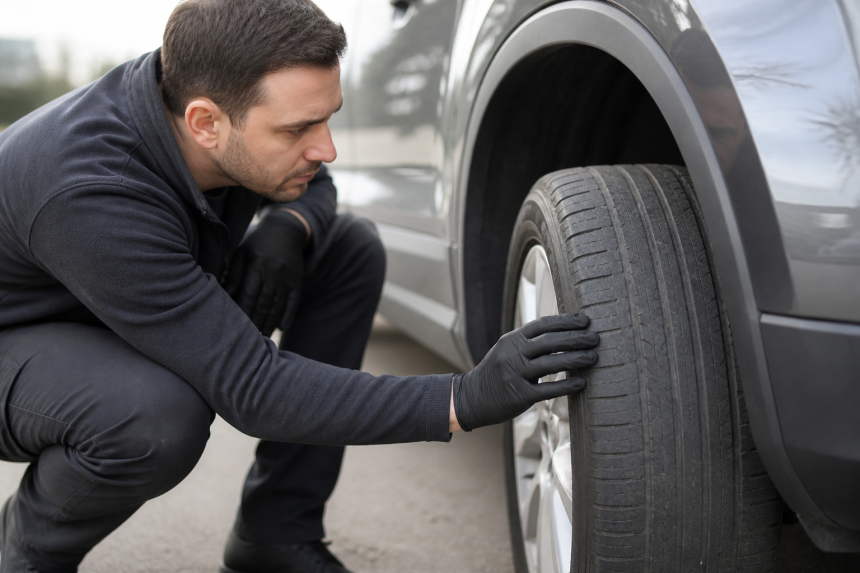
Tires rarely fail without warning. Their tread wears down, rubber ages, cracks develop, or the vehicle begins to feel different during braking and cornering. Knowing when to replace tires starts with looking at all of these factors rather than relying on mileage alone. For many drivers, when to replace tires becomes clear through a combination of tread measurements, visible damage, tire age, and changes in handling.
- When to Replace Tires: The Short Answer
- Why Tire Condition Matters Before the Tread Looks Bald
- Check Tread Depth in More Than One Place
- Read the Wear Pattern, Not Just the Depth
- Replace Tires Promptly When Structural Damage Appears
- Can a Punctured Tire Be Repaired?
- Tire Age Matters Even With Plenty of Tread
- Driving Symptoms That Can Signal Tire Trouble
- Your Driving Conditions May Justify Earlier Replacement
- Frequent Rain and Standing Water
- Snow and Winter Roads
- Hot Climates and Heavy Loads
- Long Trips
- City Driving
- Night Driving, Visibility, and the Limits of Technology
- Should You Replace Two Tires or All Four?
- How to Make New Tires Last Longer
- Check Cold Tire Pressure Regularly
- Rotate Tires as Recommended
- Correct Alignment and Balance Problems
- Inspect Tires Monthly and Before Long Journeys
- A Practical Replacement Decision Framework
- Common Tire-Replacement Mistakes
- Frequently Asked Questions
- How often should car tires be replaced?
- Do tires need replacement after six years?
- Is it safe to drive on a tire with a sidewall bulge?
- Can I replace only one tire?
- Why are my tires wearing out unevenly?
- Should I replace tires before a road trip?
- Conclusion
Replace a tire when it reaches the legal tread-wear limit in your location, develops unsafe damage, shows structural deterioration, or no longer suits the conditions in which you drive. Age also matters, even when plenty of tread remains. Understanding when to replace tires requires regular inspections, accurate tread measurements, attention to tire age, and professional assessment when something looks questionable.
Table of Contents
When to Replace Tires: The Short Answer
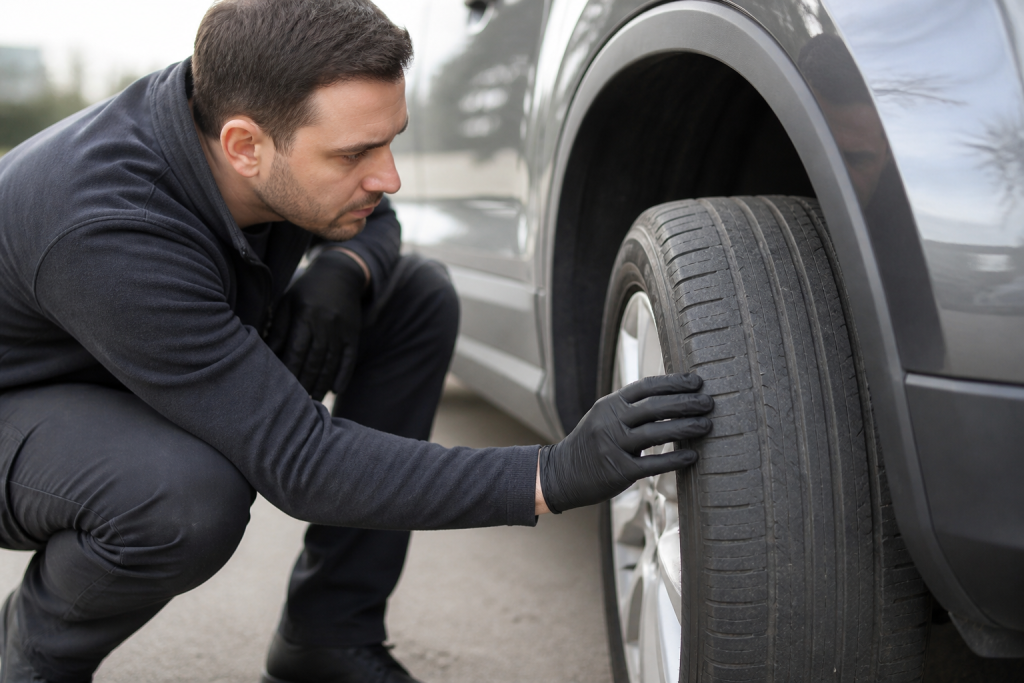
When to Replace Tires depends on condition, age, performance, and the conditions in which they are used. A quick answer to when to replace tires is to act when any safety limit is reached, rather than waiting for every warning sign to appear. A tire generally needs replacement when any of the following applies:
- Its tread is at or below the legal minimum where you drive.
- Tread-wear indicator bars are flush with the surrounding tread.
- Cords, fabric, or internal structure are visible.
- The sidewall has a bulge, bubble, deep cut, or serious cracking.
- The tire repeatedly loses pressure without an obvious, repairable cause.
- It has a puncture that cannot be safely repaired.
- Uneven wear has left part of the tread dangerously shallow.
- Age-related deterioration makes continued use questionable.
- Braking, wet-road grip, steering, or ride quality has noticeably worsened.
- The tire is unsuitable for expected winter, heat, load, or terrain conditions.
These signs do not all carry the same urgency, but they provide practical guidance on when to replace tires. A bulging sidewall or exposed cords calls for immediate action. Reduced wet-road performance may emerge gradually, but it still deserves attention before the tire reaches the absolute legal limit.
Why Tire Condition Matters Before the Tread Looks Bald
Tires are the vehicle’s only direct contact with the road. Acceleration, steering, and braking forces must all pass through four relatively small contact patches. A vehicle may have effective brakes and sophisticated driver-assistance technology, but those systems still depend on the tires’ ability to generate grip. This is one reason when to replace tires should be based on more than a visual check. The question of when to replace tires is also a question of whether the tire can still deliver predictable traction.
Tread channels move water away from the contact patch. As those channels become shallower, the tire has less capacity to manage standing water. This can make wet braking less predictable and increase susceptibility to hydroplaning.
Rubber condition matters as well. Tires are exposed to heat cycles, sunlight, oxygen, road chemicals, moisture, and flexing. Over time, the compound can harden or crack. A lightly used tire can therefore age even if it has not accumulated many miles or kilometers. Those changes are important when deciding when to replace tires.
A visual glance at the center tread is not enough. A complete inspection should include tread depth across the tire, both sidewalls, pressure behavior, age, and any changes in how the car drives. Considering all of these factors makes when to replace tires a more reliable safety decision.
Check Tread Depth in More Than One Place
Tread depth is one of the clearest measures of tire wear, but it must be checked correctly. When to replace tires may become clear only after measuring the lowest tread reading rather than inspecting the most visible area.
Use a Proper Tread-Depth Gauge
A basic tread-depth gauge is inexpensive and provides a more useful reading than estimating by sight. Insert it into a main tread groove and measure several points. Knowing when to replace tires is easier when these readings are recorded consistently:
- Near the inner shoulder
- Across the center
- Near the outer shoulder
- At several positions around the circumference
Record the lowest meaningful reading, not the best one. A tire with adequate center tread but a nearly worn-out inner shoulder is not in good overall condition. This measurement helps answer when to replace tires before uneven wear becomes more severe.
Legal minimums differ by jurisdiction and tire type, so owners in the United States and Europe should confirm the rules that apply locally. Ask a qualified local installer when to replace tires if the applicable threshold is unclear. Legal compliance should also be treated as a minimum threshold, not a guarantee of strong wet-weather performance.
Inspect the Tread-Wear Bars
Most road tires have raised wear indicators molded into the main grooves. As the tread wears down, these bars become level with the tread surface. When that happens, the tire has reached its designed wear threshold and should be replaced. The indicators can provide a quick clue about when to replace tires, but they do not reveal sidewall damage or age.
Look for small markings on the sidewall that indicate where the bars are located. Depending on the manufacturer, these may be arrows, triangles, letters, or other molded symbols.
Simple Coin Tests Are Only Rough Checks
Drivers sometimes use a coin to estimate tread depth. This may identify a severely worn tire, but coin dimensions vary by country and the method is less precise than a gauge. It also does not replace checking the applicable legal minimum or deciding when to replace tires based on the whole tire’s condition.
A gauge gives repeatable measurements and makes it easier to track wear over time. If the result is close to the replacement threshold, have a tire professional confirm it.
Read the Wear Pattern, Not Just the Depth
Uneven wear often reveals a problem elsewhere in the vehicle. Replacing the tire without addressing the cause can quickly damage the new one, so wear patterns are part of the process for determining when to replace tires. They also help explain why a tire may need replacement earlier than expected.
Center Wear
Excessive wear through the center may be associated with incorrect inflation, tire-to-wheel fitment, vehicle setup, or use conditions. Check pressure when the tires are cold and compare it with the vehicle manufacturer’s recommendation, usually found on a placard in the door opening or in the owner’s manual.
Do not use the maximum pressure molded into the tire sidewall as the routine inflation target unless the vehicle or tire manufacturer specifically instructs you to do so. Correct pressure can slow unnecessary wear and make it easier to judge when to replace tires.
Wear on Both Shoulders
Wear on both outer edges can be related to underinflation, overloading, or demanding cornering. Underinflation also creates additional heat through excessive flexing, making prompt pressure checks important.
Wear on One Edge
A heavily worn inner or outer edge may indicate an alignment or suspension issue. This pattern can be difficult to see when the vehicle is parked, especially on the inner shoulder. Use adequate lighting and turn the steering wheel where appropriate to improve access, but never crawl under an unsupported vehicle.
Cupping or Scalloped Wear
Alternating high and low patches around the tread may point to worn suspension components, wheel imbalance, alignment problems, or other mechanical issues. It may also cause humming, vibration, or a rough ride. Have the cause diagnosed before deciding when to replace tires.
Flat Spots
Hard braking, prolonged parking, or certain mechanical faults can produce localized flat areas. Some temporary vibration after a vehicle has been parked may fade as the tire warms, but persistent vibration or visible flat spotting should be inspected.
Replace Tires Promptly When Structural Damage Appears
Some damage is too serious for monitoring or routine repair. In these cases, when to replace tires is an immediate safety decision rather than a question of maximizing tread life. When to replace tires is especially urgent when the tire’s internal structure may be compromised.
Sidewall Bulges and Bubbles
A bulge can indicate that internal cords have been damaged, allowing air pressure to push against weakened rubber. Because the structure is compromised, the tire may fail unexpectedly. Avoid unnecessary driving and arrange professional replacement. Do not wait for more symptoms to decide when to replace tires.
Exposed Cords or Fabric
If metallic cords or fabric layers are visible anywhere on the tire, remove it from service. This applies even if the exposed area is small or the remaining tread appears adequate.
Cuts, Cracks, and Impact Damage
Minor surface marks are not necessarily dangerous, but deep cuts, widespread cracking, or impact damage from potholes and curbs require assessment. Damage can exist inside the tire even when the exterior mark looks limited.
After a severe impact, watch for:
- New vibration
- Steering pull
- Pressure loss
- A visible sidewall deformation
- A bent wheel
- A tire-pressure warning
Stop in a safe place if the vehicle begins behaving abnormally. Continuing at highway speed can worsen the damage.
Can a Punctured Tire Be Repaired?
Some tread-area punctures may be professionally repairable, but not every puncture is a candidate. Repairability depends on the location, size and angle of the injury, previous repairs, internal condition, tire type, and whether the tire was driven while significantly underinflated. These factors can change when to replace tires after a puncture. The safest answer to when to replace tires after damage comes from an internal inspection by a qualified technician.
Sidewall and shoulder damage generally raises greater structural concerns than a straightforward injury in the central tread area. An external plug alone also does not allow inspection of the tire’s interior. A qualified technician should remove the tire from the wheel, examine it internally, and apply an approved repair method when appropriate.
Replacement is usually the responsible choice when:
- The damage is in a non-repairable area.
- The puncture exceeds approved repair limits.
- Internal cords or the inner liner are damaged.
- Multiple repairs are too close together.
- The tire was driven flat or severely underinflated.
- The tire has additional age, cracking, or wear concerns.
Sealant from an emergency mobility kit is typically a temporary measure. Follow the kit instructions, observe its speed and distance restrictions, and tell the technician that sealant was used.
Tire Age Matters Even With Plenty of Tread
Low mileage does not stop rubber from aging. This is especially relevant to seasonal vehicles, trailers, motorhomes, collector cars, spare tires, and cars driven only occasionally. Tire age is therefore another part of knowing when to replace tires. For owners of infrequently driven vehicles, when to replace tires may depend more on age and condition than on mileage.
The tire identification markings on the sidewall include a date code. On commonly used modern formats, the final four digits indicate the production week and year. For example, a code ending in 2322 indicates production during the 23rd week of 2022. The complete code may appear on only one sidewall, so the inner side may need to be inspected.
There is no single age at which every tire automatically becomes unsafe under every condition. Tire makers and vehicle manufacturers may provide model-specific inspection or replacement guidance. Climate, storage, maintenance, loading, and exposure can also affect deterioration. Use those factors together when deciding when to replace tires.
A sensible approach is to:
- Check the vehicle owner’s manual.
- Review the tire manufacturer’s age guidance.
- Have older tires inspected regularly by a qualified professional.
- Replace tires that show cracking, deformation, hardening, or other deterioration.
- Include the spare tire in age and pressure checks.
The production date is only one part of the decision. A newer tire with impact damage may be unsafe, while an older tire may look serviceable but still require replacement under manufacturer guidance.
Driving Symptoms That Can Signal Tire Trouble
Tires sometimes communicate their condition through the way the vehicle feels. Pay attention to changes rather than assuming they are normal consequences of an aging car. Driving symptoms can help reveal when to replace tires or when another component needs inspection. A change in braking or steering is often a practical clue about when to replace tires.
Warning symptoms include:
- Vibration through the steering wheel, seat, or floor
- Pulling to one side
- Increased stopping distance
- Reduced confidence on wet roads
- Steering that feels vague or unstable
- Repeated tire-pressure warnings
- Thumping, humming, or rhythmic road noise
- A sudden change in ride quality
These symptoms are not exclusive to tires. Wheel balance, alignment, brakes, bearings, and suspension components can create similar effects. That is why diagnosis matters. A new set of tires may not solve a vibration caused by a bent wheel or worn suspension joint.
Sudden pressure loss, strong pulling, loud flapping, or severe vibration calls for an immediate reduction in speed and a safe stop away from traffic. Do not brake or steer abruptly unless necessary to avoid a hazard.
Your Driving Conditions May Justify Earlier Replacement
Waiting until the last legal fraction of tread is not always the best ownership strategy. The conditions you face should influence when to replace tires and how much safety margin you want. Knowing when to replace tires also requires considering the roads, weather, load, and trips ahead.
Frequent Rain and Standing Water
Drivers in rainy regions depend heavily on tread channels to evacuate water. As tread becomes shallower, wet-road performance may decline before dry-road grip feels noticeably different. Replacing earlier can provide a more useful margin for motorway or highway travel in heavy rain.
Snow and Winter Roads
Winter driving places different demands on tread depth and rubber flexibility. A tire may remain legal for ordinary road use but no longer provide the winter traction expected from it. Local winter-tire regulations, mountain-route rules, and manufacturer recommendations may also apply when deciding when to replace tires.
In areas with distinct seasons, check winter tires before installation rather than after the first snowfall. Inspect their age, tread, cracking, and storage-related deformation.
Hot Climates and Heavy Loads
Heat, sustained high speeds, low pressure, and heavy loading can increase tire stress. Drivers who regularly carry passengers, luggage, tools, or tow within the vehicle’s limits should be especially disciplined about cold inflation pressure and load ratings.
Never exceed the vehicle’s load limits or install tires with inadequate specifications.
Long Trips
A tire that is marginal for local errands may be a poor choice for a long journey involving sustained speeds, unfamiliar roads, rain, or a fully loaded vehicle. Inspect tires several days before departure so there is time to correct alignment, order the correct replacements, or repair a damaged wheel. This gives you time to make a sound decision about when to replace tires.
City Driving
Urban cars may cover fewer highway miles, but they encounter curbs, potholes, sharp debris, frequent braking, and repeated low-speed impacts. Inspect sidewalls after a significant curb strike and do not assume low annual mileage means low tire wear.
Night Driving, Visibility, and the Limits of Technology
Tire condition becomes especially important at night and in bad weather, when drivers may see standing water, road debris, or other hazards later. Good tread, correct pressure, functional headlights, clear glass, lower speed, and adequate following distance work together to preserve reaction and braking margins. Drivers planning longer trips can also review these night driving safety tips.
Some motorists who frequently use unlit rural roads also evaluate aftermarket driver-assistance technology. Robofinity InsightDrive is one example of a vehicle thermal imaging night vision system designed to support awareness of pedestrians, animals, vehicles, and obstacles in low-light or poor-visibility conditions. Such technology can supplement road awareness, but it does not restore tire grip or replace headlights, mirrors, safe speed, braking distance, traffic laws, and attentive driving.
No hazard-detection feature can compensate for worn or damaged tires. Technology may help a driver become aware of a hazard, but the vehicle still needs sufficient traction to respond.
Should You Replace Two Tires or All Four?
The answer depends on the drivetrain, remaining tread, tire compatibility, and vehicle manufacturer requirements. These details also affect when to replace tires on the same axle or across the whole vehicle. The answer to when to replace tires as a set should account for differences in tread depth and circumference.
Replacing all four tires often provides the most consistent behavior because tread depth, construction, traction characteristics, and age remain closely matched. However, replacing two may be reasonable when the other pair is still in good condition and the new tires are compatible.
Many tire and vehicle manufacturers provide specific guidance on where a new pair should be installed, commonly favoring the rear axle to support stability in wet conditions. Follow the vehicle and tire manufacturers’ instructions rather than making assumptions based only on whether the car is front-, rear-, or all-wheel drive.
All-wheel-drive vehicles can be particularly sensitive to differences in tire circumference. Excessive variation in tread depth, size, or construction may affect drivetrain operation. Consult the owner’s manual and a knowledgeable installer before replacing fewer than four tires.
In every case, match the required:
- Tire size
- Load index
- Speed rating
- Construction and type
- Vehicle fitment requirements
Mixing significantly different tires can change handling and braking behavior, even when each tire is individually road legal.
How to Make New Tires Last Longer
Replacement timing is partly determined by tire quality and use, but maintenance has a major influence. Good maintenance can delay premature wear without changing the answer to when to replace tires once a safety limit is reached. Review when to replace tires after every inspection if wear or damage has changed.
Check Cold Tire Pressure Regularly
Measure pressure when the tires are cold, ideally before driving or after the car has been parked long enough for temperatures to stabilize. Pressure changes with ambient temperature, so inspect it more often during seasonal transitions. Correct pressure helps you judge when to replace tires and supports predictable handling.
A tire-pressure monitoring system is a warning system, not a substitute for manual checks. It may not alert you to smaller pressure errors that still affect wear and handling.
Rotate Tires as Recommended
Rotation can help equalize wear, but the correct pattern and interval depend on drivetrain, tire design, wheel sizing, and manufacturer guidance. Directional tires, staggered wheel setups, and some high-performance configurations have limited rotation options.
Correct Alignment and Balance Problems
Have alignment checked when the vehicle pulls, the steering wheel is off-center, or unusual edge wear appears. Wheel balance should be investigated when speed-related vibration develops.
Alignment does not reverse existing wear. It helps prevent the same pattern from rapidly damaging replacement tires.
Inspect Tires Monthly and Before Long Journeys
A practical inspection takes only a few minutes:
- Measure cold pressure.
- Check tread depth in multiple grooves.
- Look over both sidewalls where visible.
- Search for embedded objects, cuts, and bulges.
- Compare wear across all four tires.
- Confirm valve caps are present.
- Check the spare or mobility kit.
- Investigate any new vibration or pressure loss.
Keep a simple record of tread measurements and pressure checks. A trend is often more informative than a single reading.
A Practical Replacement Decision Framework
When you are uncertain, assess the tire in five categories:
1. Legality
Is the tread above the applicable legal minimum, and does the tire comply with local seasonal requirements?
2. Structure
Are there bulges, exposed cords, deep cuts, severe cracks, or non-repairable punctures? Structural concerns take priority over tread remaining.
3. Age
What does the date code show, and what do the vehicle and tire manufacturers recommend? Has the tire been stored or used in harsh conditions?
4. Performance
Has wet grip, braking confidence, steering stability, pressure retention, or ride quality deteriorated?
5. Intended Use
Will the tire soon face a long trip, winter roads, heavy rain, high temperatures, towing, or sustained motorway speeds?
If a tire fails the structural check, do not wait for a convenient replacement interval. If it is approaching limits in several categories, replacement before an upcoming demanding trip is often more responsible than trying to extract the final amount of tread life.
Common Tire-Replacement Mistakes
Knowing when to replace tires also means avoiding a few ownership habits that create unnecessary risk and expense:
- Judging only by mileage: Tire life varies with compound, alignment, pressure, road surface, climate, and driving style.
- Inspecting only the outside shoulder: Dangerous inner-edge wear can remain hidden.
- Ignoring old spare tires: A spare can lose pressure and age while untouched.
- Replacing tires without correcting alignment: The new set may develop the same uneven wear.
- Assuming a pressure warning identifies every problem: Manual measurements and visual inspections remain necessary.
- Buying by price alone: Correct fitment, load capacity, climate suitability, and performance matter.
- Mixing tires without checking compatibility: Differences in type and tread can affect vehicle balance.
- Treating the legal minimum as an ideal target: Conditions such as heavy rain or snow may justify earlier replacement.
Frequently Asked Questions
How often should car tires be replaced?
There is no universal mileage or calendar interval for every tire. Replace them based on tread depth, structural condition, age, performance, manufacturer guidance, and driving conditions. Inspect them regularly rather than relying on a single deadline.
Do tires need replacement after six years?
Age recommendations vary among vehicle and tire manufacturers. A tire should not be replaced or retained based on age alone without considering the applicable guidance and its condition. Older tires deserve increasingly careful professional inspection, even when tread remains.
Is it safe to drive on a tire with a sidewall bulge?
A sidewall bulge can indicate internal structural damage. Avoid continued driving and arrange professional replacement as soon as safely possible. Do not attempt to repair the bulge.
Can I replace only one tire?
Sometimes, but the replacement must be compatible with the other tires and the vehicle’s requirements. Differences in tread depth can be especially important on all-wheel-drive vehicles. Consult the owner’s manual and a qualified tire professional.
Why are my tires wearing out unevenly?
Common contributors include incorrect pressure, alignment problems, worn suspension parts, wheel imbalance, overloading, and driving conditions. Diagnose and correct the cause when replacing the affected tire.
Should I replace tires before a road trip?
Replace them if they are damaged, near the legal or manufacturer threshold, unsuitable for expected weather, or showing troubling age or performance signs. Inspect the tires several days before departure rather than waiting until the vehicle is loaded.
Conclusion
The right time to fit new tires is determined by more than a mileage estimate. Measure tread across the full width, examine the sidewalls, identify uneven wear, check the production date, and take changes in pressure, vibration, wet grip, or steering seriously. Ultimately, when to replace tires should be decided by the most serious condition found during the inspection.
Immediate replacement is appropriate for serious structural damage, exposed cords, unsafe tread depth, and non-repairable punctures. Tires that are merely approaching their limits require a more contextual decision based on age, weather, journey type, vehicle requirements, and manufacturer guidance.
Make tire inspection part of routine ownership, including before seasonal changes and long journeys. For general tire-safety guidance, consult the National Highway Traffic Safety Administration’s tire safety information. When damage or fitment is uncertain, have a qualified tire professional inspect the tire before relying on the vehicle at speed.