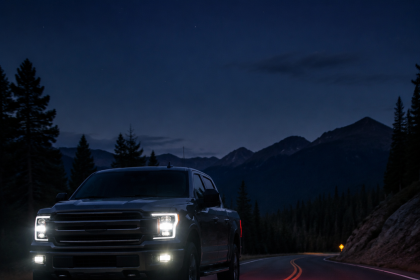
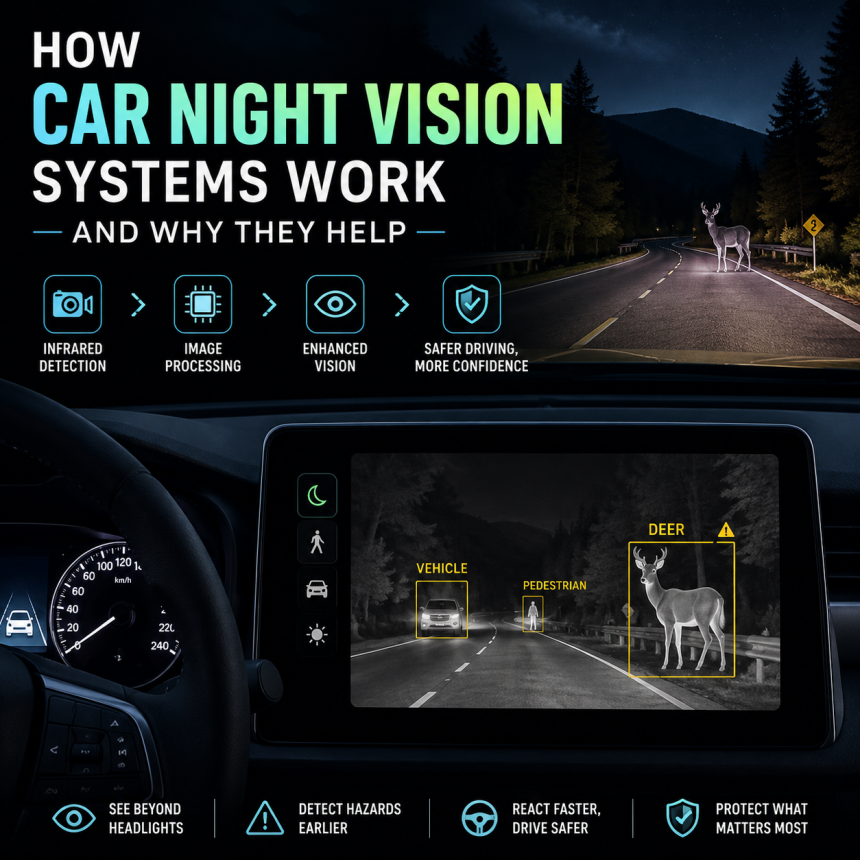
Car Night Vision Technology helps drivers see more clearly in low-light conditions by detecting objects that can be hard to spot with headlights alone. It is designed to improve road awareness at night, on dark rural roads, and in other poor-visibility conditions where the human eye can struggle. While it does not replace safe driving, it can add another layer of driver-assistance technology by helping identify pedestrians, animals, vehicles, or obstacles earlier than standard lighting may allow.
- What a car night vision technology system does
- The main types of night vision technology
- How the system works step by step
- Why night vision can help in real driving
- What drivers actually see on the display
- What night vision can and cannot do
- How it fits with other safety features
- Who benefits most from night vision
- FAQ
- Is a car night vision technology system the same as headlights?
- Does night vision work in all weather?
- Can night vision detect pedestrians and animals?
- Do I still need to pay attention while using it?
- Does car night vision technology replace defensive driving?
- Conclusion
Table of Contents
- What a car night vision technology system does
- The main types of night vision technology
- How the system works step by step
- Why night vision can help in real driving
- What drivers actually see on the display
- What night vision can and cannot do
- How it fits with other safety features
- Who benefits most from night vision
- FAQ
What a car night vision technology system does
A car night vision technology system is a vehicle safety technology built to support visibility after dark. Instead of depending only on visible light, it uses sensors to detect heat or reflected infrared light, depending on the system type. The result is a clearer view of certain objects ahead, especially when the road is dimly lit or visibility is reduced by weather, shadows, or distance.
These systems are usually meant to supplement normal driving visibility, not replace headlights, mirrors, or attentive driving. The practical goal is simple: help the driver notice hazards sooner so there is more time to react. In that sense, car night vision technology is best thought of as an awareness tool rather than a substitute for judgment.
For readers comparing system types, the overview on Automotive Thermal Night Vision System: What Is It? is a useful companion article.
It also helps to understand where car night vision technology fits in the wider safety picture. Drivers who spend a lot of time on dark roads often pair it mentally with other aids, but the value here is more specific: it is aimed at making the road edge, the lane ahead, and hard-to-see hazards easier to interpret before the situation becomes urgent.
The main types of night vision technology
Passive thermal imaging
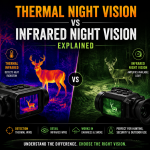
Passive thermal imaging systems detect heat energy naturally given off by people, animals, vehicles, and other objects. Warm bodies often stand out against cooler backgrounds, which can make them easier to identify at night.
This approach is useful because it does not depend on visible light. A person walking near the road or an animal crossing from a dark shoulder may appear more clearly in a thermal image than in a headlight beam alone. That is one reason car night vision technology can be helpful on rural roads, where unexpected movement can appear suddenly.
Active infrared systems
Active infrared systems project infrared light that is invisible to the human eye. The camera then captures the reflected light and turns it into a usable image for the driver.
This type of setup can help improve detail in some low-light situations. It is different from thermal imaging because it is not reading heat patterns. Instead, it is creating a view based on infrared illumination and reflection. In practice, both systems aim to make dark driving less demanding by improving what the driver can see.
Some drivers compare these systems the same way they compare headlight upgrades: not by asking which one is futuristic, but by asking which one makes the road information clearer in the conditions they actually drive in. That is a sensible way to evaluate car night vision technology because the best system is the one that fits the route, the weather, and the hazards most likely to be encountered.
How the system works step by step
A car night vision technology system usually follows a simple process.
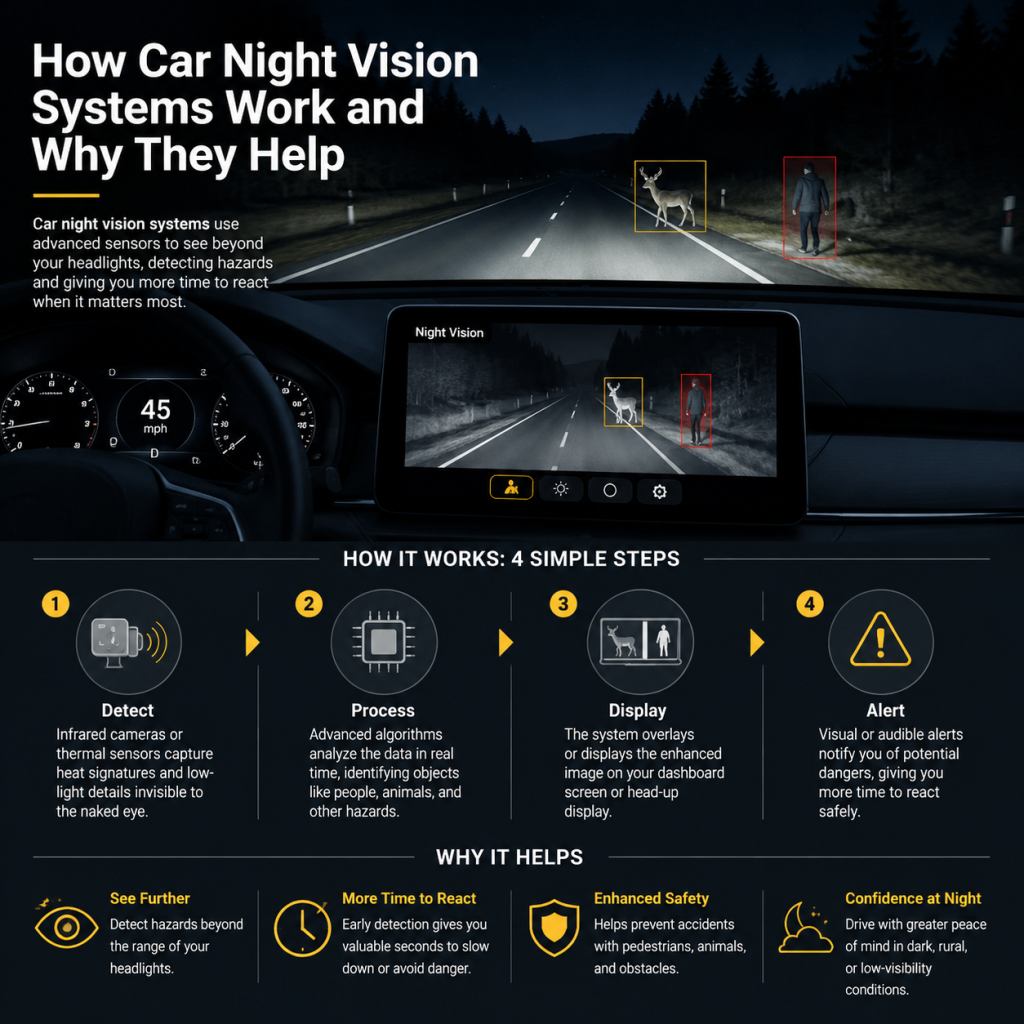
First, a sensor or camera scans the area ahead of the vehicle. In a thermal imaging system, that sensor reads heat differences. In an infrared system, it captures reflected infrared light. The data is then processed by software that turns those readings into a clearer image or highlighted display.
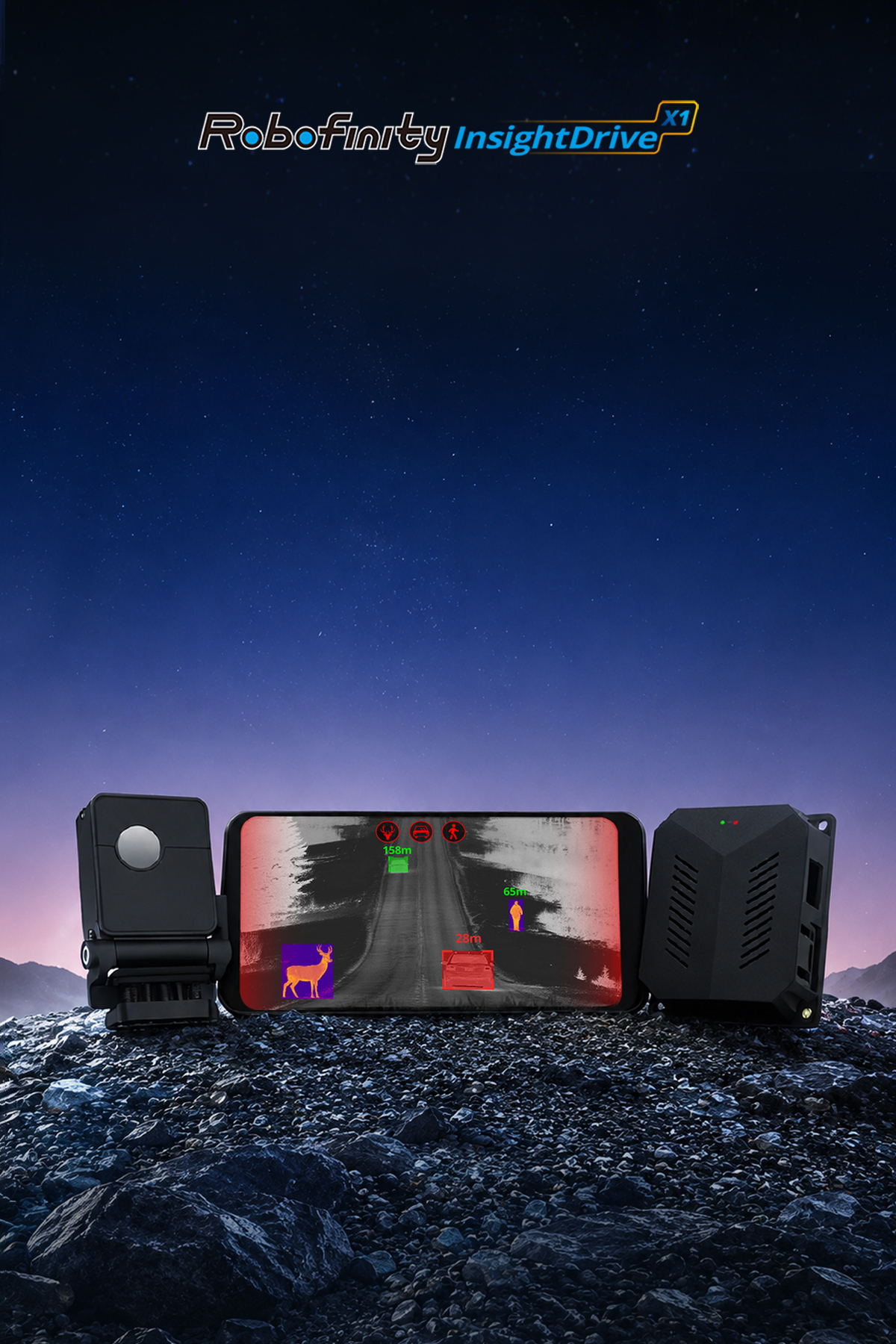
Next, the processed image is shown on a screen inside the car, often on the dashboard or center display. Some systems outline pedestrians, animals, or other detected objects. Others present a grayscale or high-contrast image that makes shapes easier to interpret.
In more advanced driver-assistance systems, the software may also issue alerts if it detects a potential hazard in the vehicle’s path. That alert can help the driver pay closer attention, especially on dark roads where depth perception and peripheral awareness are limited.
The important point is that the system is not simply “seeing in the dark.” It is collecting sensor data, processing it, and translating it into a visual format that is meant to be easier for a person to read quickly. That design is what gives car night vision technology its practical value in real driving.
When the road is flat and empty, the system may seem modest. When a pedestrian steps from a shadowed sidewalk, or a deer appears near the edge of the lane, the additional seconds of notice can matter far more. The technology does not change the laws of physics, but it can change the timing of what the driver knows.
Why night vision can help in real driving
Night driving creates several challenges that daytime driving does not. Headlights only illuminate part of the road ahead, and their reach depends on road shape, traffic, weather, and the angle of the vehicle. Dark clothing, unlit shoulders, and animals near the road can make hazards difficult to spot in time.
A car night vision technology system can help in situations such as:
- Rural roads with little or no street lighting
- Highway driving at night
- Foggy or misty conditions
- Tree-lined roads with deep shadows
- Areas where pedestrians or animals may enter the road unexpectedly
In these environments, the system may improve driving visibility by highlighting objects that are otherwise hard to separate from the background.
On routes where reaction time matters, car night vision technology can make the difference between seeing a hazard early and noticing it only at the last moment. That is especially relevant for drivers who regularly travel outside brightly lit urban corridors, where the visual load is lower and the road environment is more predictable.
There is also a practical comfort benefit. Drivers often tense up at night because they know visibility is reduced. A system that presents more information can lower some of that strain, which may help the driver stay more focused on the road instead of scanning anxiously into the dark. That does not reduce the need for caution, but it can make driving feel more controlled.
What drivers actually see on the display
The display is usually not a full replacement for a windshield view. Instead, it gives the driver another source of information. Depending on the system, the screen may show:
- A thermal silhouette of heat-emitting objects
- A grayscale image with stronger contrast
- Highlighted warnings around detected hazards
- A forward-looking view that extends beyond headlight reach
This matters because night vision is useful only if the driver can understand the image quickly. Good systems keep the display clear enough to support fast decision-making without creating confusion.
What a driver sees can also vary by speed and road geometry. On a straight highway, the display may be calm and sparse. On a winding rural road, it may show more frequent contrast changes as terrain, trees, guardrails, and roadside movement enter the field of view. That variation is normal and is part of why car night vision technology should be learned before relying on it during a difficult drive.
For a broader explanation of the technology behind the display, see the National Highway Traffic Safety Administration’s overview of vehicle safety and driver assistance technologies.
It is also worth noting that the display should support, not compete with, the driver’s attention. If the screen demands too much effort to interpret, the benefit drops quickly. The best implementations keep the imagery simple, the alerts restrained, and the information easy to process at a glance.
What night vision can and cannot do
A night vision system can improve awareness, but it has limits.
It may detect a pedestrian before headlights fully illuminate them. It may also help a driver notice an animal near the road edge or a vehicle stopped farther ahead in darkness. But it cannot predict every movement or react for the driver. It also does not eliminate the need to slow down, scan the road, and maintain a safe following distance.
Poor visibility can affect camera performance too. Heavy rain, dense fog, snow, dirt on sensors, and road spray may reduce clarity. That is why this technology works best as part of a broader safety approach rather than as a stand-alone solution.
In practice, car night vision technology is most useful when the driver treats it as an aid, not as a substitute for judgment. That means keeping speed appropriate for the conditions, watching the shoulder lines, and staying alert for anything that could move into the travel lane.
It also means understanding the system’s blind spots. Some objects may be partially hidden by barriers, foliage, curves, or other vehicles. A clean sensor and a realistic expectation are both essential. The system can improve what you know, but it cannot make the road fully transparent.
How it fits with other safety features
Night vision is often discussed alongside other vehicle safety technology such as automatic emergency braking, lane departure warning, and forward collision warning. Those systems use different methods, but they can complement one another.
For example, night vision may help identify a hazard sooner, while another ADAS feature may help warn the driver or respond if the situation becomes urgent. Together, they can support better road awareness in difficult conditions. Still, none of these systems replace careful driving.
For drivers who frequently travel after dark, especially on rural roads or in low-light environments, a vehicle thermal imaging system can be considered as an additional driver-assistance upgrade to support awareness of pedestrians, animals, vehicles, and obstacles ahead.
If you want a practical buying comparison, Best Night Vision Camera for Car: Drive Safely in the Dark explains how thermal and infrared setups differ in real-world use.
It helps to think of these tools as layers. Headlights provide direct illumination. Warning systems add alerts. Night vision adds detection support. Used together, those layers can reduce how much a driver has to depend on a single source of information, which is helpful when conditions get complicated.
Who benefits most from night vision
Night vision systems can be especially useful for drivers who often face poor-visibility conditions. That includes commuters who drive before sunrise or after sunset, families traveling on dark roads, and drivers who spend time in areas with wildlife crossings or limited street lighting.
They can also be helpful for older drivers who want extra support with nighttime road awareness, or for anyone who wants a clearer forward view when visibility is limited. The value is not in replacing attention, but in giving the driver more information sooner.
Drivers who are focused on pedestrian awareness may also want to read How Far Can a Car Thermal Camera Detect Pedestrians? for a more specific look at detection range.
For many of these drivers, car night vision technology is most valuable on roads where the unexpected can appear without much warning. That is especially true on routes with frequent crossings, low ambient light, or long stretches where the shoulder blends into the background.
It can also be useful for drivers who often carry passengers at night and want an additional layer of reassurance. In those cases, the system is less about novelty and more about practical confidence. The road still requires full attention, but a clearer picture can reduce uncertainty in the moments that matter most.
FAQ
Is a car night vision technology system the same as headlights?
No. Headlights illuminate the road, while night vision systems detect and display information that may be hard to see with visible light alone.
Does night vision work in all weather?
Not perfectly. Fog, rain, snow, dirt, and road spray can reduce performance, so the system should be viewed as a helper, not a guarantee.
Can night vision detect pedestrians and animals?
Many systems are designed to help identify pedestrians, animals, vehicles, or other obstacles, depending on the technology used.
Do I still need to pay attention while using it?
Yes. The system supports the driver, but safe driving habits, proper speed, and full attention remain essential.
Does car night vision technology replace defensive driving?
No. It can improve awareness, but defensive driving still matters because road conditions, weather, and other drivers can change very quickly.
Conclusion
A car night vision system works by using thermal imaging or infrared technology to make hard-to-see objects more visible in the dark. It is a practical tool for improving driving visibility, especially on rural roads, highways at night, and other low-light driving routes. Used correctly, it can add useful awareness, but it works best when paired with careful driving and the vehicle’s other safety features.
As a final takeaway, car night vision technology is best understood as a visibility assistant that helps drivers react sooner when darkness makes the road harder to read. For drivers who regularly face night hazards, that extra awareness can be the difference between a close call and a safer, calmer drive.