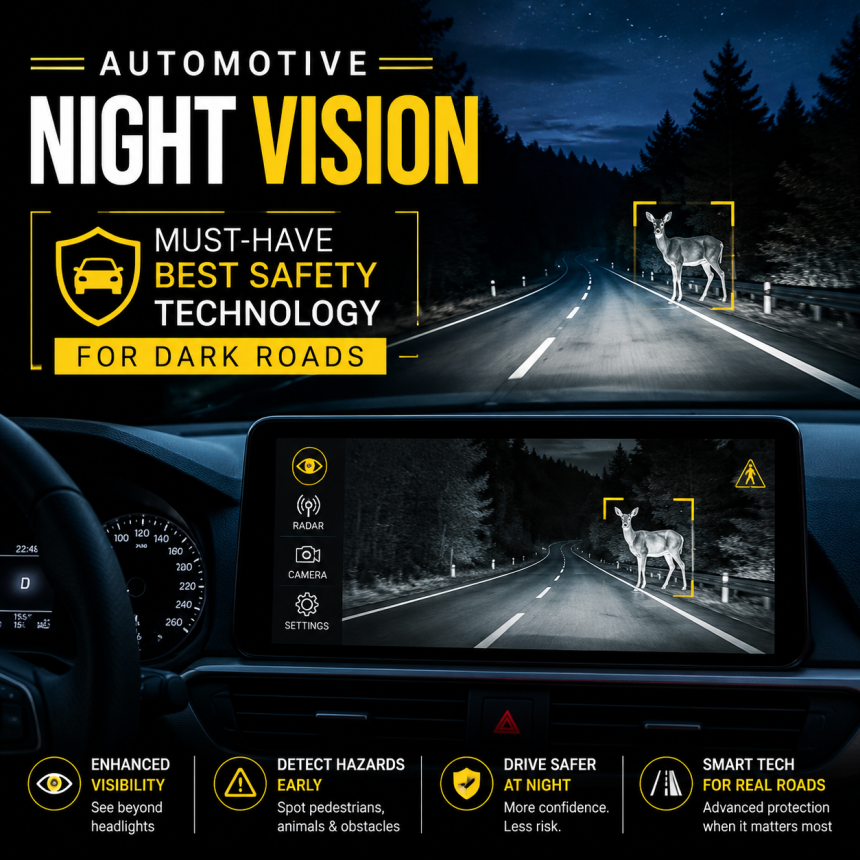
Automotive Night Vision is becoming one of the most important safety technologies for drivers who regularly travel after dark, especially on rural highways, poorly lit streets, and roads where hazards can appear without warning. While headlights help illuminate the path ahead, they often do not provide enough time to react to pedestrians, animals, stalled vehicles, or objects hidden beyond the beam. That is where this technology makes a meaningful difference. By helping drivers see farther and clearer in low-light conditions, it adds an extra layer of awareness that can reduce risk and improve confidence behind the wheel.
Table of Contents
What Automotive Night Vision Does
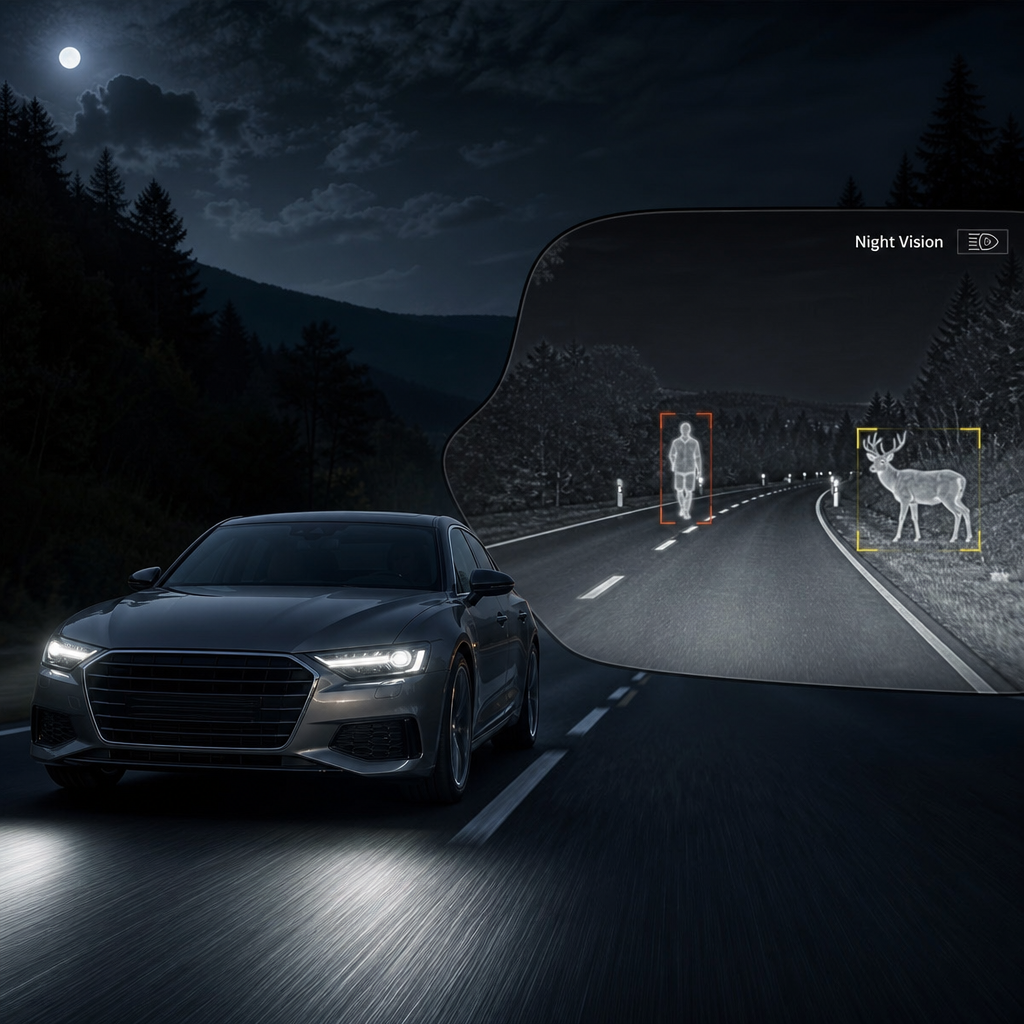
Automotive Night Vision systems are designed to detect objects in the dark that may not be visible through standard headlights or even through the human eye. Depending on the system, they may use infrared cameras, thermal imaging, or a combination of sensors to identify warm bodies, movement, and obstacles ahead of the vehicle.
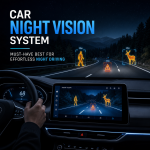
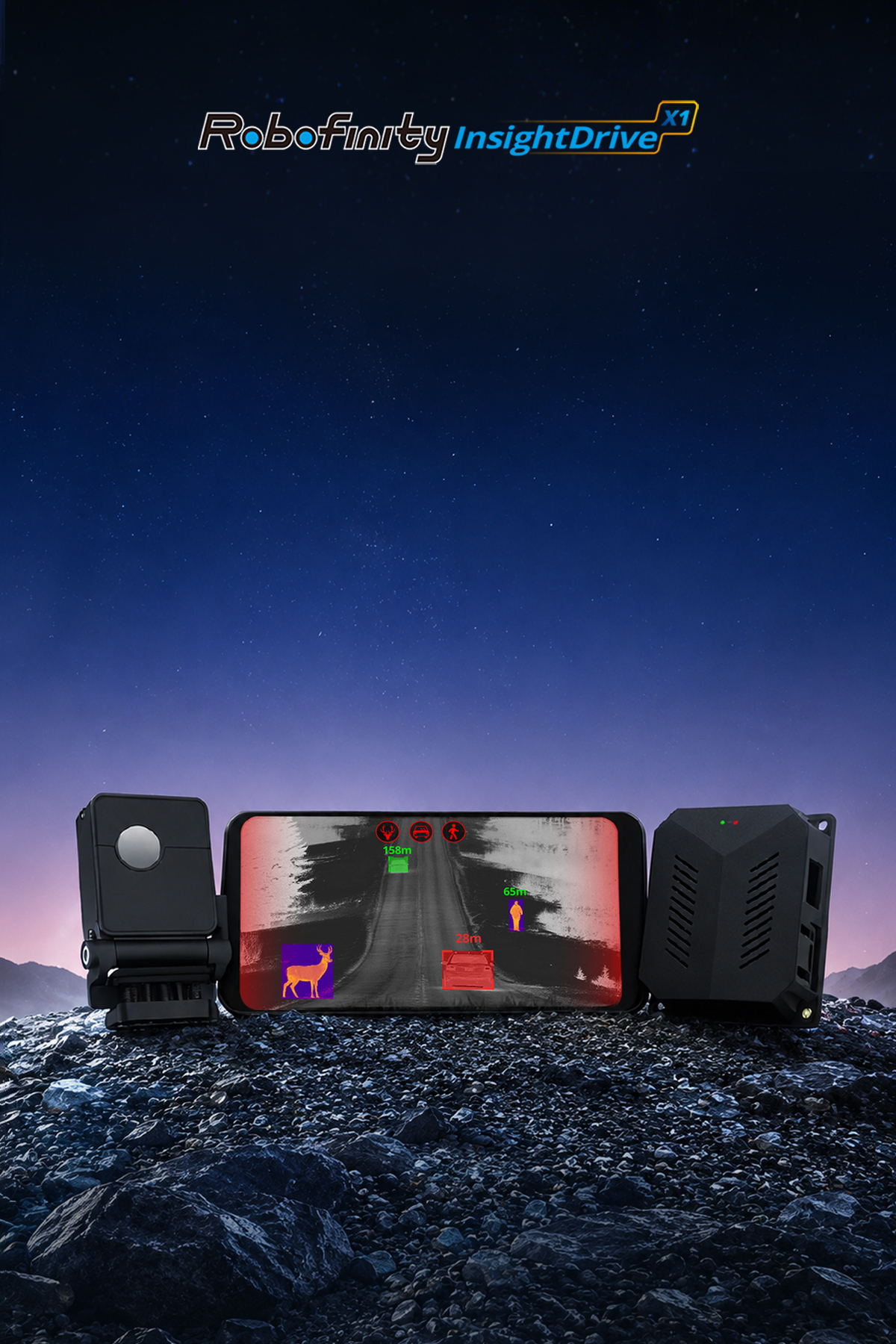
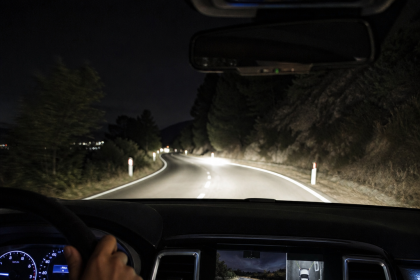
The information captured by the system is usually displayed on a screen in the dashboard or instrument cluster. In some vehicles, it can also be projected through the head-up display. This gives the driver a clearer picture of what lies beyond the immediate reach of the headlights.
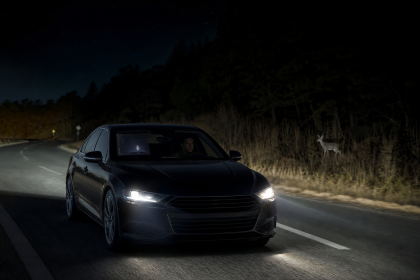
Unlike simple high-beam lighting, night vision does not rely on brightness alone. It can detect heat signatures or reflected infrared light, which means it may reveal pedestrians in dark clothing, deer on the roadside, or cyclists moving in unlit areas before they are visible to the naked eye.
For drivers comparing different systems, it can help to review how thermal imaging camera for car technology differs from infrared-based options. In many cases, that comparison makes the strengths of Automotive Night Vision easier to understand.
Why It Matters on Dark Roads
Driving at night comes with unique dangers. Visibility drops, depth perception changes, and fatigue becomes more likely. Road signs can be harder to read, lane markers may be faded, and unexpected obstacles can emerge from shadows too late for safe braking.
This is especially true on roads without streetlights. A driver may only see what is illuminated directly in front of the car, leaving very little reaction time if someone steps into the lane or an animal crosses suddenly. Automotive night vision helps extend awareness beyond headlight range, giving drivers more time to slow down, steer, or stop.
For many drivers, the technology is not just a convenience. It can be a genuine safety advantage in areas where nighttime collisions are more likely. It is particularly valuable for people who commute at dawn or dusk, live in suburban or rural areas, or travel frequently on unfamiliar roads.
Real-world crash risk is one reason researchers and safety groups continue to study night-driving hazards. For broader context, the National Highway Traffic Safety Administration vehicle safety technology resource explains how active safety systems can help reduce collisions. Automotive Night Vision fits naturally into that wider safety picture.
How Automotive Night Vision Works
There are two main types of night vision systems used in vehicles:
Infrared night vision
Infrared systems use invisible light and a camera to detect objects ahead. The system may be active or passive, depending on the design. Active infrared systems emit infrared light and capture the reflected image, while passive systems detect thermal energy naturally produced by people, animals, and engines.
These systems often produce a monochrome image on the display, showing contrast rather than color. This helps drivers identify shapes and motion in the dark, even when visibility is limited.
Thermal imaging
Thermal imaging picks up heat signatures. Warm objects stand out more clearly than the cooler background, making people and animals easier to spot. This can be especially useful in foggy, smoky, or completely dark conditions where ordinary headlights struggle.
Thermal systems are effective because they do not depend on visible light. Instead, they detect the temperature difference between the hazard and its surroundings. That makes them useful in situations where a pedestrian wearing dark clothing would otherwise blend into the road. In practice, Automotive Night Vision can feel much more intuitive when the display makes those heat differences easy to read.
Some buyers also compare these systems with a thermal night vision setup because the display style and detection behavior can feel different in real driving.
Key Safety Benefits
The biggest advantage of automotive night vision is earlier hazard detection. When drivers can see farther down the road, they have more time to respond to changing conditions.
Some of the most important benefits include:
- Better detection of pedestrians in low light
- Improved awareness of animals crossing the road
- Greater visibility on unlit roads and highways
- More confidence during night driving
- Additional support in poor weather or glare conditions
Another major benefit is reduced driver stress. Night driving can be tiring, especially when visibility is poor and the brain must constantly scan for movement. A night vision system can reduce some of that strain by presenting hazards more clearly and directly.
In vehicles equipped with alerts, the system may also notify the driver when a person or animal is detected. This added warning can be especially useful in preventing last-second reactions. That is one reason Automotive Night Vision continues to appeal to safety-focused drivers.
For drivers in wildlife-heavy areas, pairing these insights with a deer collision survival guide can help build safer nighttime habits.
Limitations to Keep in Mind
Even though automotive night vision is highly useful, it is not a replacement for careful driving. Drivers should never rely on the system alone. It is an assistive tool, not an autonomous safety guarantee.
There are a few limitations to understand. For example, some systems may struggle with:
- Extremely heavy rain, snow, or fog
- Objects that do not produce much heat
- Curves or hills that block the camera’s view
- Dirty, blocked, or damaged sensors
- Screen distraction if the driver focuses too much on the display
The technology works best when it complements good driving habits. That means maintaining a safe speed, staying alert, using proper lighting, and scanning the road continuously.
For a deeper look at the broader category, see how thermal imaging can improve emergency safety beyond normal nighttime visibility. Automotive Night Vision is strongest when it works as part of a layered safety approach.
Who Can Benefit Most
While night vision technology can help nearly any driver, it is especially valuable for certain groups.
People who drive frequently in rural areas often face more wildlife crossings and fewer streetlights. Long-distance drivers and highway commuters may also encounter dark stretches where hazards appear suddenly. Older drivers, whose night vision may naturally decline with age, can benefit from the additional visual support. Families with teen drivers may also appreciate the extra layer of safety during nighttime travel.
Luxury vehicles were once the main place to find this feature, but more automakers are now offering it in higher trim levels or as part of advanced safety packages. As the technology becomes more common, its role in mainstream vehicle safety is likely to grow. Automotive Night Vision is no longer just a niche feature for premium cars.
How It Fits into Modern Driver Assistance
Automotive Night Vision works best when combined with other driver-assistance technologies. Features like automatic emergency braking, pedestrian detection, lane keeping assist, adaptive headlights, and forward collision warning can all help build a stronger safety system.
Together, these tools create a more complete picture of the road. Night vision provides early detection, while other systems help interpret risk and respond when necessary. This layered approach can be especially helpful in modern vehicles that are designed to reduce human error, one of the leading causes of nighttime crashes.
If you are researching a wider safety package, the vehicle mounted thermal camera guide explains the most useful features to look for in a road-ready setup.
The Future of Night Driving Safety
As vehicle technology continues to advance, night vision systems are likely to become smarter, sharper, and more integrated with other safety tools. Improved image processing, better sensor fusion, and artificial intelligence may allow future systems to identify hazards faster and present information more clearly.
We may also see more vehicles using night vision data to automatically trigger warnings or assistive responses. In the future, systems could become more predictive, helping drivers not only see hazards but understand what those hazards are likely to do next.
This evolution could make nighttime driving far safer than it is today, especially on roads that are difficult to navigate after sunset. Automotive Night Vision may eventually become as expected as backup cameras are today.
Final Thoughts
Automotive Night Vision is more than a premium feature. It is a practical safety technology that addresses one of the most challenging aspects of driving: seeing clearly in the dark. By improving visibility beyond the range of headlights, it gives drivers more time to react to pedestrians, animals, and unexpected obstacles.
For anyone who regularly drives on dark roads, the value is clear. Better awareness means better decisions, and better decisions can prevent serious accidents. As more vehicles adopt this technology, it is likely to become a must-have safety feature for nighttime driving rather than just an added luxury.
In short, Automotive Night Vision can make night travel calmer, smarter, and safer when it is used as part of a complete driving strategy. That is why Automotive Night Vision continues to stand out as a practical upgrade for modern drivers.