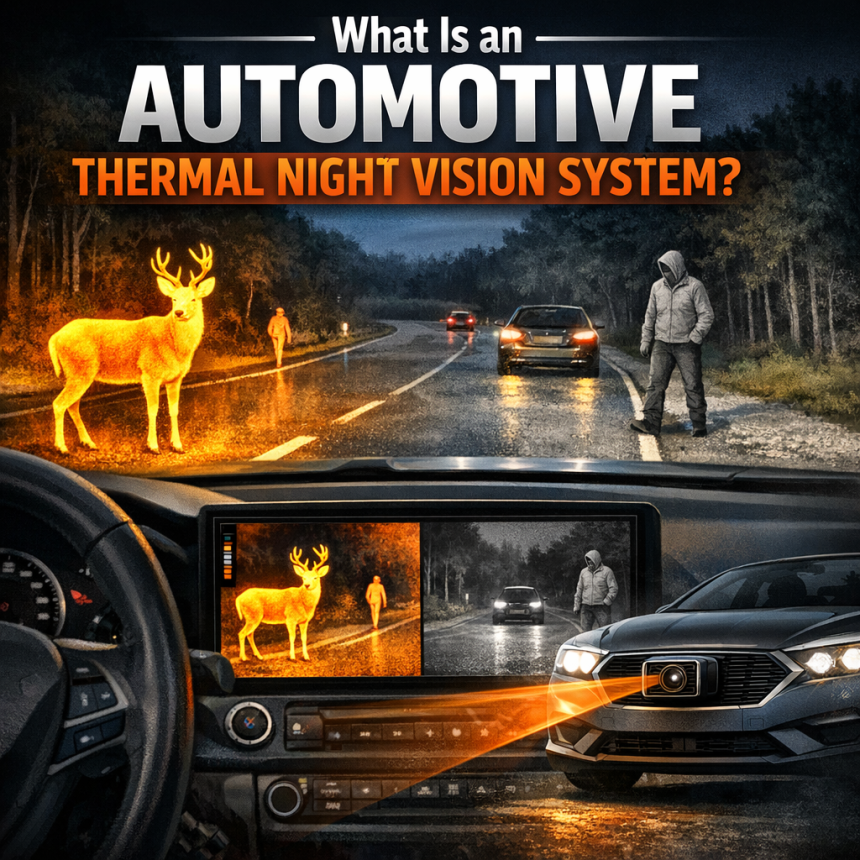
An automotive thermal night vision system helps drivers see heat signatures in darkness and low-visibility conditions, giving them more time to notice pedestrians, animals, and other hazards. By detecting infrared energy instead of relying on visible light, the technology can improve awareness when headlights alone are not enough.
- How an Automotive Thermal Night Vision System Works
- Why Thermal Night Vision Matters
- Common Features Found in Modern Systems
- How the System Is Installed and Integrated
- Limitations of Thermal Night Vision
- Where This Technology Is Found
- What to Look for When Comparing Systems
- Detection Range
- Image Clarity and Contrast
- Alert Quality
- Compatibility with Your Driving Habits
- Related Safety Features
- The Future of Automotive Thermal Night Vision
- Conclusion
Table of Contents
- How an Automotive Thermal Night Vision System Works
- Why Thermal Night Vision Matters
- Common Features Found in Modern Systems
- How the System Is Installed and Integrated
- Limitations of Thermal Night Vision
- Where This Technology Is Found
- What to Look for When Comparing Systems
- The Future of Automotive Thermal Night Vision
- Conclusion
How an Automotive Thermal Night Vision System Works
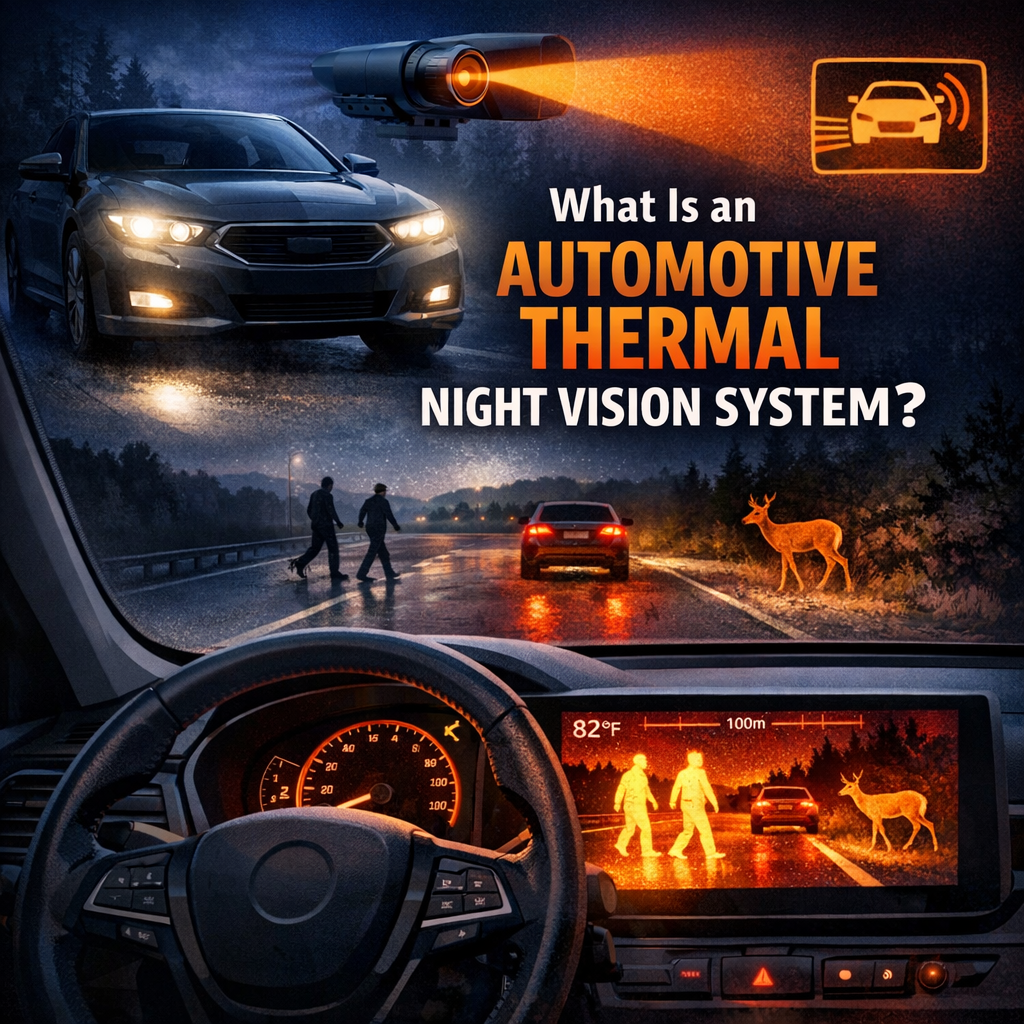
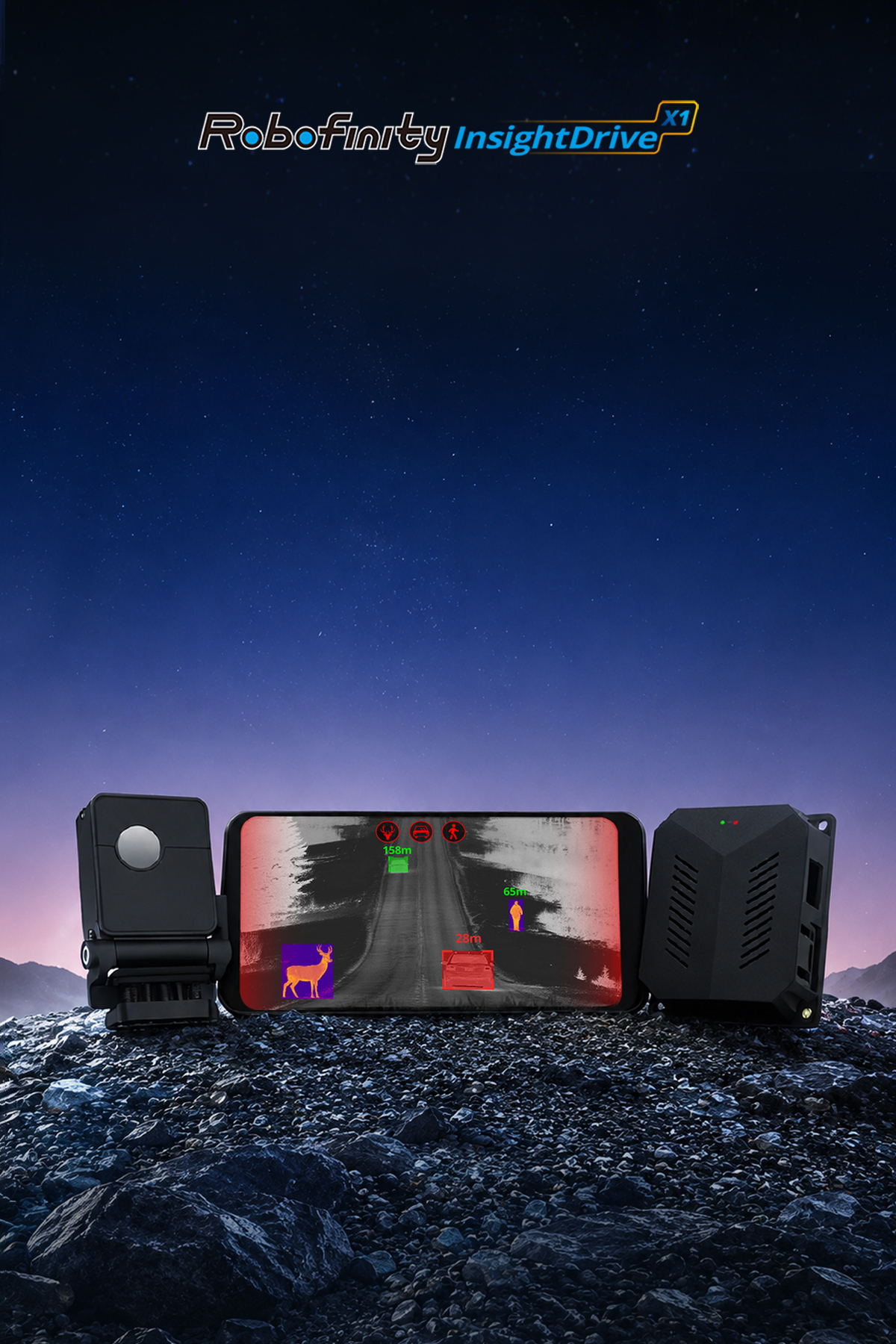
At the core of an automotive thermal night vision system is a thermal imaging camera mounted on the vehicle, usually near the front grille or behind the windshield, depending on the design. This camera senses infrared radiation emitted by warm objects such as people, animals, and engines. The system then converts those thermal readings into a visual display that appears on the dashboard or center screen.
Because the technology detects heat, it works in darkness, fog, light rain, and some other conditions where visible light may be limited. It can recognize a person walking across the road or a deer standing near the shoulder long before a driver might spot them with regular headlights alone. The result is a clearer picture of what is ahead, especially on rural roads and unlit highways.
The sensing process usually begins with a lens that focuses infrared energy onto a thermal sensor array. That array measures differences in temperature across the scene and creates a heat-based image. Software then turns that data into a display the driver can interpret quickly, often using color contrast or brightness contrast to emphasize people, animals, and vehicles.
In many systems, the image is refreshed continuously so the driver can see movement in real time. That matters because a hazard that appears stationary from a distance may suddenly become dangerous if it moves into the lane. With heat-based imaging, the driver can often identify that change earlier than with ordinary vision alone.
Thermal Imaging vs. Standard Cameras
A standard camera captures visible light, which means it still depends on ambient lighting or headlights to produce a clear image. A thermal camera, on the other hand, captures heat signatures. This difference is what makes the system especially useful at night.
For example, a pedestrian wearing dark clothing on an unlit road may blend into the surroundings for a conventional camera. An automotive thermal night vision system will still detect the body heat and highlight the person in the display. This can give drivers additional reaction time in dangerous situations.
It is also useful to remember that thermal imaging is not the same as infrared illumination. Some night-vision systems use near-infrared light to brighten a scene, while thermal systems read emitted heat. If you want to compare those approaches in more detail, see this guide on Thermal Imaging Camera for Car: How to Choose Over Infrared for Night Safety.
Display and Alerts
The thermal image is usually shown on a digital instrument cluster or infotainment screen. In some vehicles, the system also provides warnings if it detects a potentially hazardous object in the car’s path. Advanced versions may use object recognition software to distinguish between a person, animal, or vehicle and alert the driver accordingly.
This combination of visual display and warning features helps the system function as more than just a passive imaging tool. It becomes part of the vehicle’s overall safety support network. In practical terms, that means the driver does not need to stare at the screen constantly to get value from it; a clear alert can be enough to direct attention to a developing hazard.
That is one reason interest in thermal night vision has increased among drivers who want a better understanding of what lies beyond the reach of headlights. For a related overview of how heat-based sensing improves road awareness, see Thermal Imaging Obstacle Detection Prevents 95% Of Collisions.
Why Thermal Night Vision Matters
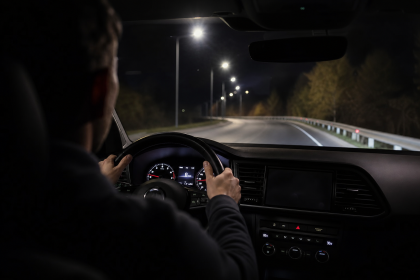
Night driving contributes to a significant share of traffic fatalities and serious accidents. Reduced visibility is one of the main reasons drivers fail to react quickly enough to hazards. An automotive thermal night vision system can extend a driver’s awareness beyond the range of headlights, which may only illuminate a fraction of the road ahead.
That extra awareness matters most on roads where surprises happen fast. A curve in a rural highway, a blind corner, or a stretch without street lighting can reduce the amount of time a driver has to respond. When the system spots heat on the roadside or in the lane ahead, it can help bridge that gap and reduce uncertainty.
Better Detection of Pedestrians and Animals
One of the most important benefits is the early detection of living things. Pedestrians can step into the road unexpectedly, especially in suburban or rural areas with limited street lighting. Large animals like deer or moose can also present serious hazards at night, often appearing too late for a driver to brake safely.
Thermal imaging can detect these risks earlier than traditional lighting systems because body heat stands out clearly against cooler surroundings. This gives drivers more time to slow down, steer carefully, or prepare to stop. If you want a closer look at pedestrian visibility at range, read How Far Can a Car Thermal Camera Detect Pedestrians?.
The advantage is not only distance. Heat signatures can also help a driver notice motion sooner, especially when an object is partially hidden by darkness, roadside clutter, or poor contrast. In real driving conditions, a few extra seconds can make the difference between a safe slowdown and a sudden emergency stop.
Improved Confidence in Poor Conditions
Night vision systems are also useful in fog, smoke, and light precipitation, where glare can make it harder to see road edges or distant objects. While they are not a replacement for safe driving habits, they can provide an extra layer of awareness when visibility is compromised.
Drivers who frequently travel on rural roads, unlit highways, or unfamiliar routes may find the added visibility especially reassuring. An automotive thermal night vision system does not remove risk, but it can reduce uncertainty in situations where visibility changes quickly.
For many drivers, the appeal of an automotive thermal night vision system comes down to earlier reaction time and fewer surprises after dark. Even a few extra seconds can matter when a person or animal appears suddenly in the lane ahead.
The technology can also reduce eye strain in certain situations because the driver spends less effort trying to parse low-contrast shapes in the dark. Instead of depending only on ambient light, the system gives a more direct view of warm objects in the environment. That can help a driver stay calmer and more deliberate when traveling through unfamiliar areas late at night.
Common Features Found in Modern Systems
Automotive thermal night vision systems vary by manufacturer and vehicle class, but many share a similar set of capabilities. Some are standalone tools, while others are integrated into larger driver assistance packages.
As these systems have evolved, they have moved from being simple display tools to more intelligent safety aids. That does not mean every version works the same way, but most modern setups focus on clarity, early detection, and minimal distraction.
Object Detection
The system may identify warm objects in the road environment and outline them on the display. This can help draw attention to hazards that might otherwise be overlooked.
In better implementations, the object outline is supported by a stable image that remains readable as the vehicle moves. A good display should make it easy to understand where the hazard is, how fast it is approaching, and whether it is on the road or just near the shoulder.
Pedestrian Recognition
More advanced systems can distinguish people from other heat sources. In some vehicles, the system highlights a pedestrian’s shape or triggers a visual warning if someone enters a dangerous area.
That kind of recognition is especially useful in cities, neighborhoods, and mixed-use roads where people may cross unexpectedly. It can also be helpful near schools, parking lots, and construction zones after dark. When the system properly identifies a person, the driver can react with more confidence instead of guessing what the thermal image is showing.
Animal Detection
Many thermal systems are particularly valuable in wildlife-prone regions. They can spot animals near the roadway earlier than the human eye, reducing the chance of a collision.
Animals are often harder to predict than people because they may freeze, dart, or move in groups. A thermal display can make them easier to notice even when they are partially outside the lane. That is one reason people who drive across rural areas often see thermal night vision as a real safety improvement rather than a luxury feature.
Integration with Safety Systems
Thermal night vision may work alongside automatic emergency braking, forward collision warning, and other driver assistance technologies. While the thermal system itself does not usually brake the car, it can contribute data that helps the broader safety suite respond more effectively.
That is why many buyers compare it with other nighttime visibility tools, including Car Night Vision System: 7 Best Safety Benefits. In practice, the best automotive thermal night vision system is often the one that fits smoothly into a vehicle’s existing safety stack.
When comparing packages, it helps to look at screen clarity, detection range, alert behavior, and how well the display fits into normal driving routines. Those details often matter as much as the hardware itself in a real automotive thermal night vision system.
In a well-designed setup, the driver does not need to second-guess what the system is trying to show. Clear highlighting, sensible warning thresholds, and a display that is easy to read at a glance all contribute to better use in daily driving.
How the System Is Installed and Integrated
Most factory-installed systems are built into the vehicle’s electronics from the start, so the driver sees the thermal feed on a dedicated display or part of the central screen. In that setup, the camera, software, and warning logic are calibrated together to work as a single unit.
Some aftermarket or specialty systems can also be added to certain vehicles, but installation quality matters. The camera needs a proper viewing angle, the wiring must be reliable, and the display should be positioned where it does not distract the driver. If the system is poorly mounted or calibrated, it can be harder to trust and less useful in real conditions.
Integration also affects usability. For example, a system that turns on automatically when the headlights are activated may feel more natural than one that requires extra menu steps every time the driver wants to use it. Ease of use is important because the best safety technology is the kind people actually keep on and use consistently.
Vehicle design plays a big role as well. A higher-mounted camera may provide a broader view, while a lower-mounted camera can capture road-level hazards more directly. Manufacturers balance those trade-offs based on the shape of the vehicle, the intended market, and the rest of the driver assistance package.
Limitations of Thermal Night Vision
Although the technology is impressive, it is not perfect. Drivers should understand what the system can and cannot do.
Not a Replacement for Attentive Driving
A thermal camera enhances visibility, but it does not eliminate the need for careful driving. Drivers still need to watch the road, obey speed limits, and stay alert for hazards outside the camera’s field of view.
An automotive thermal night vision system should be treated as a support tool, not a substitute for judgment. Safe speed, proper following distance, and focused attention remain essential.
It is also important not to assume that every obstacle will appear with the same clarity. Road debris, low-heat objects, and unusual surface conditions may be harder to interpret than a person or animal. The driver still has to make final decisions based on the whole driving environment.
Limited Detail in Some Cases
Thermal imaging is excellent for detecting heat, but it may not show fine details such as clothing color, road signs, or lane markings. It is better suited for identifying living beings and warm mechanical objects than reading the environment like a standard camera.
That means a driver may still need conventional headlights and mirrors to understand lane position, traffic flow, and roadside conditions. Thermal imaging adds a different kind of information rather than replacing every other visual aid. In other words, it answers one important question very well: what is warm and moving ahead of me?
Weather and Surface Conditions
Although thermal systems can perform well in low light, their effectiveness can be influenced by environmental conditions. Extremely hot pavement, for example, may reduce contrast between objects and the background. Heavy rain or dense obstructions can also affect performance.
For readers comparing thermal and infrared approaches, this guide explains the trade-offs in more detail: Thermal Imaging Camera for Car: How to Choose Over Infrared for Night Safety.
The practical takeaway is simple: an automotive thermal night vision system can improve hazard detection, but it works best as part of a careful driving strategy, not as a guarantee.
Another limitation is that the system is usually strongest when objects have a clear temperature difference from the surroundings. A warm pedestrian on a cold night may stand out very clearly, while a surface that has absorbed heat during the day can reduce contrast. Understanding those conditions helps set realistic expectations for how the technology performs in everyday use.
Where This Technology Is Found
Thermal night vision systems are often offered in luxury SUVs, sedans, and performance vehicles. Automakers tend to include them in higher trim levels or advanced safety packages because of the added cost of the infrared hardware and software.
As the technology becomes more refined and less expensive to produce, it may eventually appear in a wider range of vehicles. Some manufacturers view it as a valuable premium safety feature, especially for drivers who regularly travel at night. In many cases, an automotive thermal night vision system is part of a broader strategy to reduce nighttime driver workload and improve hazard detection.
That is also why interest keeps growing among buyers researching safer commuting, touring, and rural driving setups. A well-designed automotive thermal night vision system can add confidence without changing how a driver normally handles the road.
You will also see related technology discussed alongside other vehicle safety features and nighttime visibility tools. Some drivers are simply curious about whether a system is worth the added cost, while others are comparing it to other forms of advanced driver assistance. If you are exploring the broader category, Automotive Night Vision: 7 Powerful Safety Benefits is a useful companion read.
What to Look for When Comparing Systems
If you are evaluating an automotive thermal night vision setup, the most important question is not just whether it works, but how well it works in the conditions you actually drive in. A system that looks impressive in a brochure may be less useful if the image is hard to read, the alerts are too frequent, or the interface feels distracting.
Detection Range
Range matters because the value of night vision increases when the driver gets more time to react. A system that detects hazards farther ahead can be especially useful on highways and rural roads where speeds are higher and stopping distance is longer.
However, range should be considered alongside clarity. A very distant heat signature is not always helpful if the image is too vague to interpret. The best systems balance distance with usable detail.
Image Clarity and Contrast
Clear contrast makes the display easier to understand in a glance. Good thermal systems emphasize the difference between living objects and the background without overwhelming the driver with visual noise.
Look for a display that remains readable in different lighting conditions and does not require too much adjustment. A clean interface can help the driver trust the system more quickly, which is important during sudden nighttime events.
Alert Quality
Alerts should be meaningful, not excessive. If a system warns too often, drivers may ignore it. If it is too conservative, it may miss important hazards. The ideal setup gives timely warnings when something truly matters and remains quiet during routine driving.
That balance is one reason factory-integrated systems often perform better than poorly tuned aftermarket solutions. The software calibration behind the warning logic is just as important as the sensor itself.
Compatibility with Your Driving Habits
The most useful system is the one that fits your routine. If you often drive on rural roads, a longer-range detection setup may be more valuable. If you drive in mixed traffic near pedestrians, object recognition and clear alerts may matter more.
Some buyers want the technology because they want a premium feature. Others want it because they regularly travel in conditions where standard headlights are not enough. In both cases, the right choice depends on how the system supports actual driving rather than theoretical use.
Related Safety Features
It can help to think about thermal night vision as one part of a larger safety package. Features like forward collision warning, pedestrian detection, and automatic emergency braking can work together to reduce risk. For more background on how thermal sensing fits into a broader vehicle safety approach, see Vehicle Mounted Thermal Camera: 7 Best Features.
That combination is one of the reasons the automotive thermal night vision system continues to attract attention from automakers and safety-focused drivers alike. As detection logic improves, these systems may become easier to trust and more helpful in everyday driving.
The Future of Automotive Thermal Night Vision
The future of this technology looks promising. As vehicle sensors, software, and machine learning improve, thermal imaging may become even more accurate and responsive. Future systems could better classify objects, reduce false warnings, and integrate more seamlessly with autonomous driving features.
In the long term, thermal night vision may play a larger role in helping vehicles understand their surroundings after dark. Combined with radar, lidar, and camera-based systems, it could become a key component in safer, more intelligent transportation. For a primary reference on vehicle-safety guidance, the National Highway Traffic Safety Administration remains a useful source for driver-assistance and road-safety information.
That broader evolution is one reason the automotive thermal night vision system continues to attract attention from automakers and safety-focused drivers alike. As detection logic improves, these systems may become easier to trust and more helpful in everyday driving.
Looking ahead, the most useful versions of an automotive thermal night vision system will likely combine strong range, clear alerts, and minimal distraction. That balance is what turns advanced sensing into a practical driving aid.
There is also potential for better integration with navigation and route planning. If a vehicle can anticipate dark rural roads, frequent wildlife crossings, or especially low-visibility stretches, thermal alerts may become part of a more intelligent driving experience. That kind of context-aware assistance could make the technology feel less like a novelty and more like a dependable companion on long night drives.
Conclusion
An automotive thermal night vision system uses infrared sensing to help drivers see heat signatures in the dark or in low-visibility conditions. By detecting pedestrians, animals, and other hazards earlier than normal headlights can, it adds an important layer of safety and awareness. While it is not a substitute for careful driving, it can make nighttime travel less stressful and potentially far safer.
As automotive technology continues to advance, thermal night vision stands out as one of the clearest examples of how innovation can directly improve real-world driving. For anyone who often drives after dark, especially on rural or poorly lit roads, an automotive thermal night vision system represents a powerful tool in the ongoing effort to reduce nighttime accidents. In the right vehicle, it can be a meaningful safety upgrade rather than just another premium feature.
For drivers comparing nighttime safety technologies, the main goal is simple: see sooner, react sooner, and drive with more confidence. That is the practical promise of thermal night vision, and it is why the automotive thermal night vision system remains a compelling topic for modern vehicle safety.