SEO Title: Is a Thermal Night Vision System Worth It for Daily Night Commuting?
- The Short Answer: Is Thermal Night Vision Useful for a Nightly Commute?
- How Automotive Thermal Night Vision Works
- Where Thermal Night Vision Helps Most
- Unlit Rural and Suburban Roads
- Roads With Frequent Pedestrian or Cyclist Activity
- Wildlife Corridors and Animal-Collision Areas
- Glare and High-Contrast Environments
- Some Poor-Visibility Conditions
- What It Cannot Do
- It Does Not Replace Headlights
- It May Not Reveal Cold Hazards Clearly
- It Cannot Reliably Provide Every Driving Detail
- Detection Is Not the Same as Identification
- The Display Can Become a Distraction
- How It Fits Into a Daily Driving Routine
- Evaluating Whether You Need One
- What to Look for in an Aftermarket System
- Detection and Recognition Functions
- Image Smoothness and Latency
- Display Position and Night Brightness
- Camera Placement and Weather Exposure
- Compatibility and Installation Quality
- A Relevant Example of Current Technology
- Thermal Night Vision Versus Other Night-Driving Upgrades
- Headlight Maintenance and Upgrades
- Windshield, Wipers, and Mirrors
- Factory Driver-Assistance Features
- Driving-Habit Improvements
- Ownership and Maintenance Considerations
- A Practical Decision Framework
- Frequently Asked Questions
- Can thermal night vision see pedestrians beyond the headlights?
- Does a thermal camera work in complete darkness?
- Does thermal night vision work through fog, rain, and snow?
- Can an automotive thermal system detect animals?
- Is a thermal night-vision display distracting?
- Should thermal night vision come before better headlights?
- Conclusion
Meta Description: Learn when a Thermal Night Vision System helps night commuters, where it has limits, and what to consider before choosing one.
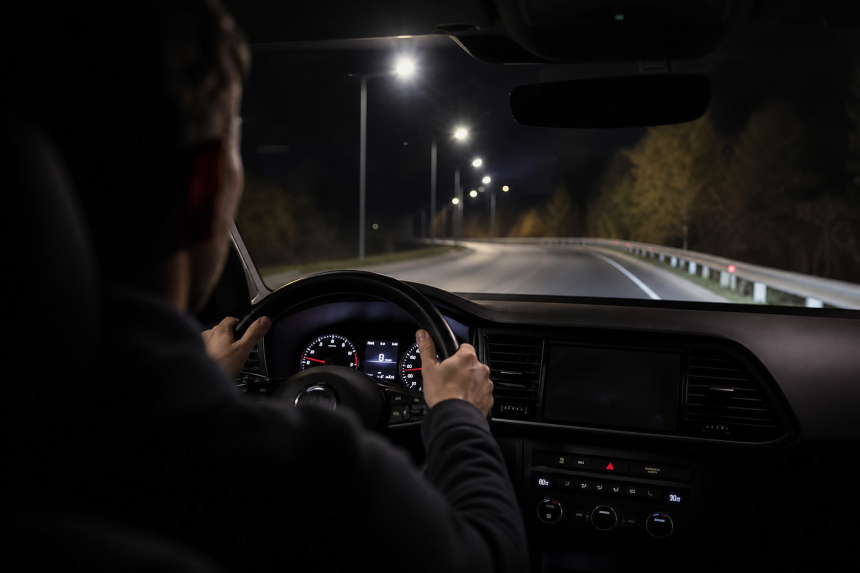
Driving the same route every night can make a commute feel predictable, but darkness changes how quickly hazards become visible. A pedestrian in dark clothing, an animal near the shoulder, or a stopped vehicle beyond the reach of the headlights may leave little time to react. A Thermal Night Vision System can help by showing heat-producing objects ahead, potentially giving the driver earlier awareness than visible light alone provides.
For daily night commuters, the technology can be genuinely useful, but its value depends on the route, weather, traffic environment, installation quality, and how well the display fits the driver’s normal scanning habits. It is an additional source of information, not a replacement for headlights, attentive driving, appropriate speed, or adequate braking distance.
The Short Answer: Is Thermal Night Vision Useful for a Nightly Commute?
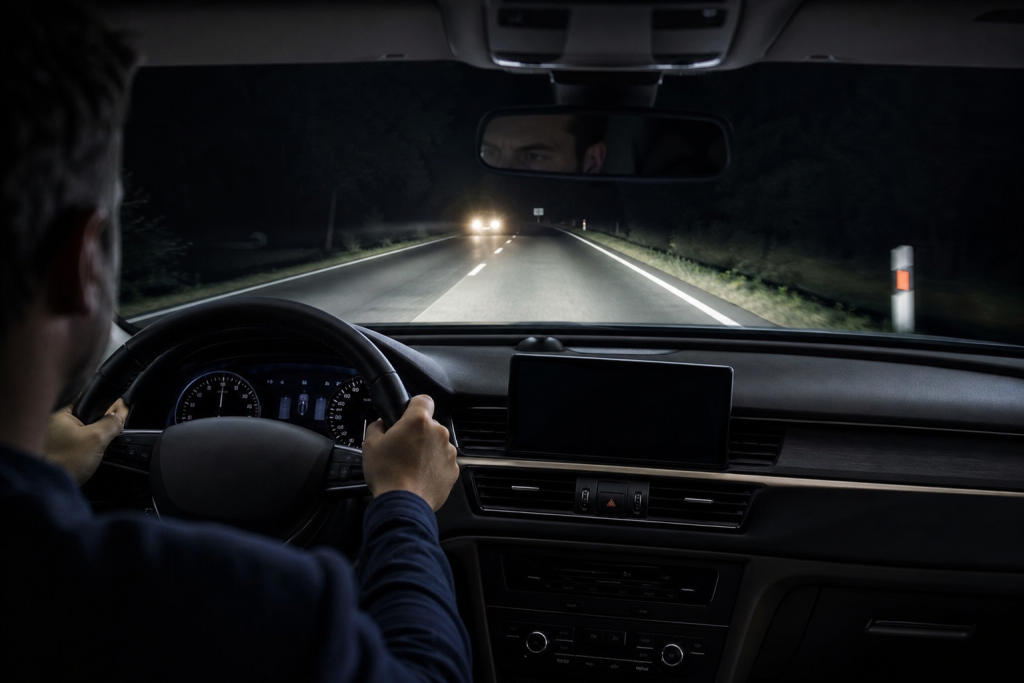
Yes, thermal night vision can be useful for regular night commuting, particularly on unlit rural roads, routes with frequent pedestrian activity, and areas where animals commonly enter the roadway. It may also support awareness when glare or limited contrast makes hazards difficult to distinguish.
The benefit is less significant when a commute takes place entirely on brightly illuminated urban streets at low speeds. In that setting, streetlights, surrounding traffic, reflective signs, and conventional vehicle safety systems may already provide substantial information.
A practical way to judge the technology is to ask whether it can address a recurring visibility problem on the route. Drivers who routinely encounter dark shoulders, sharp transitions between bright and unlit areas, wildlife, or poorly visible pedestrians are more likely to gain meaningful value than someone who only drives after sunset occasionally.
How Automotive Thermal Night Vision Works
A thermal imaging camera detects infrared energy associated with temperature differences. It converts those differences into an image that the driver can view on a dedicated screen or, in some factory systems, within the instrument cluster or head-up display.
Warm objects such as people and many animals often stand out against cooler surroundings. Vehicles and parts of the road environment can also create recognizable thermal patterns. The precise appearance varies with temperature, weather, surface material, and system processing.
Unlike a conventional camera, a thermal sensor does not depend primarily on visible light reflected from an object. This is why thermal imaging can remain useful on roads with little or no street lighting.
Thermal Imaging Versus Ordinary Night-Vision Cameras
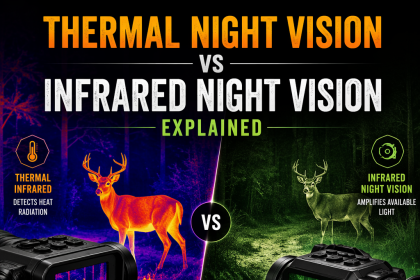
Automotive products described as “night vision” do not all use the same technology. The two broad approaches are thermal imaging and visible-light or near-infrared cameras.
A low-light camera amplifies available light or uses infrared illumination to produce an image resembling a monochrome video feed. It can show lane markings, signs, vehicle shapes, and environmental detail, but its performance may be affected by darkness, glare, and the reach of its illumination source.
A thermal system emphasizes heat differences instead of visible detail. That can make a person or animal easier to identify against a dark background, but it is generally not the right tool for reading road signs, judging traffic-signal colors, or seeing lane markings.
The technologies therefore serve different purposes. A conventional camera provides visual context; thermal imaging is particularly valuable for highlighting potential living hazards and heat-emitting objects.
Where Thermal Night Vision Helps Most
The usefulness of any driver-assistance technology is highly situational. Thermal imaging provides the greatest practical benefit when the limits of normal vision repeatedly affect the route.
Unlit Rural and Suburban Roads
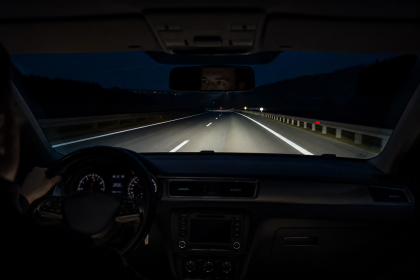
Dark rural roads are a strong use case because headlight reach defines much of the driver’s visible world. Curves, vegetation, elevation changes, and narrow shoulders can conceal hazards until the vehicle is relatively close.
Thermal imaging may reveal the heat signature of a person walking along the road or an animal near the shoulder before the object becomes visually distinct in the headlight beam. Earlier awareness does not guarantee that a hazard will enter the vehicle’s path, but it can encourage the driver to reduce speed, cover the brake, and monitor the situation.
A screen image must still be interpreted carefully. An animal standing behind a barrier, for example, may not represent an immediate threat. Thermal information should prompt attention rather than an abrupt maneuver without confirming what is happening on the road.
Roads With Frequent Pedestrian or Cyclist Activity
Pedestrians wearing dark or non-reflective clothing can be difficult to see at night, especially near crosswalks, parked vehicles, bus stops, and poorly illuminated intersections. Cyclists may also blend into a visually cluttered background if their lighting or reflective equipment is limited.
Thermal pedestrian detection may help draw attention to a human shape that is not yet obvious through the windshield. However, the driver still needs to look for the person’s location, direction, and relationship to the travel lane.
Cyclists present a more complex thermal profile because the bicycle itself may not stand out as clearly as the rider. Recognition performance can also vary with distance, obstruction, environmental temperature, and system design.
Wildlife Corridors and Animal-Collision Areas
Drivers who commute through wooded areas, farmland, or known wildlife corridors may gain more value from thermal imaging than drivers on dense urban routes. Animals can move quickly and unpredictably, and conventional headlights may not reveal them until they enter the road or turn toward the vehicle.
A thermal view can sometimes make an animal visible while it is still near the verge. That extra awareness may help the driver moderate speed and prepare to stop.
The correct response is still controlled driving. Swerving suddenly can create a more serious hazard, especially when there is oncoming traffic, a roadside drop, or another vehicle in the adjacent lane.
Glare and High-Contrast Environments
Oncoming headlights can temporarily reduce the ability to see detail beyond the approaching vehicle. Similar problems occur when moving from a brightly illuminated commercial area into a dark road or when reflections from wet pavement dominate the visual field.
Because thermal imaging does not rely on visible-light contrast in the same way as human vision or an ordinary camera, it may preserve useful information about warmer objects. It does not eliminate the effects of glare on the driver’s eyes, however, and it should not encourage looking away from the road for extended periods.
Some Poor-Visibility Conditions
Thermal imaging may support road awareness in certain conditions involving haze, light fog, rain, or snow, but its performance is not immune to weather. Water in the atmosphere can absorb and scatter infrared energy, while heavy precipitation can reduce useful range and image contrast.
It is more accurate to say that a thermal system may retain useful hazard information in some poor-visibility conditions than to claim it can “see through” all fog, rain, or snow. Severe weather still calls for lower speed, longer following distance, properly maintained lights and wipers, and, when conditions become unsafe, a suitable place to stop.
What It Cannot Do
Understanding the limitations is essential because an additional display can create misplaced confidence if the driver assumes it provides complete road vision.
It Does Not Replace Headlights
Thermal imaging is not designed to illuminate the roadway. It cannot substitute for properly aimed low beams, legal high-beam use, clean lamp lenses, or functioning adaptive-lighting features.
Headlights remain necessary for seeing lane boundaries, signs, debris, road geometry, surface damage, and objects that do not create a strong thermal contrast.
It May Not Reveal Cold Hazards Clearly
A fallen branch, tire fragment, pothole, unlit trailer, or other road debris may be near the same temperature as its surroundings. Depending on the conditions, it may not stand out clearly in a thermal image.
This is one of the most important distinctions between thermal awareness and full scene visibility. The driver must continue scanning the actual road through the windshield.
It Cannot Reliably Provide Every Driving Detail
Thermal imaging is generally unsuitable for determining traffic-light colors, reading signs, interpreting road markings, or checking whether a lane is clear. It also does not replace mirrors, shoulder checks, parking sensors, blind-spot monitoring, or a conventional camera.
Detection Is Not the Same as Identification
A bright thermal shape may indicate a person, animal, vehicle component, warm structure, or another heat source. Systems with object recognition and alerts can help classify potential hazards, but classification can still be affected by partial obstruction, distance, environmental temperature, or an unusual viewing angle.
An alert should be treated as a reason to check the road, not as an instruction to brake or steer without confirming the situation.
The Display Can Become a Distraction
A night-vision screen only helps if it can be checked briefly and naturally. A display mounted too low, too far from the forward sightline, or in a position that blocks the windshield may increase visual workload.
Brightness matters as well. A screen that is comfortable during the day can be glaring at night, reducing dark adaptation and making the road outside appear less distinct.
How It Fits Into a Daily Driving Routine
The safest way to use thermal night vision is as a secondary scan rather than a continuous viewing screen. The driver’s primary attention should remain on the road, mirrors, instruments, and surrounding traffic.
A sensible sequence is:
- Keep the main visual scan through the windshield.
- Glance briefly at the thermal display when the road environment warrants it.
- Return attention immediately to the roadway.
- Confirm any highlighted object in the real driving scene.
- Adjust speed smoothly when a possible hazard requires more time or space.
Real-time alerts can reduce the need to monitor the display continuously, but excessive or poorly calibrated warnings may cause alert fatigue. A system that frequently signals irrelevant heat sources can eventually be ignored, while a quieter system may feel more useful in routine commuting.
Drivers should learn how the image changes across their regular route. A warm exhaust, roadside equipment, sun-heated wall, or reflection from certain surfaces may look important at first. Familiarity improves interpretation, but it should never turn into overconfidence.
Evaluating Whether You Need One
A useful buying decision starts with the route, not the feature list. Consider the conditions encountered during a normal week rather than an unusual road trip.
Your Commute Is a Strong Match When:
- A meaningful portion of the route has little or no street lighting.
- Pedestrians regularly walk near the roadway after dark.
- Deer or other large animals are common near the road.
- Wet pavement and oncoming headlights frequently create glare.
- The route includes dark curves, wooded sections, or narrow shoulders.
- You drive before dawn or after dark through much of the year.
- You want an additional layer of hazard awareness and understand its limits.
It May Be a Lower Priority When:
- The route is consistently well lit.
- Most travel occurs in slow, dense city traffic.
- Night driving is infrequent.
- The vehicle’s headlights need repair, cleaning, or correct alignment.
- The display cannot be installed within an ergonomic viewing area.
- The upgrade would take priority over tires, brakes, windshield clarity, or other essential maintenance.
This distinction matters. Thermal night vision is an enhancement, whereas sound tires, reliable brakes, effective lighting, clear glass, and properly functioning wipers are fundamental safety requirements.
What to Look for in an Aftermarket System
Aftermarket thermal systems differ in camera quality, image processing, recognition functions, screen design, installation requirements, and alert behavior. Marketing language alone does not indicate whether a system will work well in a specific vehicle.
Detection and Recognition Functions
Some products provide a thermal video feed only. Others use software to identify possible pedestrians, animals, vehicles, or obstacles and issue visual or audible alerts.
Recognition can reduce the interpretation burden, particularly on a familiar commute, but buyers should distinguish among three concepts:
- Detection: The system shows or senses a potential object.
- Recognition: The software attempts to classify the object.
- Warning: The system decides that the object merits an alert.
A long detection range does not automatically mean that every object can be accurately recognized at that distance or that the driver will have an unobstructed view of it.
Image Smoothness and Latency
A driving display should update smoothly enough to make movement understandable. Noticeable lag can make the displayed position of a person, animal, or vehicle differ from its actual location.
Technical specifications can provide context, but the complete experience depends on the camera, processing hardware, software, display, and installation. Where possible, review verified operating documentation and representative footage from comparable road conditions.
Display Position and Night Brightness
The display should allow a quick glance without blocking the roadway or requiring a substantial downward head movement. It must also remain secure during braking and over rough pavement.
Automatic dimming or accessible brightness controls are particularly valuable. Excessive brightness can impair night vision, while a display that is too dim may be difficult to interpret.
Camera Placement and Weather Exposure
The camera needs a clear forward view and a position that does not create unnecessary obstruction or vulnerability. It may be exposed to rain, salt, insects, mud, road debris, car-wash equipment, and winter contamination.
An installer should consider the vehicle’s bumper design, grille openings, sensor locations, active shutters, and airflow requirements. The installation must not interfere with existing cameras, radar units, parking sensors, cooling systems, or safety equipment.
Compatibility and Installation Quality
Before purchasing, confirm the system’s electrical requirements, mounting options, cable routing, startup behavior, and compatibility with the vehicle. Poorly routed wiring can introduce reliability issues, water entry, trim damage, or interference with airbags and other equipment.
Professional installation may be appropriate when the job involves exterior body panels, concealed wiring, fuse connections, or integration near existing driver-assistance sensors. Requirements can vary by vehicle and jurisdiction, so owners should verify applicable rules rather than assuming every mounting position is permitted.
A Relevant Example of Current Technology
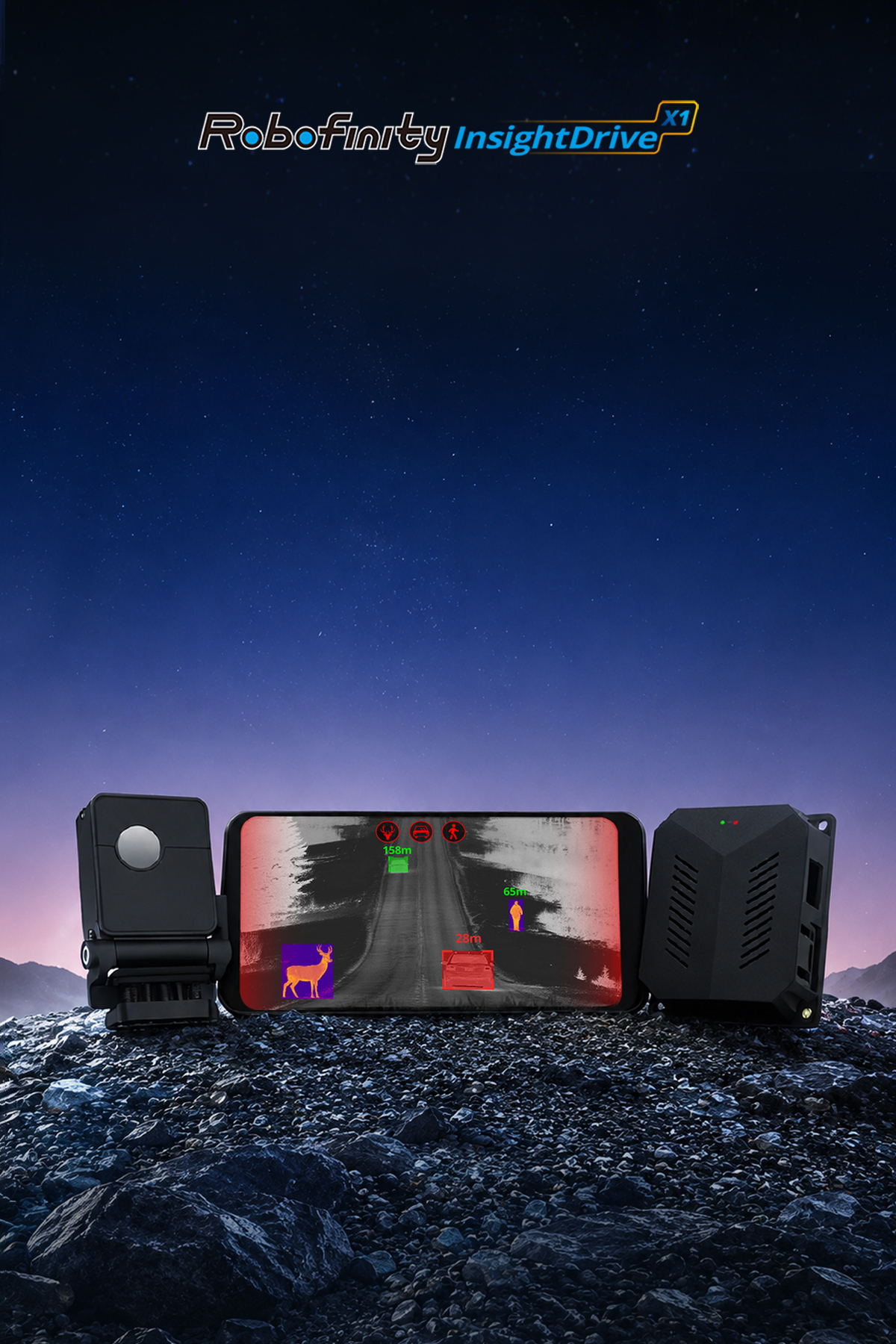
Robofinity InsightDrive is one example of an aftermarket vehicle thermal imaging night-vision system intended to support awareness in low-light and poor-visibility conditions. It combines thermal imaging with pedestrian, animal, and vehicle recognition and can provide real-time alerts. Those functions are relevant to night commuters, but they remain driver-assistance features: the driver must still use headlights, monitor the road, maintain a safe speed, and independently judge when to brake or steer.
As with any product in this category, suitability depends on the vehicle, installation, display placement, normal route, and the driver’s ability to use the information without becoming distracted. Product specifications should be checked against current manufacturer documentation before making a purchasing decision.
Thermal Night Vision Versus Other Night-Driving Upgrades
A thermal system is only one way to improve low-light driving. For some vehicles, addressing basic visibility problems will deliver greater immediate value.
Headlight Maintenance and Upgrades
Clouded lenses, failing bulbs, incorrect aim, low charging voltage, and dirty lamp housings can significantly reduce effective illumination. Restoring the original lighting system should come before adding a secondary vision display.
Any replacement lamps or assemblies should be appropriate for the vehicle and compliant with applicable local requirements. Installing an incompatible light source in a housing designed for something else can create poor beam control and glare for other drivers.
Windshield, Wipers, and Mirrors
A film on the inside of the windshield can scatter light and intensify glare. Worn wiper blades, chips in the driver’s field of view, and dirty mirrors also reduce usable visibility. These are inexpensive problems compared with most electronic upgrades and should not be overlooked.
Factory Driver-Assistance Features
Automatic emergency braking, forward-collision warning, adaptive headlights, pedestrian detection, and lane-support systems serve different functions. Some use cameras or radar rather than thermal sensors, and their performance limitations vary.
Thermal night vision can complement these features by providing another type of information, but it should not be assumed that an aftermarket display integrates with the vehicle’s braking or steering systems. Unless documentation explicitly states otherwise, treat it as an awareness tool.
Driving-Habit Improvements
Reducing speed on dark roads expands the time available to recognize and respond to hazards. Increasing following distance, minimizing unnecessary cabin lighting, keeping both hands ready for controlled inputs, and taking breaks when fatigued can improve safety without adding technology.
A system cannot compensate for tiredness. Daily commuters who struggle with drowsiness should address scheduling, rest, and safe alternatives rather than relying on detection alerts to maintain attention.
Ownership and Maintenance Considerations
Thermal systems require little day-to-day interaction, but they are not maintenance-free. A dirty camera window can degrade image quality just as contamination affects a reversing camera.
Check the lens or protective window regularly for mud, salt, ice, insect residue, and physical damage. Use cleaning methods approved by the manufacturer, since abrasive materials or harsh chemicals may damage coatings.
After bumper work, body repair, electrical service, or a minor impact, inspect the camera mount and image alignment. A shifted camera may still produce a picture while pointing too high, too low, or away from the intended field of view.
Watch for warning signs such as:
- Intermittent power or unexpected restarts
- Frozen or delayed video
- Condensation inside the camera or enclosure
- Persistent false alerts
- Missing alerts for clearly visible warm objects
- A tilted or obstructed image
- Excessively bright or unstable display output
Electrical or mounting problems should be evaluated by a qualified installer, especially when wiring passes near airbags, vehicle control modules, or existing driver-assistance equipment.
A Practical Decision Framework
Before choosing a system, score the decision across four areas.
1. Exposure
How many hours per week do you actually drive in darkness? A daily pre-dawn commute represents more exposure than occasional evening trips.
2. Route Risk
Does the route include wildlife, pedestrian activity, unlit sections, glare, or limited shoulders? The more often these conditions appear, the more relevant thermal imaging becomes.
3. Human Factors
Can the display be mounted where it supports a short glance without blocking the road? Are the alerts understandable and adjustable? A technically capable system can still be a poor fit if it increases distraction.
4. Competing Priorities
Are the tires, brakes, lights, windshield, and wipers already in good condition? Are there other factory safety features that need repair or calibration? Core vehicle maintenance should come first.
For many regular night commuters, the answer is not simply “useful” or “unnecessary.” Thermal night vision may be a worthwhile supplementary upgrade after the vehicle’s essential safety systems are in good order and when the route presents recurring low-visibility hazards.
Frequently Asked Questions
Can thermal night vision see pedestrians beyond the headlights?
It may detect a pedestrian’s heat signature before the person is clearly visible in the headlight beam, depending on distance, weather, obstruction, temperature contrast, and system capability. Detection does not guarantee correct identification or provide a safe stopping distance at every speed.
Does a thermal camera work in complete darkness?
Yes, thermal imaging does not require visible light in the same way as an ordinary camera. It detects infrared energy associated with temperature differences. Headlights are still essential for seeing road markings, signs, surface conditions, and cold objects.
Does thermal night vision work through fog, rain, and snow?
It may preserve useful thermal contrast in some poor-visibility conditions, but heavy fog, rain, or snow can reduce range and image quality. It should not be treated as a way to drive normally when weather requires slower speeds or stopping.
Can an automotive thermal system detect animals?
Many thermal systems can show warm animals, and some include software intended to recognize them. Performance varies with the animal’s size, distance, position, movement, partial obstruction, and environmental conditions.
Is a thermal night-vision display distracting?
It can be if it is mounted poorly, set too bright, or watched continuously. The display should support brief secondary glances, while the driver’s primary attention remains on the roadway. Thoughtful mounting and adjustable alerts are important.
Should thermal night vision come before better headlights?
Usually not. Faulty, cloudy, dirty, or incorrectly aimed headlights should be repaired first. Thermal imaging can add hazard awareness, but it cannot replace effective road illumination or other essential maintenance.
Conclusion
A thermal night-vision system can add useful awareness to a daily commute when darkness, wildlife, pedestrians, glare, or unlit roads create recurring visibility challenges. Its strongest contribution is the ability to highlight heat-producing objects that may not yet stand out through the windshield.
The technology also has clear boundaries. It may miss cold debris, cannot interpret all road details, can lose performance in severe weather, and may distract the driver if the display is poorly positioned. It neither guarantees hazard detection nor replaces headlights, safe speed, braking distance, mirrors, traffic-law compliance, or sustained attention.
Start by evaluating a typical week of driving, correcting basic visibility and maintenance issues, and identifying the specific hazards on the route. If low-light risk is frequent and the system can be installed ergonomically, thermal imaging may be a practical driver-assistance upgrade rather than merely an interesting dashboard feature.