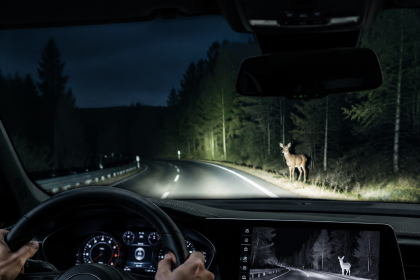
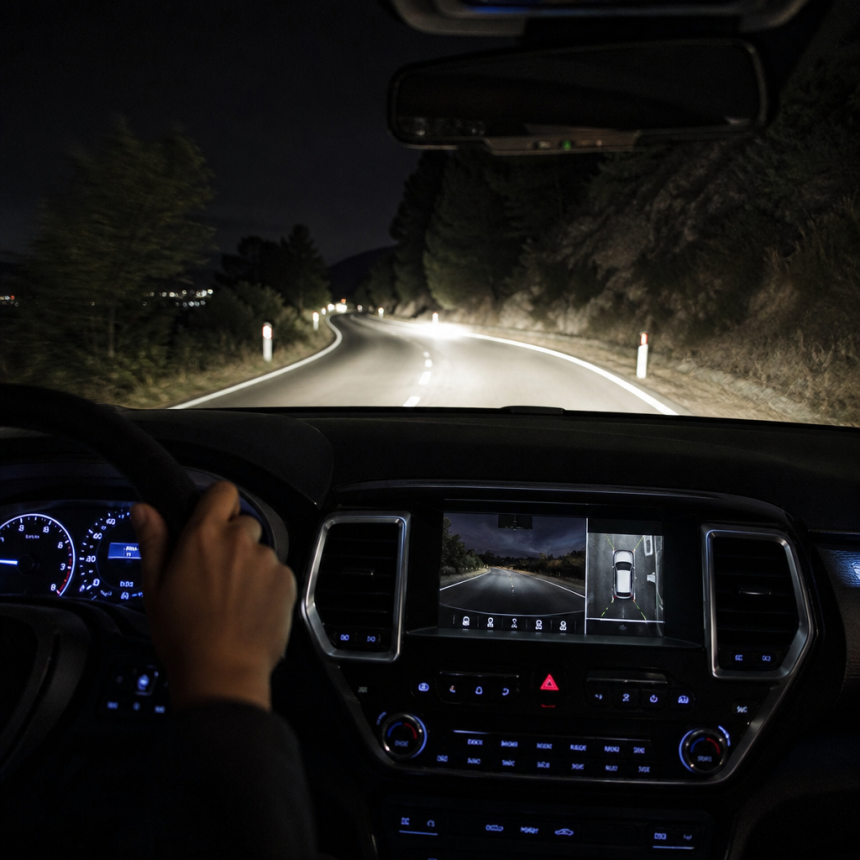
When you’re shopping for an SUV, the right SUV night driving safety features can help you spot hazards earlier, reduce glare stress, and react faster in low-light conditions. But the best choice depends on how you drive—city intersections, rural roads, and long highway trips each demand different priorities. This guide walks you through the key nighttime systems worth prioritizing, how to evaluate them in real-world terms, and what to avoid when you compare packages.
- Start With Your Typical Night Driving Conditions
- Prioritize Headlight Performance
- Look for Forward Collision and Emergency Braking Support
- Evaluate Pedestrian, Cyclist, and Animal Detection
- Consider Blind-Spot and Rear Cross-Traffic Monitoring
- Review Lane Assistance Carefully
- Assess Adaptive Cruise Control for Night Highway Use
- Add Driver-Attention and Fatigue Monitoring
- Explore Thermal Imaging and Advanced Low-Light Detection
- Compare Factory-Installed and Aftermarket Features
- Use a Feature-Matching Framework
- Test the SUV Before Buying
- Check Maintenance and Ownership Costs
- Do Not Ignore Basic Night Driving Practices
- Frequently Asked Questions
- What is the most important night driving safety feature in an SUV?
- Are automatic high beams worth choosing?
- Is thermal imaging necessary for every SUV driver?
- Can pedestrian detection work at night?
- Should I choose factory safety technology or an aftermarket system?
- Does night-vision technology replace high beams?
- What baseline safety guidance should I follow?
- Conclusion
Use this as a practical feature-matching framework so you can select options that improve visibility and hazard awareness without distracting you from safe driving.
- Start With Your Typical Night Driving Conditions
- Prioritize Headlight Performance
- Look for Forward Collision and Emergency Braking Support
- Evaluate Pedestrian, Cyclist, and Animal Detection
- Consider Blind-Spot and Rear Cross-Traffic Monitoring
- Review Lane Assistance Carefully
- Assess Adaptive Cruise Control for Night Highway Use
- Add Driver-Attention and Fatigue Monitoring
- Explore Thermal Imaging and Advanced Low-Light Detection
- Compare Factory-Installed and Aftermarket Features
- Use a Feature-Matching Framework
- Test the SUV Before Buying
- Check Maintenance and Ownership Costs
- Do Not Ignore Basic Night Driving Practices
- Frequently Asked Questions
- Conclusion
Start With Your Typical Night Driving Conditions
Before comparing SUV models or optional packages, consider the roads you use most often. A feature that is valuable on rural routes may add little benefit during short urban commutes. Your SUV night driving safety priorities should match your most common lighting and hazard conditions.
Ask yourself:
- Do you drive mostly in cities, suburbs, or rural areas?
- Are roads usually well lit?
- Do you encounter pedestrians, cyclists, deer, livestock, or other animals?
- Do you regularly drive in fog, rain, snow, or headlight glare?
- Do you take long highway trips after dark?
- Is your SUV used for family transportation, work, recreation, or towing?
- Do you frequently drive on unpaved roads or roads with poor markings?
City and suburban driving
Urban drivers often benefit most from technologies that help identify nearby road users. Pedestrian detection, cyclist awareness, forward collision warning, automatic emergency braking, cross-traffic alerts, and high-quality headlights can be especially useful around intersections, school zones, parking areas, and residential streets.
City driving also creates a different visibility challenge: many light sources compete for attention. Streetlights, shop signs, oncoming traffic, and wet pavement can make it difficult to judge distance. In this situation, well-implemented high-beam control and strong forward illumination may matter more than a long-range feature designed for dark rural roads.
Rural and semi-rural roads
On dark country roads, the main concern is often detecting hazards beyond the area illuminated by dipped headlights. Animals, pedestrians without reflective clothing, cyclists, disabled vehicles, fallen branches, and poorly marked bends may be difficult to see.
For these conditions, look closely at headlight performance, automatic high-beam control, forward hazard warnings, lane-position assistance, and any additional low-light detection technology. Drivers should also consider whether the system provides useful alerts without creating too many distractions.
Highways and long-distance travel
On motorways and interstate highways, fatigue, speed, lane changes, and limited reaction time become major concerns. Adaptive cruise control, lane-centering assistance, blind-spot monitoring, rear cross-traffic alert, and driver-attention monitoring can support a more consistent driving routine.
These systems are not substitutes for active supervision. They may have difficulty with faded lane markings, construction zones, unusual road layouts, standing water, or vehicles cutting across lanes. Their value comes from supporting the driver, not taking responsibility for the journey.
Prioritize Headlight Performance
Modern driver-assistance technology cannot compensate for weak or poorly aimed headlights. Lighting should be the first area to evaluate when building your SUV night driving safety setup for frequent nighttime use.
LED, adaptive, and matrix lighting
LED headlights typically provide efficient, bright illumination, but the type of LED system matters more than the label alone. Look for information about beam coverage, adjustment, and performance on curves.
Useful lighting technologies may include:
- Automatic headlights: Switch the low beams on when ambient light falls.
- Automatic high beams: Detect oncoming or preceding vehicles and switch between high and low beam.
- Adaptive headlights: Adjust the beam direction or pattern as the vehicle turns.
- Matrix or pixel lighting: Shape the beam to illuminate more of the road while reducing glare for other drivers.
- Cornering lights: Add illumination near turns, junctions, or low-speed maneuvers.
The exact operation varies by vehicle. Some systems react quickly and smoothly, while others may be slower to recognize motorcycles, cyclists, reflective signs, or vehicles partly hidden by bends. Test the system at night if possible, or review owner documentation before you purchase.
Beam adjustment and windshield condition
Even advanced headlights can perform poorly if they are misaligned, dirty, or obstructed. Headlamp lenses can become cloudy with age, and road grime can significantly reduce light output. A damaged or heavily scratched windshield can also increase glare and reduce contrast—directly affecting SUV night driving safety.
When evaluating a used SUV, inspect:
- Headlamp lenses for clouding, cracks, or moisture
- Beam symmetry and alignment
- Windshield chips, scratches, and wiper performance
- Dashboard warning lights related to lighting systems
- Whether replacement bulbs or headlamp assemblies are expensive or difficult to source
A vehicle with simpler but well-maintained headlights may provide better real-world visibility than one with sophisticated lighting that is damaged or poorly adjusted.
Look for Forward Collision and Emergency Braking Support
Forward collision warning uses cameras, radar, or a combination of sensors to identify a possible impact with another vehicle or road user. Automatic emergency braking may apply braking force if the driver does not respond quickly enough.
These systems can be particularly useful at night because darkness reduces the time available to recognize hazards. In your SUV night driving safety shopping, treat collision warning and emergency braking as a valuable layer—especially when you drive on routes with curves, intersections, or poor lighting.
They may help in situations such as:
- A vehicle slowing suddenly ahead
- Traffic forming after a bend
- A pedestrian entering the road
- A cyclist crossing the SUV’s path
- Low-speed maneuvering near a junction or parking area
Understand the limitations
Detection performance can change with speed, weather, road design, and the type of object involved. Cameras may struggle when visibility is poor, while radar may not identify every road user in the same way. Heavy rain, snow, fog, dirt, glare, and an obstructed sensor can reduce system performance.
Emergency braking should therefore be viewed as a backup layer. It is not a reason to follow more closely, drive faster, or look away from the road. Check the vehicle’s owner manual for the operating range and conditions that may disable the feature.
Evaluate Pedestrian, Cyclist, and Animal Detection
Nighttime road safety is not only about recognizing cars. SUVs often travel on roads where pedestrians, cyclists, horses, deer, and other animals may appear with little warning—one of the biggest reasons buyers focus on SUV night driving safety.
Pedestrian and cyclist detection
Pedestrian and cyclist detection can complement forward collision warning and automatic emergency braking. When choosing an SUV, determine whether the system can provide:
- Visual warnings
- Audible or haptic alerts
- Braking assistance
- Coverage in low-speed urban situations
- Detection near intersections or when turning
Do not assume that a vehicle described as having “pedestrian protection” offers the same capability as another model. Ask whether detection is active at night, whether it works while turning, and whether braking assistance is included or only an alert.
Animal detection
Animal detection is especially relevant for rural drivers. Conventional cameras may identify larger animals when contrast and lighting are sufficient, but dark animals against a dark background can be difficult to distinguish.
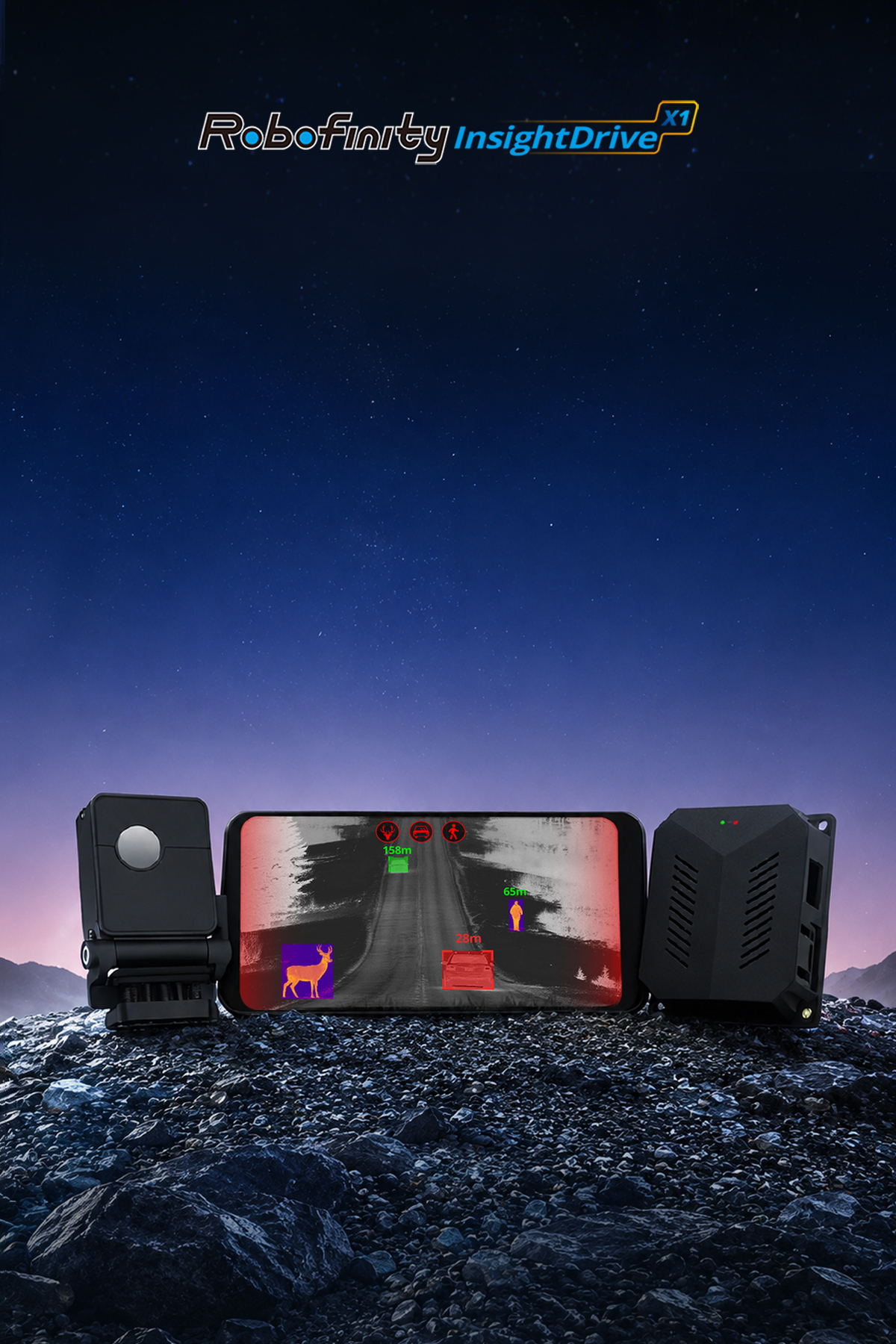
Some advanced systems use thermal imaging to detect heat signatures rather than relying only on visible light. This approach can help highlight warm objects in darkness or reduced visibility, although performance varies with the animal’s distance, size, movement, weather, and surrounding conditions.
Thermal imaging is an awareness aid, not a guarantee that every animal will be detected. Drivers should still reduce speed where wildlife is common and remain prepared to brake.
Consider Blind-Spot and Rear Cross-Traffic Monitoring
Night driving increases the difficulty of checking mirrors because surrounding vehicles may be harder to distinguish, especially on unlit roads or in rain. Blind-spot monitoring uses sensors to identify vehicles alongside or approaching from the rear quarter.
A useful system may provide:
- A warning symbol in the side mirror
- An audible alert
- Steering or lane-change intervention
- Coverage for vehicles approaching quickly from behind
- Trailer-aware operation, if the SUV is used for towing
Rear cross-traffic alert is valuable when reversing from a driveway, parking space, or poorly lit roadside location. Some systems also detect pedestrians or cyclists, but coverage and operating conditions differ by vehicle.
These technologies should supplement mirror checks and shoulder checks. A blind-spot warning may not detect a motorcycle in every situation, and it may not identify stationary objects, narrow posts, or objects outside the sensor’s coverage.
Review Lane Assistance Carefully
Lane departure warning and lane-keeping assistance can support drivers on highways after dark, but their usefulness depends heavily on road markings. For SUV night driving safety, make sure these systems are reliable on the type of lines you see most often.
Lane departure warning
This system alerts the driver when the SUV appears to drift from its lane without a turn signal. It can be helpful during fatigue or momentary inattention, but it can produce warnings on narrow roads, poorly marked lanes, construction routes, or roads with unusual edges.
Lane-centering assistance
Lane-centering systems make ongoing steering adjustments to keep the vehicle near the middle of a marked lane. They can reduce workload during long trips, but they may not function reliably when markings are faded, covered by snow, obscured by glare, or interrupted by roadworks.
When selecting an SUV, determine whether lane assistance:
- Works at the speeds you commonly use
- Requires clearly visible lane markings
- Gives a clear warning when it disengages
- Allows easy adjustment of warning sensitivity
- Interacts with adaptive cruise control
- Requires the driver to keep hands on the wheel
A system that disengages without an obvious alert can create false confidence. Drivers should always be ready to steer manually.
Assess Adaptive Cruise Control for Night Highway Use
Adaptive cruise control maintains a selected speed while adjusting following distance from traffic ahead. It can make long nighttime highway journeys less tiring, particularly when traffic flow changes frequently.
Important buying considerations include:
- The minimum and maximum operating speeds
- Following-distance adjustments
- Performance in stop-and-go traffic
- Response to vehicles cutting into the lane
- Operation on curves and hills
- Whether the system resumes automatically after stopping
- How clearly it alerts the driver when it cannot continue
Adaptive cruise control may not recognize every stationary object, road obstruction, or unusual vehicle position. It also does not ensure that the SUV is traveling at a safe speed for fog, ice, rain, or limited visibility. The driver remains responsible for selecting an appropriate speed and monitoring traffic.
Add Driver-Attention and Fatigue Monitoring
Fatigue is a major night driving risk, especially during long trips or late-night commutes. Driver-attention monitoring may analyze steering inputs, lane position, eye direction, or driving behavior to identify possible distraction or tiredness.
The most valuable systems provide an understandable warning and encourage a break rather than attempting to judge the driver with excessive confidence. Accuracy can vary based on sunglasses, lighting, road conditions, seating position, and individual driving style.
Treat an alert as a prompt to reassess your condition. If you are struggling to stay alert, stopping for rest is safer than relying on any vehicle system.
Explore Thermal Imaging and Advanced Low-Light Detection
Thermal imaging systems detect infrared energy associated with heat. Unlike a conventional camera, a thermal sensor does not depend entirely on visible illumination. For SUV night driving safety, this can help distinguish warm objects such as people, animals, and vehicles from a cooler background in certain dark or low-visibility conditions.
Where thermal imaging may help
A vehicle thermal imaging system can be relevant for drivers who frequently encounter:
- Unlit rural roads
- Wildlife near road edges
- Pedestrians wearing dark clothing
- Fog, rain, or snow
- Headlight glare
- Poorly lit work zones
- Long-distance night travel
Some systems display a thermal view on a dedicated screen or integrated vehicle display. Others combine thermal information with software that recognizes potential hazards and provides real-time alerts.
If you want to compare approaches, see Automotive Thermal Night Vision System: What Is It? and How to Choose the Right Car Night Vision Camera for practical guidance.
Aftermarket options may also be considered by drivers who want additional low-light awareness beyond factory features.
Limitations to understand
Thermal imaging is not a replacement for headlights or normal visual observation. It may not show road markings, traffic signs, lane boundaries, or surface hazards as clearly as a standard camera. A warm object can also be difficult to interpret without context.
Before choosing a system, consider:
- Where the display is mounted
- Whether it creates a distraction
- How alerts are presented
- Whether the camera remains clean in bad weather
- How the system is powered
- Whether installation could affect the vehicle’s wiring or warranty
- How easily the driver can distinguish a warning from a confirmed hazard
The best safety technology adds useful information without demanding excessive attention from the driver.
Compare Factory-Installed and Aftermarket Features
Factory-installed safety systems are generally integrated with the vehicle’s braking, steering, lighting, and sensor networks. This can create a more seamless experience and may reduce installation concerns. However, advanced features may only be available on higher trim levels or expensive option packages.
Aftermarket equipment can be useful when:
- The SUV is otherwise suitable but lacks a desired visibility feature
- You own an older vehicle
- You frequently drive in conditions not covered by the original equipment
- You want a specialized system, such as thermal imaging
Aftermarket systems vary in installation quality, display design, sensor placement, software integration, and ongoing support. Avoid choosing based solely on a long feature list. Check whether the system is practical to use while driving and whether professional installation is recommended.
Use a Feature-Matching Framework
A simple priority system can make an SUV comparison more realistic for SUV night driving safety.
Essential features
These should normally be considered first:
- Effective low- and high-beam headlights
- Automatic headlights
- Forward collision warning
- Automatic emergency braking
- Blind-spot monitoring
- Rear cross-traffic alert
- A clear rearview camera
- Reliable windshield wipers and defogging performance
Valuable for frequent night drivers
These may be especially useful depending on your routes:
- Automatic high beams
- Adaptive or matrix headlights
- Pedestrian and cyclist detection
- Animal detection
- Driver-attention monitoring
- Adaptive cruise control
- Lane-centering assistance
- Thermal imaging or advanced low-light detection
Situational features
These can be worthwhile for specific users:
- Trailer blind-spot monitoring
- Surround-view cameras
- Front and rear parking sensors
- Head-up display
- Off-road lighting
- Enhanced camera cleaning systems
- Night-vision display systems
This framework prevents a highly marketed feature from overshadowing more basic equipment that you will use every day.
Test the SUV Before Buying
A daytime test drive cannot reveal everything about nighttime performance. If possible, arrange an evening test drive or inspect the vehicle in a dark area.
Check:
- How evenly the headlights illuminate the road.
- Whether automatic high beams react smoothly.
- How clearly warnings appear on the instrument panel.
- Whether alerts are easy to understand without being startling.
- How much the screens reflect on the windshield.
- Whether the rear camera remains usable in low light.
- How well mirrors and blind-spot warnings work in traffic.
- Whether lane assistance behaves predictably on curves.
- How quickly the system warns when a feature is unavailable.
- Whether you can adjust warning volume, sensitivity, or following distance.
For a used SUV, test every safety feature rather than assuming it works because no warning light is visible. Sensor calibration may be affected by previous body repairs, windshield replacement, wheel alignment, or damaged bumpers.
Check Maintenance and Ownership Costs
Safety technology introduces additional components that may require care. Cameras and radar sensors need clear fields of view, while some systems require calibration after repairs.
Before buying, ask about:
- Sensor locations and cleaning requirements
- Calibration after windshield or bumper replacement
- Headlight replacement costs
- Software updates
- Availability of replacement cameras or radar units
- Whether warning systems can be temporarily disabled
- Service procedures after a collision
- The cost of repairing a damaged display or camera
Keep headlights, windshields, mirrors, radar covers, and camera lenses clean. Do not attach accessories that block sensors or cover the area behind a windshield-mounted camera.
Do Not Ignore Basic Night Driving Practices
Technology works best when combined with good driving habits. For SUV night driving safety, keep these basics in mind:
- Reduce speed when visibility is limited.
- Increase following distance.
- Keep the windshield and mirrors clean.
- Use high beams responsibly and dim them for other road users.
- Watch road edges for movement, eyeshine, shadows, and changing shapes.
- Expect animals near wooded areas, fields, and water.
- Avoid staring directly at oncoming headlights.
- Take breaks during long journeys.
- Do not rely on lane assistance or cruise control when conditions deteriorate.
- Leave extra stopping distance in rain, snow, fog, and icy conditions.
If a warning appears, treat it as information that requires judgment—not as proof that the vehicle has fully assessed the situation. For driving in challenging weather, also review Driving visibility in rain and fog: How to Improve It Safely.
For baseline safety guidance, the U.S. NHTSA provides an overview of roadway safety expectations: Road Safety.
Frequently Asked Questions
What is the most important night driving safety feature in an SUV?
Effective, properly aimed headlights are the foundation. Forward collision warning, automatic emergency braking, blind-spot monitoring, and rear cross-traffic alert are also important, but their value depends on your driving environment and how well you maintain the vehicle.
Are automatic high beams worth choosing?
They can be useful on dark roads because they reduce the need to switch beams manually. However, they may not recognize every road user or lighting condition perfectly. You still need to control the headlights responsibly.
Is thermal imaging necessary for every SUV driver?
No. Thermal imaging may be most useful for drivers who regularly travel on unlit rural roads, encounter wildlife, or drive in poor visibility. It’s an optional awareness aid, not an essential replacement for headlights and attentive driving.
Can pedestrian detection work at night?
Some vehicle systems are designed to detect pedestrians in low-light conditions, but performance varies by model, speed, weather, road layout, and sensor type. Review the manufacturer’s operating conditions and never assume detection is guaranteed.
Should I choose factory safety technology or an aftermarket system?
Factory systems are usually better integrated with the SUV’s controls, while aftermarket products may add specialized capabilities to vehicles that lack them. Compare installation quality, display design, sensor performance, maintenance, and compatibility rather than relying only on feature counts.
Does night-vision technology replace high beams?
No. Night-vision systems, including thermal imaging equipment, should supplement headlights and normal visual observation. They may highlight potential hazards but cannot provide complete information about road markings, signs, surface conditions, or traffic behavior.
What baseline safety guidance should I follow?
Use your vehicle’s safety features as support, not a substitute for safe speed and spacing. The U.S. NHTSA provides additional general guidance for driving safety: Road Safety.
Conclusion
Choosing SUV night driving safety features starts with an honest assessment of your roads, weather, travel schedule, and tolerance for technology. Prioritize strong headlights and dependable visibility first, then compare collision-warning, braking, blind-spot, lighting, lane-support, and driver-attention systems according to your needs.
Rural drivers may place greater value on animal detection, adaptive lighting, or thermal imaging, while urban drivers may benefit more from pedestrian detection, cross-traffic alerts, and low-speed emergency braking. Whatever equipment you choose, treat it as support for careful driving rather than a substitute for attention, appropriate speed, clear windows, safe following distance, and sound judgment.