- Table of Contents
- Budgeting for a first car for young drivers
- Check Insurance Before Choosing a Specific Car
- Matching a first car for young drivers to everyday driving
- City and Campus Driving
- Highway and Motorway Commuting
- Rural Roads and Night Driving
- Family and Passenger Use
- Prioritize Predictable Performance
- Make Safety a Non-Negotiable Requirement
- Choosing a reliable first car for young drivers
- Compare Petrol, Diesel, Hybrid, and Electric Options
- New or Used: Understand the Trade-Off
- Inspect a Used Car Methodically
- Test-Drive the Car in Realistic Conditions
- Avoid Modifications That Increase Cost and Risk
- Use a Simple First-Car Scorecard
- Common First-Car Buying Mistakes
- Buying the Cheapest Listing
- Choosing Too Much Power
- Skipping the Insurance Quote
- Ignoring Service History
- Treating Technology as a Substitute for Skill
- Spending the Entire Budget
- First-Car Checklist Before Payment
- Frequently Asked Questions
- What type of car is best for a young driver?
- How much should a young driver spend on a first car?
- Is a new car safer than a used car?
- Is an automatic or manual transmission better for a first car?
- Should a first-time buyer purchase from a dealer or private seller?
- Which safety features matter most for an inexperienced driver?
- Choosing the final first car for young drivers
Buying a first car for young drivers is exciting, but the best choice is rarely the fastest, newest, or most stylish option within reach. Young motorists should balance safety, reliability, insurance, fuel use, maintenance costs, and suitability for everyday journeys. A sensible decision now can reduce financial pressure, make driving easier, and provide a dependable platform for building experience behind the wheel.
Table of Contents
This guide explains how to set a realistic budget, compare vehicles, evaluate safety equipment, inspect a used car, and avoid common first-time buyer mistakes. It is designed for buyers making a practical purchasing decision, whether they are shopping independently or with help from a parent or family member. A written shortlist can keep the search for a first car for young drivers focused on measurable needs rather than appearance alone.
Budgeting for a first car for young drivers
A low advertised price can make a car appear affordable, but purchase cost is only one part of ownership. Insurance, taxes, registration, fuel, scheduled servicing, tires, repairs, parking, and financing can collectively cost more than expected. A realistic budget for a first car for young drivers should therefore cover both the purchase and the ongoing expenses.
Before browsing listings, calculate two limits:
- The maximum amount available to buy the vehicle
- The maximum monthly amount available to keep it on the road
Keep part of the purchase budget in reserve. Spending every available dollar, pound, or euro on the car leaves no room for registration, an initial service, worn tires, or an unexpected repair. Whether new or used, a first car for young drivers must leave enough financial room for these immediate costs.
Build a Realistic Monthly Budget
Estimate the following expenses:
- Insurance premiums
- Fuel or charging
- Vehicle tax and registration
- Routine servicing
- Annual inspection costs where applicable
- Tires and seasonal equipment
- Parking, permits, and tolls
- Loan payments and interest
- A monthly repair reserve
Use realistic driving distances rather than an idealized estimate. A student commuting five days a week may cover considerably more distance than someone who mainly drives on weekends. Likewise, a vehicle used for regular motorway or highway travel will have different fuel and maintenance demands from one making short urban trips. In practice, the running costs of a first car for young drivers should remain affordable even in a higher-mileage month.
Check Insurance Before Choosing a Specific Car
Insurance can transform an inexpensive vehicle into an unaffordable one. Young and newly licensed drivers are often assessed as higher risk because they have limited driving history. The vehicle’s power, repair cost, theft profile, safety equipment, location, and intended use may all influence the premium.
Obtain insurance estimates for the exact models, engine variants, and model years under consideration. Two cars with similar purchase prices can produce very different quotations, so insurance should be checked before selecting a first car for young drivers. A high-performance trim may look almost identical to the standard version but cost substantially more to insure.
Provide accurate information when requesting a quote. Annual mileage, parking arrangements, modifications, primary driver details, and vehicle use should reflect reality. Incorrect information can create serious problems if a claim is made.
A parent adding a young motorist to an existing policy may be an option in some markets, but the person who drives the car most should be identified honestly. Insurance rules vary by country and provider, and the policy for a first car for young drivers should always be verified directly rather than based on general online advice.
Matching a first car for young drivers to everyday driving
The right first car for young drivers depends on how it will actually be used. A buyer should write down the journeys the vehicle must handle before deciding on a body style, engine, or powertrain.
City and Campus Driving
For congested streets, small hatchbacks and compact cars are often easy to maneuver, economical, and simple to park. Good outward visibility, light steering, parking sensors, and a reversing camera can make everyday driving less stressful.
However, the smallest possible car is not automatically the best. Consider luggage space, passenger needs, road comfort, and crash safety. A tiny first car for young drivers that feels unsettled on faster roads may be a poor match for regular long-distance travel.
Highway and Motorway Commuting
Drivers covering longer distances should prioritize supportive seats, stable handling, manageable road noise, effective climate control, and strong safety performance. Fuel efficiency matters, but comfort and fatigue also deserve attention.
Cruise control can help maintain a steady speed, while automatic emergency braking and lane-departure alerts may provide useful support. These systems have limitations, however, and should never encourage inattention or shorter following distances. A first car for young drivers used for regular highway travel must also feel stable and comfortable at higher speeds.
Rural Roads and Night Driving
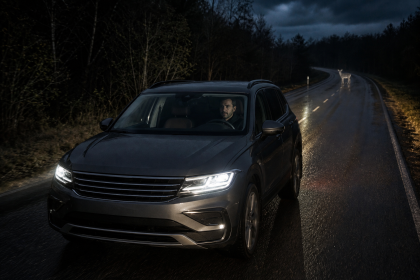
Country roads introduce blind bends, variable surfaces, limited lighting, wildlife, and fewer safe passing opportunities. Predictable handling, effective headlights, good tires, and dependable brakes matter more than cosmetic styling.
Drivers who regularly travel on unlit roads should check whether the vehicle’s mirrors, windshield, headlights, and dashboard controls provide clear nighttime visibility without creating distracting glare. These details are especially important when choosing a first car for young drivers in a rural area.
Family and Passenger Use
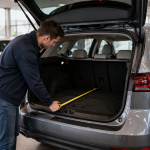
A young driver who frequently carries relatives, friends, children, sports equipment, or work gear may need a larger vehicle. Check rear-seat access, seat-belt fit, cargo capacity, headroom, and child-seat compatibility where relevant.
Do not buy a large SUV solely because it appears safer. Size can offer certain advantages, but heavier vehicles may cost more to fuel, insure, maintain, and repair. They can also be harder for an inexperienced driver to place accurately in tight spaces, making them a less practical first car for young drivers in some circumstances.
Prioritize Predictable Performance
A first car for young drivers should be easy to control in ordinary and unexpected situations. Extremely powerful engines, aggressive throttle response, rear-wheel-drive performance setups, and heavily modified suspensions can make mistakes harder to recover from.
Moderate power is generally enough for safe merging, overtaking, and climbing hills when matched appropriately to the vehicle. The goal is not to find the slowest car available; it is to choose one with predictable acceleration, braking, steering, and road behavior. This balanced performance is particularly valuable in a first car for young drivers who are still developing smooth control.
During a test drive, notice whether:
- The accelerator responds smoothly
- The brakes are progressive rather than abrupt
- The steering feels consistent
- Visibility is clear in every direction
- The driving position adjusts properly
- The controls are easy to understand
- The car remains stable over bumps and at higher speeds
A vehicle that feels intimidating during a calm test drive is unlikely to become easier in heavy rain, darkness, or unfamiliar traffic.
Make Safety a Non-Negotiable Requirement
Safety in a first car for young drivers should be assessed using more than size, brand reputation, or the seller’s description. Compare independent crash-test information for the relevant market and vehicle generation. Test standards change over time, so ratings from different years may not be directly equivalent. Buyers can consult the official Euro NCAP safety ratings for vehicles tested in Europe.
Essential equipment should include properly functioning seat belts, head restraints, airbags, anti-lock brakes, and electronic stability control where available. For newer used cars, useful driver-assistance technology may include:
- Automatic emergency braking
- Forward-collision warning
- Blind-spot monitoring
- Lane-departure warning
- Reversing cameras
- Rear cross-traffic alerts
- Parking sensors
- Tire-pressure monitoring
These features can support hazard detection and road awareness, but none makes a driver invulnerable. Cameras may be obscured by dirt, radar performance can be affected by conditions, and alerts may arrive too late to correct unsafe speed or inadequate braking distance. In any first car for young drivers, headlights, mirrors, legal compliance, attentive observation, and sound judgment remain fundamental.
Consider Nighttime and Poor-Visibility Needs
Low-light driving deserves specific attention because young drivers may have limited experience judging closing speeds, dark road edges, pedestrians in subdued clothing, or animals entering the road.
First ensure that the car’s standard equipment works properly. Headlight lenses should be clear, bulbs should match the approved specification, wipers should clean effectively, and the windshield should be free from damage or haze. Good tires are also critical because seeing a hazard is only useful if the vehicle can respond predictably.
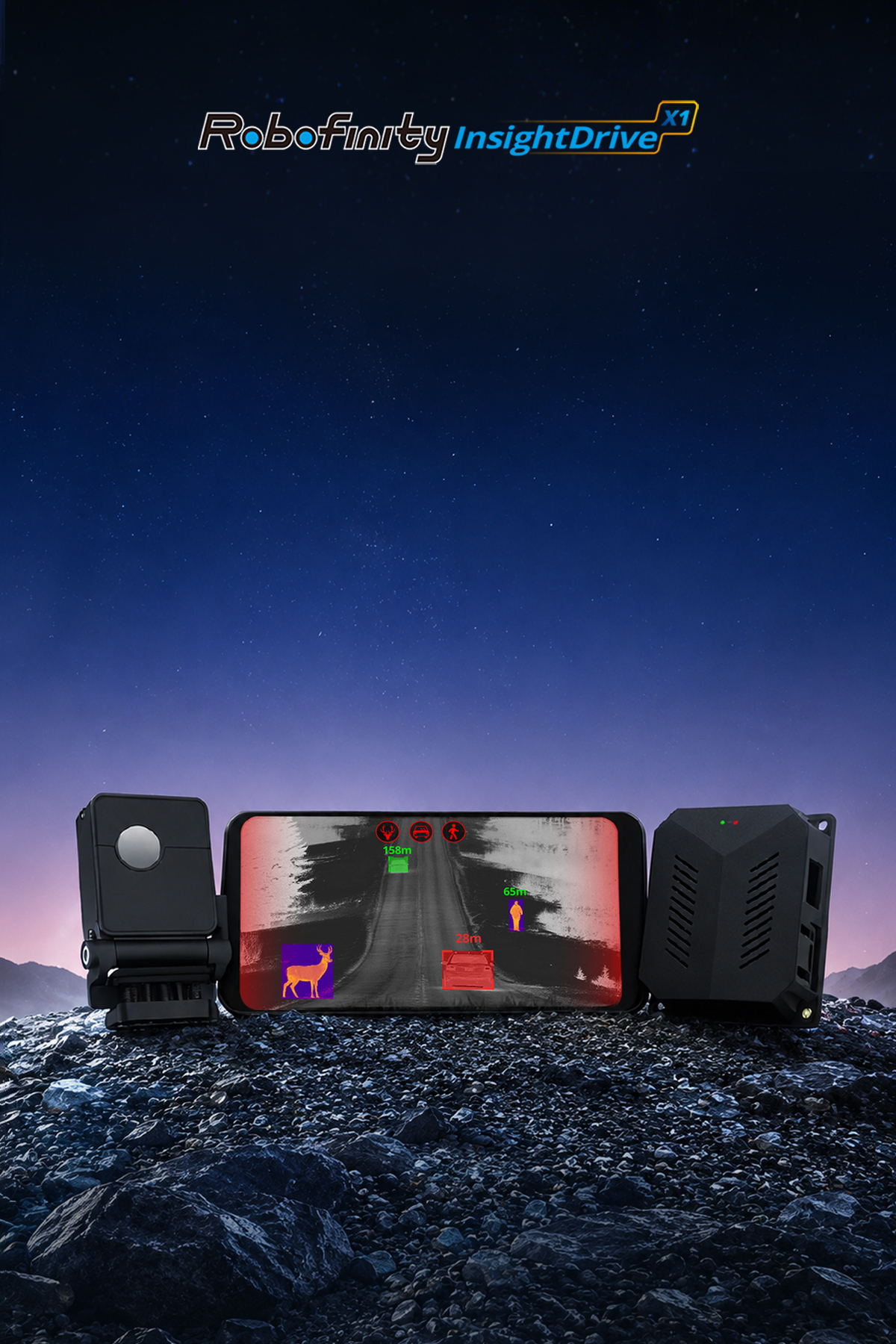
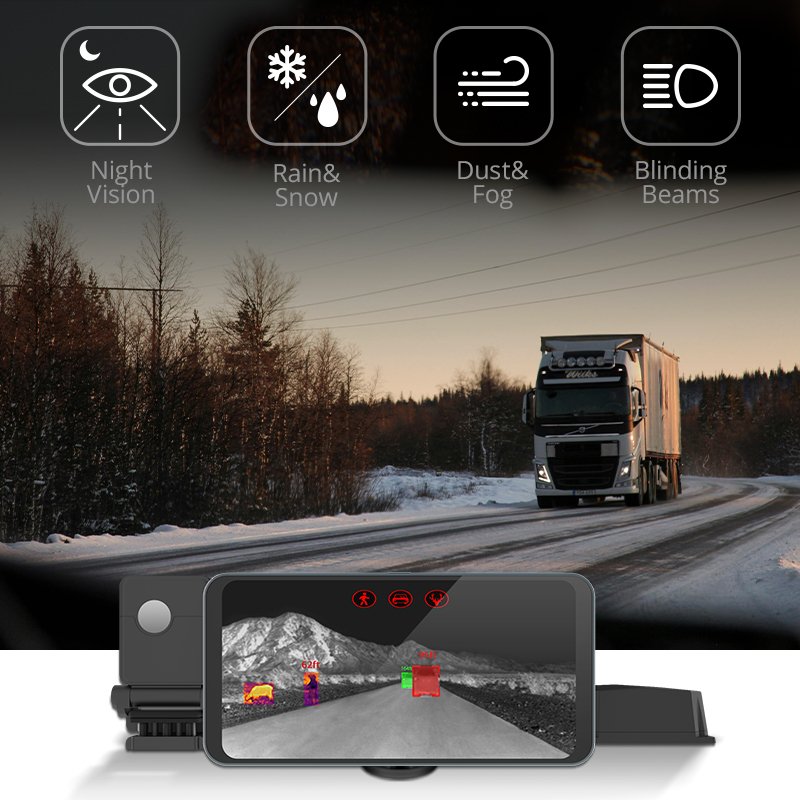
Aftermarket driver-assistance technology can provide an additional layer of awareness for particular driving conditions. Robofinity InsightDrive, for example, is a vehicle thermal imaging night vision system designed to support recognition of pedestrians, animals, vehicles, and obstacles in low-light or poor-visibility environments. Such technology can supplement a first car for young drivers, but it does not replace headlights, mirrors, safe speed, braking distance, traffic laws, or continuous driver attention. Readers who often use rural roads can also learn how to reduce the risk of hitting animals while driving at night.
Choosing a reliable first car for young drivers
A first vehicle is most useful when it starts every morning, passes required inspections, and does not consume the owner’s budget through repeated repairs. Reliability depends on model design, engine and transmission choice, maintenance history, mileage, climate exposure, and previous use. Comparing maintenance records helps show whether a first car for young drivers has received the care needed for dependable service.
Research the specific generation and powertrain, not just the badge. One engine in a model range may have a strong record while another has known maintenance demands. Automatic and manual transmissions may also differ in reliability and servicing requirements.
Look for:
- A documented service history
- Consistent mileage records
- Evidence of timely fluid and filter changes
- Receipts for major repairs
- A valid inspection record where required
- No unexplained warning lights
- No obvious fluid leaks
- Even tire wear
- Original or professionally installed components
An older, well-maintained mainstream vehicle can be a better first car for young drivers than a newer example with incomplete records, accident damage, or neglected servicing.
Compare Petrol, Diesel, Hybrid, and Electric Options
The best powertrain for a first car for young drivers should follow actual driving patterns and access to fuel or charging, not fashion.
Petrol or Gasoline
Petrol cars are widely available and can suit lower annual mileage, short journeys, and mixed driving. They are often straightforward to find on the used market, making petrol a practical option for a first car for young drivers, although fuel economy and maintenance needs vary greatly by engine.
Diesel
Diesel vehicles can be efficient on regular long journeys, but some modern diesel emissions systems are poorly suited to repeated short trips. Before selecting a diesel first car for young drivers, check current and expected local restrictions, taxes, and low-emission zone rules.
Hybrid
A conventional hybrid can work well in stop-and-go traffic because it can recover energy during deceleration and reduce engine use in some conditions. When evaluating a hybrid first car for young drivers, investigate battery condition, warranty terms, maintenance history, and repair availability for the specific model.
Battery-Electric
An electric car may offer lower routine energy and maintenance costs when home or reliable workplace charging is available. An electric first car for young drivers should be assessed for real-world range, seasonal range variation, charging speed, public charging access, insurance, and battery health.
Apartment residents or students who depend entirely on public charging should test the practical routine before committing. A theoretically suitable range is not enough if convenient chargers are regularly unavailable.
New or Used: Understand the Trade-Off
Choosing between a new and used first car for young drivers requires balancing warranty coverage, depreciation, insurance, condition, and available safety technology.
A new car provides a full manufacturer warranty, known history, current safety technology, and fewer immediate maintenance concerns. The drawbacks are a higher purchase price, potentially higher insurance, and depreciation.
A used car generally costs less to buy, and depreciation may be slower. However, condition varies widely, warranties may be limited, and repairs can arrive sooner.
For many young drivers, a carefully selected used car that is neither extremely old nor nearly new provides a useful balance. The priority should be sound mechanical condition, a clean history, affordable insurance, and appropriate safety equipment.
A certified used program may add inspection coverage or warranty protection, but buyers should read what is actually included. Certification does not automatically make a vehicle the right first car for young drivers or remove the need to inspect it, check its records, and understand exclusions.
Inspect a Used Car Methodically
When inspecting a used first car for young drivers, view the vehicle in daylight and, if possible, when the engine is cold. A warmed-up engine can conceal difficult starting, smoke, noise, or rough running.
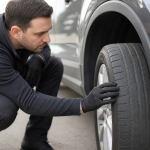
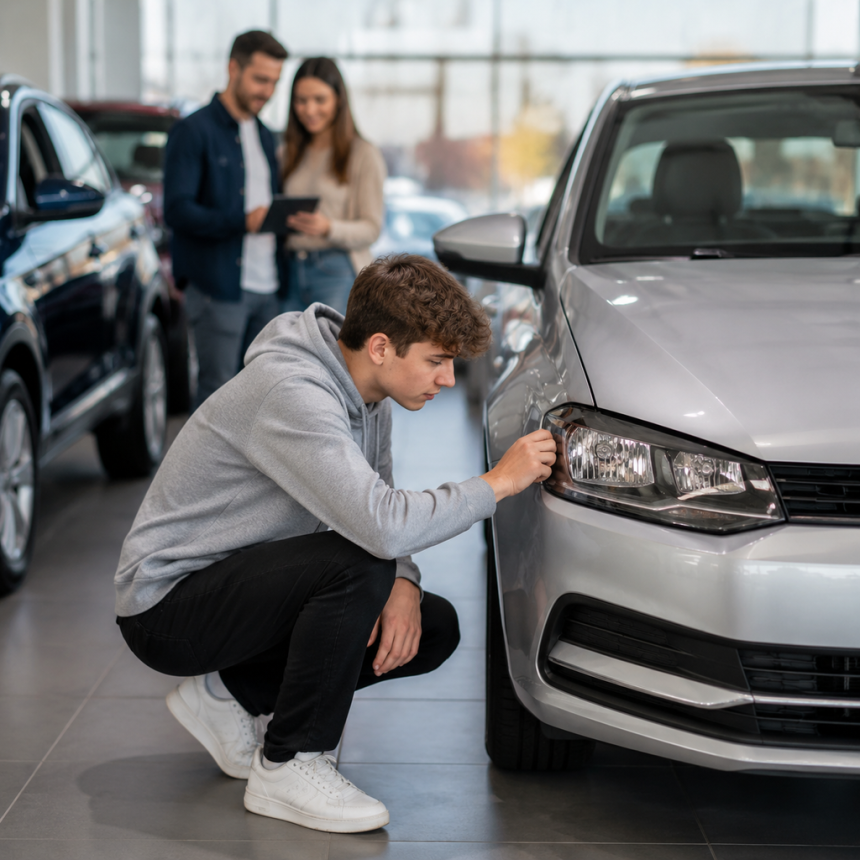
Walk around the car slowly. Check panel gaps, paint color consistency, corrosion, cracked lamps, damaged glass, and signs of poor repairs. Inspect all tires, including their age, tread, sidewalls, and wear pattern. Uneven wear may indicate alignment, suspension, or previous damage issues.
Inside, test every major control:
- Exterior and interior lights
- Wipers and washers
- Heating and air conditioning
- Windows, locks, and mirrors
- Infotainment and charging ports
- Reversing camera and parking sensors
- Seat adjustments
- Warning lights
- Driver-assistance features
When the ignition is switched on, warning lamps should illuminate as part of the self-check and then turn off appropriately after the engine starts. A lamp that never appears may deserve investigation, as does one that remains illuminated. Resolving these issues before purchase is especially important for a first car for young drivers with a limited repair budget.
Arrange an Independent Inspection
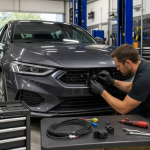
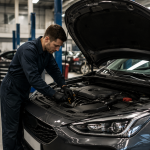
Unless the vehicle comes with robust protections and the buyer has suitable mechanical knowledge, an independent pre-purchase inspection is a sensible expense. A qualified technician can determine whether a potential first car for young drivers has problems with the underside, brakes, suspension, leaks, diagnostic systems, or structural repairs.
An inspection cannot guarantee that nothing will fail later, but it can reveal problems that alter the value or make the vehicle unsuitable.
Also check the vehicle identification number against the documents and obtain an appropriate history report for the country. Confirm ownership status, finance or lien information, recorded damage, mileage consistency, and any outstanding safety recalls through authoritative sources.
Test-Drive the Car in Realistic Conditions
A first car for young drivers should be tested on roads similar to those it will use regularly. A short loop around a dealership is not enough, so obtain the seller’s permission and confirm that appropriate insurance is in place.
Include low-speed turns, uneven surfaces, moderate acceleration, braking, parking, and a faster road where safe and legal. Listen for knocks, grinding, humming, or rattling. Check whether the car tracks straight and whether the steering wheel returns naturally after a turn.
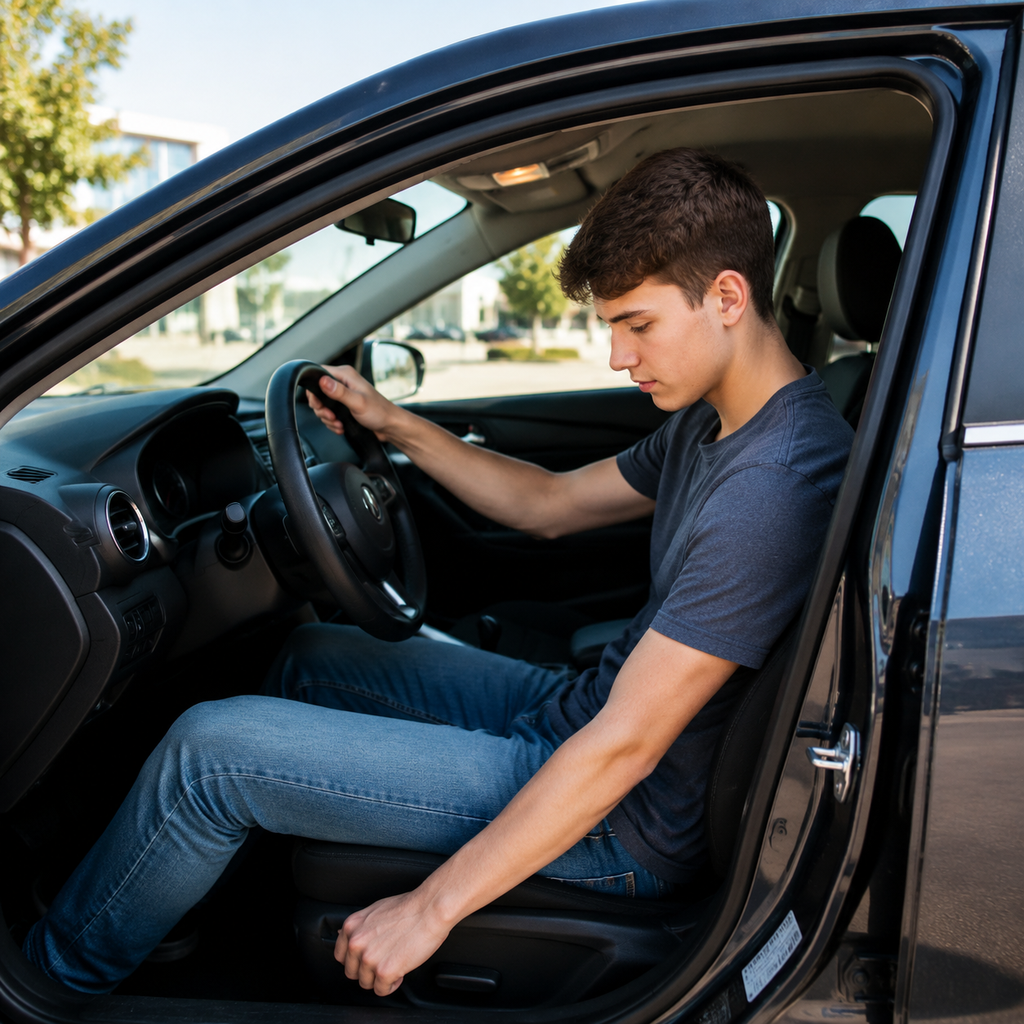
Pay attention to personal fit. The driver should be able to sit upright, operate the pedals without stretching, reach the controls, and see the instruments clearly. Mirrors should provide useful coverage, and thick pillars should not create unacceptable blind spots for the driver’s seating position.
Try parking the vehicle. A car may feel manageable in motion but awkward when reversing into a tight bay. This is particularly important for first-time drivers who will frequently park in crowded school, university, apartment, or workplace areas.
Avoid Modifications That Increase Cost and Risk
Modified cars can be appealing, but changes to the engine, suspension, lighting, wheels, exhaust, or bodywork may affect reliability, legality, insurance, and ride quality. Poorly installed electronics can also cause persistent faults.
Insurance providers generally need accurate information about modifications. Even changes that seem cosmetic may need to be declared under the policy terms.
For a first car for young drivers, an unmodified or lightly equipped standard vehicle is usually easier to value, insure, service, and resell. If accessories are needed, choose legal, professionally installed products that do not obstruct visibility or distract the driver.
Use a Simple First-Car Scorecard
Emotional reactions are normal when buying a car, so compare each potential first car for young drivers with a written scorecard. Rate every finalist from one to five in these categories:
- Purchase price
- Insurance cost
- Fuel or charging cost
- Expected maintenance
- Safety equipment
- Reliability history
- Driving comfort
- Visibility and ease of parking
- Cargo and passenger suitability
- Service records and current condition
Give extra weight to insurance, condition, and safety. Color, wheel design, screen size, and cosmetic trim can still matter, but they should not outweigh evidence of poor maintenance or an unaffordable ownership burden.
Before paying a deposit, pause and review the numbers away from the seller. Pressure to decide immediately is a reason to slow down, not speed up.
Common First-Car Buying Mistakes
Many mistakes made when buying a first car for young drivers come from focusing on the advertised price or appearance while overlooking insurance, condition, and long-term costs.
Buying the Cheapest Listing
The lowest-priced example may require tires, brakes, servicing, registration, or major repairs. Compare the cost of making the car roadworthy, not just the advertised figure.
Choosing Too Much Power
High output can increase insurance and make smooth control more difficult. Performance that rarely benefits everyday driving may impose costs every month.
Skipping the Insurance Quote
A buyer can afford the car but still be unable to afford the policy. Always check before committing.
Ignoring Service History
A clean interior does not prove mechanical care. Records and inspection findings are more informative than freshly polished paint.
Treating Technology as a Substitute for Skill
Parking cameras, emergency braking, blind-spot alerts, and hazard-detection systems can support awareness. They cannot correct every mistake or detect every danger. Young drivers still need observation, restraint, proper following distance, and experience in different road conditions.
Spending the Entire Budget
A reserve fund protects against the ordinary costs that appear after purchase. Without it, a minor repair can take the car off the road.
First-Car Checklist Before Payment
Before paying for a first car for young drivers, confirm each of the following:
- The insurance premium is affordable
- The vehicle suits normal journeys
- Ownership and identification documents match
- The service and mileage history are credible
- A history check has been completed
- Recall status has been verified
- Required inspections are current
- Tires and brakes have usable life remaining
- There are no unresolved warning lights
- All keys and promised accessories are present
- The test drive revealed no serious concerns
- An independent inspection has been completed where appropriate
- Taxes, registration, and immediate maintenance fit the budget
- Payment and transfer procedures are secure and documented
Local purchasing, registration, insurance, and consumer-protection rules differ across the United States and Europe. Verify current requirements through government agencies, insurers, and relevant vehicle authorities.
Frequently Asked Questions
What type of car is best for a young driver?
A suitable first car for young drivers is often a compact or midsize model with predictable handling, strong safety equipment, affordable insurance, good visibility, and a reliable service history. The best body style depends on the driver’s passenger, cargo, parking, and travel needs.
How much should a young driver spend on a first car?
There is no universal amount. The budget for a first car for young drivers should include the purchase price plus insurance, registration, fuel, servicing, tires, parking, and a repair reserve. The car is too expensive if routine ownership leaves no financial margin.
Is a new car safer than a used car?
A newer vehicle may include more modern crash protection and driver-assistance features, but age alone does not determine safety. Compare relevant crash-test information, equipment, condition, tires, and maintenance. A poorly maintained newer car can still be a bad purchase.
Is an automatic or manual transmission better for a first car?
An automatic can reduce workload in congestion, while a manual may cost less in some markets and develops a different set of driving skills. Insurance, local availability, licensing rules, reliability, and the driver’s confidence should guide the decision.
Should a first-time buyer purchase from a dealer or private seller?
A dealer may offer additional legal protections or warranty coverage depending on the location, but prices can be higher. A private sale may cost less but usually requires more careful verification. In either case, inspect the vehicle, check its history, and read every document before payment. These checks help ensure that a first car for young drivers is accurately represented regardless of who sells it.
Which safety features matter most for an inexperienced driver?
Strong occupant protection, electronic stability control, anti-lock brakes, effective headlights, good tires, and properly functioning restraints are fundamental. Automatic emergency braking, blind-spot monitoring, parking aids, and lane warnings can add support, but driver attention remains essential.
Choosing the final first car for young drivers
A suitable first vehicle should be affordable after the keys change hands, manageable in daily traffic, dependable enough for routine commitments, and forgiving while the driver gains experience. Begin with real journeys and total costs, shortlist vehicles with credible safety and reliability records, and verify each candidate through insurance quotes, documentation, a thorough test drive, and an independent inspection.
The strongest first car for young drivers may not be the most exciting car in the listings. It will be the one that helps a young motorist build confidence without creating avoidable financial or mechanical problems. Use the checklist, compare at least a few realistic candidates, and be prepared to walk away when a vehicle’s condition or history does not support the asking price.