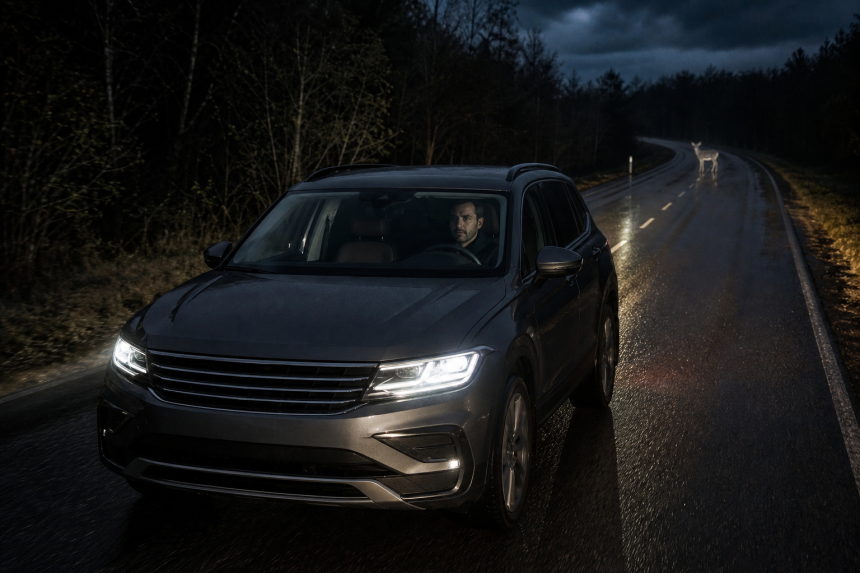
SEO Title: Automotive Thermal Night Vision System Price: Costs, Features, and Buying Factors
- What Is an Automotive Thermal Night Vision System?
- Typical Price Tiers for Thermal Night Vision
- Basic Aftermarket Systems
- Midrange Aftermarket Systems
- Premium Aftermarket and Factory-Integrated Systems
- The Main Factors That Affect the Price
- Thermal Sensor Quality
- Detection Range and Field of View
- Object Recognition and Alerts
- Display Hardware
- Weatherproofing and Automotive Durability
- Recording and Connectivity Features
- Vehicle Compatibility
- Installation Costs and Why They Vary
- Factory Night Vision Versus an Aftermarket System
- Which Features Are Worth Paying More For?
- For Rural and Wildlife-Prone Roads
- For Highway Night Driving
- For Cities and Suburbs
- For Fog, Rain, and Snow
- Hidden and Long-Term Ownership Costs
- Lens Cleaning and Camera Care
- Damage and Replacement
- Software and Updates
- Battery and Power Management
- Warranty Implications
- A Practical Way to Compare Quotes
- When the Expense Makes Sense
- Common Buying Mistakes
- Treating Maximum Range as the Only Measure
- Ignoring Installation Quality
- Assuming Every System Uses True Thermal Imaging
- Focusing on Hardware but Not the Interface
- Expecting the Technology to Replace Normal Vision
- Frequently Asked Questions
- How much does a car thermal night vision system usually cost?
- Is professional installation included in the advertised price?
- Is thermal night vision better than a standard night-vision camera?
- Can thermal night vision see through fog or heavy rain?
- Does a thermal system automatically brake for hazards?
- Is a more expensive system always safer?
- Conclusion
Meta Description: Learn what affects the automotive thermal night vision system price, including hardware, detection features, installation, and ownership costs.
Drivers comparing night-vision upgrades often discover that prices vary widely, while product listings do not always explain why. The automotive thermal night vision system price depends on more than the camera itself: display hardware, detection software, installation complexity, environmental protection, recording functions, and vehicle compatibility can all affect the total cost. As a practical starting point, aftermarket systems may range from several hundred dollars for basic equipment to several thousand dollars for more capable packages, while factory-integrated options can cost more or be available only within expensive option bundles.
This guide explains what buyers are paying for, which features justify a higher price, what installation may add, and how to evaluate long-term value without treating night vision as a substitute for attentive driving.
What Is an Automotive Thermal Night Vision System?
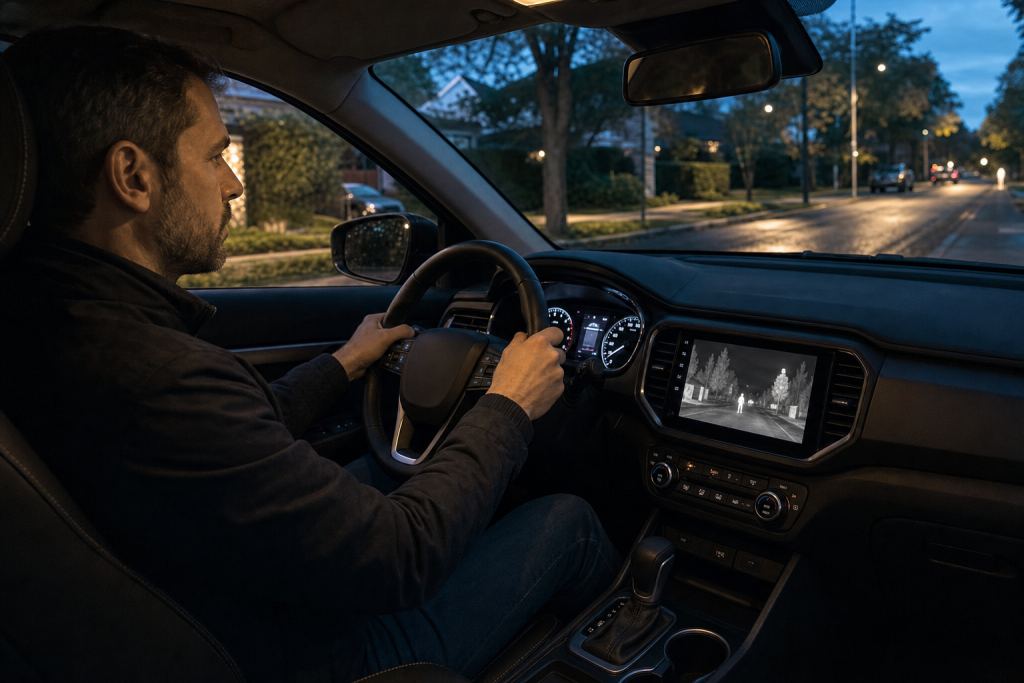
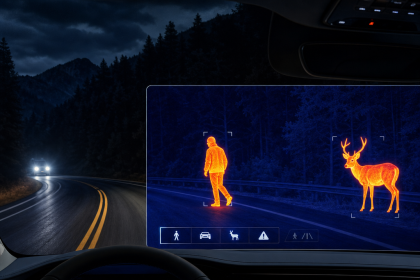
An automotive thermal night vision system uses a thermal camera to detect infrared energy emitted by people, animals, vehicles, and other objects. It translates differences in detected heat into a visible image that the driver can view on a dedicated screen or, in some configurations, through an integrated vehicle display.
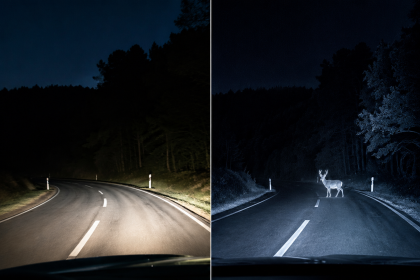
That distinction matters because thermal imaging does not work like a conventional low-light camera. A standard night-vision camera generally depends on visible light, infrared illumination, or both. A thermal imaging system detects heat contrast, so it may reveal a warm pedestrian or animal against cooler surroundings even when the road is poorly lit.
More advanced systems can also analyze the thermal image using software. Depending on the model, they may identify selected types of road users or objects and generate visual or audible alerts. These capabilities can raise the purchase price because they require additional processing hardware, software development, and a more sophisticated user interface.
Thermal night vision remains a driver-assistance technology. It does not replace legal headlights, mirrors, windshield visibility, suitable speed, safe following distance, or continuous attention to the road.
Typical Price Tiers for Thermal Night Vision
There is no single standard retail price covering every vehicle and installation. Product design varies considerably, and some prices include a display or wiring kit while others cover only part of the system. Taxes, import costs, labor rates, and regional availability also differ between the United States and Europe.
Still, the market can be understood through broad tiers.
Basic Aftermarket Systems
Entry-level equipment may cost several hundred dollars. These products typically concentrate on displaying a thermal image rather than providing extensive object recognition or integrated warnings.
A lower price may mean:
- Lower image resolution or refresh rate
- A smaller or simpler display
- Limited detection and alert functions
- Basic mounting hardware
- Less sophisticated image processing
- Few recording or connectivity options
- Installation materials sold separately
A basic system can introduce the driver to thermal imaging, but specifications alone do not show whether the image will remain clear and stable on an actual road. Buyers should examine sample footage, field of view, display readability, operating temperature range, environmental protection, and the completeness of the installation kit.
Midrange Aftermarket Systems
Midrange packages commonly move into the high hundreds or low thousands of dollars. This category may include better camera hardware, a dedicated screen, more useful mounting components, real-time detection functions, or improved durability.
This tier often makes sense for drivers who regularly use dark rural roads, travel during early-morning or late-night hours, or want a purpose-built system rather than an experimental accessory.
The quoted price still needs careful interpretation. A package that appears more expensive may include the camera, processor, screen, cables, brackets, and software, while a cheaper listing may require several additional purchases.
Premium Aftermarket and Factory-Integrated Systems
Premium systems can cost several thousand dollars once hardware and professional installation are included. Factory night vision can cost more still, especially when it is tied to a broader technology or luxury option package rather than offered as a standalone feature.
Higher-priced systems may provide:
- Better image quality and thermal sensitivity
- Longer useful detection capability
- Pedestrian, animal, or vehicle recognition
- Real-time hazard highlighting or alerts
- Improved weather and vibration resistance
- Recording functions
- A cleaner, vehicle-specific installation
- Integration with existing displays or controls
Factory integration can produce a more cohesive interface, but it may also restrict the buyer to specific vehicle models, trim levels, or option combinations. An aftermarket system offers more flexibility and may be transferable, although the installation may look less seamless.
The Main Factors That Affect the Price
Understanding the cost drivers is more useful than comparing headline prices alone. Two systems may both be called “thermal night vision” while differing substantially in capability and completeness.
Thermal Sensor Quality
The thermal camera is one of the largest contributors to cost. Resolution, sensitivity, lens design, calibration, and image processing affect how useful the picture is.
Higher resolution can make shapes easier to interpret, particularly at longer distances. Thermal sensitivity influences how well the camera distinguishes objects with relatively small temperature differences. However, a high specification on paper does not automatically ensure a good driving experience. Processing quality, field of view, display performance, and mounting position all matter.
Refresh rate is another practical consideration. A smoother image can be easier to interpret while the vehicle and surrounding traffic are moving. Buyers should compare complete system performance rather than choosing solely by the largest resolution number.
Detection Range and Field of View
Manufacturers may advertise a maximum detection distance, but “detection” does not always mean the driver or software can confidently identify the object. A system might register a heat source at a considerable distance without providing enough detail to determine whether it is a pedestrian, an animal, or another object.
Useful range depends on several factors:
- Object size and heat contrast
- Camera resolution and lens
- Road curvature and elevation
- Mounting height and alignment
- Weather and surface conditions
- Recognition software
- Display size and image processing
Field of view introduces a trade-off. A wider view can cover more roadside area, while a narrower view can make distant objects appear larger. The appropriate balance depends on whether the vehicle is used mainly on rural roads, highways, or dense city streets.
Object Recognition and Alerts
A thermal feed asks the driver to look at and interpret another display. Recognition software can reduce that burden by highlighting certain pedestrians, animals, vehicles, or obstacles and providing real-time alerts.
This functionality tends to increase the price because it adds processors, algorithms, interface design, and system testing. Its value depends on how accurately and consistently it works in real driving conditions.
Buyers should ask what the system recognizes, how an alert is presented, whether sensitivity can be adjusted, and whether frequent false or low-value warnings are likely to become distracting. Detection claims should also be separated from braking intervention claims. Many aftermarket night-vision systems inform the driver but do not control the brakes or steering.
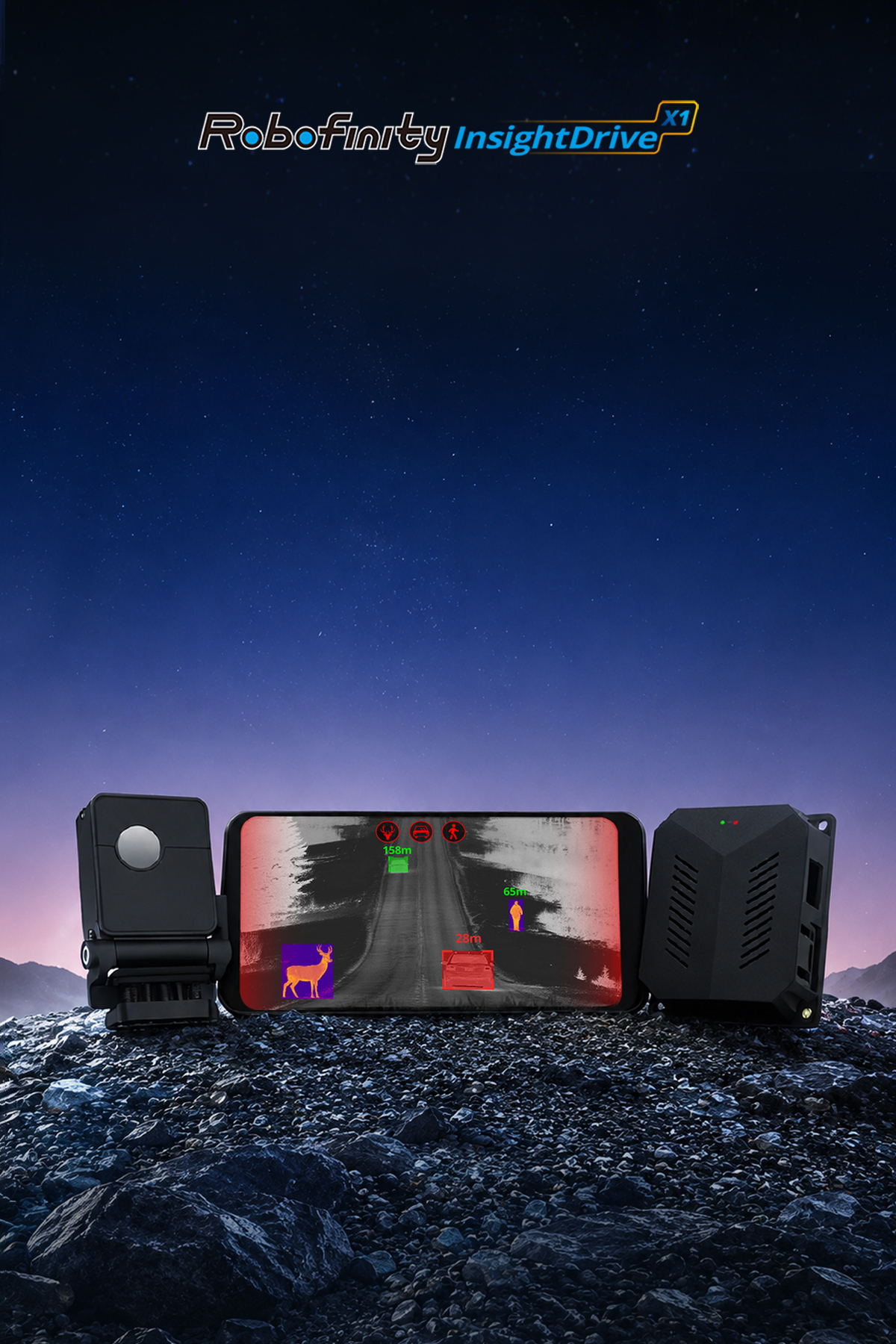
Robofinity InsightDrive is one example of an aftermarket vehicle thermal imaging night-vision system designed to support road awareness. It combines AI-powered thermal imaging with recognition of pedestrians, animals, and vehicles and can issue real-time alerts. Those functions are relevant when comparing costs because a detection-and-warning package should not be evaluated as though it were merely a thermal camera feed.
Display Hardware
Some products use a dedicated screen, while others may connect to a compatible infotainment unit or mobile device. The display arrangement affects both price and usability.
A dedicated monitor raises the hardware cost but can provide a predictable interface. Integration with an existing display may reduce dashboard clutter, although it can require adapters, software support, or vehicle-specific labor.
Screen placement matters as much as screen size. The image should be visible without blocking the driver’s view or encouraging prolonged glances away from the road. A low-priced screen that is difficult to read in sunlight, overly bright at night, or awkwardly positioned can undermine the value of the entire system.
Weatherproofing and Automotive Durability
An exterior camera must cope with rain, road spray, dust, temperature changes, vibration, and repeated exposure to the elements. Robust housings, sealed connectors, protective ratings, and automotive-grade components generally add cost.
Durability is particularly important in regions that use road salt or experience heavy snow, frequent rain, or large seasonal temperature changes. The least expensive camera may not be economical if moisture intrusion, corrosion, or connector failure requires early replacement.
A protection rating should be interpreted carefully. It may apply to the camera housing but not necessarily to every connector, display, or control module included in the package.
Recording and Connectivity Features
Some systems can record thermal video or provide data through additional connections. Recording can be useful for reviewing an event, but it also requires storage, file management, and sometimes additional hardware.
Before paying extra, determine:
- Whether storage is included
- How old recordings are overwritten
- Whether video can be exported easily
- Whether audio or location data is captured
- What privacy rules apply in the relevant country
- Whether recording continues automatically after startup
A recording feature should be valued according to actual use, not simply treated as a sign of a better safety system.
Vehicle Compatibility
A universal kit may fit many vehicles mechanically, yet still require custom work. Camera placement can be complicated by grille design, active shutters, parking sensors, radar modules, license-plate positioning, bumper structure, and available cable routes.
Modern vehicles can make seemingly simple electrical work more difficult. The installer may need a suitable power source that does not interfere with sensitive electronics or create warning messages. Electric vehicles and hybrids also require correct procedures around their electrical architecture.
Vehicle-specific brackets, interface modules, or trim work can raise the installed price, but they may produce a more stable and professional result.
Installation Costs and Why They Vary
Professional installation may add a few hundred dollars or more, depending on the vehicle, local labor rates, and the complexity of the system. Custom fabrication or display integration can increase the bill further.
A typical installation may involve:
- Selecting an unobstructed exterior camera position
- Mounting and aligning the thermal camera
- Routing protected wiring through the engine bay and firewall
- Connecting an appropriate power source
- Installing the processor and display
- Configuring alerts and display settings
- Testing the image and alignment on the road
A very low installation quote deserves scrutiny if it excludes brackets, wiring supplies, troubleshooting, or calibration. Ask for an itemized estimate and confirm whether the installer has experience with exterior cameras and modern vehicle electrical systems.
Self-installation can reduce labor expense, but it is not suitable for every buyer. Poor cable routing can expose wiring to heat, sharp edges, moving components, and water. Incorrect electrical connections can cause unreliable operation or affect other vehicle systems. Professional help is sensible when the installation crosses the firewall, requires interior trim removal, or interacts with complex electronics.
Factory Night Vision Versus an Aftermarket System
Both routes can provide useful thermal awareness, but their cost structures differ.
Factory-Installed Night Vision
Factory systems may offer a polished interface and closer integration with the instrument panel or head-up display. They are also designed for a defined vehicle platform.
The drawbacks are price and availability. Night vision may be limited to expensive models or packaged with unrelated features. Repair costs can also be significant if a proprietary camera, control module, or display component fails outside warranty.
Factory equipment may add value for the original owner, but it should not be assumed that the full option price will be recovered at resale.
Aftermarket Thermal Imaging
Aftermarket systems are available to a wider range of vehicles and allow the buyer to select features independently. The total cost may be lower than changing vehicles or purchasing a large factory option package.
Trade-offs include visible wiring or displays, installer-dependent quality, and uncertain compatibility with existing controls. Product support, replacement-part availability, and software updates should be evaluated before purchase.
A removable aftermarket system may also be transferable to another vehicle, but removal and reinstallation create additional labor costs and may require new mounting materials.
Which Features Are Worth Paying More For?
The answer depends on the driving environment. A feature has value when it addresses a recurring need, not simply because it appears on the specification sheet.
For Rural and Wildlife-Prone Roads
Pedestrian and animal recognition can be especially relevant where roads are unlit and wildlife may enter from the roadside. A useful field of view and clear alert design may matter more than smartphone connectivity.
Camera placement is critical here. A low or obstructed mount can reduce the practical view along hilly or curving roads.
For Highway Night Driving
Longer useful viewing distance, stable image processing, and a smooth frame rate can be more important at higher speeds. Even so, seeing a potential hazard does not change the vehicle’s physical stopping distance. Drivers must still adjust speed for headlight reach, weather, traffic, and road conditions.
For Cities and Suburbs
Object recognition may help organize a busy thermal scene containing pedestrians, cyclists, parked vehicles, exhaust systems, and building heat. Alert quality matters because excessive warnings can become distracting in dense traffic.
Thermal night vision is less likely to justify its cost for someone who rarely drives after dark and travels mainly on well-lit urban roads.
For Fog, Rain, and Snow
Thermal imaging may support awareness in some poor-visibility situations because it responds to heat rather than relying entirely on reflected visible light. It should not be described as seeing perfectly through every form of weather.
Heavy precipitation, fog, spray, road grime, and ice on the camera can reduce usable image quality. Conditions also affect tire grip, braking distance, lane visibility, and driver perception. Thermal information addresses only part of the risk.
Hidden and Long-Term Ownership Costs
The purchase and installation invoices are not the entire financial picture. Ownership costs can include maintenance, repairs, removal, updates, and reinstallation.
Lens Cleaning and Camera Care
An exterior camera can collect dirt, salt, insects, snow, and road film. Regular cleaning may be necessary, especially if the camera sits low in the grille. Use cleaning methods approved by the manufacturer because abrasive materials or harsh chemicals may damage the protective surface.
Damage and Replacement
A front-mounted sensor is exposed to debris and minor impacts. Ask whether the camera, display, cables, and mounting components can be purchased separately. Replacing one damaged module should not necessarily require replacing the complete system.
Software and Updates
Recognition-equipped systems may rely on firmware or software. Buyers should establish whether updates are available, how they are installed, and whether access requires a subscription. Do not assume updates are included indefinitely unless the seller states this clearly.
Battery and Power Management
The system should switch off appropriately when the vehicle is parked. Incorrect installation can contribute to battery drain. This is particularly relevant for vehicles driven infrequently or already fitted with several powered accessories.
Warranty Implications
Adding aftermarket equipment does not automatically erase all vehicle warranty protection, but a manufacturer or dealer may dispute a claim if an accessory or its installation caused the problem. Rules vary by jurisdiction, so buyers should retain invoices and installation records and seek region-specific advice when necessary.
A Practical Way to Compare Quotes
Comparing complete installed packages prevents a low headline price from hiding necessary extras. Request written details from each seller or installer.
Use the following checklist:
- Included equipment: Confirm whether the price covers the camera, processor, display, cables, brackets, storage, and control hardware.
- Core image specifications: Review resolution, refresh rate, field of view, and operating conditions without judging the system on one number.
- Detection functions: Identify which object categories the software recognizes and how alerts reach the driver.
- Installation scope: Ask about labor, custom brackets, wiring supplies, trim work, configuration, and road testing.
- Vehicle compatibility: Confirm fitment for the exact make, model, year, trim, and existing driver-assistance equipment.
- Weather protection: Check which components have documented protection against dust and water.
- Support and replacement parts: Establish who handles technical problems and whether individual components can be replaced.
- Warranty coverage: Separate product coverage from installation workmanship coverage.
- Ongoing fees: Ask about subscriptions, software access, cloud storage, or paid updates.
- Total ownership estimate: Include installation, likely maintenance, and possible transfer or removal costs.
This approach turns the decision from “Which unit is cheapest?” into “Which complete system fits my vehicle and driving pattern at a reasonable total cost?”
When the Expense Makes Sense
A thermal system is easier to justify for drivers who encounter the conditions it is designed to address. That can include regular nighttime commuting, rural travel, wildlife-prone routes, unlit highways, or long winter journeys with limited daylight.
Consider three questions:
- How frequently do I drive in darkness or poor visibility?
- Are pedestrians, animals, or roadside hazards a recurring concern on my routes?
- Will the display and alerts support awareness without creating distraction?
For a driver who rarely travels at night, the same budget might be better spent on fresh tires, windshield replacement, headlight restoration, corrective eyewear, or overdue maintenance. Thermal imaging should complement a roadworthy vehicle rather than take priority over essential safety work.
For a frequent rural night driver, paying more for dependable image quality, environmental protection, and well-designed recognition alerts may be reasonable. The benefit is earlier awareness of some warm objects outside the most clearly illuminated area, not guaranteed avoidance of a collision.
Common Buying Mistakes
Treating Maximum Range as the Only Measure
A long advertised range does not establish recognition accuracy, image clarity, or useful warning time. Ask what the distance figure represents and under which conditions it was measured.
Ignoring Installation Quality
A capable camera can perform poorly if it is mounted behind an unsuitable material, pointed incorrectly, exposed to spray, or connected to an unreliable power source.
Assuming Every System Uses True Thermal Imaging
Some listings use “night vision” broadly. Verify whether the product contains a thermal sensor or is a conventional camera using visible light or infrared illumination. These technologies behave differently and should not be priced as though they are interchangeable.
Focusing on Hardware but Not the Interface
The driver must be able to understand warnings quickly. Confusing icons, excessive alerts, a poorly positioned display, or high screen brightness can turn an awareness tool into a distraction.
Expecting the Technology to Replace Normal Vision
Thermal images do not show every road detail. Lane markings, signs, potholes, debris, and cold objects may not stand out clearly. Headlights and direct observation remain essential.
Frequently Asked Questions
How much does a car thermal night vision system usually cost?
Basic aftermarket equipment may cost several hundred dollars, while more capable systems can reach the high hundreds, low thousands, or more. Premium aftermarket packages and factory-integrated options may cost several thousand dollars. Installation, vehicle-specific hardware, taxes, and regional pricing affect the final amount.
Is professional installation included in the advertised price?
Often it is not. Product listings may cover only the equipment, so check for labor, brackets, wiring materials, display mounting, configuration, and testing. Obtain an itemized installed quote before comparing alternatives.
Is thermal night vision better than a standard night-vision camera?
It serves a different purpose. Thermal imaging detects heat contrast and can make warm pedestrians or animals easier to distinguish in darkness. Conventional cameras may show road markings, signs, and other visible details more naturally. The better choice depends on the intended use.
Can thermal night vision see through fog or heavy rain?
It may retain useful heat-contrast information in some poor-visibility conditions, but it cannot see perfectly through all fog, rain, snow, or road spray. Weather can weaken image quality or obscure the camera, and drivers must reduce speed appropriately.
Does a thermal system automatically brake for hazards?
Not necessarily. Many aftermarket systems display images and provide alerts without controlling the brakes or steering. Buyers should verify the exact functions and never assume that detection includes automatic intervention.
Is a more expensive system always safer?
No. Higher prices may reflect better hardware, recognition software, durability, integration, or bundled equipment, but suitability depends on actual performance, installation quality, alert design, and the driver’s needs. No price tier guarantees safety.
Conclusion
The cost of automotive thermal night vision reflects an entire system, not just a camera. Sensor quality, useful detection distance, object recognition, alerts, display hardware, weather protection, vehicle compatibility, and installation all shape the final bill. Ongoing factors such as cleaning, replacement parts, updates, and possible reinstallation also deserve consideration.
For buyers, the most reliable method is to compare complete installed quotes against real driving conditions. Prioritize a clear image, appropriate field of view, restrained alerts, durable hardware, and competent installation over impressive but poorly defined specifications. A well-chosen thermal imaging system may improve awareness on dark or poorly visible roads, but its value depends on disciplined use alongside headlights, safe speed, adequate braking distance, and uninterrupted driver attention.