SEO Title: How Automotive Safety Technology Is Changing
- What Is Driving the Shift in Automotive Safety?
- The Biggest Changes Happening Now
- From Passive Protection to Active Prevention
- From Single-Function Features to Layered Systems
- From Luxury Features to Everyday Expectations
- How the Main Safety Technologies Work in Practice
- Automatic Emergency Braking
- Lane Departure Warning and Lane Keeping Support
- Blind Spot Monitoring
- Adaptive Cruise Control
- Why Visibility Is Becoming a Bigger Safety Issue
- Where the Technology Helps Most
- What Safety Technology Still Cannot Do
- How Buyers Should Evaluate Safety Features
- The Ownership Side of Safety Technology
- The Role of Aftermarket Safety Upgrades
- What This Means for the Future
- FAQ
- What is automotive safety technology?
- Is driver-assistance technology the same as self-driving?
- Which safety features matter most for everyday driving?
- Do safety systems work in bad weather?
- Are aftermarket safety upgrades worth considering?
- How often should safety sensors be checked?
- Conclusion
Meta Description: Learn how automotive safety technology is changing, what features matter most, and how drivers can use new systems without overrelying on them.
Automotive safety technology is changing in a practical way that affects daily driving, not just the spec sheet. From automatic emergency braking to lane support, smarter cameras, and better nighttime awareness, the modern vehicle is becoming more capable of helping drivers notice risk sooner. For anyone comparing new cars, evaluating upgrades, or simply trying to understand the direction of the industry, the key question is not whether these systems are impressive. It is how they change the driving experience, where they help, and where they still depend on the person behind the wheel. That is the real story of how automotive safety technology is changing.
What Is Driving the Shift in Automotive Safety?
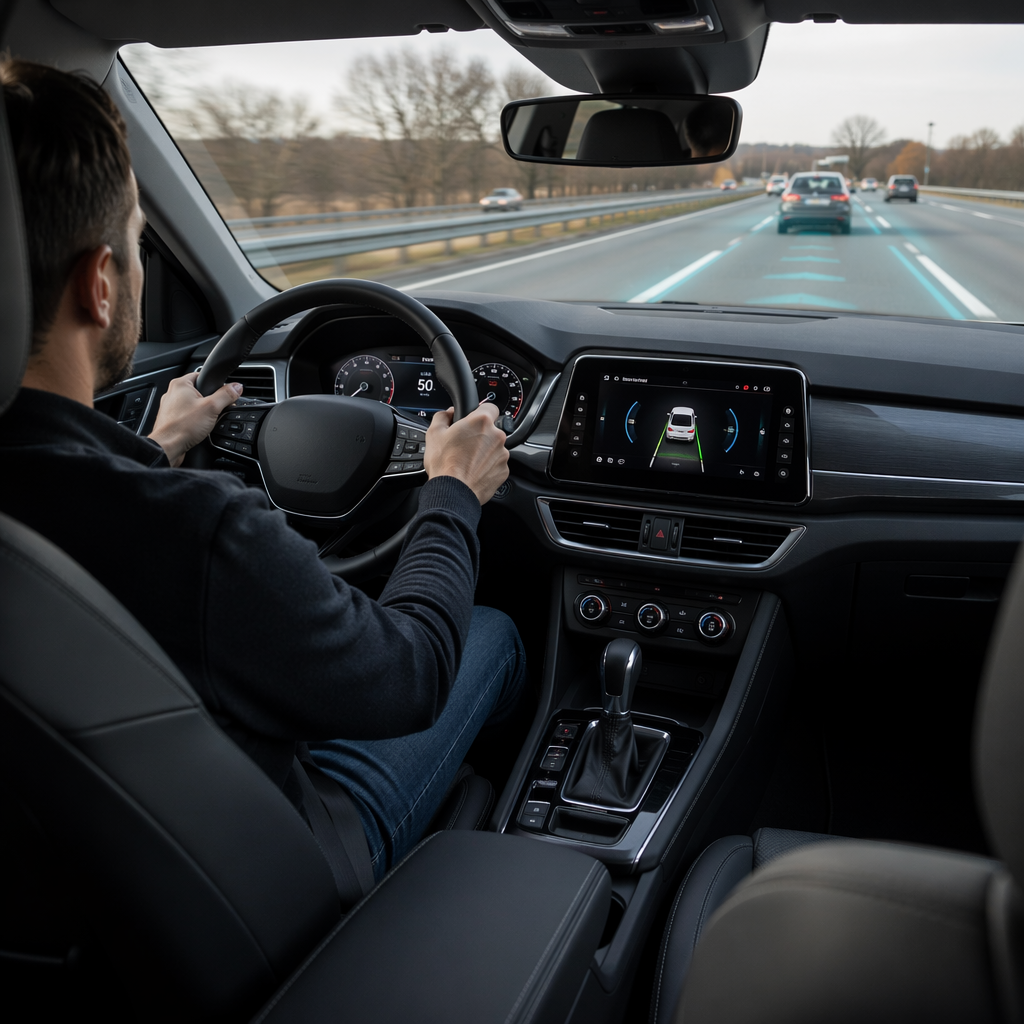
The biggest change is that safety is no longer limited to passive protection. Airbags, crumple zones, and seat belts remain essential, but they mainly help after a crash has begun. Modern vehicle safety technology is increasingly focused on preventing the crash in the first place or reducing the chance that a driver misses an important hazard.
Several forces are pushing that shift:
- More sensors and better processing power are now affordable in mainstream vehicles.
- Camera, radar, and ultrasonic systems can be packaged into everyday cars, not only premium models.
- Drivers spend more time in crowded traffic, at night, and in poor-weather conditions where visibility is reduced.
- Buyers increasingly expect convenience features to double as safety tools.
- Automakers are building systems that can respond faster and more consistently than human reaction alone in some situations.
This does not mean cars are becoming self-driving in the near term. It means the safety baseline is rising. The modern car is turning into an active partner that watches, warns, and sometimes intervenes.
The Biggest Changes Happening Now
From Passive Protection to Active Prevention
The traditional approach to vehicle safety was built around surviving impacts. That remains important, but today’s driver-assistance technology aims to reduce the odds of impact altogether. Features such as automatic emergency braking, forward collision warnings, blind spot monitoring, and rear cross-traffic alerts are designed to make hazards visible sooner.
This matters because many crashes are not caused by lack of knowledge. They happen because the driver had too little time, too little visibility, or too much information competing for attention. A good safety system does not replace judgment; it extends awareness.
From Single-Function Features to Layered Systems
Older safety features often did one job well. Newer systems work as a chain. A front camera may detect lane markings, a radar sensor may track vehicle distance, and software may decide whether to warn the driver or apply braking support. That layering is important because no single sensor is perfect in all conditions.
For example:
- Cameras are strong for reading lane markings and signs, but they can struggle in glare or darkness.
- Radar is useful for distance and movement detection, but it is less visually detailed.
- Ultrasonic sensors help at very low speeds, but not at highway distances.
The shift is not about one “magic” feature. It is about combining different tools to cover more of the road environment.
From Luxury Features to Everyday Expectations
Many technologies that once felt premium are now common in compact cars and family vehicles. Buyers increasingly expect lane departure warnings, parking sensors, adaptive cruise control, and blind spot alerts as part of the standard safety conversation.
That changes the market in two ways. First, it gives more drivers access to helpful tools. Second, it raises the bar for what people consider an acceptable baseline in a new car. Safety is becoming a selling point, a comparison factor, and a daily ownership issue all at once.
How the Main Safety Technologies Work in Practice
Automatic Emergency Braking
Automatic emergency braking uses sensors to detect a likely collision and may apply the brakes if the driver does not react in time. In practical terms, this is most useful in stop-and-go traffic, urban driving, and moments when a distraction or sudden event shortens reaction time.
Its value is straightforward, but it has limits. It cannot predict every object, road shape, or unusual movement. It should be viewed as a backstop, not a replacement for attentive driving.
Lane Departure Warning and Lane Keeping Support
These systems help the driver stay centered and can warn if the vehicle drifts without signaling. Some vehicles gently steer back into the lane when needed.
They are especially helpful on long trips, fatigue-heavy drives, and roads where a minor drift can become dangerous fast. Still, they work best when lane markings are clear. Construction zones, worn paint, snow, rain, and bright reflections can weaken performance.
Blind Spot Monitoring
Blind spot monitoring has become one of the most practical safety additions for everyday driving. It addresses a common real-world problem: a car or motorcycle sitting where mirrors do not give a complete view.
This technology is most useful during lane changes, merging, and highway driving. It reduces uncertainty, but it does not eliminate the need for shoulder checks and mirror discipline.
Adaptive Cruise Control
Adaptive cruise control maintains a set speed and can adjust following distance automatically. In real use, it reduces fatigue on long drives and helps smooth out traffic flow.
It is useful, but drivers should not assume it can handle every traffic pattern cleanly. Cut-ins, abrupt braking, and complicated merges still require attention. The system assists the driver; it does not manage the trip alone.
Why Visibility Is Becoming a Bigger Safety Issue
A lot of modern safety progress is really about visibility. That includes more than headlights. It includes how well the vehicle can detect hazards in darkness, fog, rain, glare, and cluttered traffic.
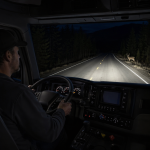
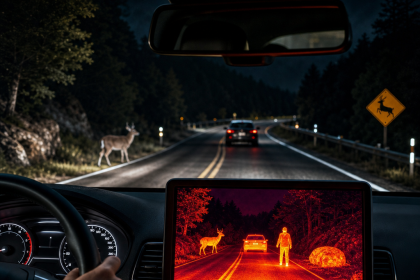
Night driving is a good example. A human driver may have excellent headlights, but still miss a pedestrian in dark clothing near the roadside, a cyclist in a shadow, or an animal moving into the lane from a field edge. The challenge is not only seeing farther. It is seeing differently.
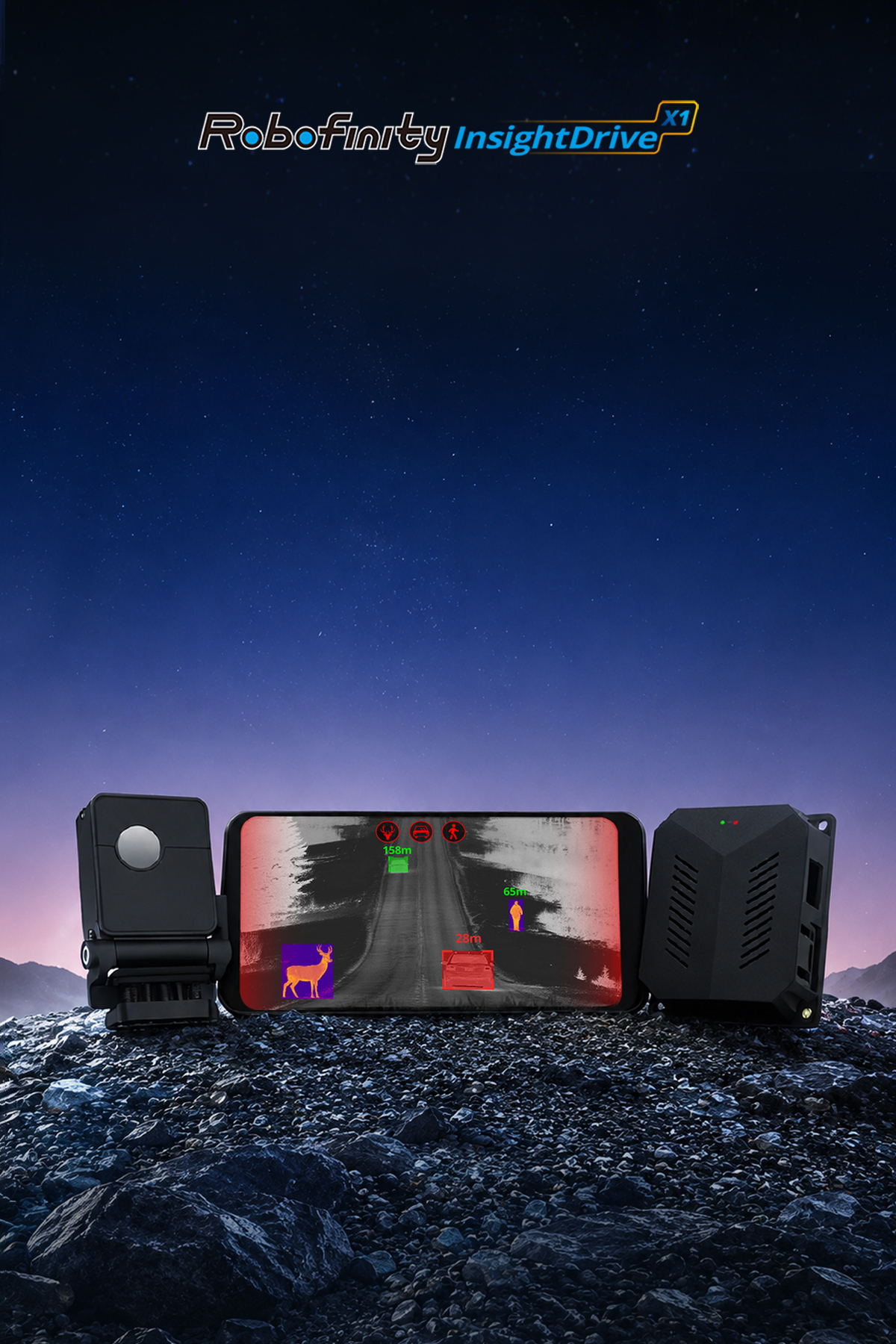
This is why advanced road awareness tools are getting more attention. Some vehicles and aftermarket systems now use thermal imaging to help identify people, animals, and obstacles in low-light or poor-visibility conditions. Robofinity InsightDrive is one example of a vehicle thermal imaging night vision system that may help improve awareness in those situations. It is not a substitute for headlights, mirrors, or driver attention, but it reflects a broader shift toward giving drivers more usable information when vision alone is limited.
Where the Technology Helps Most
City Driving
Urban driving benefits from systems that support quick reaction and low-speed awareness. Pedestrian detection, forward collision warnings, and parking assistance can all be useful where traffic changes quickly and road users are unpredictable.
In city settings, the main risk is not always speed. It is complexity. A driver may be watching traffic lights, cyclists, crosswalks, delivery vehicles, and pedestrians at the same time. Safety technology can reduce the chance that one hazard is missed.
Highway Driving
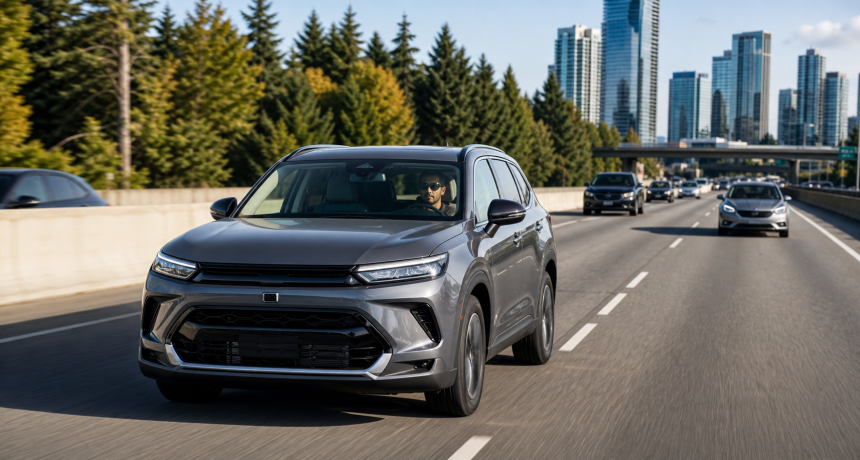
At highway speeds, small errors become more serious. Adaptive cruise control, lane support, and blind spot monitoring are useful because they help reduce fatigue and improve consistency over long distances.
These tools are especially relevant on multi-hour trips, where a driver’s attention naturally fluctuates. They help, but they do not remove the need to watch traffic patterns, road conditions, and merging vehicles carefully.
Rural Roads and Night Travel
Rural roads create a different challenge: less lighting, fewer lane markings, and a higher chance of encountering animals or unexpected obstacles. Standard safety systems may still help, but visibility is often the core issue.
This is where low-light awareness technology matters most. In conditions like fog, rain, snow, and headlight glare, even a careful driver can lose valuable seconds of recognition. Systems designed to improve hazard detection in those conditions are part of the reason automotive safety technology is changing so quickly.
What Safety Technology Still Cannot Do
It is easy to overstate what modern systems can accomplish. The honest answer is that they still have clear boundaries.
They cannot:
- See through all weather or all forms of darkness.
- Predict every driver behavior.
- Eliminate the need for proper following distance.
- Replace clean mirrors, working lights, and good tire condition.
- Compensate for distracted, tired, or impaired driving.
That is why the smartest way to think about these features is as support, not control. A car that helps with awareness is useful. A car that creates false confidence is not.
Drivers should also remember that safety systems depend on maintenance. Dirty sensors, blocked cameras, damaged bumpers, low windshield washer fluid, and neglected software updates can all reduce effectiveness. The technology is only as useful as the condition of the vehicle that carries it.
How Buyers Should Evaluate Safety Features
If you are shopping for a car, the useful question is not “Does it have safety tech?” Nearly every new vehicle does. The better question is which systems match the driving you actually do.
Consider these factors:
- If you drive mostly in cities, prioritize pedestrian detection, automatic emergency braking, and parking support.
- If you commute on highways, look closely at blind spot monitoring, lane support, and adaptive cruise control.
- If you drive at night or on rural roads, pay attention to visibility support, headlight performance, and hazard detection in poor-light conditions.
- If your household includes new drivers, pick systems that are easy to understand and do not create confusing alerts.
- If you keep cars for a long time, think about repair complexity and whether the system will be expensive to service.
The best safety package is not always the one with the most features. It is the one that fits your use case and stays reliable over time.
The Ownership Side of Safety Technology
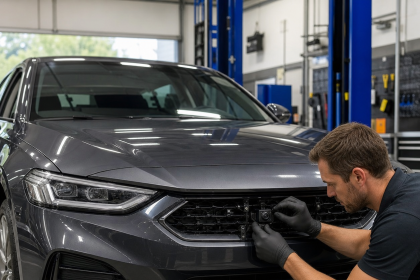
Safety technology affects ownership beyond the showroom. Replacement sensors, camera calibration, windshield repairs, bumper damage, and software-related service can all change the cost of keeping a vehicle in top shape.
That matters because a feature that seems simple on paper may require careful maintenance in practice. For example, replacing a windshield can affect camera alignment in some vehicles. A minor parking bump may damage a sensor hidden behind bodywork. Even a good system may stop working correctly if dirt, ice, or road grime obscures its view.
Owners should treat safety systems as part of the vehicle’s operating equipment, not decorative extras. A quick visual check of lights, sensors, and warning indicators is worth making part of regular driving habits.
The Role of Aftermarket Safety Upgrades
Factory systems are becoming more capable, but some drivers still want additional awareness tools. That can be especially true for people who drive long distances at night, use older vehicles, or regularly travel through poor-visibility areas.
Aftermarket options are not a replacement for a well-equipped car, but they can provide another layer of support when used correctly. Some are designed to help with thermal detection or enhanced road awareness in dark environments. The important part is to view them as assistance tools with limitations, not as a guarantee of safety or a substitute for good driving habits.
What This Means for the Future
The next phase of automotive safety technology is likely to be less about flashy novelty and more about refinement. Better object recognition, more reliable alerts, improved performance in bad weather, and fewer false warnings are the developments that will matter most to everyday drivers.
The trend is clear: safety systems are becoming more aware, more integrated, and more routine. Cars are moving toward a model where prevention is as important as protection. That is a meaningful change, because it can reduce stress, improve confidence, and help drivers respond earlier to hazards they might otherwise miss.
Still, the core principle has not changed. Good safety technology works best when it supports a careful driver in a well-maintained vehicle. The human role remains central.
FAQ
What is automotive safety technology?
It refers to vehicle systems designed to help prevent crashes, reduce collision severity, or improve awareness. This includes features like automatic emergency braking, lane support, blind spot monitoring, and parking sensors.
Is driver-assistance technology the same as self-driving?
No. Driver-assistance technology helps the driver with awareness or control, but it does not turn the vehicle into a fully autonomous car. The driver is still responsible for attention and decision-making.
Which safety features matter most for everyday driving?
Automatic emergency braking, blind spot monitoring, lane departure warning, and rear cross-traffic alerts are among the most broadly useful features. The best choice depends on whether you drive mostly in cities, on highways, or in low-light conditions.
Do safety systems work in bad weather?
They can help, but performance often depends on the weather and the sensor type. Heavy rain, snow, fog, glare, dirt, and ice can reduce effectiveness, which is why no system should be treated as foolproof.
Are aftermarket safety upgrades worth considering?
They can be, especially for drivers who use older vehicles or regularly face poor visibility at night. The key is to choose tools that add awareness without creating a false sense of security.
How often should safety sensors be checked?
They should be inspected whenever warning lights appear, after a collision or bumper repair, and whenever dirt, ice, or windshield damage may affect their view. Regular cleaning and routine maintenance help keep them working properly.
Conclusion
Automotive safety technology is changing because driving conditions are changing, and because vehicles now have the tools to do more than simply absorb impact. The most useful systems today help drivers see earlier, react sooner, and reduce the workload in traffic, at night, and in poor weather. That makes them valuable, but not magical.
The practical takeaway is simple: focus on the features that match your driving habits, maintain them properly, and keep your expectations grounded. The safest approach is still the combination of a well-maintained vehicle, attentive driving, and technology that supports awareness rather than replacing it.