
Buying a new vehicle in the United States has become a bigger financial decision than ever, and shoppers in 2026 are asking the same two questions: what is the average new car cost, and is now actually a good time to buy? Between higher interest rates, changing incentives, and a market that still feels uneven after years of disruption, the answer is more nuanced than a simple yes or no. Understanding how pricing works in 2026 can help buyers decide whether to purchase now, wait, lease, or shop used instead.
- What a New Car Costs in 2026
- Vehicle Type Matters More Than Ever
- Trim Levels Can Change the Budget Fast
- Electric Vehicles Still Influence the Market
- Why New Cars Feel Expensive in 2026
- Higher Standard Features Raise the Floor
- Financing Costs Still Matter
- Inventory and Incentives Are Uneven
- Is Now a Good Time to Buy?
- What Buyers Should Look at Beyond the Sticker Price
- How to Shop Smarter in 2026
- Compare Multiple Offers
- Be Flexible on Trim and Color
- Time Your Purchase Carefully
- Know When to Walk Away
- New car cost and Long-Term Ownership
- The Bottom Line
Table of Contents
What a New Car Costs in 2026
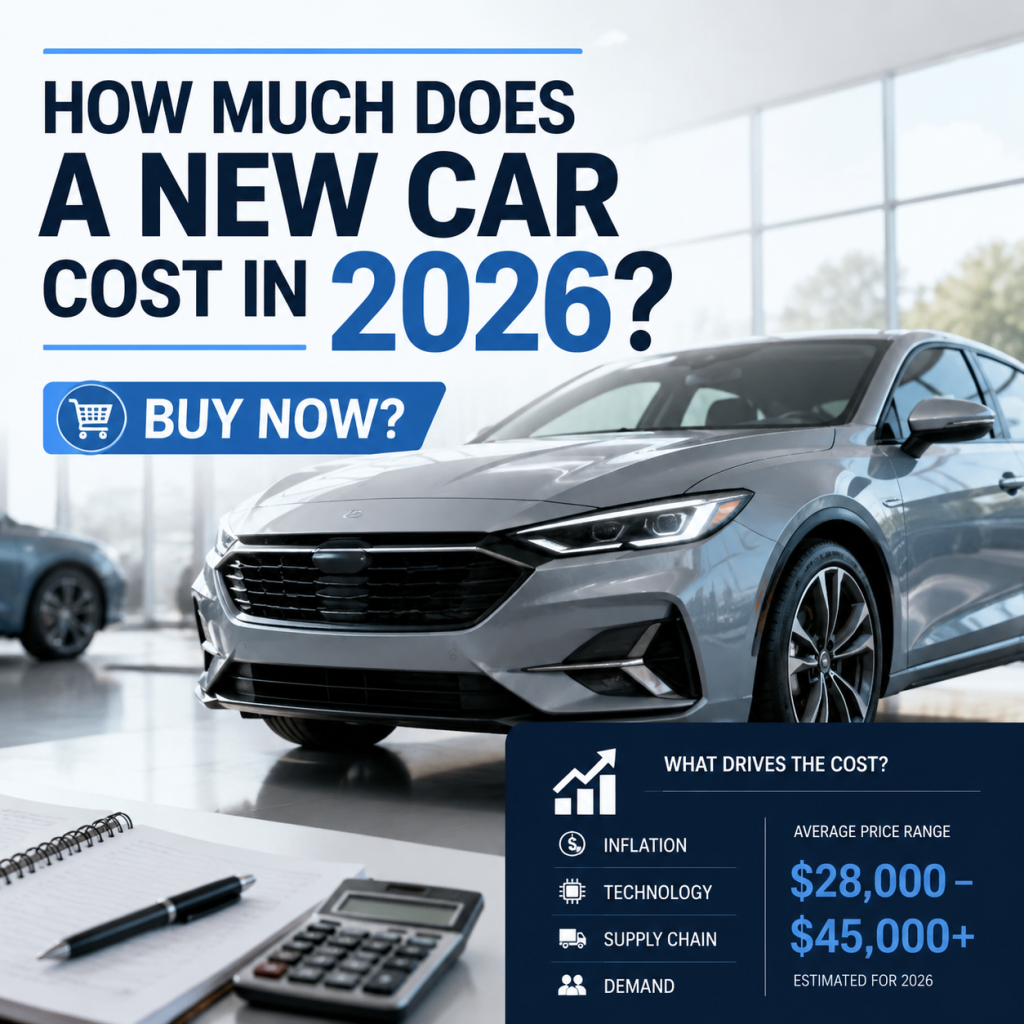
The new car cost in the U.S. varies widely by brand, trim level, drivetrain, and technology package. In 2026, most buyers can expect the average transaction price for a new vehicle to land in the low-to-mid $40,000 range, with many compact models still available below that level and trucks, SUVs, and electric vehicles often pushing prices much higher.
That headline number is only the starting point. A buyer cross-shopping a practical compact sedan, a midsize crossover, and a fully loaded pickup will see three very different price structures. The new car cost you actually pay depends on the vehicle category, the options you select, the financing you use, and how much negotiation room exists at the dealership.
Several factors continue to shape the market:
Vehicle Type Matters More Than Ever
A compact sedan will usually remain the least expensive new-vehicle category, while full-size pickup trucks and three-row SUVs often sit near the top of the pricing ladder. Crossovers remain the most popular choice for many families, and that popularity supports higher average prices because automakers keep adding features and moving buyers into higher trims. Even a modestly equipped crossover can push the new car cost higher than many shoppers expect once all options are included.
Trim Levels Can Change the Budget Fast
The base model of a vehicle may look affordable on paper, but many shoppers end up choosing mid-level trims with safety tech, larger screens, advanced driver assistance systems, and convenience features. That can easily add several thousand dollars to the final price. In 2026, the sticker price is only part of the story; the real cost often comes from the configuration buyers choose. A model that starts as a bargain can become a much pricier purchase once packages and dealer-installed accessories are added.
Electric Vehicles Still Influence the Market
EV pricing remains a major part of the conversation. Some electric models have become more competitive, but others still carry premium pricing due to battery costs and advanced software. In addition, the incentive landscape can shift quickly, affecting the effective purchase price. Buyers considering an EV should look closely at local charging access, incentive eligibility, and resale value rather than focusing only on the headline price. In some cases, the advertised new car cost looks high until tax credits or manufacturer rebates are applied, but those savings are not guaranteed for every household or location.
If you are comparing segments, it can also help to review other ownership-focused guides like most reliable car brands in 2026 before narrowing your shortlist.
Why New Cars Feel Expensive in 2026
Many consumers feel like vehicles cost more than they used to, and in many cases that perception is accurate. Inflation, supply chain changes, labor costs, and greater standard equipment have all contributed to higher prices over time.
There is also a psychological effect at work. Shoppers compare today’s new car cost with what they remember paying several years ago, but those older purchase memories often ignore how much equipment has been added since then. The result is a gap between what buyers expect and what they see on the window sticker.
Higher Standard Features Raise the Floor
Automakers have spent the last several years making features that once felt premium into standard equipment. Automatic emergency braking, lane-keeping systems, large infotainment displays, and smartphone integration are now common on many entry-level vehicles. That improves safety and convenience, but it also means the cheapest new cars are no longer as stripped down as they once were.
For many families, this is a fair trade. The problem is that the added safety and convenience equipment raises the entry point, which pushes the overall new car cost upward across the market. Even shoppers who avoid premium trims can feel the effect when standard equipment lists are longer than they were a decade ago.
Financing Costs Still Matter
Even if the sticker price is only moderately higher than in previous years, monthly payments can rise sharply when interest rates remain elevated. A buyer financing a vehicle over five or six years may end up paying thousands more in interest than they would have during a lower-rate period. For many shoppers, the financing terms matter just as much as the purchase price.
That is why two buyers can choose the same vehicle and still experience a very different new car cost. One person might make a large down payment and qualify for a competitive rate, while another stretches the loan term and pays far more over time. Looking only at the monthly payment can hide the true cost of the car.
Inventory and Incentives Are Uneven
The market in 2026 is not identical across every brand or region. Some dealers have plenty of inventory and are willing to negotiate, while others still charge near sticker price for high-demand models. Incentives can also vary significantly. One automaker may offer cash rebates or low-rate financing, while another may provide little help because demand remains strong.
This unevenness matters because the same model may have a very different effective new car cost depending on when and where you shop. A buyer in one state may find several thousand dollars in incentives, while another shopper in a different market sees almost none. That is why local research is essential.
Is Now a Good Time to Buy?
For some buyers, yes. For others, waiting may be smarter. The right answer depends on your situation, your financing options, and the kind of vehicle you want.
If your current car is still dependable and your budget is tight, the best move may be to wait and keep comparing offers. But if you are facing major repairs or need a replacement soon, the new car cost in 2026 may still be manageable if you shop carefully and avoid unnecessary extras.
Reasons to Buy Now
If your current car is unreliable, expensive to repair, or no longer safe for your needs, waiting may cost more in the long run. Repair bills, downtime, and rising maintenance costs can quickly outweigh the benefits of delaying a purchase. Buying now can also make sense if you find a well-priced model with strong incentives, especially if the manufacturer is offering low APR financing or cash back.
Another reason to move now is selection. If you need a specific body style, all-wheel drive, towing capacity, or a particular trim, the right vehicle may be available today but not later. In some cases, a good deal is worth taking when it appears. This is especially true when the final new car cost already fits your budget and the dealer is willing to negotiate on fees or add-ons.
Buyers with strong credit may also benefit from the current environment if they can secure a competitive loan through a bank or credit union. A lower interest rate can reduce the overall new car cost enough to make buying now more appealing than waiting for a modest sticker-price drop.
Reasons to Wait
If you are not in a hurry, waiting can still offer advantages. Prices may soften on certain models as inventory builds, and dealers may become more flexible if sales slow. Buyers who can wait also have more time to improve their credit score, increase their down payment, and compare financing options. That can lead to a better total cost even if the sticker price does not change much.
If your goal is to keep monthly payments low, patience can be especially valuable. The combination of high vehicle prices and financing costs means timing matters more than it did in past years. A modest improvement in the loan rate can make a noticeable difference in the total new car cost over the life of the loan.
For shoppers who are still deciding between new and used, a guide like best age to buy a used car for maximum value may help clarify whether waiting is worth it.
It can also help to compare your budget against broader ownership costs using resources such as the Edmunds guide to car buying budgets, which explains how monthly payments, down payments, and loan terms affect affordability.
What Buyers Should Look at Beyond the Sticker Price
A smart car purchase in 2026 requires looking beyond the advertised MSRP. The true cost of ownership includes much more than the window sticker.
To understand the real new car cost, buyers should treat the purchase like a full budget decision rather than a single-number comparison. That means accounting for financing, insurance, registration, fuel or charging, and long-term depreciation.
Monthly Payment vs. Total Cost
A low monthly payment can be tempting, but stretching the loan term may make the car significantly more expensive over time. Buyers should compare the total amount financed, the interest rate, the trade-in value, and the length of the loan before signing anything.
Longer terms can reduce the payment but increase the amount of interest paid. That is one of the most common reasons the final new car cost ends up higher than expected. A shorter loan may feel less comfortable month to month, but it often saves money overall.
Insurance, Taxes, and Fees
Insurance premiums have climbed in many regions, especially for newer vehicles packed with technology. Sales tax, registration fees, dealer documentation fees, and add-ons can also add several thousand dollars to the final bill. These costs should be part of your budget from the beginning.
Fees can also vary by dealership, so it is worth asking for a written breakdown before you commit. In some cases, the advertised new car cost appears reasonable until the paperwork includes delivery charges, protection packages, or other extras that were not included in the initial quote.
Maintenance and Depreciation
A vehicle that looks affordable today may lose value quickly or cost more to maintain over time. Reliability ratings, warranty coverage, and expected resale value should all influence the decision. A slightly more expensive vehicle with better long-term value may be the smarter choice.
Depreciation is especially important because it affects what the vehicle is worth when you trade it in or sell it later. A model with a lower new car cost can still be more expensive in the long run if it loses value rapidly. On the other hand, a vehicle with stronger resale demand may protect more of your money over time.
For buyers comparing long-term ownership value, it can help to think about the complete picture: purchase price, loan interest, fuel economy, insurance, and expected repairs. The cheapest sticker price does not always deliver the cheapest ownership experience.
For a benchmark on what reliable ownership can look like after purchase, see the Consumer Reports cars overview for research-driven model and reliability information.
How to Shop Smarter in 2026
The best way to save money is to shop with discipline and flexibility.
Shoppers who control the process often reduce the final new car cost without sacrificing the features they want. A little preparation can make a meaningful difference.
Compare Multiple Offers
Get quotes from several dealers, including online price offers if available. Dealers often compete more aggressively when they know you are shopping around. It also helps to compare financing through your bank or credit union before accepting dealer financing.
When you compare offers, look at the total out-the-door price, not just the monthly payment. That includes taxes, title, fees, and any dealer-installed items. A dealer with a slightly higher sticker price may still deliver the lower new car cost if the fee structure is cleaner and the financing is better.
Be Flexible on Trim and Color
If you are willing to accept a different color, trim, or package, you may find a much better deal. Popular combinations can carry premiums, while less common configurations may be discounted to move inventory.
This flexibility can be one of the easiest ways to lower the new car cost without compromising the vehicle’s core usefulness. Many buyers focus on a perfect color or feature bundle, but adjusting one or two preferences can unlock better pricing.
Time Your Purchase Carefully
End-of-month, end-of-quarter, and model-year clearance periods can sometimes create stronger negotiating opportunities. While there is no universal “best” day to buy, timing your search around dealership sales goals can work in your favor.
If your timing is flexible, comparing the new car cost with manufacturer incentives and local dealer inventory can make a real difference in the final number you pay. A lower headline price does not always mean the best deal, but a well-timed purchase often reduces both the upfront price and the total amount financed.
Know When to Walk Away
Not every offer is worth accepting, even if the vehicle seems close to what you want. If the dealership adds unnecessary protection packages, inflated fees, or pressure tactics, it may be better to leave and keep shopping. The patience to walk away often protects your budget more than any single rebate.
That discipline can also keep the final new car cost from drifting upward through small add-ons that seem harmless individually but become expensive together.
New car cost and Long-Term Ownership
One reason buyers feel uncertain in 2026 is that the decision does not end on delivery day. The purchase price is only the first step in a longer ownership timeline.
For many households, the most important question is not just whether they can afford the monthly payment, but whether the new car cost makes sense over three, five, or seven years of ownership. A vehicle that fits today may become stressful later if insurance, fuel, or repair costs rise faster than expected.
Budgeting for the First Year
The first year of ownership often includes extra expenses such as registration, accessories, floor mats, winter tires, home charging equipment for EVs, or a higher insurance premium. Buyers should plan for those costs in addition to the purchase price.
Keeping a small reserve for maintenance and unexpected expenses is also smart. Even a brand-new vehicle can need minor repairs or replacement items, and those costs should be part of the overall new car cost calculation.
Thinking About Resale Value
Resale value matters because it changes your net cost after ownership ends. Vehicles with strong reputations for reliability, fuel efficiency, and broad market appeal often hold value better than niche or heavily optioned models.
That is why some buyers choose a slightly less expensive trim or a more common configuration. It can lower the purchase price and help the vehicle appeal to a wider group of future buyers, which may improve the long-term new car cost equation.
When Used Cars Make More Sense
There are times when a used vehicle offers better value, especially if you are trying to minimize depreciation and avoid a large loan balance. If that route is under consideration, a comparison guide such as used car to buy: top reliable picks can help you evaluate alternatives before committing to a brand-new model.
For some shoppers, the right decision is not to chase the lowest possible new car cost at all, but to choose the vehicle that creates the healthiest balance between price, reliability, and ownership expenses.
If keeping long-term costs low is your top priority, another useful reference is cost to own a car: what you really need to budget, which breaks down the expenses that matter after the sale.
The Bottom Line
In 2026, the new car cost in the U.S. remains high enough that buyers need to plan carefully. Many shoppers will find that the average new vehicle still falls around the mid-$40,000 range, with plenty of options both below and well above that level depending on category and trim. Whether now is a good time to buy depends on your urgency, your financing terms, and the specific model you want.
If you need a car soon and find a fair deal with manageable payments, buying now can make sense. If you have time and can wait for better incentives, more inventory, or improved financing conditions, delaying may save money. The smartest move is not simply buying when prices look lower, but buying when the total ownership cost fits your budget and needs.
In other words, watch the total deal, not just the sticker price. That is the easiest way to keep the new car cost under control in a market that still rewards careful shoppers.