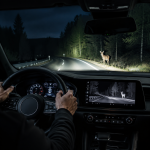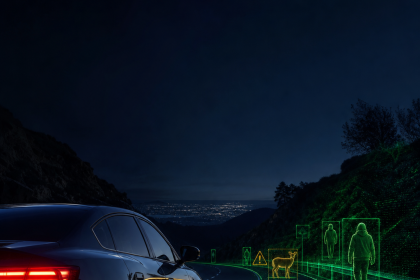
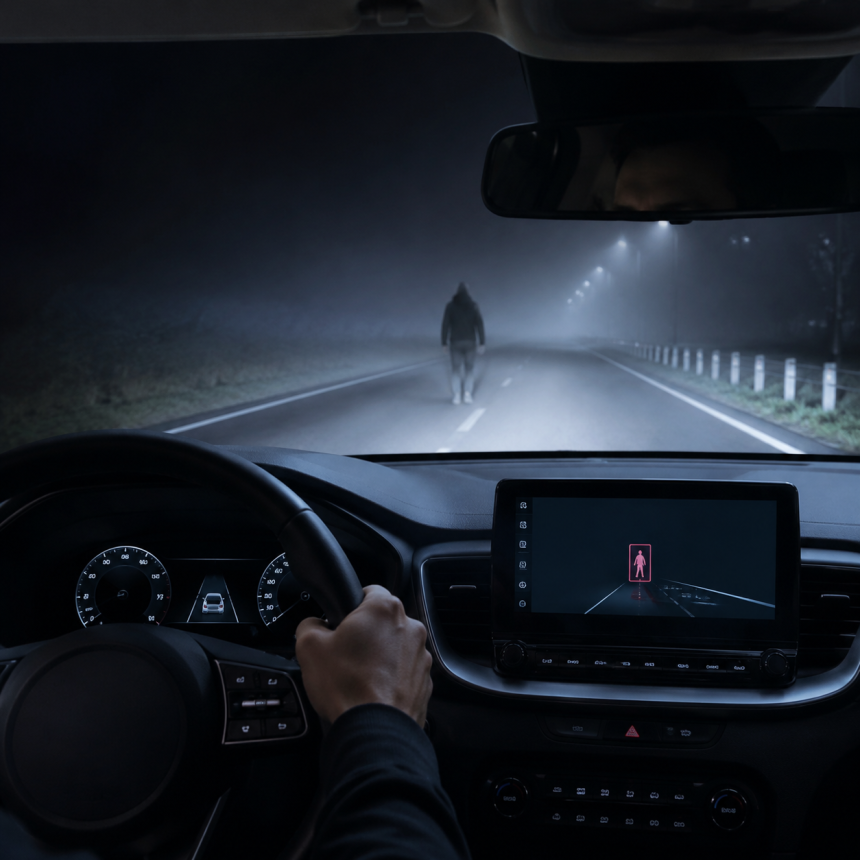
ADAS Thermal Imaging Cameras can improve road awareness when standard camera-based systems struggle with darkness, glare, rain, fog, or snow. They do not replace careful driving or other sensors, but they give driver-assistance systems another way to detect pedestrians, animals, vehicles, and obstacles in low-visibility conditions.
- What ADAS Is Trying to Solve
- Why Conventional Cameras Have Limits
- How Thermal Imaging Helps ADAS
- Earlier hazard detection
- Better performance in poor visibility
- More consistent night awareness
- Why ADAS thermal imaging cameras support low-light decisions
- Why This Matters for Safety Features, Not Just Cameras
- What Thermal Imaging Can Detect Well
- Where It Helps Most in Real Driving
- What Thermal Imaging Does Not Do
- Thermal Imaging Versus Visible-Light Cameras
- Why Automakers and Drivers Care About Sensor Redundancy
- What Drivers Should Look For in a Thermal-Enabled ADAS System
- The Limits Drivers Should Understand Before Relying on Thermal Imaging
- Is Thermal Imaging Only Useful at Night?
- How This Affects Car Buying Decisions
- FAQ
- What is the main reason ADAS uses thermal imaging cameras?
- Does thermal imaging replace regular ADAS cameras?
- Can thermal cameras detect pedestrians and animals?
- Is thermal imaging useful in bad weather?
- Should every driver choose a thermal imaging system?
- Can ADAS with thermal imaging prevent accidents?
- Conclusion
This matters because advanced driver-assistance systems are only as effective as the information they receive. When the road scene is visually weak, thermal imaging can help fill in part of the gap and support earlier warnings. For a closer look at the core use case, see thermal imaging camera for car systems and how they compare with infrared options.
Table of Contents
- What ADAS Is Trying to Solve
- Why Conventional Cameras Have Limits
- How Thermal Imaging Helps ADAS
- Why This Matters for Safety Features, Not Just Cameras
- What Thermal Imaging Can Detect Well
- Where It Helps Most in Real Driving
- What Thermal Imaging Does Not Do
- Thermal Imaging Versus Visible-Light Cameras
- Why Automakers and Drivers Care About Sensor Redundancy
- What Drivers Should Look For in a Thermal-Enabled ADAS System
- The Limits Drivers Should Understand Before Relying on Thermal Imaging
- Is Thermal Imaging Only Useful at Night?
- How This Affects Car Buying Decisions
- FAQ
- Conclusion
What ADAS Is Trying to Solve
ADAS is built around reducing the chances that a driver misses something important. It can help with lane awareness, forward collision warnings, parking support, blind-spot monitoring, and emergency braking. The common goal is to identify risk early enough that the driver has time to react.
That becomes harder in real-world conditions. A road may be dark, the windshield may reflect headlights, rain may flatten contrast, or a pedestrian may wear clothing that blends into the background. Cameras can still work in many of those situations, but they are not equally strong in all of them. ADAS thermal imaging cameras are useful because they detect heat signatures instead of relying only on visible light.
Why Conventional Cameras Have Limits
A standard ADAS camera sees the world much like a human eye does. It depends on light, contrast, and image clarity. That works well in daylight and in many urban settings. It is less reliable when the environment reduces visibility.
Common problem areas include:
- Dark rural roads where pedestrians or animals appear late
- Fog, rain, or snow that reduces contrast
- Glare from headlights, streetlights, or reflections
- Poorly lit intersections and side streets
- Vehicles or objects that blend into a dark background
- Long stretches of highway at night, where fatigue also lowers driver attention
These are not unusual edge cases. They are the kinds of conditions where a driver may most need early warning. ADAS thermal imaging cameras help fill part of that gap. For a broader look at how thermal sensing performs in challenging conditions, see thermal imaging in low visibility.
How Thermal Imaging Helps ADAS
ADAS Thermal Imaging Cameras detect heat rather than visible detail. That makes them useful for identifying warm objects such as people, animals, and vehicles even when the scene is too dark for a regular camera to read clearly.
In practical ADAS terms, thermal imaging can help with three important jobs.
Earlier hazard detection
If a person is crossing a dark road or an animal is standing near the shoulder, a thermal camera may notice the heat source before it is obvious in a standard video feed. That can give the system more time to alert the driver.
Better performance in poor visibility
Rain, fog, snow, and glare can all interfere with normal image processing. Thermal sensing is not immune to those conditions, but it often remains useful when contrast-based systems become less dependable.
More consistent night awareness
A lot of ADAS features are designed to function day and night, but night is where sensor quality matters most. ADAS thermal imaging cameras can improve the system’s ability to maintain awareness when the road scene is visually thin.
Why ADAS thermal imaging cameras support low-light decisions
When road markings fade and shadows deepen, ADAS thermal imaging cameras can help a system focus on what is still physically present rather than what is merely easy to see. That difference is why thermal sensing is often discussed alongside pedestrian alerts, animal detection, and night driving support.
Why This Matters for Safety Features, Not Just Cameras
Thermal imaging is not valuable because it looks impressive on a screen. It matters because it supports a safety system’s main purpose: awareness.
A car can have lane keeping, front collision warnings, and automatic braking, but those systems still need to know that something is there. If the sensor input is weak, delayed, or obscured, the system may warn later than it otherwise could. ADAS thermal imaging cameras give ADAS another channel for identifying road users and obstacles in conditions where the normal camera feed is less reliable.
That is especially relevant for:
- Night driving on rural roads
- School zones or neighborhood streets after dark
- Wildlife-heavy routes
- Long-distance highway travel at night
- Drivers who frequently encounter fog, rain, or glare-heavy roads
For related context on how thermal sensing supports obstacle detection, read thermal imaging obstacle detection.
What Thermal Imaging Can Detect Well
Thermal imaging is especially useful for heat-emitting hazards. In automotive use, that usually means:
- Pedestrians
- Animals
- Vehicles
- Some roadside obstacles that retain heat
This is why thermal systems are often discussed in the same context as pedestrian detection and animal detection. A person walking near the road at night may be difficult to see in visible light, but their body heat can create a clearer signal for a thermal camera. The same applies to animals near rural roads, where impact risk tends to be higher after dark.
ADAS Thermal Imaging Cameras are also useful when a heat source stands out against a cooler background, such as a person on a cold roadway or a vehicle shoulder-stop after sunset. In those moments, the sensor is not guessing based on color or contrast alone; it is reading a different physical signal.
Where It Helps Most in Real Driving
Thermal imaging is most valuable when the road environment is uneven or unpredictable.
Rural roads
Rural driving is one of the clearest use cases. Lighting is limited, shoulders may be narrow, and animals can appear without warning. ADAS thermal imaging cameras can help identify movement and heat sources sooner than a normal camera alone.
Highway driving at night
On highways, speed matters. A driver has less time to notice anything that appears in the lane or on the shoulder. Thermal imaging can extend awareness farther ahead in dark conditions, which may support earlier response.
Rain, fog, and snow
Weather can reduce contrast before it fully blocks the road. A thermal camera does not magically solve bad weather, but it can remain useful when visible-light systems lose clarity.
Busy city streets after dark
Urban driving is usually better lit, but not always better organized. Pedestrians step out between parked cars, delivery traffic adds clutter, and shadows can hide movement. ADAS thermal imaging cameras can add an extra layer of detection when the scene is visually crowded.
Drivers who regularly travel in these environments often compare thermal cameras with other night-support systems, including night vision feature cars, because the real question is not which sensor looks best on paper, but which one improves awareness in the conditions they actually face.
What Thermal Imaging Does Not Do
This part matters. Thermal imaging is a support tool, not a substitute for driving skill.
It does not replace:
- Headlights
- Mirrors
- Safe following distance
- Braking distance
- Traffic laws
- Driver attention
It also does not guarantee that every hazard will be seen in time. A thermal camera may help identify some risks earlier, but no ADAS setup can remove the need for the driver to scan the road and remain ready to react.
That is the right way to think about ADAS thermal imaging cameras: they improve awareness, but they do not eliminate risk.
Thermal Imaging Versus Visible-Light Cameras
A useful way to compare the two is to ask what each one is good at.
Visible-light cameras are strong when the scene is clear, bright, and detailed. They are useful for reading lane lines, signs, and surroundings in normal conditions. They can also work well as part of a broader ADAS suite.
Thermal cameras are stronger when the scene is visually weak. They do not need the same amount of light, and they can make heat-emitting hazards easier to spot. On the other hand, they do not provide the same kind of visual detail as standard cameras. They are not meant to replace ordinary imaging, but to complement it.
For that reason, the most practical ADAS designs do not treat thermal imaging as a standalone answer. They use it as part of a layered sensing approach.
Why Automakers and Drivers Care About Sensor Redundancy
In safety engineering, redundancy matters. If one sensing method struggles, another can help compensate. That is one reason ADAS systems increasingly combine cameras, radar, ultrasonic sensors, and in some cases thermal imaging.
Each sensor type sees the road differently:
- Cameras read detail and color
- Radar tracks distance and movement
- Ultrasonic sensors help at close range
- Thermal imaging highlights heat sources in darkness or poor visibility
This combination can create a more complete picture of the driving environment. No single sensor is perfect, but multiple sensors can reduce blind spots in specific conditions.
What Drivers Should Look For in a Thermal-Enabled ADAS System
If you are evaluating a vehicle or an aftermarket upgrade, it helps to think practically rather than chase feature lists.
Look for systems that clearly explain:
- What the thermal camera is designed to detect
- How warnings are presented to the driver
- Whether the system is meant for night driving, poor visibility, or both
- How it integrates with the rest of the vehicle’s safety features
- What conditions may reduce performance
A good example of this approach is the U.S. National Highway Traffic Safety Administration, which provides safety guidance and research on vehicle technologies. That kind of reference is useful because it keeps the evaluation grounded in safety behavior rather than marketing claims.
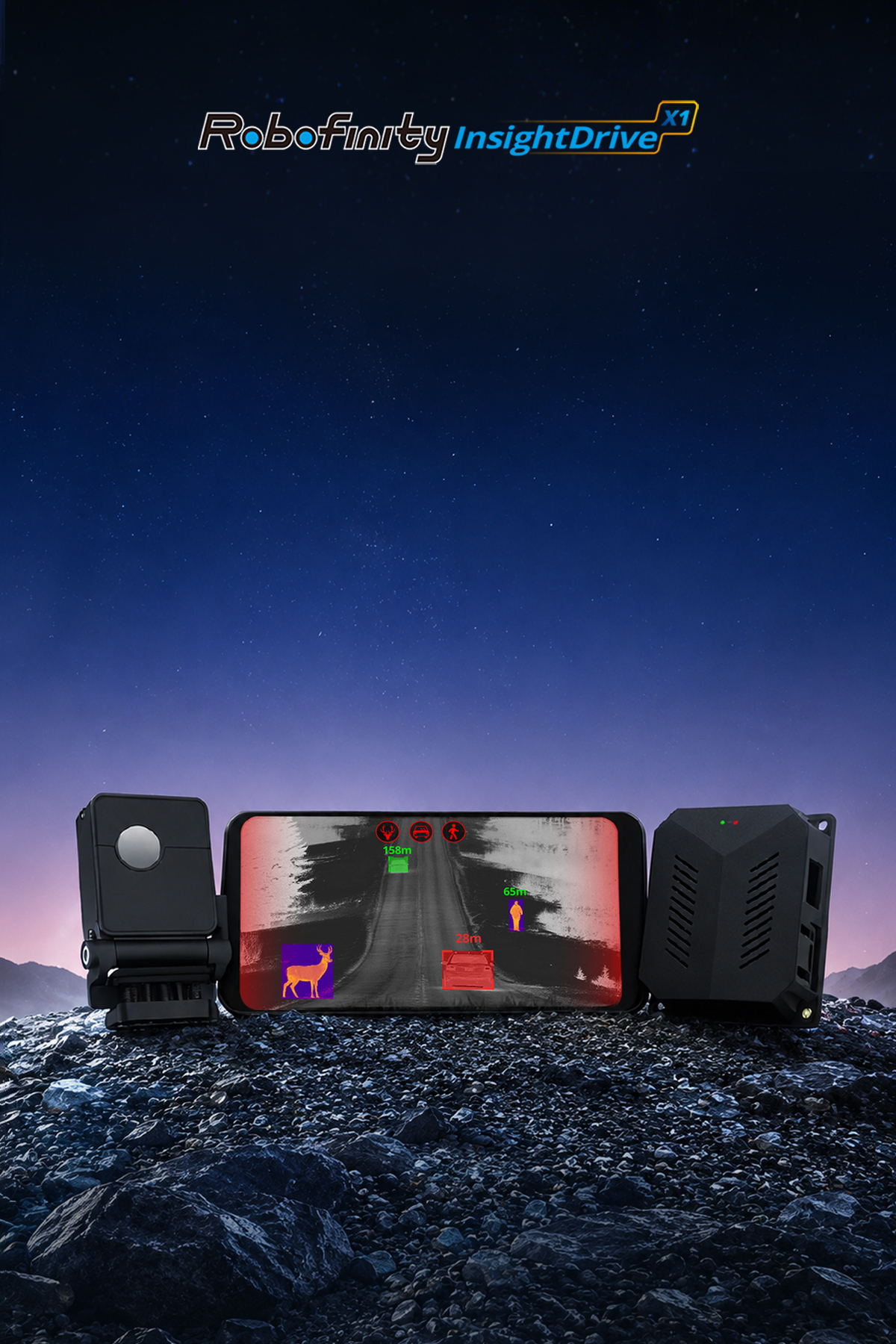
For a practical product example, Robofinity InsightDrive uses AI-powered thermal imaging to support awareness of pedestrians, animals, vehicles, and obstacles in low-light or poor-visibility driving conditions. It is best understood as an additional driver-assistance layer, not a replacement for careful driving.
How ADAS thermal imaging cameras fit into a buying decision
When buyers compare options, ADAS thermal imaging cameras are most useful to weigh against the kind of driving they do every week. If your routes include long dark stretches, frequent wildlife crossings, or weather that regularly reduces visibility, the feature becomes more practical than flashy.
The Limits Drivers Should Understand Before Relying on Thermal Imaging
ADAS Thermal Imaging Cameras can be helpful, but drivers should keep expectations realistic.
It may be less useful when:
- The hazard does not produce enough heat contrast
- The object is far away and small
- Road geometry blocks the line of sight
- The system is poorly calibrated or installed
- The driver assumes the system can do more than it can
This is why training and familiarization matter. A driver needs to understand what the alerts mean, how the display looks, and what kind of conditions can affect detection. A safety feature only helps if the driver interprets it correctly.
For deeper technical context on how thermal sensing performs in difficult conditions, the NHTSA vehicle safety resources are a useful reference point for understanding how driver-assistance tools should be evaluated in the real world.
Is Thermal Imaging Only Useful at Night?
No. Night is the most obvious use case, but not the only one.
Thermal imaging can also help in daytime when visibility is reduced by weather, smoke, glare, or road clutter. A dark shadow under a bridge, a rain-heavy windshield, or a bright sun angle can all make ordinary camera feeds less trustworthy. Thermal sensing is sometimes useful in those conditions because heat contrast may still be visible even when the scene is hard to read.
That said, daytime benefits are usually secondary. Night and low-visibility conditions remain the strongest use cases for ADAS thermal imaging cameras.
In practice, many drivers discover that ADAS thermal imaging cameras are most noticeable not during perfect night weather, but during those in-between moments when the road is technically visible yet still difficult to judge quickly. That is where the extra layer of sensing can feel most valuable.
How This Affects Car Buying Decisions
For most buyers, thermal imaging is not a must-have feature. But it can be a meaningful consideration if the vehicle will regularly be used in conditions where visibility is often limited.
It may be worth extra attention for buyers who:
- Drive rural roads often
- Commute early in the morning or late at night
- Travel long distances on highways
- Live in areas with frequent fog, rain, or snow
- Want extra awareness support for pedestrian or animal risk
If that sounds like your driving pattern, ADAS thermal imaging cameras become more than a novelty. They become a practical safety upgrade worth comparing alongside other ADAS features.
FAQ
What is the main reason ADAS uses thermal imaging cameras?
Thermal imaging helps ADAS detect heat sources in darkness or poor visibility, which can improve awareness when standard cameras are less effective.
Does thermal imaging replace regular ADAS cameras?
No. It works best as a complement to regular cameras and other sensors, not as a replacement.
Can thermal cameras detect pedestrians and animals?
Yes, thermal systems are often useful for detecting pedestrians and animals because both emit heat that stands out in low-light conditions.
Is thermal imaging useful in bad weather?
It can be. Fog, rain, and snow can reduce visible-light camera performance, and thermal imaging may still provide useful contrast in some of those situations.
Should every driver choose a thermal imaging system?
Not necessarily. It is most relevant for drivers who frequently travel at night, on rural roads, or in poor-visibility conditions.
Can ADAS with thermal imaging prevent accidents?
No system can guarantee that. Thermal imaging may improve awareness, but safe driving habits, attention, and proper vehicle operation still matter.
Conclusion
ADAS Thermal Imaging Cameras matter because the road does not always present itself clearly to normal sensors. Darkness, glare, fog, rain, snow, and complex roadside conditions can reduce what standard cameras see, especially when a driver has only seconds to react. Thermal imaging adds a different kind of visibility by focusing on heat signatures, which can be especially helpful for pedestrians, animals, vehicles, and other hazards in low-light environments.
The practical value is straightforward: better awareness in situations where ordinary imaging is weaker. For drivers who regularly face night travel, rural roads, or poor visibility, ADAS thermal imaging cameras can be a sensible addition to a broader safety strategy.
When matched with other sensors and used with proper driver attention, ADAS thermal imaging cameras can make warning systems more responsive in the exact situations where visibility is most likely to fail. That combination is what gives them real-world value.