SEO Title: Is a Car Night Vision System Useful for Long Road Trips?
- How Car Night Vision Works
- Why Night Vision Can Matter on Long Road Trips
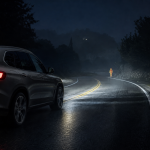
- Headlights Illuminate Only Part of the Driving Environment
- Intercity Routes Frequently Change Character
- Earlier Awareness Can Support Better Decisions
- Where the Technology Provides the Most Value
- Dark Rural Roads
- Wildlife-Prone Intercity Routes
- Poorly Lit Motorways and Highways
- Fog, Rain, Snow, and Headlight Glare
- Unfamiliar Destinations After Dark
- Where It May Be Less Useful
- Thermal Night Vision Compared With Other Safety Features
- Headlights
- Automatic Emergency Braking
- Adaptive Headlights and Automatic High Beams
- Driver-Monitoring and Fatigue Alerts
- A Practical Example of an Aftermarket System
- Potential Drawbacks on a Long Journey
- Display Distraction
- Alert Fatigue
- Interpretation Errors
- Installation and Compatibility
- Maintenance Requirements
- How to Decide Whether It Is Worth Buying
- Consider Your Night-Driving Exposure
- Prioritize Fundamentals First
- Evaluate the Interface, Not Just Detection Claims
- Think About Total Ownership Effort
- Using Night Vision Responsibly on an Intercity Trip
- Frequently Asked Questions
- Can car night vision see farther than headlights?
- Does thermal night vision work in complete darkness?
- Is night vision useful on highways?
- Can a night vision system replace high beams?
- Is an aftermarket night vision system difficult to install?
- Should I rely on pedestrian or animal alerts?
- Conclusion
Meta Description: Learn whether a car night vision system improves awareness on long road trips, where it helps most, and what limitations drivers should consider.
Long road trips often continue well after sunset, when fatigue increases and hazards become harder to identify. A car night vision system can be useful in these conditions because it may reveal pedestrians, animals, vehicles, and other objects beyond or outside the clearest area illuminated by the headlights. Its value is greatest on dark rural roads, unfamiliar intercity routes, and journeys through areas with frequent wildlife. However, it remains a driver-assistance technology, not a substitute for effective headlights, sensible speed, rest breaks, or attentive driving.
How Car Night Vision Works
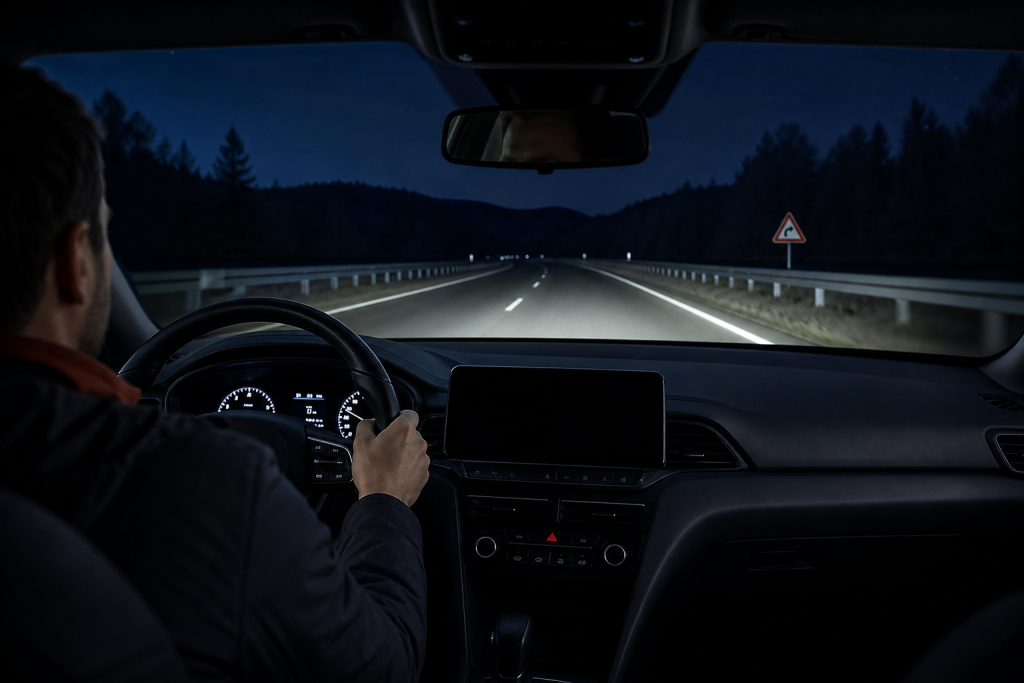
Automotive night vision systems provide an additional view of the road ahead using a forward-facing camera and an in-cabin display. Depending on the system, the camera may use thermal imaging or near-infrared technology.
A thermal imaging system detects differences in heat rather than relying primarily on visible light. Warm objects such as people and many animals may therefore stand out against a cooler background, even when the roadside is poorly illuminated. Vehicles and other objects may also appear because their components and surfaces have different thermal characteristics.
Near-infrared systems work differently. They illuminate the road with infrared light and use a compatible camera to form an image. This can provide a more familiar view of the road and surrounding objects, although performance depends on the equipment and conditions.
Some systems add software that analyzes the camera feed and identifies likely hazards. Pedestrian detection, animal detection, vehicle recognition, and real-time alerts can reduce the amount of interpretation required from the driver. The exact detection capabilities and warning behavior vary, so buyers should evaluate the specific system rather than assuming every night vision product works in the same way.
Why Night Vision Can Matter on Long Road Trips
The practical challenge of nighttime intercity driving is not simply that the road is dark. Long trips combine limited visibility with changing road environments, prolonged concentration, unfamiliar junctions, and the possibility of fatigue.
Headlights Illuminate Only Part of the Driving Environment
Well-maintained headlights are essential, but they do not make every hazard equally visible. Curves, hills, vegetation, parked vehicles, roadside barriers, rain, and oncoming glare can all affect what a driver sees.
A person wearing dark clothing may be difficult to distinguish from the background. An animal may approach from the shoulder rather than standing directly in the beam. A stopped vehicle without adequate lighting may not become obvious until the distance has narrowed.
Night vision can provide an additional visual layer. Its purpose is not to make headlights unnecessary, but to improve road awareness where visible-light performance has natural limits.
Intercity Routes Frequently Change Character
A long journey may begin on a brightly lit urban road, continue along a controlled-access highway, pass through construction zones, and finish on an unlit rural route. The usefulness of night vision changes with each environment.
On an illuminated urban street, the additional display may offer limited benefit because streetlights, signs, traffic, and surrounding buildings already provide substantial visual information. On a dark two-lane road, however, thermal contrast may make a pedestrian or animal easier to notice.
This means the technology should be judged against the routes a driver actually uses, not simply the total mileage covered.
Earlier Awareness Can Support Better Decisions
Seeing a possible hazard earlier does not guarantee that the driver can avoid it. Road surface, speed, traffic, weather, tire condition, and braking distance still determine what actions are possible.
Even so, additional awareness can be valuable. An early indication may give the driver more time to ease off the accelerator, increase the following distance, scan the shoulder, or prepare to brake without making a sudden maneuver.
The emphasis should remain on anticipation rather than reaction. A night vision system is most useful when it encourages measured driving decisions, not when it creates confidence to travel faster in darkness.
Where the Technology Provides the Most Value
A car night vision system is not equally beneficial in every driving situation. The following scenarios are where it can make the strongest practical case.
Dark Rural Roads
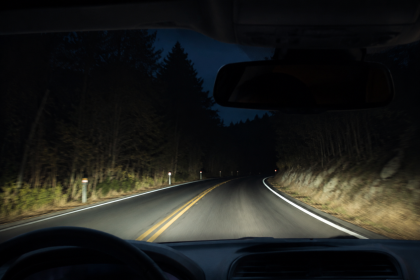
Unlit rural roads combine narrow lanes, vegetation, limited shoulders, concealed entrances, and possible wildlife activity. Pedestrians and cyclists may also be present without being immediately obvious in the headlight beam.
Thermal night vision can help separate heat-emitting road users and animals from cooler surroundings. On winding roads, however, a forward-facing camera cannot see around a bend or through a hill. Its coverage remains limited by direction, obstructions, and the camera’s field of view.
Wildlife-Prone Intercity Routes
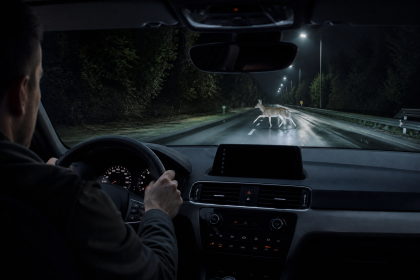
Animals can enter the road quickly and unpredictably. Headlights may reveal reflective eyes, but that cue is not always available or noticed in time.
Animal recognition and thermal imaging may help a driver notice wildlife near the shoulder before it moves into the lane. The appropriate response is to reduce speed smoothly when conditions permit and remain alert for additional animals. Swerving abruptly can create a different and potentially more serious hazard.
Poorly Lit Motorways and Highways
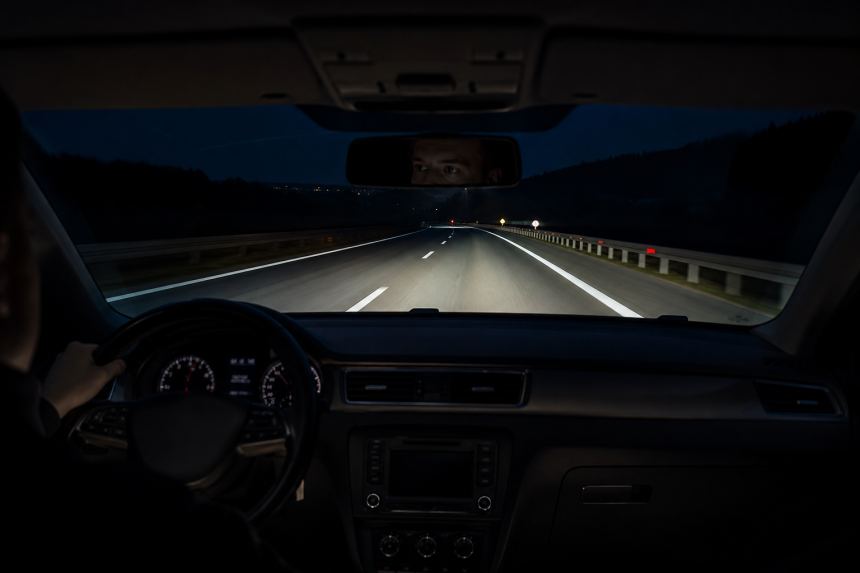
On a straight, dark highway, a night vision display may provide another way to monitor activity ahead or beside the road. It can be especially relevant around stopped vehicles, pedestrians near breakdowns, unlit roadside activity, or animals near the carriageway.
Highway speeds also expose an important limitation: a detectable object is not necessarily an avoidable object. Safe speed, adequate following distance, and continuous observation remain fundamental because stopping distance increases substantially as speed rises.
Fog, Rain, Snow, and Headlight Glare
Poor-visibility conditions are more complicated than darkness alone. Thermal imaging does not depend on visible illumination in the same way as an ordinary camera, so it may preserve useful contrast when glare or low light makes direct observation difficult.
It should not be described as seeing perfectly through all weather. Heavy precipitation, moisture, dirty lenses, atmospheric conditions, and low thermal contrast can reduce image quality or detection reliability. Snowbanks, heated road surfaces, exhaust, and reflections may also complicate interpretation.
When visibility deteriorates, the first response should still be to slow down, increase following distance, use the correct lights, and stop somewhere safe if conditions become unsuitable for continued travel.
Unfamiliar Destinations After Dark
The final portion of an intercity trip can be demanding. Drivers may leave a major highway and enter unfamiliar local roads at the same time fatigue is beginning to affect concentration.
Night vision may help identify roadside activity, but it does not solve navigation errors or tiredness. Route planning should be completed before departure, and navigation prompts should be configured to minimize distraction. If the driver is struggling to remain alert, the correct action is to stop and rest.
Where It May Be Less Useful
Balanced buying decisions require understanding where the technology adds little value or could even become a distraction.
Well-Lit Urban Driving
Streetlights, lower speeds, dense traffic, and frequent visual references can reduce the advantage of a separate night vision image. In a busy city, the display may compete with mirrors, traffic signals, navigation instructions, cyclists, and pedestrians for the driver’s attention.
Recognition alerts may still help in certain circumstances, but frequent or unnecessary warnings can become distracting. Buyers should look for systems with clear alerts and sensible adjustment options.
Drivers Who Rarely Travel at Night
For someone whose long trips occur almost entirely during daylight, night vision may not justify its purchase and installation costs. Money may be better directed toward replacing worn tires, restoring cloudy headlamp lenses, repairing lighting faults, or obtaining corrective eyewear where appropriate.
A safety upgrade should address a real driving need. Occasional nighttime use does not automatically make a night vision system unnecessary, but frequency and route type should influence the decision.
Routes Dominated by Heavy Traffic
On congested intercity roads, the driver’s immediate concern is usually the behavior of nearby traffic rather than distant objects. Conventional driver-assistance functions such as forward collision warnings, blind-spot monitoring, and adaptive cruise control may provide more frequent support, depending on the vehicle and journey.
Night vision may complement those features, but it should not be assumed to provide the same functions.
Thermal Night Vision Compared With Other Safety Features
Night vision should be evaluated as part of a complete nighttime road safety strategy.
Headlights
Headlights illuminate lane markings, signs, road surfaces, and obstacles while helping other road users see the vehicle. Night vision does not replace these essential functions.
Before adding another system, confirm that the low and high beams operate correctly, the lenses are clear, and the lamps are properly aimed. Incorrectly aimed headlights can reduce the driver’s effective view and create glare for oncoming traffic.
Automatic Emergency Braking
Automatic emergency braking may intervene when onboard sensors identify a collision risk. Night vision is primarily an awareness tool, although system designs differ.
A thermal display or warning does not mean the vehicle will brake automatically. Buyers should understand whether a product only presents an image, produces alerts, or integrates with any vehicle control system. These functions must not be treated as interchangeable.
Adaptive Headlights and Automatic High Beams
Adaptive lighting can improve illumination through bends or adjust the beam according to driving conditions. Automatic high beams can help drivers use available light more consistently.
These features improve visible-light performance, while thermal imaging provides a different type of information. Drivers who regularly use dark, winding roads may benefit from either or both, but cost, vehicle compatibility, and actual driving patterns should guide the choice.
Driver-Monitoring and Fatigue Alerts
Night vision helps with hazards outside the vehicle. Driver-monitoring technology focuses on the person behind the wheel.
For long-distance driving, fatigue management may be more important than extending visual awareness. No camera can compensate for microsleep, delayed reactions, or poor judgment caused by exhaustion. Regular breaks and driver changes, where possible, remain necessary.
A Practical Example of an Aftermarket System
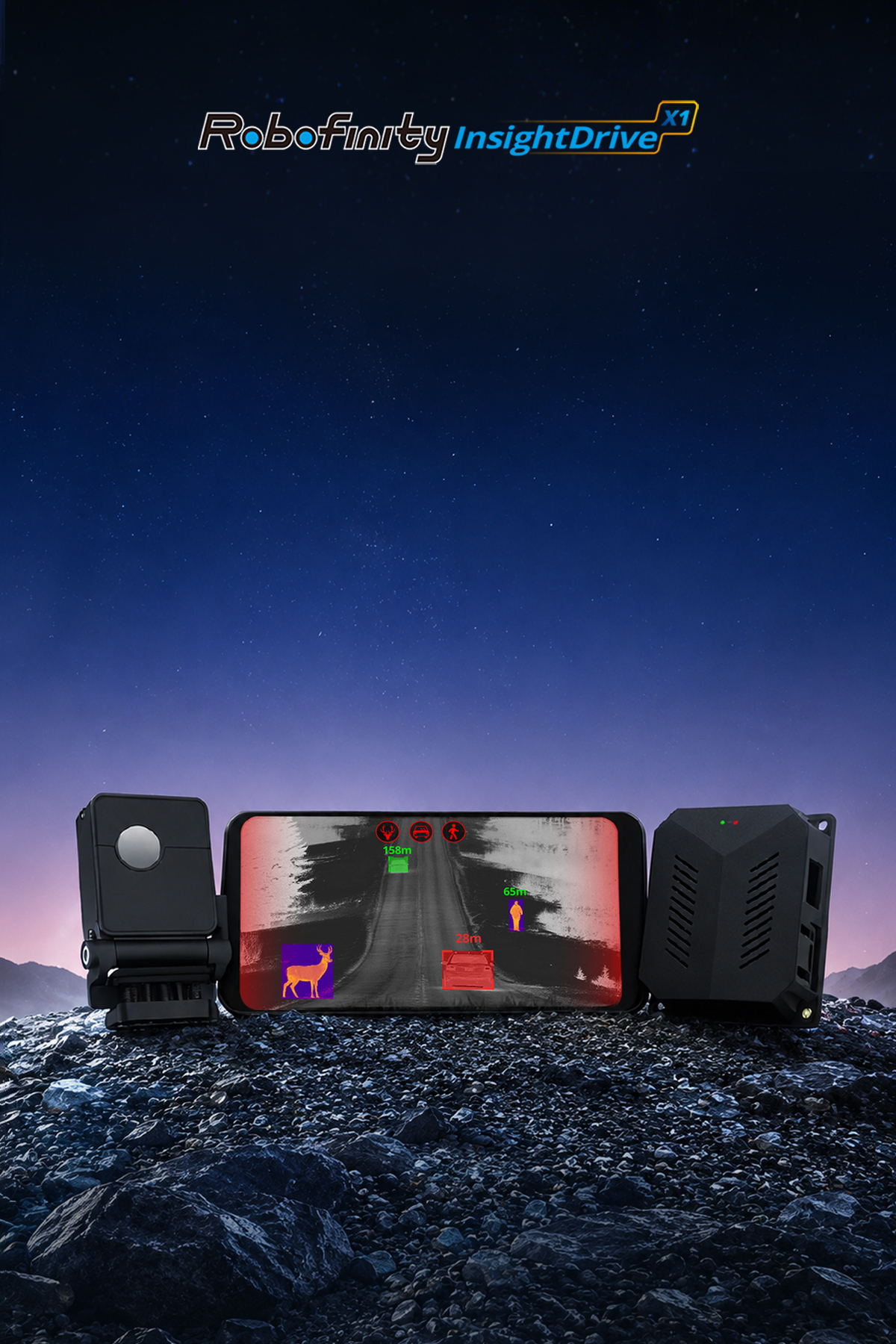
Drivers do not always need to purchase a new vehicle to access advanced road-awareness technology. Robofinity InsightDrive is one example of an aftermarket vehicle thermal imaging night vision system designed to support the recognition of pedestrians, animals, vehicles, and obstacles, with real-time alerts for low-light and poor-visibility driving conditions. As with any such system, it should be treated as an additional source of information rather than a replacement for headlights, mirrors, safe braking distance, traffic-law compliance, or driver attention.
This distinction matters because the usefulness of thermal imaging depends on how the driver incorporates it into an existing safety routine. The display should support timely observation without becoming the main focus of attention.
Potential Drawbacks on a Long Journey
Display Distraction
A dashboard-mounted screen creates another visual task. If the driver repeatedly looks away from the road to interpret the image, the system can undermine the awareness it is intended to support.
Placement matters. The display should be visible with a brief glance without blocking the windshield, mirrors, vehicle controls, or required instruments. Local rules may restrict where screens and accessories can be mounted, so installation should account for applicable requirements.
Alert Fatigue
Warnings are helpful only when they are understandable and relevant. Excessive alerts may become irritating, and the driver may begin ignoring them.
A useful system should make the type and urgency of a warning clear. During initial use, drivers should learn the interface on familiar roads rather than attempting to understand it for the first time during a demanding overnight trip.
Interpretation Errors
Thermal images look different from ordinary camera footage. Warm road surfaces, vehicle exhaust, machinery, buildings, and environmental conditions can produce shapes that require interpretation.
Recognition software can simplify the image by identifying likely pedestrians, animals, or vehicles, but no detection system is infallible. A missed alert does not prove that the road is clear, and an alert does not always indicate that a collision is imminent.
Installation and Compatibility
Aftermarket equipment may require a camera, display, wiring, power connection, and secure mounting. Poor camera alignment or obstructed placement can reduce its usefulness. Loose wiring and badly positioned screens can also create practical or safety problems.
Before purchasing, confirm vehicle compatibility, installation requirements, camera mounting position, power needs, display dimensions, and whether professional fitting is appropriate. Owners of leased or warranty-covered vehicles should also consider how modifications may affect their agreements.
Maintenance Requirements
A forward-facing camera needs a clear view. Dirt, insects, road salt, snow, or ice can interfere with the image, especially during a long journey.
Include the camera lens in normal pre-trip and fuel-stop checks, following the manufacturer’s cleaning guidance. Inspect mounts and visible wiring periodically, and do not use the system if components are loose or obstruct the driver’s view.
How to Decide Whether It Is Worth Buying
A simple decision framework can prevent an expensive feature from becoming an underused accessory.
Consider Your Night-Driving Exposure
The case becomes stronger when several of these conditions apply:
- You regularly complete intercity trips after dark.
- Your routes include unlit rural roads.
- Wildlife is common along the roads you use.
- You frequently encounter pedestrians or cyclists outside illuminated areas.
- You drive through regions where fog, rain, snow, or glare often reduces visibility.
- Your vehicle does not already provide a comparable night vision function.
- You are willing to learn how to interpret the display without relying on it.
The case is weaker when most nighttime travel occurs on brightly lit urban roads, long trips are rare, or the accessory budget would displace essential maintenance.
Prioritize Fundamentals First
Before purchasing additional vehicle safety technology, review the condition of:
- Headlights, taillights, brake lights, and indicators
- Windshield glass and wiper blades
- Tires, including tread condition and inflation
- Brakes and suspension
- Mirrors and window visibility
- Battery and charging system
- Emergency supplies appropriate to the route and climate
A sophisticated display cannot compensate for worn tires, poor lighting, or an obstructed windshield.
Evaluate the Interface, Not Just Detection Claims
A system can detect objects effectively and still be difficult to use. Examine how information reaches the driver.
Consider whether alerts are visual, audible, or both; whether warning sensitivity can be adjusted; whether the display is legible without being excessively bright; and whether controls can be operated without lengthy menu navigation. The image should remain stable and understandable over uneven roads and during changing temperatures.
Think About Total Ownership Effort
Purchase price is only one factor. Installation, potential removal when changing vehicles, maintenance, software support where applicable, and replacement of damaged components can affect long-term value.
A transferable aftermarket system may appeal to drivers who change vehicles regularly, but portability depends on the product and installation method. Compatibility should be verified rather than assumed.
Using Night Vision Responsibly on an Intercity Trip
The best results come from integrating the system into disciplined driving habits.
Before departure, clean the windshield, headlights, mirrors, and camera lens. Set screen brightness while parked so the display does not impair dark adaptation. Confirm that the mount is stable and that the image is correctly aligned.
During the journey, keep primary attention on the road. Use the display for brief supporting checks, much like a mirror, rather than watching it continuously. Respond to an alert by assessing the real road environment and reducing risk smoothly where appropriate.
Plan breaks before fatigue becomes severe. Overnight driving can disrupt normal sleep patterns, and long, monotonous roads can reduce alertness. Warning signs such as repeated yawning, drifting within the lane, missing signs, or difficulty recalling the last few miles or kilometers should trigger an immediate stop in a safe location.
Drivers should also avoid increasing speed merely because the system appears to extend their awareness. Detection distance is not the same as stopping distance, and the road may contain hazards that the system does not identify.
Frequently Asked Questions
Can car night vision see farther than headlights?
It may identify some heat-emitting objects beyond the clearest illuminated portion of the headlight beam, depending on the system and conditions. That does not mean every object will be detected or that the driver will have enough distance to stop.
Does thermal night vision work in complete darkness?
Thermal imaging detects heat differences and does not require visible light in the same way as a standard camera. Performance can still be affected by weather, obstructions, lens contamination, and low thermal contrast.
Is night vision useful on highways?
It can support awareness of animals, pedestrians, stopped vehicles, or roadside activity on dark highways. At higher speeds, however, safe following distance and attentive observation remain more important because available reaction time is limited.
Can a night vision system replace high beams?
No. High beams illuminate the roadway, signs, markings, and many obstacles. Night vision provides supplementary information and should never replace correctly used vehicle lighting.
Is an aftermarket night vision system difficult to install?
Installation complexity varies. Some systems require camera alignment, secure display placement, wiring, and a suitable power connection. Professional installation may be appropriate when the work involves permanent routing, vehicle trim, or electrical connections.
Should I rely on pedestrian or animal alerts?
Alerts can improve awareness, but drivers should not assume silence means no hazard is present. Detection can be affected by object position, range, obstructions, weather, camera condition, and system limitations.
Conclusion
A car night vision system can be a worthwhile practical upgrade for drivers who frequently make long nighttime trips on rural, poorly lit, unfamiliar, or wildlife-prone roads. Its main benefit is additional awareness: it may draw attention to people, animals, vehicles, and obstacles that are difficult to distinguish with visible light alone.
The technology offers less value for drivers who rarely travel after dark or remain mostly on illuminated urban roads. It also introduces costs, display-management demands, maintenance needs, and the possibility of overreliance.
Assess the routes you actually drive, correct any lighting or maintenance problems first, and compare systems based on usable alerts, clear display design, installation quality, and realistic operating limitations. Used responsibly, thermal night vision can strengthen nighttime road awareness, but safe speed, adequate rest, effective headlights, and sustained driver attention still determine whether a long road trip is managed safely.