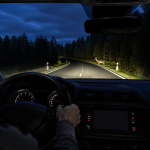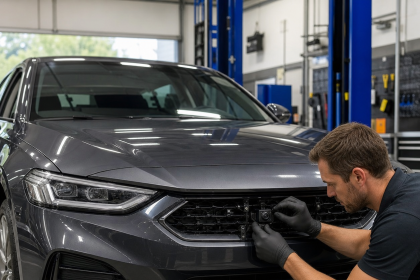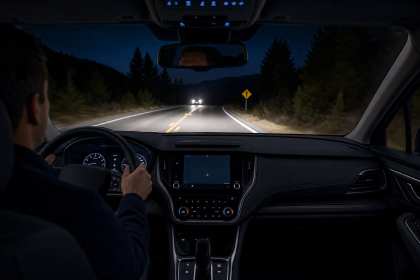
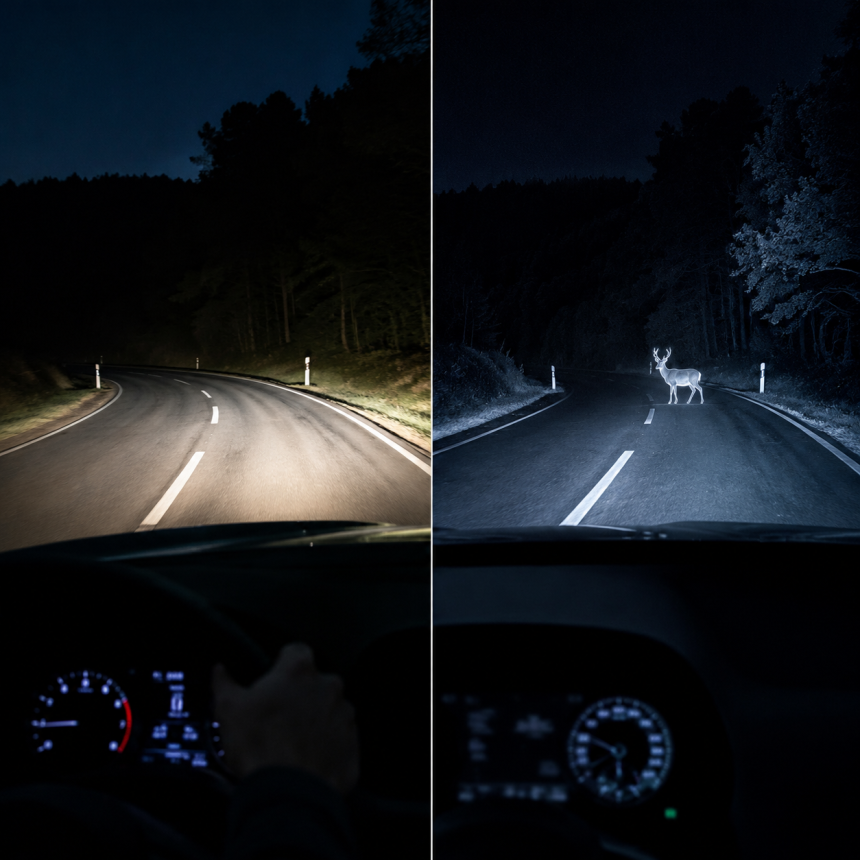
When drivers compare headlights vs night vision systems, the real answer is not that one is universally better than the other. They solve different problems. Headlights are essential for legal, safe driving because they let you see the road ahead and help other drivers see you. Night vision systems, on the other hand, are driver-assistance tools that can improve road awareness in low-light or poor-visibility conditions by highlighting people, animals, vehicles, or obstacles that may be harder to notice with the naked eye alone.
- Why this comparison matters
- What headlights do well
- What night vision systems do differently
- They focus on detection, not illumination
- They can be helpful in specific conditions
- They are not magic
- Headlights vs night vision systems: the practical trade-off
- Headlights are essential for all drivers
- Night Vision Systems are situational upgrades
- One is not a substitute for the other
- Which matters more for different types of drivers
- How to decide where to spend your money first
- Step 1: Make sure your headlights are truly good
- Step 2: Consider your driving environment
- Step 3: Think about what kind of hazard worries you most
- Common misconceptions about night vision systems
- Misconception 1: Night vision makes headlights less important
- Misconception 2: Brighter headlights always solve the problem
- Misconception 3: Night vision only matters for luxury cars
- Misconception 4: Technology can replace attentive driving
- What to check on your car today
- Check your headlights if you notice:
- Consider night vision or similar driver-assistance technology if you often drive:
- Keep in mind the basics
- A realistic way to think about the two
- FAQ
- Are headlights more important than night vision systems?
- Can a night vision system replace better headlights?
- Who benefits most from night vision systems?
- Do night vision systems work in bad weather?
- Should I upgrade my headlights first?
- Is an aftermarket night vision system worth it?
- Conclusion
If you are trying to decide where to invest your attention or money, the best choice depends on how, where, and when you drive. Most drivers still need to think of headlights as the foundation. Night vision technology is a useful layer on top of that foundation, not a replacement for it.
Why this comparison matters
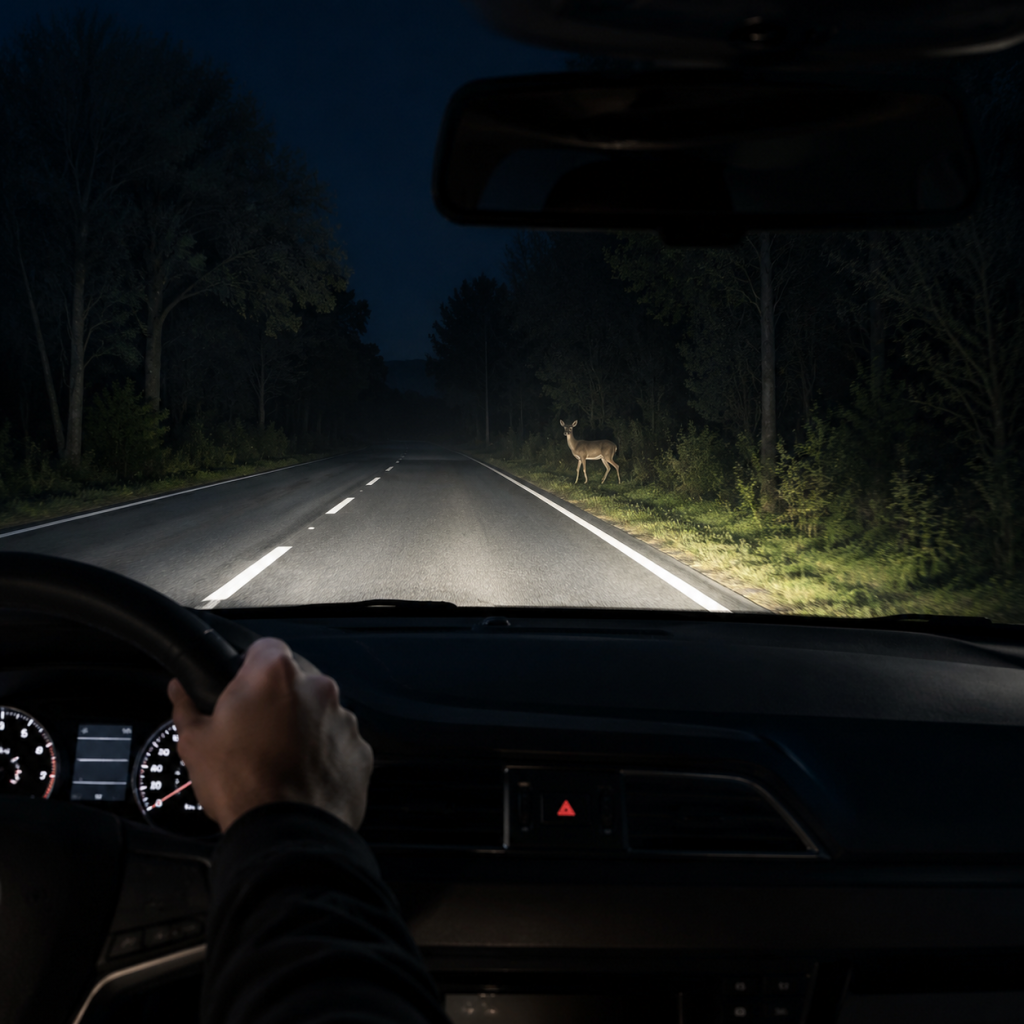
Night driving is one of those situations where small differences in visibility can have a big impact on comfort and reaction time. A dark rural road, a dimly lit neighborhood, glare from oncoming traffic, or a rainy highway at night can all make it harder to spot hazards early.
That is why this comparison matters. Drivers often wonder whether they should upgrade lighting first or look into advanced driver-assistance technology. The answer is usually rooted in practicality:
- Headlights affect how well you illuminate the road
- Night Vision Systems affect how well you detect hard-to-see hazards
- Good driving habits still matter more than either one alone
- The best setup often uses both, especially for frequent night drivers
For most people, headlights remain the more important feature overall. But in certain driving environments, night vision systems can add valuable awareness that standard lighting does not provide.
What headlights do well
Headlights are not just about brightness. They are part of a vehicle’s core safety equipment. Their job is to light the road, reveal lane edges, show signs and markings, and help you maintain safe speed and positioning after dark.
Headlights help you see and be seen
A good headlight setup does two things at once. It improves your visibility of the road ahead, and it increases your visibility to other road users. That second function matters just as much as the first, especially in traffic, at intersections, or in rain and fog.
Even modern systems with adaptive lighting or improved beam patterns still serve the basic purpose of visible illumination. Without them, night driving would be much more difficult and much more dangerous.
Headlights are required equipment
Unlike night vision systems, headlights are not optional technology. They are part of the vehicle’s essential safety equipment and are governed by road rules. If they are dim, misaligned, dirty, or failing, the impact on night driving safety can be immediate.
That is why maintenance matters so much. A clean lens, correct aim, and properly functioning bulbs or LEDs often make a bigger difference than many drivers expect. Even a premium car with advanced technology can become harder to drive safely at night if the headlights are neglected.
Headlights have limitations
Even excellent headlights cannot solve every visibility problem. They can have trouble with:
- Animals on the shoulder beyond the beam pattern
- Pedestrians wearing dark clothing
- Objects partially blocked by glare or shadows
- Curves, hills, and blind spots ahead of the beam
- Poor weather that scatters light
This is where the comparison with night vision systems becomes more interesting. Headlights are fundamental, but they are not always enough on their own.
What night vision systems do differently
Night Vision Systems are designed to improve driver awareness, not replace vision. In automotive use, they typically detect heat signatures or improve low-light detection in ways that may make hazards easier to notice earlier than with standard headlights alone.
For a deeper overview of the technology, see how car night vision technology works.
They focus on detection, not illumination
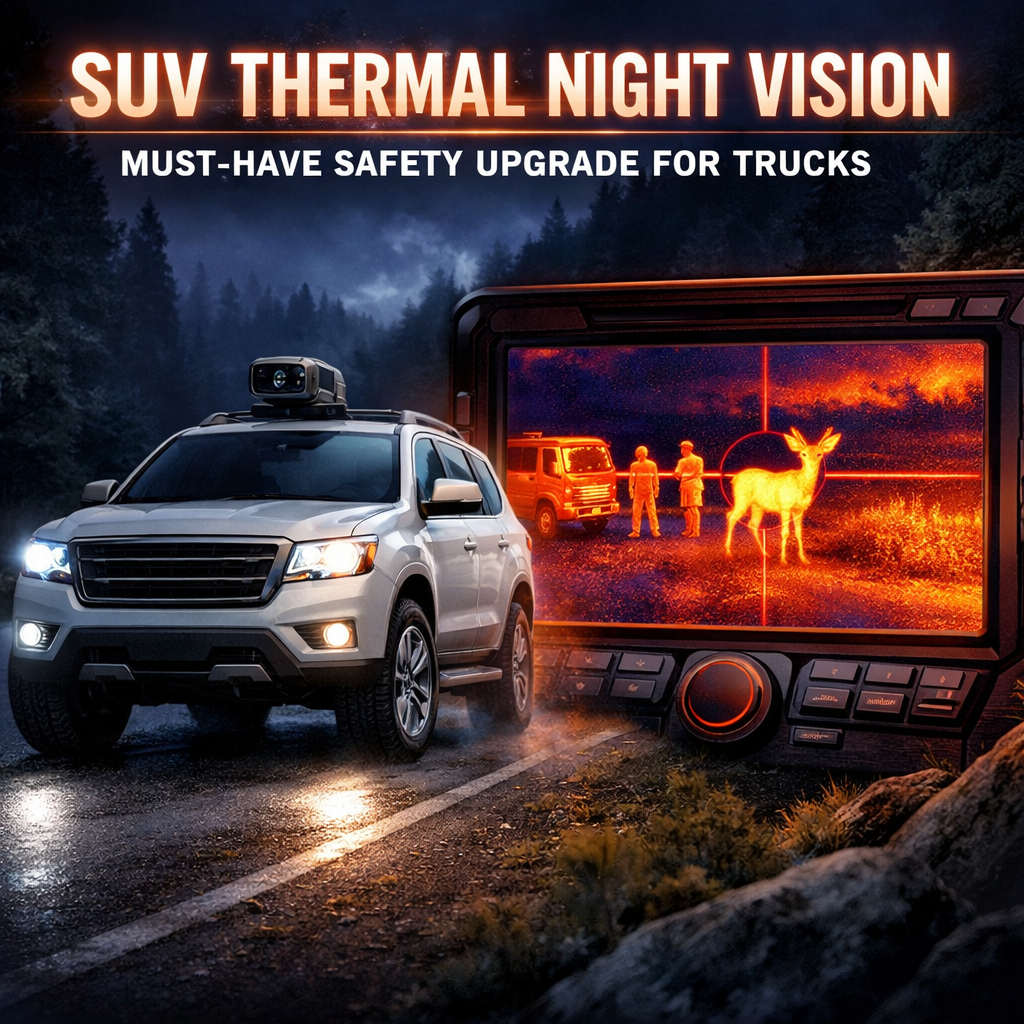
A night vision system does not light the road the way headlights do. Instead, it helps identify people, animals, vehicles, and obstacles that may stand out in darkness or poor visibility. That makes it especially useful for spotting hazards that are outside the most effective reach of headlights.
In other words, headlights help you illuminate the road. Night vision systems help you interpret what may be on or near it.
They can be helpful in specific conditions
Night vision technology tends to make the most sense for drivers who frequently encounter:
- Rural roads with little lighting
- Long highway drives after dark
- Areas with wildlife crossings
- Heavy rain, fog, or snow
- Roads with high glare from streetlights or oncoming traffic
These are the situations where visual attention can be strained and early hazard recognition matters.
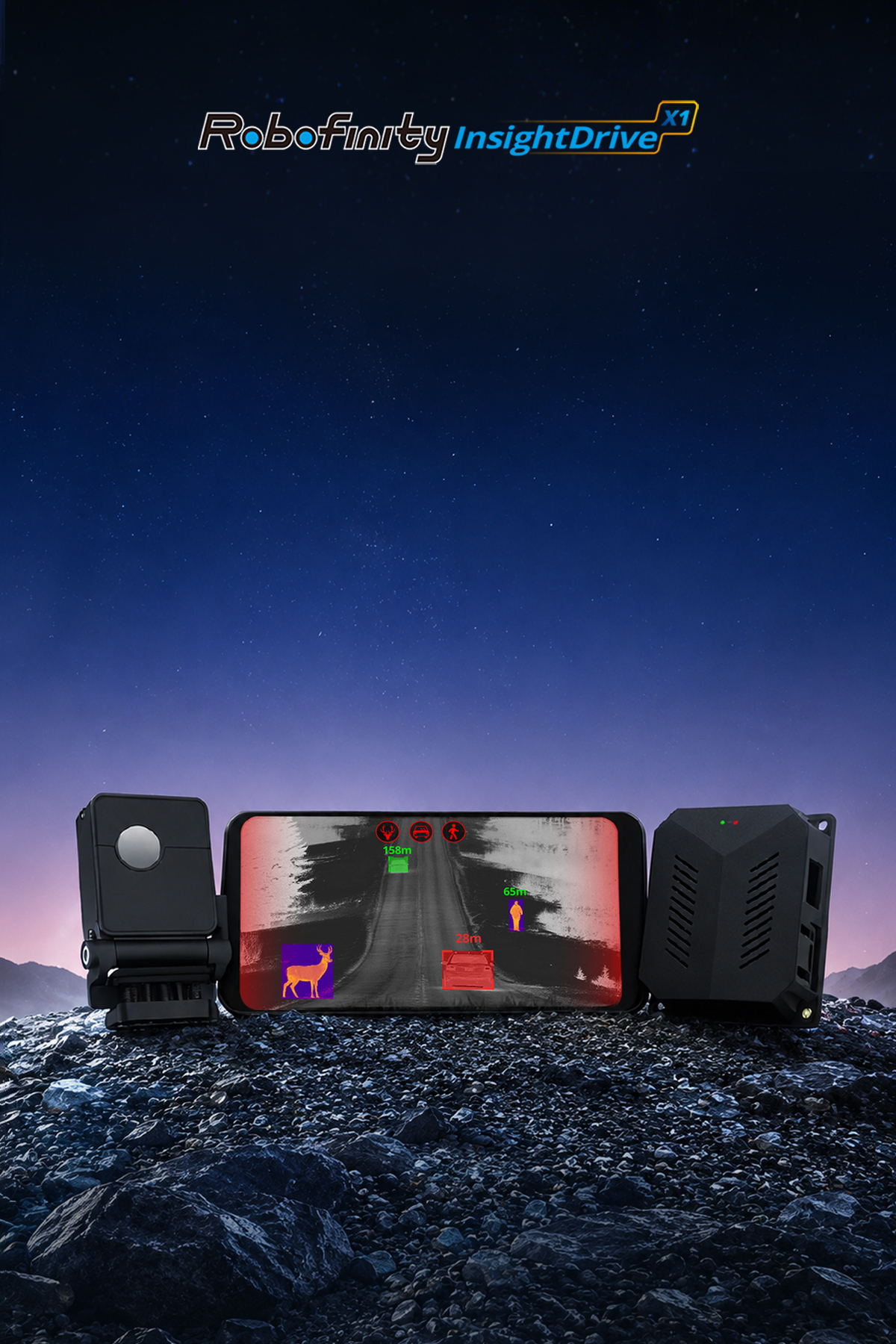
For drivers who often face those conditions, a vehicle thermal imaging night vision system such as Robofinity InsightDrive can be considered as an additional awareness tool. It is designed to support detection of pedestrians, animals, vehicles, and obstacles in low-light or poor-visibility driving, while still relying on the driver to stay attentive and use normal safety practices.
For more context on buying decisions, read the automotive thermal night vision buying guide.
They are not magic
Night Vision Systems are useful, but they come with limitations. They do not eliminate the need for headlights. They do not remove the need to slow down in fog or rain. They do not guarantee that you will spot every hazard in time.
That is the most important point in this comparison. A night vision system is an enhancement, not a substitute for the driver.
Headlights vs night vision systems: the practical trade-off
If you want the shortest answer, here it is: headlights matter more for every driver, while night vision systems matter more in certain driving situations.
Headlights are essential for all drivers
Every car needs effective headlights. They are necessary for legal nighttime driving, and they affect day-to-day safety in a direct way. If you can only focus on one thing, headlights should come first because they are the base layer of nighttime visibility.
A weak headlight setup can make even short drives more stressful. Poor illumination affects:
- Reaction time
- Lane confidence
- Ability to judge curves and road edges
- Comfort during rain or glare
- Overall fatigue at night
Night Vision Systems are situational upgrades
Night Vision Systems are most valuable when your usual driving environment makes hazards hard to detect early. They can be especially useful if you drive:
- On unlit roads
- In rural or suburban areas with wildlife
- On long overnight trips
- In poor weather where contrast is reduced
- In vehicles where standard visibility feels limited
For these drivers, night vision may add a meaningful safety margin. For someone who mainly drives in well-lit cities at moderate speeds, the benefit may be smaller.
One is not a substitute for the other
A common mistake is to treat night vision as a replacement for better headlights. It is not. Even a good thermal imaging or night vision setup depends on the driver’s ability to interpret warnings and continue driving responsibly.
Likewise, better headlights do not solve every visibility issue. A bright beam can still miss a pedestrian in dark clothing or a deer stepping out at the edge of the road.
The safest approach is to treat these tools as complementary.
Which matters more for different types of drivers
The answer changes depending on your driving profile.
City drivers
If you mostly drive in well-lit urban areas, headlights matter more. Street lighting, traffic density, and lower average speeds reduce the need for a specialized night vision system. In this case, your better investment may be in maintaining strong headlights, clean lenses, and proper alignment.
Rural and suburban drivers
If you regularly drive on unlit roads, night vision systems become much more relevant. These roads often have more wildlife, fewer visual cues, and less ambient lighting. Headlights are still essential, but they may not reveal hazards early enough on their own.
Highway drivers
For long-distance highway driving after dark, both matter. Headlights support road visibility, but night vision can help with early detection of people, animals, stalled vehicles, or debris near the travel lane or shoulder. That can be especially useful when fatigue begins to affect alertness.
Family drivers
Families often focus first on child seats, crash ratings, and airbags, but nighttime visibility also matters. If you frequently drive children on dark roads, a good headlight setup is non-negotiable. A night vision system may be worth considering if your routine includes rural pickups, late-night returns, or poorly lit routes.
Drivers in bad weather
In fog, rain, or snow, headlights remain necessary but are not always enough. Light can reflect back, reducing contrast and making the road harder to read. Night vision systems can sometimes help with detection in these conditions, although they still have limits and should not be expected to solve every visibility issue.
How to decide where to spend your money first
If you are deciding between upgrading headlights or adding a night vision system, start with the basics.
Step 1: Make sure your headlights are truly good
Before buying any extra technology, check whether your current headlights are doing their job. Ask yourself:
- Are they bright enough without being blinding?
- Are the lenses cloudy or damaged?
- Are the beams aimed correctly?
- Do the bulbs or LEDs still perform well?
- Do they help you feel confident on dark roads?
If the answer is no, that should be your first fix.
Step 2: Consider your driving environment
If you rarely drive at night, a night vision system may not be a priority. If you frequently drive in low-light conditions, it may be a more practical upgrade.
Think about where you drive most often:
- Bright city streets
- Dark country roads
- Mixed highway routes
- Fog-prone regions
- Snowy or rainy climates
The more often you deal with poor visibility, the more valuable an additional driver-assistance tool can become.
Step 3: Think about what kind of hazard worries you most
Headlights help with general illumination. Night vision systems are more focused on early hazard awareness. If your concern is seeing lane lines and road edges, headlights are the priority. If your concern is spotting a person, animal, or obstacle before it becomes obvious in the beam pattern, night vision is worth a closer look.
If animals are a major concern on your routes, this guide on how thermal cameras detect animals at night may also help.
Common misconceptions about night vision systems
There are a few misunderstandings that come up often when drivers compare these technologies.
Misconception 1: Night vision makes headlights less important
It does not. Night vision systems depend on the driver remaining alert and still require proper lighting for normal driving. They are meant to support awareness, not replace fundamental visibility equipment.
Misconception 2: Brighter headlights always solve the problem
Not necessarily. Overly bright or poorly aimed headlights can create glare, reduce comfort, and make night driving worse for others. Better beam quality and correct aim are usually more useful than chasing the brightest possible setup.
Misconception 3: Night vision only matters for luxury cars
That used to be a common impression, but aftermarket driver-assistance technology has expanded the options available to everyday drivers. The real question is whether the system fits the driver’s needs, not whether it appears in a luxury badge’s feature list.
Misconception 4: Technology can replace attentive driving
It cannot. Safe speed, following distance, clean glass, working wipers, alertness, and sound judgment still matter more than any single feature.
What to check on your car today
If you are not sure what matters more for your own vehicle, use this quick checklist.
Check your headlights if you notice:
- Dim output
- Uneven lighting
- Cloudy lens covers
- Flickering
- Poor aim
- Dark patches on the road
- Difficulty seeing signs or lane markings
Consider night vision or similar driver-assistance technology if you often drive:
- On rural roads at night
- In areas with frequent wildlife
- In fog, rain, or snow
- On poorly lit highways
- During long late-night commutes
- In environments where early hazard detection feels difficult
Keep in mind the basics
No matter what technology you use, make sure your windshield is clean, mirrors are adjusted, tires are in good condition, and your speed matches visibility. A strong lighting system and a helpful driver-assistance upgrade both work best when the rest of the vehicle is maintained properly.
A realistic way to think about the two
The best way to compare headlights and night vision systems is to think of them as different layers.
Headlights are the foundation. They are required, practical, and useful for every night driver.
Night Vision Systems are an enhancement. They can provide extra awareness when the road is dark, the weather is poor, or hazards are harder to detect early.
If you drive mostly in cities, headlights matter more. If you spend a lot of time on rural roads or in poor visibility, night vision becomes more compelling. If you drive in a mix of conditions, the combination can be especially useful.
To understand the broader safety context, it can also help to compare this topic with whether car night vision is worth it and with a broader guide to night driving assistance.
FAQ
Are headlights more important than night vision systems?
Yes, for most drivers. Headlights are essential equipment and are needed for legal nighttime driving. Night vision systems add awareness, but they do not replace headlights.
Can a night vision system replace better headlights?
No. A night vision system supports hazard detection, but it does not illuminate the road the way headlights do. Both serve different purposes.
Who benefits most from night vision systems?
Drivers who frequently travel on rural roads, dark highways, or in poor-visibility conditions often benefit the most. These systems are also useful when wildlife or pedestrians may be harder to spot.
Do night vision systems work in bad weather?
They may help in some low-visibility situations, but they are not a perfect solution. Fog, rain, and snow can still limit performance, so cautious driving remains necessary.
Should I upgrade my headlights first?
In most cases, yes. If your headlights are weak, cloudy, misaligned, or aging, fixing them should come before adding extra technology.
Is an aftermarket night vision system worth it?
It can be, depending on your driving habits and environment. For drivers who often face darkness, glare, or poor visibility, an aftermarket driver-assistance upgrade may add useful awareness.
Conclusion
When comparing headlights vs night vision systems, headlights matter more as the essential first step for safe night driving. They are necessary for visibility, legal operation, and general road awareness. Night vision systems, however, can be a valuable second layer for drivers who regularly face dark roads, wildlife, bad weather, or other poor-visibility conditions.
The smartest choice is usually not one or the other. It is making sure your headlights are in good shape first, then deciding whether added driver-assistance technology would meaningfully help in the places you drive most often. For some drivers, a thermal imaging system such as Robofinity InsightDrive can be a practical example of that extra awareness layer, especially on low-light or rural routes.
For additional technical background, the National Highway Traffic Safety Administration offers general guidance on vehicle safety and nighttime driving considerations.