- Table of Contents
- Why night driving safety changes the road-trip risk equation
- Europe and America present different nighttime challenges
- Fatigue is often more important than the clock
- The most common visibility problems after sunset
- Headlight range and speed
- Glare from other vehicles
- Rain, fog, and snow
- Poorly lit pedestrians and cyclists
- Wildlife is a road-trip hazard on both continents
- Planning the trip around human limits
- Prepare the vehicle for low-light driving
- How driver-assistance technology can help
- A practical night-driving routine
- When it is better not to continue
- A night driving safety framework for deciding whether to continue
- Frequently asked questions
- Is driving at night always more dangerous than driving during the day?
- Are high beams enough for rural road trips?
- Can thermal night vision see through fog, rain, or snow?
- What is the most important preparation for a long night drive?
- Should I rely on lane assistance or emergency braking when tired?
- Is nighttime driving different in a rental car?
- Make night driving safety part of the plan
Long-distance road trips often continue after sunset, whether drivers are crossing several U.S. states, touring multiple European countries, or simply trying to reach an overnight stop. That makes night driving safety a practical concern rather than an abstract one. Darkness reduces visual information, fatigue weakens decision-making, and unfamiliar roads leave less time to interpret hazards. Safe nighttime travel therefore depends on more than working headlights: it requires thoughtful planning, disciplined driving, a well-maintained vehicle, and a realistic understanding of driver-assistance technology.
Table of Contents
Why night driving safety changes the road-trip risk equation
Daylight gives drivers a broad view of the road environment. It is easier to assess a curve, notice a pedestrian near the shoulder, distinguish an animal from roadside vegetation, and understand how traffic is developing farther ahead.
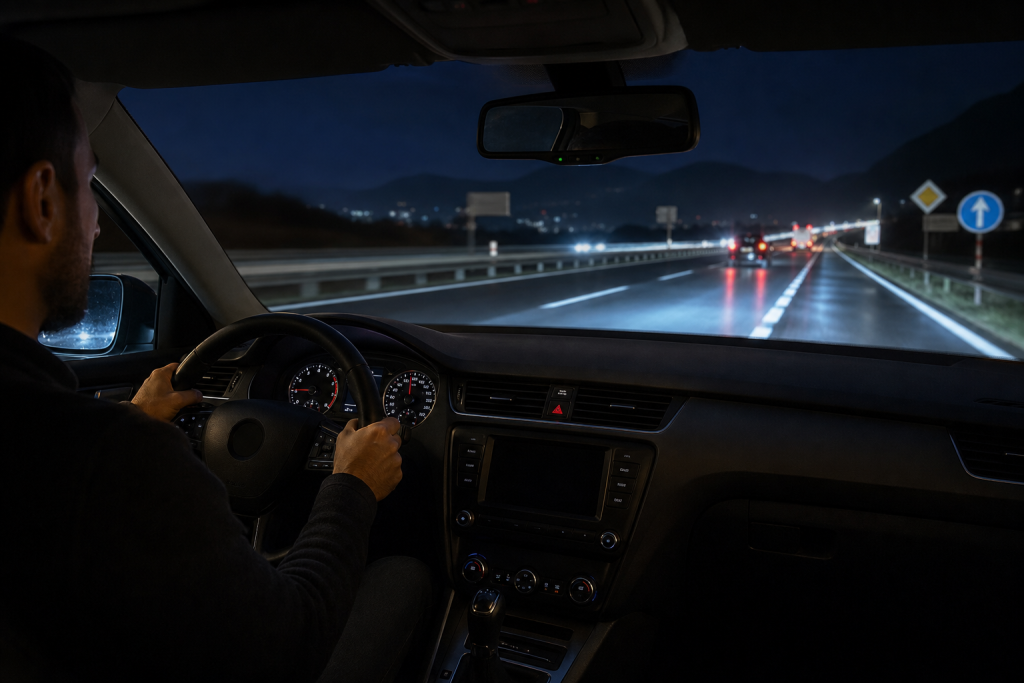
At night, the useful visual field becomes narrower and more dependent on headlights, street lighting, reflective markings, and weather conditions. A hazard may be physically close before it becomes visually obvious. Drivers may also misjudge speed and distance when there are fewer reference points.
Road trips add several complications:
- The driver may be tired after hours behind the wheel.
- The road layout may be unfamiliar.
- Navigation instructions can divide attention.
- Rural routes may lack continuous lighting.
- Rain, fog, snow, or glare can obscure important details.
- Passengers may be asleep, reducing conversation and informal support.
- The vehicle may be carrying more weight than usual.
- Local traffic behavior and road signs may be unfamiliar.
None of these issues automatically makes a night journey unsafe. Together, however, they reduce the margin available for recognizing a problem and responding smoothly. For road-trip drivers, effective night driving safety preserves that margin through lower speeds, longer following distances, and earlier decisions.
Europe and America present different nighttime challenges
Drivers on both continents face poor visibility, fatigue, wildlife, pedestrians, and changing weather. The way those hazards appear can differ substantially by location, so night driving safety plans should reflect the region and route rather than rely on a single routine.
Long distances and variable road conditions in America
Road trips in the United States and Canada can involve long highway sections, widely spaced services, and substantial distances between overnight stops. Interstate travel may feel predictable, but monotony can encourage loss of concentration. Exits, fuel stations, and rest facilities may also become less frequent on remote routes.
Secondary roads introduce other issues. They can pass through unlit communities, agricultural areas, forests, and open land where wildlife may enter the carriageway. A driver can move quickly from a well-lit urban corridor to near-total darkness.
Wide roads do not necessarily provide unlimited stopping space. Construction zones, disabled vehicles, debris, animals, and sudden congestion can still appear within the illuminated area ahead. Higher cruising speeds also mean that more distance is covered between recognizing a hazard and applying the brakes. On these routes, night driving safety depends on realistic fuel stops, rest breaks, and speed choices.
Dense networks and unfamiliar rules in Europe
European road trips often involve shorter geographic distances but more frequent changes in road type. A journey can move from a motorway to a rural lane, an urban low-speed area, or a historic town center within a relatively short period.
Drivers may encounter:
- Narrow roads with limited shoulders
- Frequent roundabouts and complex junctions
- Cyclists, pedestrians, scooters, and motorcycles
- Mountain routes with sharp bends or steep gradients
- Changing road signs, markings, and language
- Right-hand or left-hand traffic, depending on the country
- Different expectations regarding headlight use and local access
A tourist accustomed to wide roads may find a dark, narrow lane demanding. Conversely, a European driver traveling in North America may underestimate the effects of distance, fatigue, and long gaps between services. Familiarizing yourself with local signs and controls before departure is a basic part of night driving safety.
The practical lesson is the same in both regions: road design, traffic behavior, and service availability should influence when and how far a traveler drives after dark. Good night driving safety begins with adapting the itinerary to those local conditions.
Fatigue is often more important than the clock
Drivers sometimes treat night driving as a visibility problem alone. In reality, fatigue can be just as significant, and any credible night driving safety plan must account for the driver’s condition.
A person who has spent the day sightseeing, hiking, attending meetings, managing children, or navigating airports may begin the evening drive with reduced alertness. Even if the total driving time seems reasonable, the full day’s workload matters.
Fatigue can affect:
- Reaction time
- Lane control
- Speed consistency
- Hazard recognition
- Memory of recent road signs
- Judgment about overtaking or following distance
- Willingness to stop when conditions deteriorate
Warning signs include repeated yawning, heavy eyelids, wandering thoughts, missing an exit, drifting within the lane, or being unable to remember the previous few kilometers or miles. Opening a window, increasing the music volume, or consuming caffeine should not be treated as a reliable substitute for rest. The National Highway Traffic Safety Administration’s drowsy-driving guidance explains why adequate sleep and timely stops matter.
A safer plan is to establish a stopping point before departure and treat it as a limit rather than a target to renegotiate while tired. Sharing driving responsibilities can help, but only when the second driver is genuinely rested and legally permitted and insured to drive the vehicle. Rest is therefore a core part of night driving safety, not an optional response after concentration has already failed.
The most common visibility problems after sunset
Many night driving safety decisions involve matching speed and following distance to the road that is actually visible, not the road a driver assumes lies ahead.
Headlight range and speed
A driver must be able to respond within the area that is meaningfully visible. The faster the vehicle travels, the more distance it covers during perception, decision-making, and braking.
That relationship becomes especially important on an unlit bend or rural road. A speed that feels comfortable on a straight section may be inappropriate when headlights cannot reveal what lies around the curve. Posted limits are maximum legal limits under applicable conditions, not instructions to maintain the same speed regardless of visibility. Choosing a speed that allows a controlled stop is fundamental to night driving safety.
Glare from other vehicles
Oncoming headlights, high beams, wet pavement, and poorly adjusted lamps can temporarily reduce contrast. Looking directly at bright lights usually makes the effect worse. Drivers should keep their gaze oriented toward the road and lane reference ahead, reduce speed if necessary, and avoid retaliating with inappropriate high-beam use.
A dirty or scratched windshield can amplify glare. Film on the inside surface is particularly easy to overlook because the glass may appear clean during the day. Clean glass and properly adjusted mirrors make a simple but important contribution to night driving safety.
Rain, fog, and snow
Rain creates reflections that can hide lane markings and reduce contrast. Fog scatters light and can make high beams counterproductive. Snow can cover road edges and signs while producing intense reflection from headlights.
Under these conditions, drivers should reduce speed, increase following distance, use the appropriate lighting, and avoid abrupt inputs. Cruise control may be inappropriate where grip or visibility is inconsistent. No camera, sensor, or lighting system changes the fundamental need to drive at a speed that allows a controlled stop. Weather-aware night driving safety may also require delaying the journey or choosing a major route.
Poorly lit pedestrians and cyclists
People do not always wear reflective clothing, and bicycles may have weak, obscured, or missing lights. This is particularly relevant around villages, roadside businesses, transit stops, event venues, and the edges of towns.
Drivers should scan beyond the center of the lane and look for subtle movement near shoulders, crossings, parked vehicles, and junctions. Extra caution is appropriate where pedestrians may cross unpredictably or where road design provides little separation from traffic. This wider scanning pattern supports night driving safety wherever vulnerable road users may be difficult to see.
Wildlife is a road-trip hazard on both continents
Animals can enter the road quickly, particularly around forests, fields, waterways, and undeveloped areas. Activity varies by species, location, and season, but night driving safety requires drivers to take animal warning signs seriously rather than treating them as background information.
Practical precautions include:
- Lowering speed where sight lines are short
- Watching both road edges, not only the lane center
- Allowing more stopping distance
- Using high beams when legal and appropriate
- Dipping high beams promptly for other road users
- Avoiding sudden swerves that could create a more serious collision
- Remaining alert for additional animals after seeing one
A driver’s first response should generally be controlled braking while maintaining vehicle stability. The correct response can depend on the traffic around the vehicle, the road surface, the animal’s movement, and local guidance. Violent steering at speed may move the vehicle into opposing traffic, a tree, a barrier, or a rollover situation.
Wildlife risk also changes the value of route planning. A technically shorter road through an isolated area may be less suitable after dark than a slightly longer, better-lit major route. Selecting the safer route can improve night driving safety without requiring any new equipment.
Planning the trip around human limits
A well-planned night drive begins before the vehicle moves. Effective night driving safety accounts for delays, rest, fuel or charging needs, weather, and the difficulty of the final route segment.
Choose a realistic arrival time
Navigation apps usually estimate travel time from traffic and route data. They do not fully account for meals, fuel, charging, border procedures, children, road fatigue, weather delays, or difficulty finding accommodation.
Build those factors into the itinerary. Arriving earlier may also simplify parking, check-in, and finding an unfamiliar address. A flexible arrival plan protects night driving safety by reducing the pressure to maintain an unsuitable speed or continue while tired.
Review the final part of the route
The last section often demands the most attention because the driver is tired and the destination may be on a local road. Before leaving, check:
- Whether the final roads are paved and publicly accessible
- Whether mountain passes or seasonal roads are involved
- Where the last reliable fuel or charging stop is located
- Whether the destination has clear parking instructions
- Whether a ferry, toll, border, or restricted-access zone affects arrival
- Whether mobile coverage may be limited
Downloading offline maps can be useful, but navigation should support judgment rather than override visible signs, closures, or unsafe road conditions.
Set a firm rest strategy
Plan breaks according to the people in the vehicle, not an ambitious schedule. A family with young children, an older driver, or a solo traveler may need different intervals.
If drowsiness appears, stop somewhere safe and appropriate. A short delay is less consequential than continuing with impaired attention. Where practical, reserving accommodation with flexible arrival arrangements can remove pressure to “push through” and strengthen the overall night driving safety plan.
Prepare the vehicle for low-light driving
Basic maintenance is essential to night driving safety. Advanced systems cannot compensate for poor tires, dim lights, ineffective brakes, or an obstructed windshield.
Inspect the lighting
Before a major trip, confirm that the following operate correctly:
- Low- and high-beam headlights
- Tail lamps
- Brake lamps
- Turn signals
- Hazard lights
- Number-plate illumination where required
- Fog lights, if fitted
Headlight aim matters as much as brightness. Lamps aimed too low reduce useful range, while lamps aimed too high can glare other drivers. Bulb replacement, vehicle loading, suspension changes, or minor impact damage can affect alignment, so professional adjustment may be appropriate. Correctly aimed, clean lights support both the driver’s night driving safety and the comfort of oncoming road users.
Clean the glass and mirrors
Clean the windshield inside and outside. Replace wiper blades that smear or skip, top up suitable washer fluid, and check that demisting and defrosting functions work.
Adjust mirrors before departure. Interior displays should be bright enough to read without dominating the driver’s vision. Many vehicles provide automatic or manual nighttime dimming.
Check tires and brakes
Tires influence steering, braking, and water clearance. Inspect pressures when the tires are cold, account for the manufacturer’s guidance on vehicle load, and check tread and visible damage.
Brake problems deserve attention before a long trip. Warning lamps, vibration, pulling, unusual noises, or a changed pedal feel should be assessed by a qualified technician rather than deferred until after the holiday.
How driver-assistance technology can help
Modern vehicle safety technology can add useful information to a night driving safety routine, but different systems solve different problems and none removes the driver’s responsibility. Travelers evaluating these features can also review the pros and cons of vehicle thermal night vision before deciding whether it suits their routes and driving conditions.
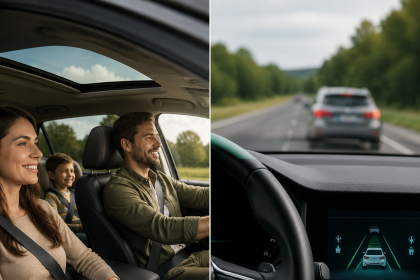
Automatic emergency braking may respond to certain detected hazards. Lane-support systems can help with unintentional lane departure under suitable conditions. Adaptive headlights may change beam direction or distribution. Blind-spot monitoring can support lane changes, while driver-monitoring features may identify some patterns associated with inattention.
Performance varies by system and environment. Cameras may be affected by glare, darkness, dirt, rain, snow, or obscured lane markings. Radar and other sensors also have operational limits. Drivers need to understand what their vehicle has, what dashboard warnings mean, and how to keep sensor areas clean.
Where thermal imaging fits
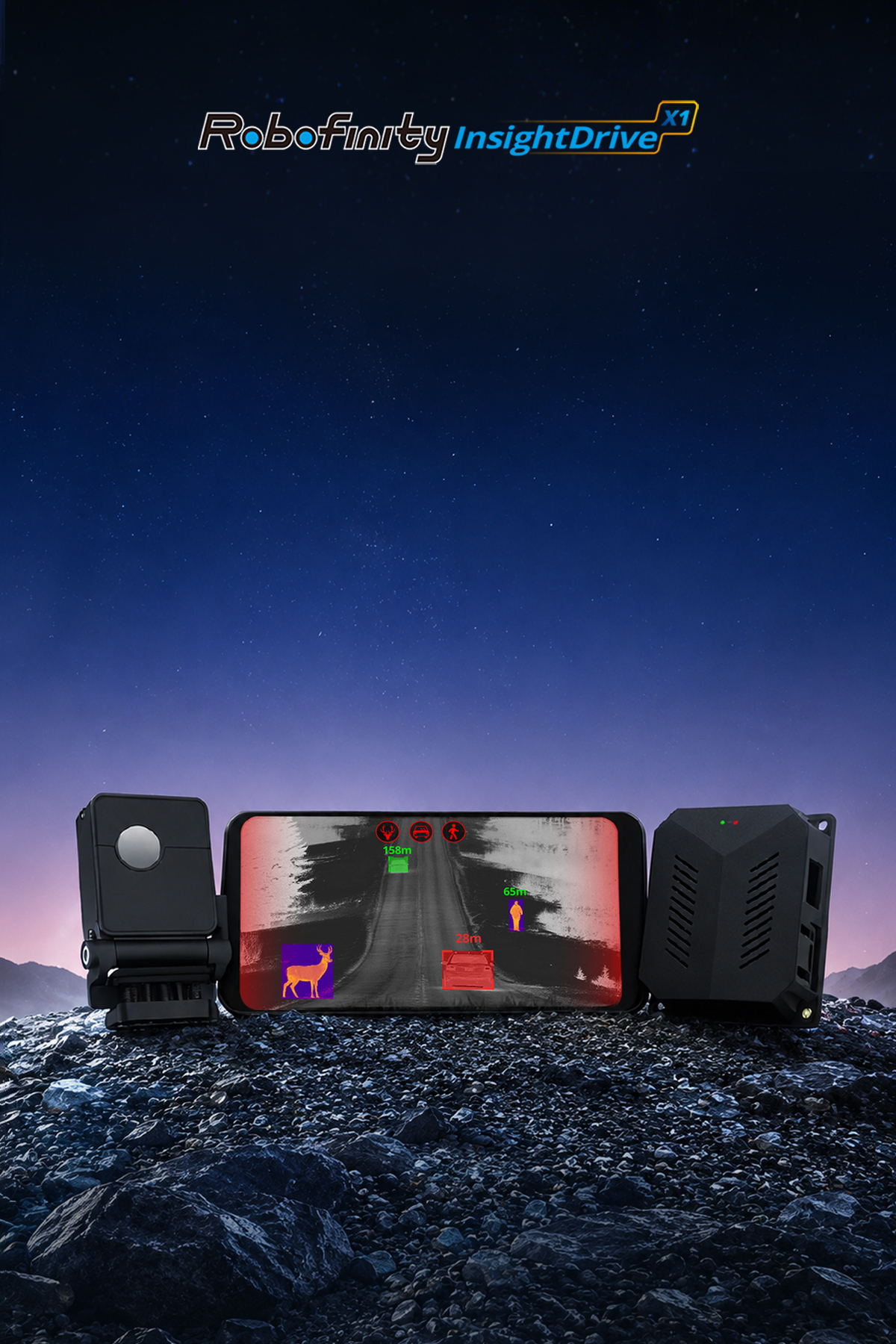
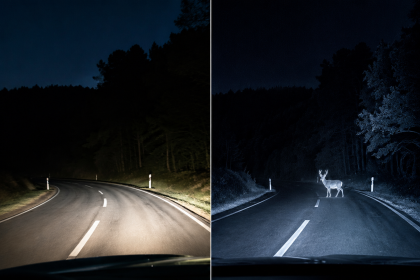
Thermal imaging systems interpret differences in emitted heat rather than depending entirely on visible light reflected by headlamps. This can support road awareness by presenting warm objects such as people or animals against cooler surroundings, although performance remains dependent on system design and environmental conditions.
Robofinity InsightDrive is one example of a vehicle thermal imaging night vision system that uses AI-powered thermal imaging to support recognition of pedestrians, animals, and vehicles and provide real-time alerts in low-light or poor-visibility conditions. It is an awareness aid, not a replacement for headlights, mirrors, legal speed, adequate braking distance, or continuous driver attention.
Drivers considering any aftermarket safety upgrade should assess installation requirements, display placement, alert behavior, compatibility, and whether it could become distracting. Review what to look for in a car thermal night vision system before comparing equipment. A device contributes to night driving safety only when its information can be understood quickly without encouraging the driver to look away from the road.
A practical night-driving routine
Complicated advice is hard to apply when a driver is already tired. A simple, repeatable night driving safety routine is more useful.
Before departure
- Check the weather and route conditions.
- Confirm fuel or battery range and planned stops.
- Clean the windshield, mirrors, lamps, and cameras.
- Test exterior lighting.
- Secure luggage so it cannot shift under braking.
- Set navigation and audio before moving.
- Adjust the seat, mirrors, and display brightness.
- Agree on driving shifts and a latest stopping time.
While driving
- Use a speed appropriate for the visible road.
- Increase following distance in darkness and bad weather.
- Scan the shoulders and intersections for movement.
- Avoid staring at oncoming headlights.
- Dim high beams appropriately.
- Keep both hands ready for controlled steering.
- Stop when fatigue symptoms appear.
- Treat warnings from assistance systems as additional information, not permission to disengage.
These habits keep night driving safety focused on observation, space, and timely decisions rather than last-second reactions.
At every stop
Walk around the vehicle and look for tire damage, lamp problems, fluid leaks, or unsecured cargo. Clean accumulated dirt, snow, or insects from lamps and relevant sensors. Reassess the driver’s alertness honestly before continuing, since that brief check can reveal a developing night driving safety problem.
When it is better not to continue
Good night driving safety includes permission to stop. Continuing may be a poor decision when:
- The driver is struggling to stay awake.
- Visibility has fallen below a manageable level.
- Snow, ice, flooding, or high winds exceed the driver’s experience.
- A critical light, tire, brake, or warning-system problem appears.
- The route ahead is closed or unsuitable.
- The driver is becoming confused by unfamiliar traffic rules.
- An animal strike or impact may have damaged the vehicle.
- Emotional stress, illness, or medication is affecting concentration.
Stop only in a place that is legal and physically safe. A live traffic lane or narrow shoulder can create a new hazard. Use designated rest areas, service stations, parking facilities, or other suitable locations whenever possible. For breakdowns, follow local emergency procedures and the vehicle manufacturer’s guidance. Selecting an appropriate stopping place is itself part of night driving safety.
A night driving safety framework for deciding whether to continue
Before choosing an evening departure or extending a driving day, consider four factors: driver, vehicle, route, and conditions.
Driver: Is the person rested, comfortable with the road type, and legally able to drive?
Vehicle: Are the lights, tires, brakes, wipers, heating, demisting, and safety systems operating correctly?
Route: Is it a major illuminated road, a remote highway, a narrow rural route, or a mountain pass? Are services available?
Conditions: Are rain, fog, snow, wildlife activity, glare, or traffic likely to reduce the safety margin?
One weak factor may be manageable. Several weak factors at once are a strong reason to delay, shorten the journey, change routes, or find accommodation. This night driving safety framework works whether the trip involves a rented hatchback in Europe, a family SUV crossing U.S. states, or an electric vehicle traveling between charging stops.
Frequently asked questions
Is driving at night always more dangerous than driving during the day?
Not every night journey is unsafe, but darkness generally reduces visual information and can combine with fatigue, glare, wildlife, and poor weather. Effective night driving safety means adjusting speed, following distance, route choice, and rest plans accordingly.
Are high beams enough for rural road trips?
High beams can improve visibility when used legally and without affecting other road users, but they do not reveal every hazard or remove stopping-distance limits. They can also make visibility worse in fog or heavy precipitation because light reflects back toward the driver.
Can thermal night vision see through fog, rain, or snow?
Thermal imaging may provide useful contrast in some low-light and poor-visibility situations, but it cannot be assumed to see perfectly through all weather. Heavy precipitation, environmental temperatures, sensor obstruction, and system design can affect performance.
What is the most important preparation for a long night drive?
Begin well rested and avoid creating an itinerary that depends on driving through fatigue. For night driving safety, vehicle checks, route planning, clean glass, and working lights are important, but they cannot restore impaired alertness.
Should I rely on lane assistance or emergency braking when tired?
No. Driver-assistance technology may support awareness or intervene in specific circumstances, but it does not make fatigued driving acceptable. If staying alert is difficult, stop in a safe place and rest.
Is nighttime driving different in a rental car?
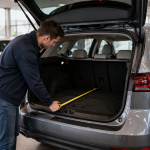
It can be more demanding because the controls, lighting behavior, mirrors, transmission, navigation, and assistance systems may be unfamiliar. Learn the essential controls while parked and adjust the seat, mirrors, displays, and headlights before beginning the trip.
Make night driving safety part of the plan
Night driving is not merely daytime driving with less light. It changes how far ahead a driver can understand the road, how quickly hazards become visible, and how fatigue affects judgment. Road-trip drivers in Europe and America care about it because unfamiliar routes, long hours, wildlife, pedestrians, weather, and varying road designs can combine after sunset.
The most effective night driving safety response is layered: start rested, maintain the vehicle, choose a suitable route, preserve following distance, reduce speed when visibility contracts, and stop before fatigue takes control. Driver-assistance systems and thermal imaging may add awareness, but they should remain supporting tools within a broader safety routine. Before the next long journey, review the nighttime portion of the route as carefully as the destination itself.