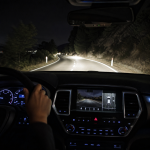
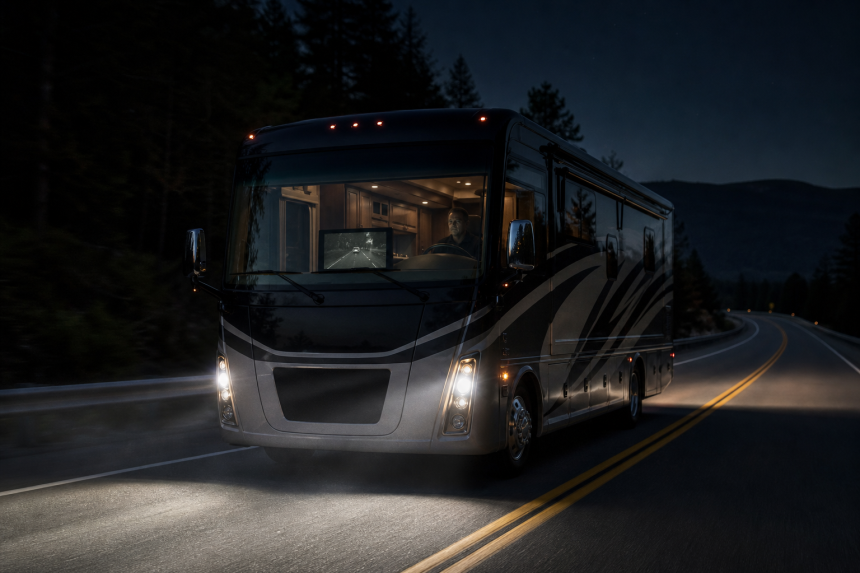
Night driving in a recreational vehicle comes with unique risks—especially on rural roads, near wildlife, and when approaching dark campgrounds. RV night vision systems add a different kind of visual awareness by highlighting heat-based contrast that may be hard to see with headlights alone. They can help you spot people, animals, and other heat-emitting hazards earlier, but they are not a replacement for proper headlights, safe speed, attentive driving, or adequate braking distance.
- Why Night Driving Is More Demanding in an RV
- RVs Need More Space to Slow Down
- Width, Height, and Blind Areas Increase the Workload
- Headlights Have Practical Limits
- How Thermal Night Vision Works
- Where Night Vision Can Help RV Drivers Most
- Rural Roads With Animal Activity
- Campgrounds and Overnight Parking Areas
- Dark Highways and Long-Distance Routes
- Fog, Rain, Snow, and Headlight Glare
- Night Vision Compared With Other RV Safety Equipment
- An Editorial Example of Aftermarket Thermal Imaging
- A Practical Buying Framework for RV Owners
- Start With the Driving Pattern
- Evaluate Detection and Alert Functions
- Check the Camera’s Mounting Location
- Consider Display Placement Carefully
- Confirm Electrical Compatibility
- Review Support and Update Requirements
- Installation and Maintenance Matter
- Safe Use Behind the Wheel
- Limitations RV Owners Should Understand
- Frequently Asked Questions
- Is thermal night vision useful on an RV?
- Can an RV night vision system see through fog?
- Does thermal imaging replace high beams?
- Can night vision detect deer and other wildlife?
- Can a thermal camera be installed behind the windshield?
- Is professional installation necessary?
- Conclusion
- Why Night Driving Is More Demanding in an RV
- How Thermal Night Vision Works
- Where Night Vision Can Help RV Drivers Most
- Night Vision Compared With Other RV Safety Equipment
- An Editorial Example of Aftermarket Thermal Imaging
- A Practical Buying Framework for RV Owners
- Installation and Maintenance Matter
- Safe Use Behind the Wheel
- Limitations RV Owners Should Understand
- Frequently Asked Questions
Why Night Driving Is More Demanding in an RV
Low-light driving reduces contrast and makes it harder to judge distance, movement, road boundaries, and the speed of approaching hazards. Those problems affect every driver, but an RV’s size and handling characteristics can make the consequences more serious.
RVs Need More Space to Slow Down
A motorhome is generally heavier than a passenger car and may require more time and distance to stop. Actual braking performance varies with vehicle weight, speed, tires, brakes, road surface, weather, and whether the RV is towing another vehicle or trailer.
This makes early hazard awareness particularly valuable. A deer at the edge of a rural road, a pedestrian walking near a campground entrance, or a stopped vehicle in an unlit lane may leave fewer options if the driver notices it late.
RV Night Vision Systems do not shorten the RV’s physical stopping distance. Their practical purpose is to give the driver another source of information that may help them recognize a developing situation sooner.
Width, Height, and Blind Areas Increase the Workload
Large motorhomes require careful lane positioning and wider turns. Mirrors help, but the driver still has to monitor a broad area while watching for low branches, narrow shoulders, roadside barriers, merging traffic, and clearance restrictions.
At night, these tasks compete for limited visual attention. Headlight glare, dark mirrors, illuminated dashboard controls, and reflections in the windshield can further complicate the view.
A forward-looking display from an RV night vision system can supplement road awareness, but it must be positioned and used correctly. A poorly placed or overly bright screen can become another distraction rather than a useful tool.
Headlights Have Practical Limits
Properly maintained headlights are essential, yet they cannot reveal every relevant hazard equally well. Their useful reach depends on beam pattern, alignment, lens condition, weather, road geometry, and whether the RV is traveling uphill, downhill, or around a bend.
Dark clothing, roadside vegetation, and low-contrast objects can be difficult to distinguish. High beams improve visibility in appropriate conditions, but drivers must dim them around other traffic. Fog, heavy precipitation, and reflected glare can also reduce the usefulness of visible light.
These limitations explain why many RV owners consider thermal imaging as a supplemental driver-assistance technology—especially RV night vision systems that can highlight heat contrast when visible light falls short.
How Thermal Night Vision Works
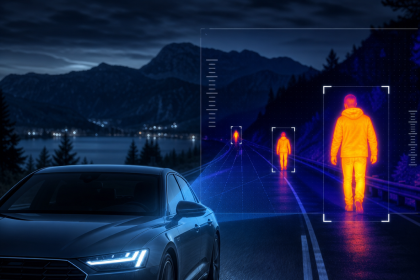
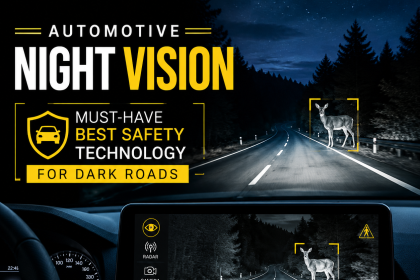
A thermal imaging system detects differences in emitted infrared energy and turns that information into a visible image. In practical terms, warm objects such as people and many animals can stand out from cooler surroundings, even when visible light is limited.
This is different from a conventional camera that amplifies available light. A low-light camera may produce a familiar road image, but its effectiveness still depends heavily on ambient illumination and can be affected by glare. Thermal imaging does not need to reproduce natural colors or ordinary visual detail to be useful; its strength is highlighting heat contrast.
What a Driver May See
Depending on the equipment and conditions, a thermal display may make the following easier to notice:
- A pedestrian walking near the shoulder
- An animal approaching or standing beside the road
- A cyclist or motorcyclist whose body produces a visible heat signature
- Vehicles, particularly warmer mechanical components
- Warm objects or activity near a dark campsite
- A person standing near a disabled vehicle
Some systems combine the thermal view with software-based pedestrian detection, animal detection, vehicle recognition, or real-time alerts. These functions can help direct attention, but recognition software is not infallible. Detection depends on object position, heat contrast, distance, obstruction, weather, installation, and system design.
Thermal Imaging Is Not X-Ray Vision
Thermal cameras cannot see through solid barriers, terrain, buildings, or another vehicle. A pedestrian hidden behind a parked truck will remain hidden until there is a clear thermal line of sight. A windshield can also block or degrade the thermal infrared wavelengths used by many systems, which is why vehicle thermal cameras are commonly mounted externally.
Thermal images may not show lane markings, road signs, potholes, ice, or unheated debris as clearly as a visible-light camera or the driver’s direct view. The display therefore complements the windshield view rather than replacing it.
Where Night Vision Can Help RV Drivers Most
The value of RV night vision systems depends less on the label and more on how closely the technology matches the owner’s actual travel patterns.
Rural Roads With Animal Activity
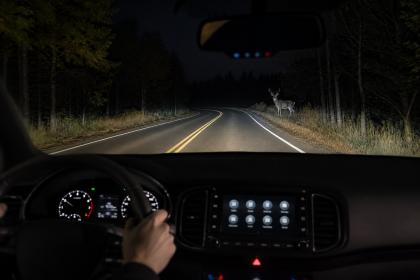
Rural and forested routes are among the clearest use cases. Wildlife can enter the road quickly, and an animal standing near vegetation may blend into the background under ordinary headlights.
Thermal contrast may help reveal an animal near the road before its full shape becomes obvious in visible light. The responsible response is not a sharp steering maneuver based solely on the screen. Drivers should reduce speed smoothly when conditions permit, cover the brake, check surrounding traffic, and remain prepared for unpredictable movement.
Campgrounds and Overnight Parking Areas
RV travel often involves low-speed movement through campgrounds, parking areas, fuel stations, and rest stops after dark. These spaces can contain pedestrians, children, pets, bicycles, utility posts, and vehicles maneuvering without consistent lighting.
A forward thermal view may support awareness of people or animals. It will not reliably identify every cold obstacle, overhead branch, picnic table, curb, or hookup point. Slow speed, mirrors, direct observation, a spotter, and appropriate exterior lighting remain essential.
Dark Highways and Long-Distance Routes
On a dark highway, the primary benefit is additional warning of heat-emitting hazards near or within the roadway. A person near a disabled vehicle or an animal beside the shoulder may appear on a thermal display before the driver can identify the same subject clearly through the windshield.
RV Night Vision Systems also cannot solve fatigue, which is one of the most important risks on extended RV journeys. A clearer display can sometimes create a false sense of confidence, but no driver-assistance system can restore alertness. When concentration declines, the correct action is to stop in a safe place and rest.
Fog, Rain, Snow, and Headlight Glare
Thermal imaging can remain useful in some poor-visibility conditions because it does not depend on visible illumination in the same way as a standard camera. It may also avoid some of the glare created by oncoming headlights.
Performance is not unlimited. Dense fog, heavy rain, snow, water on the lens, road spray, and reduced thermal contrast can degrade the image or detection accuracy. Weather that limits visibility also affects traction and braking distance, so the driver must reduce speed and increase following distance regardless of what appears on the display.
Night Vision Compared With Other RV Safety Equipment
RV Night Vision Systems work best as one layer in a broader road-awareness setup. They address a different problem from most common RV cameras and driver-assistance features.
Headlights and Auxiliary Lighting
Headlights illuminate the road in visible light and remain legally and practically essential. Thermal night vision adds heat-based information but does not illuminate signs, pavement markings, or road geometry.
Headlight restoration, correct alignment, suitable bulbs or assemblies, and clean lenses may offer a meaningful improvement for an RV with poor lighting. Any auxiliary lighting must be installed and used in accordance with applicable road rules and without creating glare for other drivers.
For general lighting and visibility guidance, see the U.S. National Highway Traffic Safety Administration’s overview of vehicle maintenance and safety.
Backup and Side-View Cameras
Backup cameras help with reversing and low-speed positioning. Side-view cameras can improve awareness during turns or lane changes. Neither is normally designed to identify distant hazards ahead in darkness.
An RV may benefit from all three camera categories, but each display increases the amount of information the driver must manage. Screen layout and alert behavior are therefore important purchasing considerations.
Radar-Based Driver Assistance
Radar can estimate distance and relative movement and may support functions such as forward-collision warning or adaptive cruise control when integrated into a vehicle. Thermal imaging provides a visual heat-based representation and may be particularly useful for people and animals.
These technologies are complementary rather than interchangeable. Aftermarket installation also differs from factory integration: a standalone thermal system may alert the driver without controlling the brakes or steering.
An Editorial Example of Aftermarket Thermal Imaging
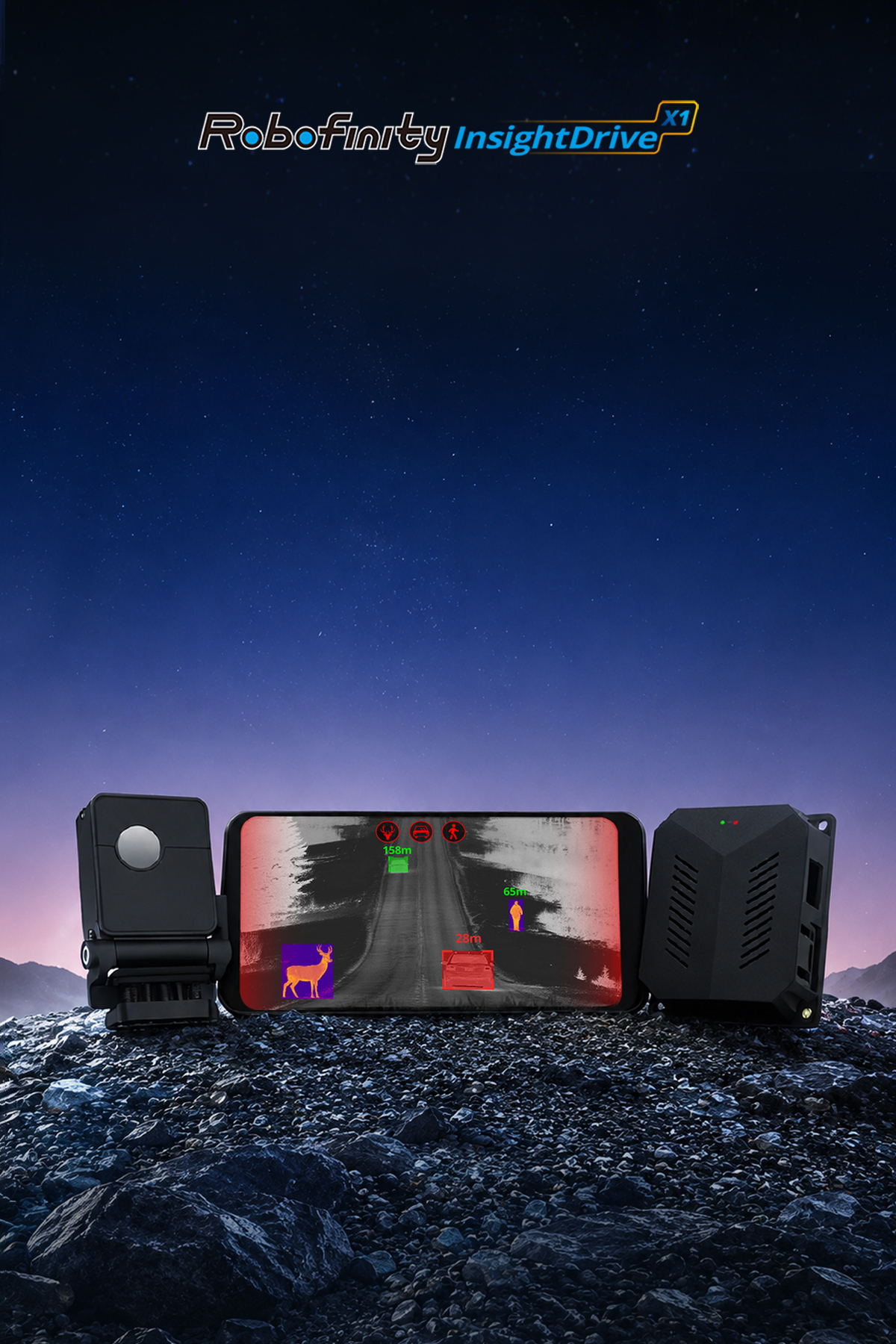
Drivers evaluating advanced safety upgrades may encounter Robofinity InsightDrive, a vehicle thermal imaging night vision system designed to support recognition of pedestrians, animals, and vehicles. Its real-time alerts illustrate how an aftermarket system can direct attention toward heat-emitting hazards in low-light or poor-visibility driving conditions.
That assistance should be interpreted as an additional awareness layer. It does not guarantee detection, prevent collisions, or replace headlights, mirrors, safe speed, adequate following distance, traffic laws, and direct driver attention.
If you’re planning longer nighttime travel as part of full-timing life, you may also find this guide useful: Full-Time RV Living: The Unspoken Struggle 1.2 Million Families Face.
A Practical Buying Framework for RV Owners
Not every RV needs the same equipment. Before purchasing an RV night vision system, consider where the vehicle travels, how it is driven, and whether the installation will be genuinely usable.
Start With the Driving Pattern
RV Night Vision Systems may be more relevant when an RV is regularly used for:
- Rural or mountain travel after dark
- Routes with frequent wildlife activity
- Overnight highway journeys
- Arrival at unlit campgrounds
- Driving in areas with limited street lighting
- Travel during seasons with short daylight hours
An owner who drives almost exclusively during daylight may receive less benefit. In that case, tire replacement, brake service, headlight restoration, mirror upgrades, or driver training could be higher priorities.
Evaluate Detection and Alert Functions
Ask what the system detects and how it communicates a warning. A clear image is useful, but object recognition and appropriately timed alerts may reduce the need to study the display continuously.
Look for understandable documentation about pedestrians, animals, vehicles, detection range, field of view, operating temperature, startup time, and expected performance in rain or fog. Detection range should not be treated as a guaranteed reaction distance. The usable result will depend on speed, road shape, object visibility, installation, and environmental conditions.
Alerts should be noticeable without being startling. Frequent false or low-value warnings may lead the driver to ignore the system.
Check the Camera’s Mounting Location
A forward thermal camera needs a stable, unobstructed view. On an RV, installation can be complicated by the vehicle’s tall front profile, bodywork, grille configuration, bumper position, and vibration.
The installer should account for:
- Camera height and viewing angle
- Protection from road debris and spray
- Clearance from moving panels or equipment
- Cable routing and weather sealing
- Heat sources that could interfere with the image
- Access for lens cleaning and inspection
- Alignment after installation
A camera mounted too high, too low, or off-center may give a misleading perspective. Alignment should reflect the lane ahead rather than simply producing an attractive image while parked.
Consider Display Placement Carefully
The display should be visible with a brief glance while preserving a clear windshield view. It should not cover instruments, interfere with mirrors, obstruct airbag deployment zones, or encourage the driver to look away from the road for extended periods.
Nighttime brightness control is important. A screen that is comfortable during the day may be distracting after dark or may reduce the driver’s ability to adapt to low light. A simple interface is generally preferable when the RV is moving.
Confirm Electrical Compatibility
RVs can have complex electrical systems involving chassis batteries, house batteries, converters, inverters, and aftermarket accessories. The night vision equipment should be connected to an appropriate circuit, protected by the correct fuse, and installed without overloading existing wiring.
A qualified installer should also minimize the risk of battery drain when the RV is parked. The system’s power source and shutdown behavior should be clear before installation.
Review Support and Update Requirements
Recognition-based systems may depend on firmware or software. Owners should understand how updates are delivered, whether the display or camera requires periodic calibration, and what support is available if alerts or video behavior change.
It is also worth checking whether replacement cables, mounts, cameras, or screens are obtainable. Long-term serviceability matters for equipment installed on a vehicle that may remain in use for many years.
Installation and Maintenance Matter
Even capable hardware can perform poorly when installed incorrectly or neglected. For best results, RV night vision systems should be set up and maintained like safety-critical equipment rather than a convenience gadget.
Keep the Camera Window Clean
Road film, insects, salt, mud, and water spots can interfere with image quality. Inspect and clean the camera according to the manufacturer’s instructions, using materials that will not scratch or damage its protective surface.
Make this check part of the normal pre-trip routine, especially after driving in winter conditions or on unpaved roads.
Watch for Alignment Changes
Vibration, minor impacts, service work, or a loose bracket can shift the camera. Warning signs include an off-center horizon, detection boxes appearing in the wrong area, missed objects that were previously recognized, or alerts that no longer correspond with the road ahead.
Do not assume a distorted image is merely a software issue. Check the mount and arrange professional inspection when necessary.
Test Before Relying on It
After installation, learn how the display represents people, animals, vehicles, roadside objects, and changing road temperatures. Begin in a controlled, low-speed environment rather than trying to interpret the system for the first time on an unfamiliar highway.
Testing should build familiarity, not attempt to prove the maximum detection distance or encourage faster driving.
Safe Use Behind the Wheel
The safest way to use RV night vision systems is as an occasional cross-check, much like a mirror or instrument display. The windshield remains the driver’s primary view.
Use these habits to keep the technology in its proper role:
- Scan the road continuously instead of staring at the thermal display.
- Slow down when visibility or road conditions deteriorate.
- Maintain enough distance to stop within the visible and usable road space.
- Treat every alert as information to verify, not an instruction to swerve.
- Keep headlights, windows, mirrors, cameras, brakes, and tires maintained.
- Pull over safely if an alert requires menu adjustment or troubleshooting.
- Stop driving when tired, regardless of the available assistance systems.
- Use a spotter for tight campground maneuvers when one is available.
A thermal image can reveal a warm subject without explaining the full situation. For example, it may show a person near the shoulder but not a cold object that person is carrying or standing beside. The driver still has to interpret the road as a whole.
Limitations RV Owners Should Understand
RV Night Vision Systems have meaningful benefits, but a balanced decision requires knowing what they cannot do.
It may have difficulty with objects whose temperature is close to the background. It can also be affected by occlusion, lens contamination, severe weather, complex roadside heat sources, and installation angle. Some hazards, including road debris, potholes, low barriers, and lane markings, may not stand out thermally.
A system can also create human-factors problems. Excessive alerts may become irritating, while a bright or complex screen can increase distraction. Most importantly, successful detections can encourage overconfidence. No driver should increase speed because a thermal camera is operating.
Owners should also verify that the chosen mounting position and display location comply with applicable rules. Requirements can vary by jurisdiction, particularly for windshield obstruction, exterior lighting, recording, and electronic devices.
Frequently Asked Questions
Is thermal night vision useful on an RV?
It can be useful for RVs driven frequently after dark, especially on rural roads, highways, and poorly lit campground approaches. The value is lower for owners who avoid nighttime travel or mainly operate in well-lit urban areas.
Can an RV night vision system see through fog?
Thermal imaging may preserve useful contrast in some foggy conditions, but it cannot see perfectly through dense fog. Moisture, precipitation, spray, and reduced thermal contrast can all degrade performance. Speed and following distance must still reflect the actual conditions.
Does thermal imaging replace high beams?
No. Headlights provide the visible illumination needed to see road markings, curves, signs, and many nonthermal hazards. Thermal imaging supplies different information and should only supplement properly maintained low and high beams.
Can night vision detect deer and other wildlife?
A thermal system may make warm-bodied animals easier to distinguish from cooler surroundings. Detection is not guaranteed, particularly when an animal is hidden, far away, partially obstructed, or close in temperature to its environment.
Can a thermal camera be installed behind the windshield?
Many thermal wavelengths used by vehicle systems do not pass effectively through ordinary automotive glass. Installation requirements vary, but an externally mounted camera is often necessary. Follow the equipment manufacturer’s instructions and use a qualified installer where appropriate.
Is professional installation necessary?
Professional installation is advisable when mounting, weatherproof cable routing, electrical integration, display placement, or calibration is beyond the owner’s experience. RV electrical and body systems can be more complex than those of a passenger car, and incorrect installation can impair both reliability and image alignment.
Conclusion
RV Night Vision Systems can be a sensible safety upgrade when regular travel includes dark rural roads, wildlife corridors, unlit highways, or late campground arrivals. Their strongest contribution is earlier awareness of heat-emitting hazards, particularly people and animals that are difficult to distinguish with visible light alone.
The purchasing decision should be based on real travel conditions, useful alert functions, installation quality, display ergonomics, electrical compatibility, and long-term support. Before adding new technology, owners should also address the fundamentals: sound tires and brakes, correctly aimed headlights, clean glass and mirrors, conservative speed, sensible trip planning, and adequate rest.
Used within those boundaries, RV night vision systems can add another useful layer of nighttime road awareness. For broader guidance on choosing night safety features for larger vehicles, see SUV Night Driving Safety: How to Choose Night Safety Features for SUVs.