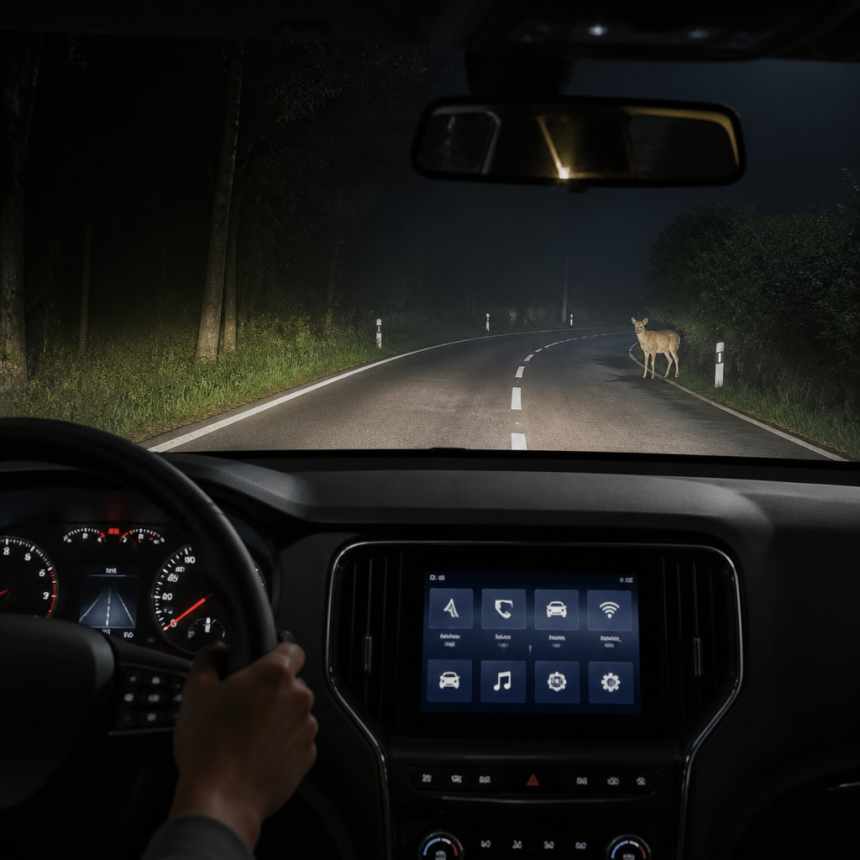
SEO Title: Is a Vehicle Thermal Night Vision System Worth It? Benefits, Limits, and Ideal Users
- What Is a Vehicle Thermal Night Vision System?
- Thermal Imaging Versus Conventional Night Vision
- The Main Benefits of Car Thermal Night Vision
- Earlier Awareness of Pedestrians
- Better Awareness of Animals on Rural Roads
- Support Beyond the Strongest Headlight Illumination
- Improved Road Awareness in Uneven Lighting
- Reduced Uncertainty During Long Night Drives
- Where Thermal Night Vision Has Real Limitations
- It Does Not Replace Headlights
- Not Every Hazard Produces a Strong Heat Signature
- Weather Still Matters
- Classification Software Can Make Mistakes
- The Display Can Become a Distraction
- Installation Quality Affects Performance
- Who Is Most Likely to Find It Worthwhile?
- Rural and Remote-Area Drivers
- Frequent Long-Distance Night Drivers
- Drivers in Areas With High Animal Activity
- Families Who Frequently Travel After Dark
- Owners of Older Vehicles Without Comparable Awareness Features
- Who May Not Need One?
- How to Decide: A Practical Buying Framework
- 1. Review Your Actual Night Driving
- 2. Check the Vehicle’s Existing Equipment
- 3. Evaluate Detection and Alert Functions
- 4. Account for Installation and Ownership
- 5. Consider How the Display Fits Your Driving
- 6. Compare It With Other Safety Spending
- Real-World Scenarios: When It Helps and When It Does Not
- A Pedestrian on an Unlit Road
- An Animal Near a Wooded Verge
- Heavy Rain on a Motorway
- Cold Debris in the Road
- A Brightly Lit City Center
- Safe Use After Installation
- Frequently Asked Questions
- Can thermal night vision see through fog, rain, or snow?
- Does a thermal camera work in complete darkness?
- Can vehicle thermal imaging detect all pedestrians and animals?
- Is factory night vision better than an aftermarket system?
- Will thermal night vision help with potholes and lane markings?
- Is a thermal night vision system legal to install?
- Conclusion: Match the Technology to the Road
Meta Description: Learn whether a vehicle thermal night vision system is worth it, including its benefits, limitations, costs, and best use cases.
Driving after dark creates a basic visibility problem: headlights illuminate only part of the road, while pedestrians, animals, stalled vehicles, and debris may remain difficult to distinguish until the vehicle is relatively close. A vehicle thermal night vision system can expand a driver’s awareness by detecting heat patterns and displaying potential hazards ahead. It can be a worthwhile driver-assistance upgrade for frequent night drivers, particularly on rural or poorly lit roads, but its usefulness depends on driving conditions, installation quality, display design, and realistic expectations.
The short answer is that thermal night vision is not essential for every vehicle. It makes the strongest case for drivers who regularly face darkness, animal activity, weak roadside lighting, long-distance travel, or certain poor-visibility conditions. It remains an awareness aid, however, and cannot replace headlights, attentive driving, safe speed, braking distance, mirrors, or compliance with traffic laws.
What Is a Vehicle Thermal Night Vision System?
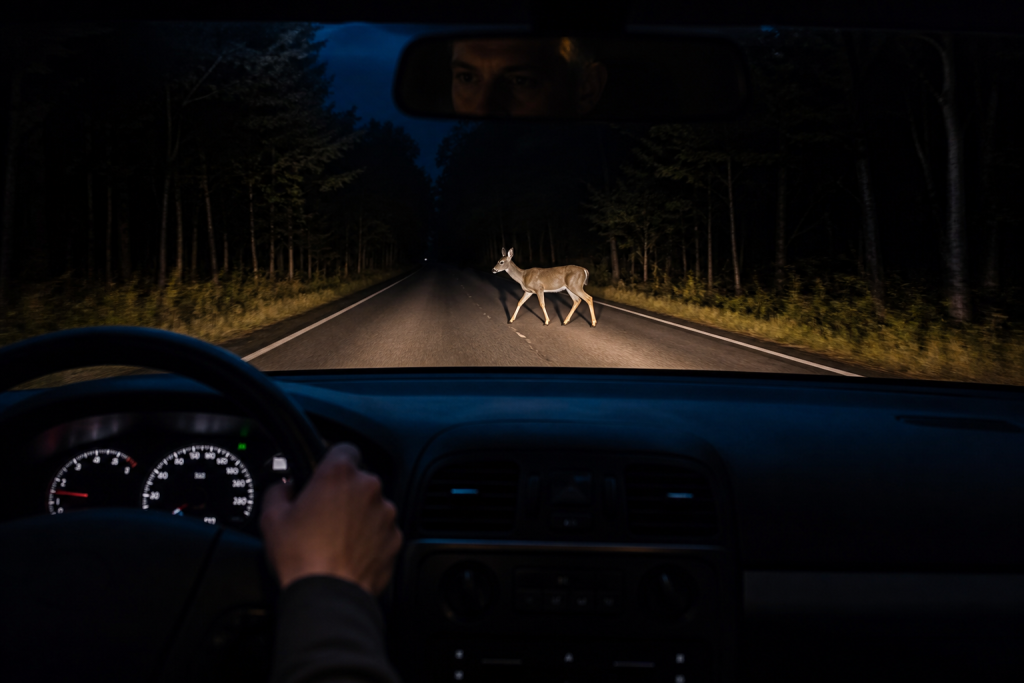
A vehicle thermal night vision system uses a thermal camera to detect differences in infrared energy emitted by objects in the road environment. Instead of relying entirely on visible light, it creates an image based on temperature contrast.
People and many animals often stand out against cooler surroundings, especially at night. Warm vehicle components may also be visible, while road edges, trees, signs, and other objects can appear with varying levels of contrast depending on their temperature and the system’s image processing.
The camera is usually mounted at the front of the vehicle, with its image shown on a dedicated display or, in some factory systems, an instrument panel or head-up display. More advanced products may analyze the thermal image and highlight possible pedestrians, animals, vehicles, or obstacles.
This distinction is important: thermal imaging does not make the road look like daytime. It presents a different kind of visual information that the driver must understand without becoming distracted.
Thermal Imaging Versus Conventional Night Vision
The term “night vision” can refer to more than one technology. Understanding the difference helps buyers evaluate what they are actually getting.
Active Infrared Night Vision
An active infrared system illuminates the road with infrared light and captures the reflected energy using a compatible camera. It can produce a scene with recognizable road details, but its useful view depends on the system’s infrared illumination and how surfaces reflect it.
Thermal Night Vision
A thermal imaging system detects infrared energy emitted by objects. It does not need to illuminate the subject first, making it particularly relevant for identifying warm pedestrians and animals beyond brightly lit areas.
Thermal imaging also differs from an ordinary low-light camera. A visible-light camera still depends heavily on available illumination and may be affected by headlight glare, deep shadows, or uneven lighting. Thermal contrast may reveal a warm road user who blends into the visible background.
Neither approach is universally superior. A conventional camera may provide clearer lane markings, traffic signs, and familiar visual detail. Thermal imaging can be more useful for spotting heat-emitting hazards. Some drivers may benefit most from treating thermal information as a supplementary layer rather than a replacement for the normal road view.
The Main Benefits of Car Thermal Night Vision
The real value of this technology is not that it lets a driver travel faster at night. Its purpose is to provide earlier or clearer awareness of certain hazards, giving the driver more time to assess the situation and respond appropriately.
Earlier Awareness of Pedestrians
Pedestrians wearing dark clothing can be difficult to see on an unlit road. The problem becomes more serious when a person is near trees, parked vehicles, roadside structures, or other low-contrast backgrounds.
Because the human body emits heat, a person may stand out in a thermal image even when clothing and surroundings look similar in visible light. Recognition software may also place a marker around a likely pedestrian or issue a real-time alert.
Detection is not guaranteed. A person may be partly hidden, outside the camera’s field of view, or difficult for software to classify. Even so, pedestrian detection can be valuable on roads without sidewalks, at dim intersections, near work zones, and around areas where people may unexpectedly enter the roadway.
Better Awareness of Animals on Rural Roads
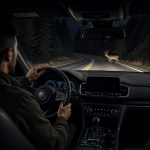
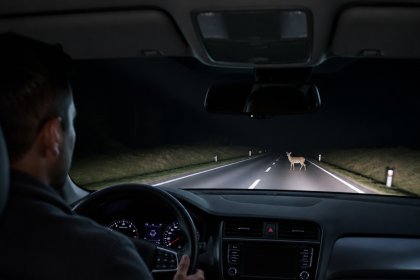
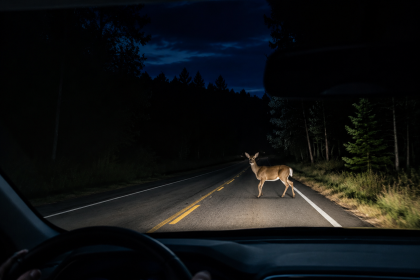
Animal detection is one of the most convincing use cases for vehicle thermal imaging. Deer and other animals may approach from dark verges where headlights provide limited illumination. Their shape and movement can also be hard to judge against vegetation.
A thermal display may help reveal an animal’s heat signature before its full body is obvious through the windshield. This can be useful for rural residents, commuters who travel around dawn or dusk, and drivers crossing forested or agricultural regions.
The correct response is still to reduce speed progressively and maintain control. A sudden swerve may create a more serious hazard involving oncoming traffic, roadside objects, or vehicle rollover.
Support Beyond the Strongest Headlight Illumination
Even effective, correctly aimed headlights have practical limits. Curves, hills, dips, roadside vegetation, and opposing traffic can reduce how much useful information reaches the driver.
Thermal imaging may reveal heat-emitting objects outside the brightest portion of the headlight beam. This does not mean the driver should treat the system’s stated detection distance as available stopping distance. Recognition, alert presentation, driver reaction, road conditions, and braking performance all affect whether an early detection becomes a useful response.
Improved Road Awareness in Uneven Lighting
Nighttime visibility is not always uniformly dark. Drivers often move between well-lit roads, tunnels, dim residential areas, and stretches with no street lighting. Bright oncoming headlights can also make surrounding areas appear darker.
A thermal view can offer a separate source of information when visible-light contrast is poor. Depending on system design and conditions, it may support awareness during headlight glare, light fog, rain, or snow. Performance can still decline in severe weather, and thermal imaging cannot reveal every road feature needed for safe driving.
Reduced Uncertainty During Long Night Drives
Fatigue and visual strain can make it harder to interpret ambiguous shapes at night. A thermal display may help a driver determine whether a distant shape is a person, an animal, a warm vehicle, or an irrelevant background object.
That does not make tired driving acceptable. A night vision system cannot restore alertness, judgment, or reaction time. Drivers who are fatigued should stop in a safe place and rest rather than relying on technology to compensate.
Where Thermal Night Vision Has Real Limitations
A balanced buying decision requires understanding what the system cannot do. Thermal imaging is specialized vehicle safety technology, not a complete picture of the road.
It Does Not Replace Headlights
Thermal cameras are not intended to replace legal, properly maintained vehicle lighting. Drivers still need headlights to see lane markings, signs, signals, road texture, vehicle reflectors, and objects without a useful heat contrast.
A thermal image may show that something is present while providing limited information about its color, text, surface condition, or exact physical characteristics. Those details can be essential to safe driving.
Not Every Hazard Produces a Strong Heat Signature
A pedestrian or running animal may be relatively distinct, but cold road debris, a fallen branch, a pothole, standing water, or an unlit trailer may not appear as prominently. Temperature contrast also changes with weather, surface heating, shade, and time of day.
For example, objects heated by the sun may remain warm after sunset, creating a busier thermal scene. In other circumstances, an object may be close in temperature to its surroundings and difficult to distinguish.
Weather Still Matters
Thermal imaging can remain useful when visible light is compromised, but it cannot see perfectly through all atmospheric conditions. Dense fog, heavy rain, snow, spray, dirt, ice, and moisture on the camera housing can reduce image quality or effective detection range.
Weather also affects vehicle control. Even if a hazard is detected, wet, snowy, or icy roads increase stopping distance. A driver must adapt speed to traction and visibility rather than assuming the camera provides an adequate safety margin.
Classification Software Can Make Mistakes
Systems with pedestrian, animal, or vehicle recognition use algorithms to interpret the image. They may miss an object, classify it incorrectly, or create an alert for something that is not an immediate hazard.
A driver should treat alerts as prompts to check the road, not instructions to make an abrupt maneuver. Frequent false alerts can also lead to alert fatigue, making system configuration and interface quality important buying considerations.
The Display Can Become a Distraction
A thermal image is useful only if it can be interpreted without drawing excessive attention away from the road. A poorly positioned screen may encourage the driver to look down or to the side at the wrong moment.
Display brightness also matters. A screen that is too bright can interfere with dark adaptation, while a dim or cluttered image may be difficult to interpret quickly. Clear alerts, sensible positioning, and simple controls generally matter more than decorative interface features.
Installation Quality Affects Performance
An aftermarket thermal camera needs a stable location with a suitable forward view. Mounting height, camera angle, calibration, wiring, weather protection, and exposure to road debris all influence reliability.
A camera placed behind some types of glass or vehicle trim may not function as intended because materials can affect thermal transmission. Installation should follow the product manufacturer’s requirements and should not interfere with airbags, vehicle controls, cooling systems, existing sensors, or legal visibility requirements.
Who Is Most Likely to Find It Worthwhile?
The value of thermal night vision depends more on a driver’s routine than on the age or price of the vehicle.
Rural and Remote-Area Drivers
Drivers who regularly travel on unlit country roads are strong candidates. These routes commonly combine limited street lighting, higher speeds, narrow shoulders, animal activity, and longer distances between safe stopping points.
The technology may be especially useful for shift workers, emergency personnel, agricultural workers, and rural households whose normal journeys begin before sunrise or finish after dark.
Frequent Long-Distance Night Drivers
Motorway and highway driving may appear predictable, but stopped vehicles, people near breakdowns, debris, and animals can still create hazards. A thermal system can add another layer of road awareness during long nighttime trips.
It should not be used to justify longer driving sessions. Planned rest stops, clean windows, correct headlight use, and conservative speed remain more fundamental.
Drivers in Areas With High Animal Activity
Someone who travels through forests, mountain regions, open farmland, or established wildlife corridors may receive more practical benefit than a driver whose journeys are limited to illuminated urban streets.
Local conditions matter. The feature may be valuable during seasonal periods of increased animal movement but less relevant for the rest of the year.
Families Who Frequently Travel After Dark
Parents who regularly drive children on dark suburban or rural roads may value earlier awareness of pedestrians, cyclists, and animals. The decision should still consider whether the display and alerts are intuitive enough to support the driver without creating additional workload.
Owners of Older Vehicles Without Comparable Awareness Features
A well-maintained older car may lack modern camera-based driver-assistance technology. An aftermarket thermal system can add a specialized awareness function without requiring the owner to replace the vehicle.
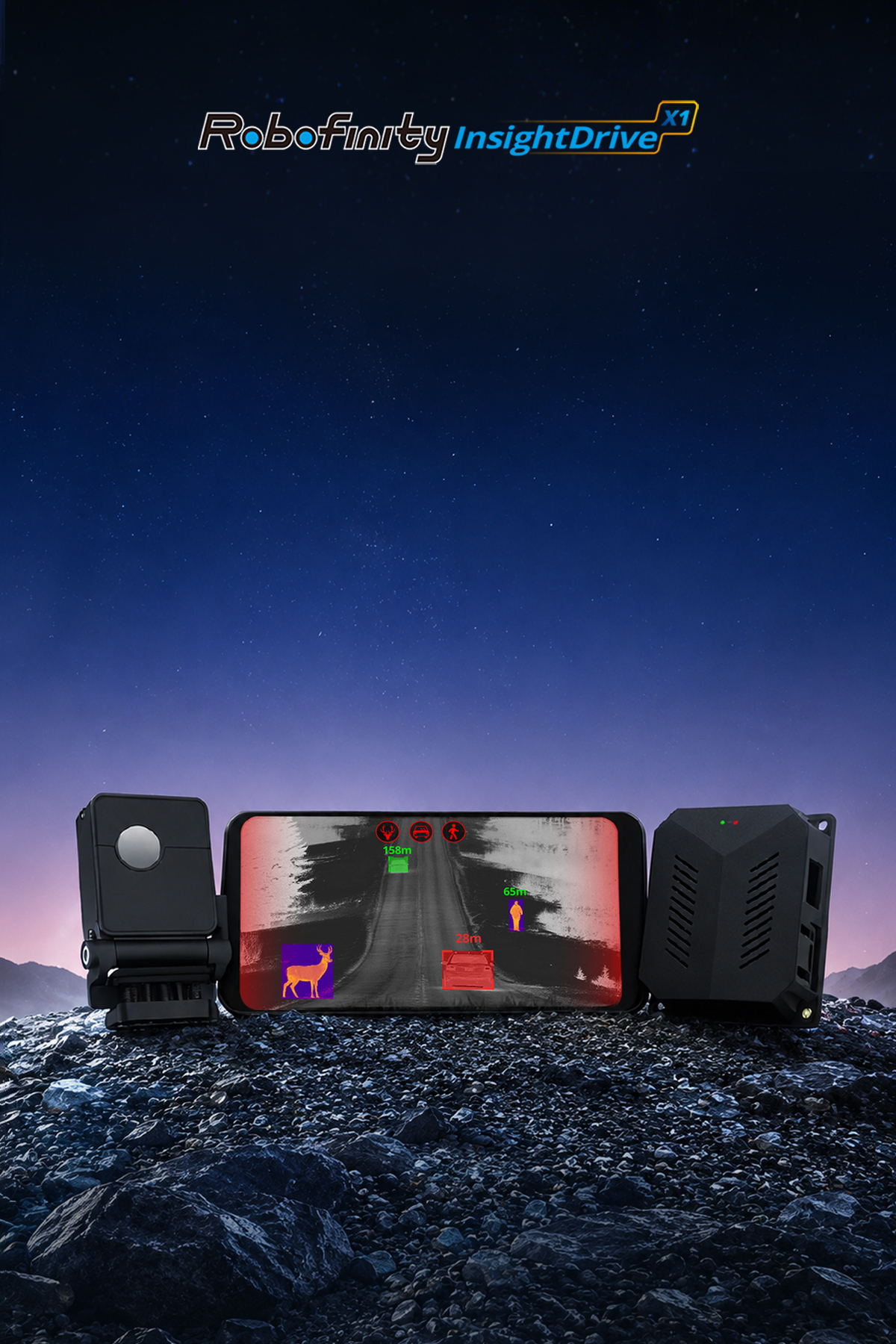
One current example is Robofinity InsightDrive, a vehicle thermal imaging night vision system that uses AI-supported recognition for pedestrians, animals, and vehicles and can provide real-time alerts. It should be evaluated as an additional awareness tool for low-light or poor-visibility driving, not as a substitute for attentive driving or the vehicle’s primary safety equipment.
Who May Not Need One?
A thermal night vision system may offer limited value to drivers who rarely travel after dark or remain mainly on brightly lit urban routes. City environments can also produce a dense thermal image containing pedestrians, vehicles, building exhaust, and other heat sources, increasing the amount of information the driver must process.
It may also be a weak investment when more basic problems have not been addressed. Before buying specialized technology, an owner should correct cloudy headlight lenses, failed bulbs, incorrect headlight aim, a scratched windshield, worn wiper blades, poor tires, defective brakes, or an outdated eye prescription.
These improvements may produce a more immediate benefit across a wider range of journeys.
How to Decide: A Practical Buying Framework
Instead of asking whether thermal night vision is worthwhile in general, ask whether it addresses a recurring problem in your own driving.
1. Review Your Actual Night Driving
Think about the last several months rather than an occasional road trip. How often do you drive after dark? Are those journeys on city streets, motorways, or rural roads? Do animals, pedestrians, weak lighting, glare, or fog regularly affect your visibility?
A feature used several nights each week is easier to justify than one reserved for a yearly holiday trip.
2. Check the Vehicle’s Existing Equipment
Some vehicles already include factory night vision or driver-assistance features such as automatic emergency braking, pedestrian detection, adaptive headlights, or high-beam assistance. These systems do not necessarily provide the same information as thermal imaging, but there may be overlap in the problems they address.
Confirm how an aftermarket unit will fit into the cabin and whether it will interfere with existing displays, sensors, cameras, or controls.
3. Evaluate Detection and Alert Functions
Do not assess a system based only on the maximum distance in a specification sheet. Detection range and reliable classification range may not be the same, and real-world performance varies with weather, temperature contrast, camera cleanliness, and installation.
Useful questions include:
- Does it recognize pedestrians, animals, and vehicles?
- How are warnings presented?
- Can alert sensitivity or volume be adjusted?
- Is the image clear enough to understand quickly?
- Does the display have appropriate nighttime brightness controls?
- What happens in rain, snow, fog, and headlight glare?
- Does the camera’s field of view suit the roads you use?
- Are software or calibration requirements clearly explained?
4. Account for Installation and Ownership
The purchase price is only part of the decision. Consider professional installation, wiring, mounting hardware, calibration, maintenance, and possible removal when selling the vehicle.
The camera lens or protective window must remain clean. Bugs, road salt, mud, snow, and ice can obstruct it. Owners should also check wiring and mounting points periodically, particularly after minor front-end contact or work near the bumper.
5. Consider How the Display Fits Your Driving
A technically capable system may still be unsuitable if its screen is awkwardly placed. The display should not block the driver’s view, create excessive glare, or require long glances away from the road.
Try to understand the interface before committing. Demonstration footage can show the general presentation, but it may not represent the exact weather, roads, camera position, or vehicle involved in your use case.
6. Compare It With Other Safety Spending
A limited budget should usually address essential maintenance first. Good tires, reliable brakes, clear glazing, functioning lights, and correct wheel alignment affect every journey.
Once the vehicle’s fundamentals are sound, compare thermal night vision with other relevant upgrades. Depending on the driver, better road-legal headlamp performance, a quality dash camera, parking sensors, or driver training may provide greater everyday value.
Real-World Scenarios: When It Helps and When It Does Not
A Pedestrian on an Unlit Road
A person in dark clothing is walking near the edge of a country road. Thermal contrast may make the pedestrian visible on the display before clothing becomes distinct in the headlight beam. An alert could prompt the driver to reduce speed and create more passing space where lawful and safe.
An Animal Near a Wooded Verge
An animal is partly concealed by roadside vegetation. If enough of its heat signature is visible, the system may highlight it before it enters the lane. The driver gains an opportunity to slow smoothly and prepare for unpredictable movement.
Heavy Rain on a Motorway
The camera may provide some additional information, but water, spray, and reduced thermal contrast can limit the image. Lane visibility, grip, and braking distance remain the dominant concerns. The correct response is lower speed, greater following distance, clean glass, effective wipers, and appropriate lighting.
Cold Debris in the Road
A piece of tire tread or other road debris may have little temperature contrast and may not be emphasized. The driver must continue scanning through the windshield because thermal night vision cannot be expected to identify every obstacle.
A Brightly Lit City Center
The system may detect many people and vehicles, but the driver can already see much of the scene under streetlights. Numerous alerts could add workload rather than meaningful information. In this setting, the benefit depends heavily on alert filtering and interface design.
Safe Use After Installation
Allow time to learn what different road users and objects look like in thermal imagery. Initial familiarization should take place while parked or with assistance from a passenger, following the manufacturer’s instructions.
During normal use:
- Keep attention primarily on the road through the windshield.
- Use thermal alerts as reasons to verify a potential hazard.
- Never drive faster because the camera appears to see farther.
- Keep headlights, the windshield, mirrors, and camera housing clean.
- Reduce speed when weather or darkness limits safe stopping distance.
- Do not depend on the system to detect every person, animal, vehicle, or obstacle.
- Inspect the mount and camera view after front-end work or minor impact.
- Seek qualified installation support when wiring or calibration is beyond your experience.
Thermal night vision works best as one layer in a broader safety approach that includes vehicle maintenance, appropriate speed, fatigue management, defensive observation, and adequate space around the vehicle.
Frequently Asked Questions
Can thermal night vision see through fog, rain, or snow?
It may preserve useful contrast in some poor-visibility conditions, but it cannot see perfectly through dense fog, heavy precipitation, road spray, or snow. Moisture or contamination on the camera can also reduce performance. Drivers must still slow down and increase following distance.
Does a thermal camera work in complete darkness?
Yes, a thermal camera can detect temperature differences without visible light. However, the quality of the image depends on thermal contrast, camera capability, installation, and environmental conditions.
Can vehicle thermal imaging detect all pedestrians and animals?
No. Detection can be affected by distance, partial obstruction, temperature contrast, camera angle, weather, and recognition software. The system should support the driver’s observation rather than replace it.
Is factory night vision better than an aftermarket system?
Not automatically. A factory system may benefit from integration with the instrument panel and vehicle controls, while an aftermarket unit may make the technology available to a wider range of vehicles. Compare camera performance, recognition features, display placement, alerts, installation requirements, and support rather than judging only by whether the system is factory-installed.
Will thermal night vision help with potholes and lane markings?
It is not the ideal technology for either task. Potholes, painted markings, signs, and cold debris may lack a distinct heat signature. Headlights, direct observation, and other camera or sensor technologies remain necessary.
Is a thermal night vision system legal to install?
Rules can vary by location and installation method. A display or camera must not unlawfully obstruct the driver’s view or create a distraction, and wiring should comply with applicable vehicle requirements. Check local regulations and use a qualified installer when necessary.
Conclusion: Match the Technology to the Road
A car thermal night vision system can be worth the investment when night driving is a frequent, unavoidable part of life and the route includes poor lighting, rural verges, pedestrians, or animal activity. Its strongest benefit is earlier awareness of selected heat-emitting hazards that may be difficult to distinguish with headlights alone.
Its limits are equally important. Thermal imaging does not show every hazard, guarantee accurate recognition, overcome severe weather, shorten braking distance, or replace safe driving habits. Drivers who mostly use illuminated city streets or rarely drive after dark may see little practical return.
Start with the basics: maintain the lights, tires, brakes, wipers, windshield, and camera surfaces; keep speed within the distance you can safely see and stop; and avoid driving while fatigued. If low-light hazard detection remains a recurring concern after those fundamentals are covered, compare vehicle thermal night vision systems by real-world relevance, alert quality, display ergonomics, installation needs, and long-term ownership demands.