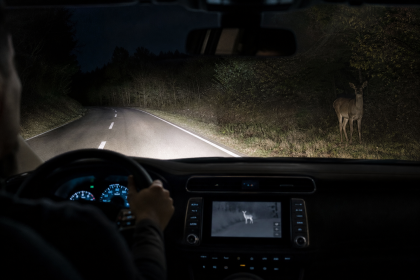
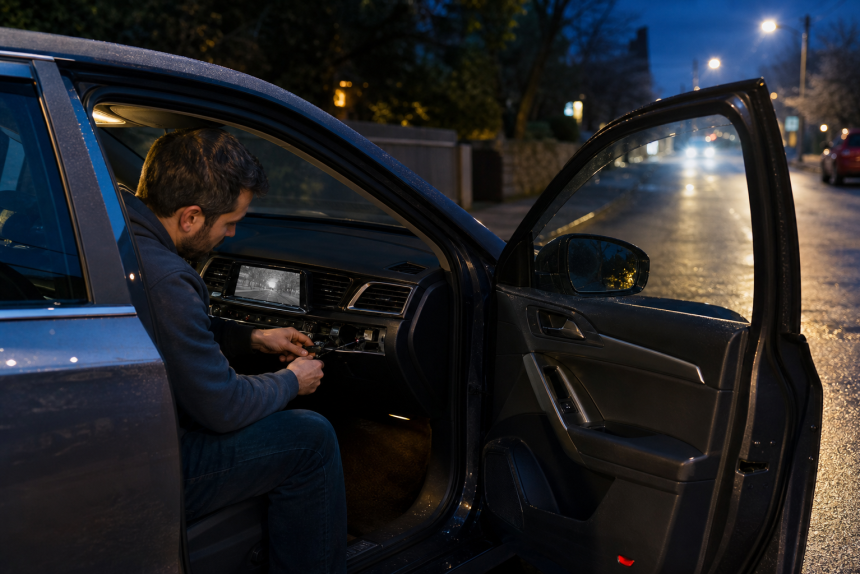
Aftermarket Night Vision System upgrades can be tempting for drivers who want better awareness during night and low-visibility conditions. The real question is whether a typical owner can install the hardware safely—without creating electrical issues, obstructing sensors, or distracting from the road.
- What Is an Aftermarket Car Night Vision System?
- Can an Average Car Owner Install One?
- What Installation Usually Involves
- 1. Choosing the Camera Location
- 2. Routing the Wiring
- 3. Connecting Power
- 4. Positioning the Display
- 5. Aiming and Testing
- DIY Installation Versus Professional Installation
- Choosing a System That Is Practical to Install
- Confirm Vehicle Compatibility
- Look Beyond the Camera Specification
- Consider a Thermal Driver-Assistance Example
- Where Night Vision Can Be Most Useful
- Safety Limitations Every Driver Should Understand
- Installation Mistakes to Avoid
- Mounting the Camera Behind Incompatible Glass
- Obstructing Existing Sensors
- Using an Unverified Power Circuit
- Leaving Cables Loose
- Installing the Screen Too High or Too Bright
- Skipping Real-World Rechecks
- Maintenance and Ownership Considerations
- A Practical Decision Checklist
- Frequently Asked Questions
- Do car night vision systems work without headlights?
- Can I install a thermal camera inside the windshield?
- Will installation affect my vehicle warranty?
- Can night vision detect every pedestrian or animal?
- Is a plug-in system better than a hardwired one?
- Does a night vision display distract the driver?
- Conclusion
- What Is an Aftermarket Car Night Vision System?
- Can an Average Car Owner Install One?
- What Installation Usually Involves
- DIY Installation Versus Professional Installation
- Choosing a System That Is Practical to Install
- Safety Limitations Every Driver Should Understand
- Installation Mistakes to Avoid
- Maintenance and Ownership Considerations
- Frequently Asked Questions
- Conclusion
Car night vision systems are no longer limited to expensive factory-equipped vehicles. Regular drivers can install many aftermarket systems, including thermal imaging units, but whether installation is suitable as a do-it-yourself project depends on the equipment, the vehicle, and the driver’s electrical experience.
A basic display-and-camera kit may be manageable for a careful owner, while systems requiring concealed wiring, permanent mounting, or integration with vehicle electronics are usually better handled by a professional.
The important question is not simply whether you can install one. It is whether the completed system will be securely mounted, correctly powered, properly aimed, legally positioned, and easy to interpret without distracting you from the road.
What Is an Aftermarket Car Night Vision System?
An aftermarket night vision system is a driver-assistance device intended to provide additional visual information beyond the normal reach or clarity of visible-light driving conditions. A typical setup includes:
- A forward-facing camera
- A dashboard or windshield-mounted display
- Power and video wiring
- Mounting hardware
- Processing software or a control module
- Optional hazard recognition and real-time alerts
Not every product uses the same sensing technology. Understanding the difference matters because it affects performance, installation requirements, and the type of hazards shown on the screen.
Thermal Imaging Systems
A vehicle thermal imaging system detects differences in emitted heat rather than relying primarily on visible light. Warm objects such as people and many animals can therefore stand out from cooler surroundings, even on an unlit road.
Thermal imaging can be useful where headlights provide limited contrast, including dark rural roads, wooded areas, poorly illuminated streets, and locations affected by headlight glare. Depending on the system, software may also identify pedestrians, animals, vehicles, or other potential hazards and issue an alert.
Thermal cameras still have limitations. They do not reveal every road feature equally well, and environmental conditions can reduce thermal contrast. Glass also affects many thermal imaging cameras, which is one reason installation instructions may specify an exterior camera position instead of placing the sensor behind the windshield.
Near-Infrared and Low-Light Systems
Near-infrared systems use infrared illumination and a compatible camera to create a view of the road. Low-light cameras amplify available light. These technologies can show road markings, signs, objects, and environmental details differently from thermal imaging, but their performance may depend more heavily on ambient light, supplemental illumination, and weather.
A product described only as “night vision” is therefore not necessarily a thermal system. Buyers should verify the sensor type before deciding whether it suits their usual driving environment.
Can an Average Car Owner Install One?
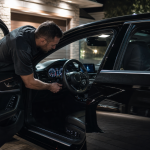
In practical terms, yes. Many aftermarket night vision system products are designed for installation without factory-level vehicle modification. However, “installable by a regular driver” covers several levels of complexity.
A portable unit powered through a 12-volt accessory outlet may require little more than mounting the camera and display, routing a cable, and adjusting the viewing angle. An aftermarket night vision system that is hardwired with an exterior camera can require removal of interior trim, passage through the firewall, weatherproof connections, fuse selection, grounding, and precise camera alignment.
DIY installation is most realistic when all of the following are true:
- The aftermarket night vision system has clear, vehicle-appropriate instructions.
- It uses a straightforward accessory power connection.
- The camera mount does not require cutting body panels.
- The wiring can be routed away from airbags, pedals, heat, and moving parts.
- The driver understands basic polarity, grounding, and fuse protection.
- The display can be mounted without obstructing the road view.
- No factory safety system needs to be disconnected or recalibrated.
Professional installation is the more responsible choice when the work involves advanced vehicle electronics, uncertain wiring, permanent body modifications, airbag trim, or calibration that cannot be verified at home.
If you’re also comparing night-time video systems (like backup-style displays), it helps to understand how different camera approaches behave. See Backup camera differences: Car Night Vision Camera vs Backup Camera (Key Differences) for useful context on purpose and placement.
What Installation Usually Involves
Installation varies by product, but most aftermarket night vision system installs follow the same general sequence. The manufacturer’s instructions should always take priority over a generic guide.
1. Choosing the Camera Location
The camera needs an unobstructed view ahead. Common mounting areas include the grille, lower bumper region, or another stable position near the front of the vehicle.
The location must be evaluated for more than image quality. A camera mounted too low may be exposed to road debris, standing water, mud, and snow. A position too high or too far to one side can distort the driver’s perception of where a detected object sits relative to the vehicle.
The mount should not interfere with:
- Radiator airflow
- Parking sensors
- Radar modules
- Factory cameras
- Active grille shutters
- Tow-hook access
- Number plates or license plates
- Bumper-mounted lighting
Before drilling or using permanent adhesive, temporarily position the camera and inspect the displayed image from the driver’s seat.
2. Routing the Wiring
Cable routing is often the most time-consuming part of the job. Wiring in the engine compartment must be kept clear of the exhaust, radiator fans, belts, pulleys, steering components, and sharp metal edges. It should be secured at suitable intervals rather than left loose.
Passing a cable into the cabin requires particular care. An existing firewall grommet may provide an appropriate route, but it should not be punctured or enlarged without understanding what other wiring passes through it. A poorly sealed opening can allow water, fumes, heat, or noise into the cabin.
Inside the vehicle, wiring must stay away from pedals and should not cross the deployment path of curtain, dashboard, knee, or seat-mounted airbags. Tucking a wire behind trim without checking for an airbag is not a harmless shortcut.
3. Connecting Power
Some aftermarket night vision system setups plug into an accessory socket or USB power source. Others require a hardwired connection to a switched circuit, meaning the system turns on and off with the vehicle.
Hardwiring requires the correct voltage, polarity, fuse protection, and grounding point. Connecting to an unsuitable circuit may create electrical faults, drain the battery, trigger warning messages, or interfere with other equipment. Modern vehicles can also use monitored circuits that respond poorly to unplanned electrical loads.
A fuse tap is not automatically safe simply because it fits. The circuit capacity, fuse orientation, added load, and manufacturer instructions all matter. Vehicles with unfamiliar electrical architectures, high-voltage hybrid components, or sensitive control modules warrant professional attention.
4. Positioning the Display
The display should be visible with a brief glance but should not block the driver’s direct view, mirrors, instruments, or controls. It must also remain secure during hard braking or a collision.
A good position minimizes the distance the driver’s eyes travel away from the road. Brightness should be low enough to preserve night vision while remaining readable. Reflections on the windshield and side windows should be checked after dark, not just during daytime installation.
Placement rules can differ between jurisdictions, especially for windshield-mounted equipment. Drivers in the United States and Europe should check the requirements that apply where the vehicle is registered and operated.
5. Aiming and Testing
A functioning image does not prove that the camera is aimed correctly. The displayed road position should correspond logically with the vehicle’s path, and any recognition or warning zones should follow the manufacturer’s setup process.
Initial testing should occur while parked. Confirm that:
- The image orientation is correct.
- The display remains stable during engine start.
- Camera and power connections do not become hot.
- The steering wheel, pedals, airbags, and controls remain unobstructed.
- No vehicle warning lights appear.
- The camera view covers the intended road area.
- Display brightness can be adjusted for nighttime use.
A cautious road check can then be performed in a familiar, low-risk area. Another person should handle setup menus while the driver concentrates on driving.
DIY Installation Versus Professional Installation
The decision should be based on risk and competence, not only on installation cost.
When DIY Installation Is Reasonable
A driver with basic automotive electrical experience may be comfortable installing an aftermarket night vision system that is self-contained and uses non-invasive mounting and accessory power. DIY work can also make future maintenance easier because the owner understands the cable route, connectors, and mounting points.
The owner should have suitable tools, including trim-removal tools where needed, a reliable method of checking voltage, proper cable protection, and vehicle-specific information. Improvised connections, household wire accessories, or unsecured cables are not appropriate for automotive use.
Even for simpler installs, take time to verify safe cable routing and confirm that the aftermarket night vision system display doesn’t pull attention away from traffic.
When an Installer Is Worth Paying
Professional help is advisable when:
- The aftermarket night vision system must be hardwired.
- Interior airbag trim needs to be removed.
- No safe firewall route is obvious.
- The bumper or grille must be removed.
- A permanent hole or custom bracket is required.
- The vehicle has complex electronic modules near the proposed connection.
- Factory cameras, radar, or parking sensors could be affected.
- The instructions require calibration equipment.
- The owner cannot verify the electrical circuit or grounding point.
A qualified installer should also explain the mounting method, power source, fuse location, and whether any factory components were disturbed. Keep the system instructions and installation documentation with the vehicle’s records.
Choosing a System That Is Practical to Install
Installation begins with product selection. A sophisticated aftermarket night vision system is not useful if it cannot be mounted safely on the vehicle or if its interface is difficult to use at night.
Confirm Vehicle Compatibility
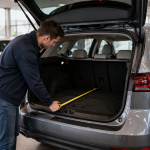
“Universal” usually means a product can work across many vehicles, not that it will fit every one without adaptation. Check the required voltage, available mounting space, cable length, camera placement, display dimensions, and connector requirements.
Owners of electric and hybrid vehicles should be especially cautious around high-voltage components and clearly marked high-voltage cabling. An aftermarket accessory should normally operate from an approved low-voltage accessory circuit, following vehicle and product guidance.
Look Beyond the Camera Specification
A useful night-driving system is a complete interface, not merely a sensor. Consider:
- Image clarity and refresh behavior
- Display brightness adjustment
- Alert type and volume control
- Recognition of relevant hazard categories
- Camera weather protection
- Recording and data-storage behavior
- Startup time
- Replacement mounting and cable availability
- Software or firmware support
- Ease of cleaning the lens
Vehicle recognition and pedestrian or animal detection may make an aftermarket night vision system easier to interpret, but an automated label can be missed or incorrect. The raw view should remain understandable without complete dependence on alerts.
Consider a Thermal Driver-Assistance Example
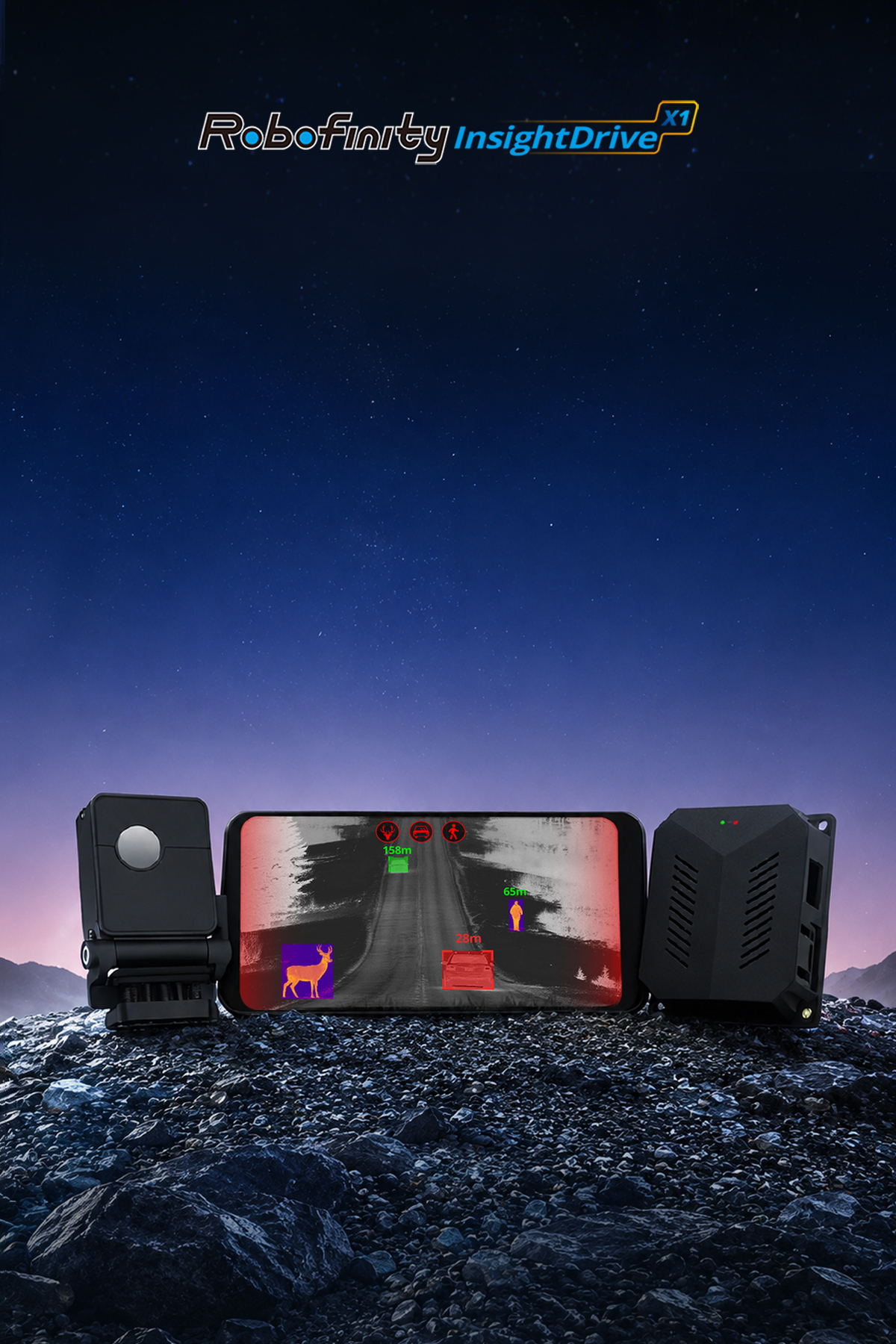
Robofinity InsightDrive is one example of an aftermarket vehicle thermal imaging night vision system intended to support road awareness in low-light and poor-visibility conditions. Its AI-powered thermal imaging can recognize pedestrians, animals, and vehicles and provide real-time alerts. These functions may help a driver notice a potential hazard sooner, but they do not establish that every object will be detected or remove the need for proper headlights and attentive driving.
For systems in this category, buyers should review the installation guide before purchase. In particular, confirm the required camera position, display location, power method, cable path, and whether the vehicle layout permits installation without interfering with factory driver-assistance hardware.
Where Night Vision Can Be Most Useful
The value of car thermal night vision depends heavily on where and when the vehicle is driven.
Rural and Woodland Roads
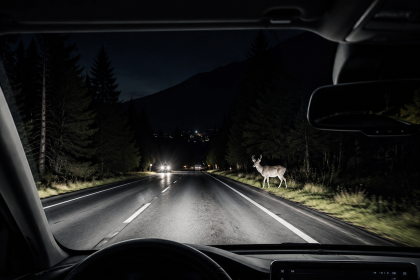
Unlit roads can contain pedestrians, cyclists, deer, livestock, or other animals that are difficult to distinguish against a dark background. Curves, vegetation, and elevation changes further reduce useful sight distance.
Thermal imaging may add contrast before a person or animal becomes obvious in the headlight beam. The driver still needs to maintain a speed that allows stopping within the visible, confirmed path ahead.
Long-Distance Night Travel
Fatigue and reduced visual contrast make overnight highway journeys demanding. A night vision display may provide another source of hazard information, but it can also add cognitive load. Alerts should be configured conservatively, and the display should not become a substitute for rest breaks.
A driver who is too tired to interpret the road safely should stop. No driver-assistance technology compensates for serious fatigue.
City Traffic
Urban roads have more ambient light but also more visual clutter. Pedestrians may emerge between parked vehicles, cyclists may approach from the side, and glare can make dark clothing harder to distinguish.
Here, alert quality and display placement are particularly important. A screen that continually draws attention from traffic lights, crossings, mirrors, and vulnerable road users can undermine its intended benefit.
Fog, Rain, Snow, and Glare
Poor-visibility conditions are not all the same. Thermal imaging does not depend on visible illumination in the same way as a standard camera, but weather can still affect range, image contrast, and the camera lens. Heavy precipitation, road spray, grime, ice, and temperature conditions can reduce practical performance.
The correct expectation is additional awareness, not clear-weather vision under every condition. Speed and following distance must still be adjusted to what the driver can safely confirm.
Safety Limitations Every Driver Should Understand
Night vision is supplementary vehicle safety technology. It does not replace the primary driving view through the windshield.
A driver should never steer toward a path merely because the thermal display appears clear. Some cold objects and road hazards may not stand out strongly, while a screen cannot fully communicate depth, surface condition, lane geometry, or the behavior of surrounding traffic.
The system also cannot replace:
- Properly functioning and correctly aimed headlights
- Windscreen and mirror visibility
- Safe following and braking distances
- Appropriate speed for the conditions
- Shoulder checks and mirror use
- Compliance with traffic laws
- Driver attention and judgment
Alerts may arrive late, fail to identify an object, or classify it incorrectly. Conversely, false or low-priority warnings can distract the driver. Hazard detection should be treated as an extra prompt to inspect the road, not an instruction to make an abrupt maneuver.
Installation Mistakes to Avoid
A poor installation can turn a useful driver-assistance tool into a distraction or vehicle fault.
Mounting the Camera Behind Incompatible Glass
Many thermal cameras do not operate properly through an ordinary windshield because the glass can block the thermal wavelengths the sensor needs. Follow the specified mounting requirements instead of assuming every camera can sit on the dashboard.
Obstructing Existing Sensors
Modern bumpers and grilles may contain radar, ultrasonic sensors, cameras, and other equipment. Even a small bracket or cable placed in the wrong area may affect a factory system’s view or operation.
Using an Unverified Power Circuit
Guessing which wire or fuse to use can cause battery drain, blown fuses, electrical noise, or module faults. Verify the circuit with appropriate documentation and tools.
Leaving Cables Loose
A cable near the pedals, steering column, fan, or belt is a direct safety concern. Wiring should be protected from abrasion, heat, movement, and moisture.
Installing the Screen Too High or Too Bright
An oversized or bright display can block the road view and degrade the driver’s adaptation to darkness. The best position is usually one that supports a quick glance while preserving an unobstructed windshield.
Skipping Real-World Rechecks
Vibration, rain, car washing, temperature changes, and routine servicing can loosen mounts or expose weak connections. Inspect the installation after the first several trips and periodically thereafter.
Maintenance and Ownership Considerations
Aftermarket night vision is not a fit-and-forget accessory. The exterior lens must remain clean, the mount must remain aligned, and cables and seals should be checked for wear.
Before a night journey:
- Clean the camera lens carefully.
- Confirm that the display starts normally.
- Check that no warning or error message appears.
- Make sure brightness is suitable for darkness.
- Verify that the mount has not shifted.
- Inspect exposed wiring for damage.
After road salt, heavy rain, snow, off-road use, or a minor bumper impact, inspect the camera area again. A camera can remain powered while pointing at the wrong part of the road.
System updates should come from the manufacturer or another verified source. Recording features also introduce privacy and data-management considerations. Drivers should understand where footage is stored, how it is deleted, and whether local rules restrict recording or display use.
For general guidance on dashcam-style recording and privacy considerations, the U.S. National Highway Traffic Safety Administration provides consumer information on vehicle technology and safety (useful context when you’re thinking about how driver-assist features affect driving). Visit NHTSA: Vehicle Safety.
A Practical Decision Checklist
Before installing an aftermarket night vision system, answer these questions:
-
Does my driving pattern justify it? Frequent nighttime travel on rural, poorly lit, or wildlife-prone roads makes a stronger case than occasional urban night driving.
-
Is the sensor technology suitable? Thermal, near-infrared, and low-light cameras provide different types of information.
-
Can the camera be mounted without blocking factory equipment? Inspect the front of the vehicle and review model-specific documentation.
-
Can the wiring be routed without crossing airbags or moving components? If the safe route is uncertain, use an installer.
-
Is the power method simple and approved? Plug-in power is generally less invasive; hardwiring demands more electrical knowledge.
-
Can the display be positioned legally and safely? It must not obstruct the road or create excessive glare.
-
Will I use it as an aid rather than a primary view? The road must remain the driver’s main visual focus.
-
Can I maintain the installation? Exterior cameras need cleaning, inspection, and occasional alignment checks.
A “no” or uncertain answer does not necessarily rule out an aftermarket night vision system. It usually indicates that professional installation or a different system design would be more appropriate.
Frequently Asked Questions
Do car night vision systems work without headlights?
A thermal imaging system can detect emitted heat without relying on headlight illumination, but headlights are still legally and practically essential. They reveal lane markings, signs, road surfaces, and many objects that may not appear clearly in a thermal image.
Can I install a thermal camera inside the windshield?
Not necessarily. Many thermal cameras cannot see effectively through standard automotive glass. Use only the position approved by the system manufacturer, which may require an exterior mount.
Will installation affect my vehicle warranty?
Aftermarket installation does not have one universal effect across all vehicles or jurisdictions. Problems may arise if the accessory or installation damages a related component. Review the vehicle warranty terms and use a competent installer for invasive electrical or body work.
Can night vision detect every pedestrian or animal?
No. Detection depends on sensor performance, distance, orientation, weather, thermal contrast, obstructions, lens condition, and software behavior. Recognition and real-time alerts support awareness but should never be assumed to identify every hazard.
Is a plug-in system better than a hardwired one?
A plug-in system is easier to install and remove, but it can leave visible cables and occupy an accessory outlet. Hardwiring can produce a cleaner installation and automatic startup, although it requires more expertise and creates greater risk if connected incorrectly.
Does a night vision display distract the driver?
It can. Poor screen placement, excessive brightness, frequent alerts, or prolonged viewing may pull attention from the road. The display should provide glanceable supplementary information while the windshield remains the driver’s primary view.
Conclusion
Aftermarket Night Vision System owners can install certain upgrades themselves—especially self-contained products with simple power connections and non-invasive mounts. The task becomes less suitable for DIY work when it involves hardwiring, firewall access, bumper removal, airbag trim, factory sensors, or uncertain calibration.
Choose an aftermarket night vision system according to real driving conditions rather than novelty. Confirm compatibility, inspect the proposed camera and display positions, study the wiring requirements, and be realistic about your electrical skills. When any safety-critical part of the installation is unclear, professional fitting is the sensible ownership decision.
A properly selected and installed thermal imaging system may provide useful additional road awareness at night. Its value remains dependent on disciplined use: keep the lens clean, verify the image, control display brightness, maintain safe speed and braking distance, and continue treating headlights, mirrors, traffic laws, and direct attention to the road as the foundation of nighttime safety.