SEO Title: Is Automotive Thermal Night Vision Worth Buying? A Practical Guide
- What Is an Automotive Thermal Night Vision System?
- The Direct Answer: When Is It Worth Buying?
- How Thermal Imaging Can Help at Night
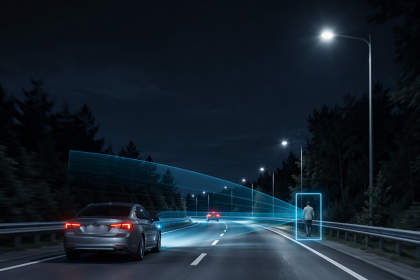
- Pedestrian Awareness
- Animal Detection on Rural Roads
- Vehicle and Obstacle Recognition
- Support in Glare and Uneven Lighting
- Thermal Night Vision in Rain, Fog, and Snow
- Important Benefits Beyond Simple Visibility
- Limitations Every Buyer Should Understand
- It Does Not Replace Headlights
- It Cannot Detect Every Hazard
- The Screen Can Become a Distraction
- False or Missed Alerts Are Possible
- Stopping Distance Still Governs Safety
- Factory-Installed Versus Aftermarket Systems
- How to Compare Systems Before Buying
- Detection and Recognition
- Field of View
- Alert Design
- Camera Durability and Maintenance
- Installation and Compatibility
- Recording and Data Handling
- A Practical Buying Framework
- 1. Audit Your Night Driving
- 2. Identify the Main Hazard
- 3. Fix Basic Safety Deficiencies First
- 4. Consider the Full Ownership Cost
- 5. Judge Whether You Will Use It Correctly
- Real-World Scenarios
- Who Can Probably Skip It?
- Frequently Asked Questions
- Can thermal night vision see through fog?
- Does a thermal camera work in complete darkness?
- Can automotive thermal imaging detect deer?
- Is an aftermarket system as good as factory night vision?
- Will thermal night vision reduce my insurance premium?
- Does thermal night vision replace high-beam headlights?
- Conclusion: Base the Decision on Exposure, Not Novelty
Meta Description: Is automotive thermal night vision worth buying? Compare its real-world benefits, limitations, costs, and suitability for night driving.
Driving after dark reduces the time available to recognize pedestrians, animals, stopped vehicles, and other hazards beyond the strongest part of the headlight beam. That makes the question “is automotive thermal night vision worth buying?” especially relevant for drivers who regularly travel on rural roads, unlit highways, or in poor visibility. The short answer is yes for some drivers, but not everyone. Its value depends on where and how often you drive, how effectively the system presents warnings, and whether you will use it as an awareness aid rather than a substitute for attentive driving.
This guide explains how vehicle thermal imaging works, where it can provide meaningful assistance, what limitations buyers should expect, and how to decide whether the upgrade justifies its cost.
What Is an Automotive Thermal Night Vision System?
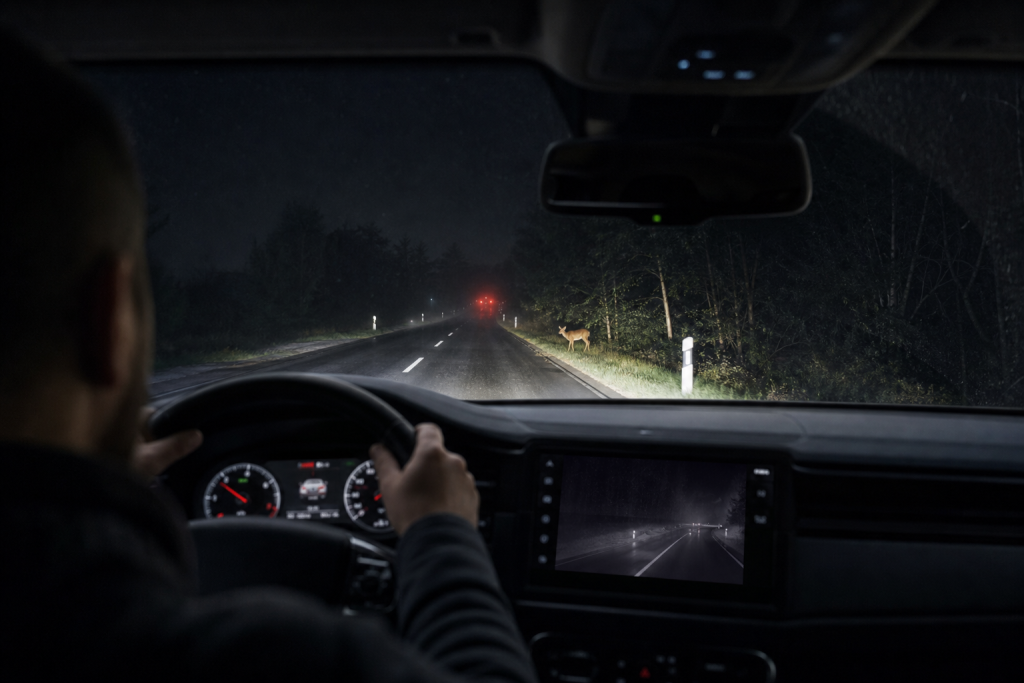
An automotive thermal night vision system uses a thermal camera to detect differences in infrared energy emitted by objects in the road environment. Instead of relying only on visible light, it builds an image from heat patterns.
Warm road users, such as pedestrians and many animals, may therefore stand out against cooler surroundings even when they are difficult to see with headlights alone. Depending on the system, the thermal image may appear on a dedicated display, the vehicle’s instrument panel, or another compatible screen.
More advanced systems may also use software to recognize likely pedestrians, animals, vehicles, or obstacles. They can then mark potential hazards on the display or generate real-time visual or audible alerts. This combines thermal imaging with driver-assistance technology, although capabilities vary significantly between products.
Thermal night vision is different from a conventional low-light camera. A low-light camera amplifies or processes available visible light, while a thermal camera detects infrared radiation associated with temperature. That distinction affects how each performs around darkness, glare, fog, precipitation, and objects with little temperature contrast.
The Direct Answer: When Is It Worth Buying?
A car thermal night vision system is most likely to be worth buying when you:
- Drive frequently after dark rather than only occasionally.
- Regularly use poorly lit rural roads.
- Travel through areas where deer or other animals commonly enter the roadway.
- Drive long nighttime highway routes.
- Need additional road awareness around pedestrians or cyclists in dim environments.
- Often encounter headlight glare or inconsistent roadside lighting.
- Plan to keep the vehicle long enough to benefit from the upgrade.
- Are comfortable interpreting another display without becoming distracted.
It is less likely to offer good value when nearly all your driving happens during daylight, on brightly illuminated city streets, or at low speeds in familiar areas. It may also be difficult to justify if purchasing the system would divert money from higher-priority safety needs such as tires, brakes, windshield repair, headlight restoration, or overdue vehicle maintenance.
Thermal imaging should be viewed as an additional layer of awareness. It does not improve tire grip, shorten the vehicle’s physical stopping distance, or correct excessive speed.
How Thermal Imaging Can Help at Night
The most important potential benefit is earlier awareness of hazards that produce a useful thermal contrast with their surroundings. Earlier recognition can give a careful driver more time to assess the situation and respond smoothly.
Pedestrian Awareness
A person wearing dark clothing can be difficult to distinguish from an unlit background. This is particularly concerning near rural properties, roadside breakdowns, unmarked crossings, and suburban roads with limited street lighting.
Because a thermal imaging system does not depend entirely on reflected headlight illumination, a person’s heat signature may be visible on the display before clothing color or fine visual detail becomes clear through the windshield. Recognition software may provide another cue by highlighting a human-shaped object.
However, detection is not the same as perfect identification. The system can miss a person, classify an object incorrectly, or display a shape that requires interpretation. Drivers must still scan the road directly and be prepared for people outside the camera’s field of view.
Animal Detection on Rural Roads
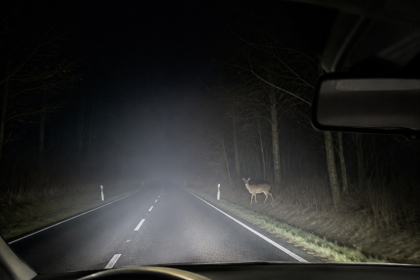
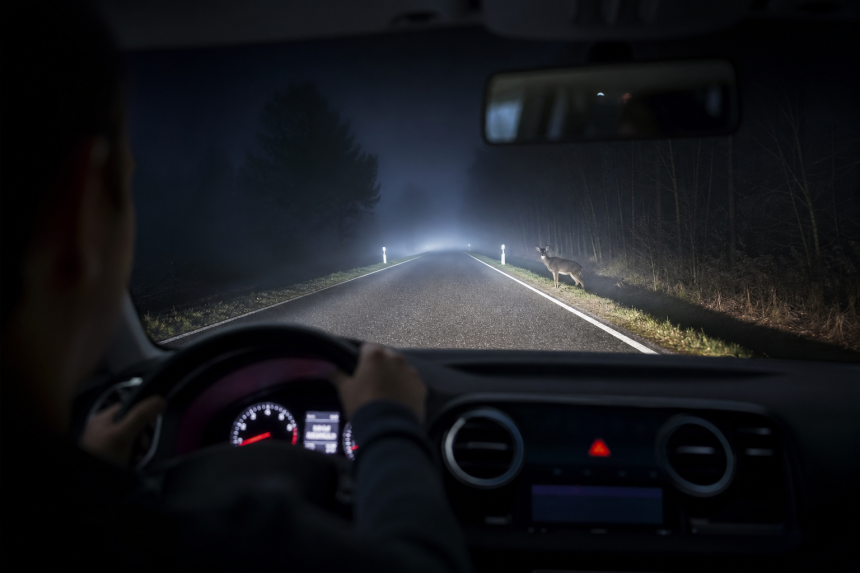
Animal detection is one of the strongest use cases for thermal night vision. A deer near the shoulder may be partially hidden by darkness, vegetation, roadside shadows, or visual clutter. Smaller animals may appear suddenly and behave unpredictably.
A useful thermal view can draw attention to a warm shape near the road before the driver clearly recognizes it with normal vision. That additional warning may help the driver reduce speed in a controlled manner.
It does not predict what an animal will do next. An animal can reverse direction, run into the road, or be followed by others. Sudden swerving can also create a more serious collision risk, so drivers must respond according to traffic, road, and vehicle conditions.
Vehicle and Obstacle Recognition
Some systems can identify or highlight vehicles and other objects ahead. This may assist on a dark road where a stopped vehicle has weak, obscured, or nonfunctioning lights.
Thermal imaging has limits here because vehicles do not always present a uniform heat signature. Engines, exhaust components, brakes, tires, cabin occupants, and body panels can have different temperatures. A recently parked vehicle may appear different from one that has been stationary for hours.
Objects such as fallen cargo, road debris, barriers, and rocks may also be difficult to distinguish when their temperature is close to the road surface. Buyers should not assume that a system optimized for warm pedestrians and animals will detect every nonliving obstacle equally well.
Support in Glare and Uneven Lighting
Oncoming headlights can temporarily reduce a driver’s ability to see detail beyond the glare. Bright signs, wet pavement reflections, and rapid transitions between illuminated and dark areas can create similar difficulties.
Thermal imaging may preserve some awareness because its image is not formed from visible headlight reflections alone. Even so, the driver must keep looking through the windshield. Watching a thermal screen continuously would trade one visibility problem for a distraction problem.
Thermal Night Vision in Rain, Fog, and Snow
Thermal technology is often discussed as a solution for poor-visibility conditions, but performance is not unlimited.
It may retain useful contrast in conditions where a visible-light camera struggles with darkness or glare. Yet water droplets, dense fog, falling snow, moisture on the lens, road spray, and temperature changes can reduce image quality or effective detection distance. Rain can also cool surfaces and reduce the thermal contrast between a hazard and its background.
Fog deserves particular caution. Thermal imaging may provide useful information in some foggy conditions, but density, moisture, temperature, camera wavelength, and system processing all affect the result. No thermal camera makes it appropriate to maintain normal dry-road speed when forward visibility is severely restricted.
In winter, a person or animal may remain distinguishable, but warm road surfaces, heated vehicles, exhaust plumes, and snow-covered surroundings can change the displayed scene. Buyers should expect variable performance rather than a fixed detection capability in every type of weather.
Important Benefits Beyond Simple Visibility
A good system does more than make a dark scene look interesting. Its value comes from presenting relevant information early enough and clearly enough to support a driving decision.
Potential benefits include:
- Greater awareness beyond the brightest area illuminated by the headlights.
- Improved detection opportunities for pedestrians and animals.
- Added context on dark shoulders and unlit roads.
- Visual or audible alerts that direct attention toward a potential hazard.
- Less dependence on clothing color or visible-light contrast.
- Additional support during long nighttime journeys.
These benefits are conditional. Camera placement, display location, image clarity, software quality, alert timing, road geometry, weather, and driver behavior all influence whether the system is useful in practice.
Limitations Every Buyer Should Understand
Thermal night vision can add information, but it cannot produce complete situational awareness. Understanding what it does not do is essential to a responsible buying decision.
It Does Not Replace Headlights
Headlights illuminate road markings, signs, lane boundaries, surface damage, and objects that may not produce meaningful thermal contrast. Thermal cameras also do not replace legally required vehicle lighting.
Dirty, cloudy, damaged, or poorly aimed headlights should be repaired before adding night vision. A technology upgrade should not be used to compensate for a basic maintenance problem.
It Cannot Detect Every Hazard
A cool object lying on the road may blend into a similarly cool background. Warm pavement can reduce contrast with a person or animal. Objects hidden behind a hill, building, vehicle, or dense physical barrier remain hidden.
Detection claims should always be interpreted as maximum capabilities under particular conditions, not as guaranteed recognition at a fixed distance.
The Screen Can Become a Distraction
A dashboard display requires the driver to look away from the road. Even a short glance has a cost, particularly at highway speeds. Systems with clear highlighting and well-timed alerts may reduce the need to study the raw image, but poor interface design can create unnecessary workload.
Display position matters. It should be visible with a brief glance without obstructing the windshield, controls, airbags, or other critical information.
False or Missed Alerts Are Possible
Recognition software makes judgments based on sensor data. It may highlight a harmless warm object, fail to classify a partially obscured pedestrian, or produce repeated alerts in a complex environment.
A useful system should support judgment rather than dictate it. Never make an abrupt maneuver solely because an alert appears; confirm the hazard as far as conditions allow and respond without losing control of the vehicle.
Stopping Distance Still Governs Safety
Seeing a hazard earlier is useful only when the driver has enough distance and traction to respond. Speed, reaction time, tire condition, road surface, gradient, vehicle load, and brake condition all affect stopping distance.
Thermal night vision does not make it safe to drive faster than the visible road, weather, or traffic conditions permit.
Factory-Installed Versus Aftermarket Systems
Both factory and aftermarket solutions can be useful, but they offer different ownership trade-offs.
Factory-Installed Night Vision
A factory system may integrate thermal information into the instrument cluster, head-up display, or vehicle warning architecture. The controls and camera installation are usually designed around that specific model.
The disadvantages are limited availability, potentially high replacement costs, and the fact that buyers may need to select a particular trim or option package. A used vehicle’s factory camera may also require careful inspection because sensor damage, misalignment, or display faults can be expensive to diagnose.
Aftermarket Thermal Night Vision
An aftermarket system can add thermal imaging to a vehicle that did not originally offer it. This may suit drivers who want to keep an existing car or who do not want to replace an otherwise serviceable vehicle solely to obtain newer safety technology.
Installation quality becomes especially important. The camera needs a stable position with an unobstructed view, while wiring must be protected from weather, heat, vibration, and moving components. The display should not obstruct airbags or normal sight lines.
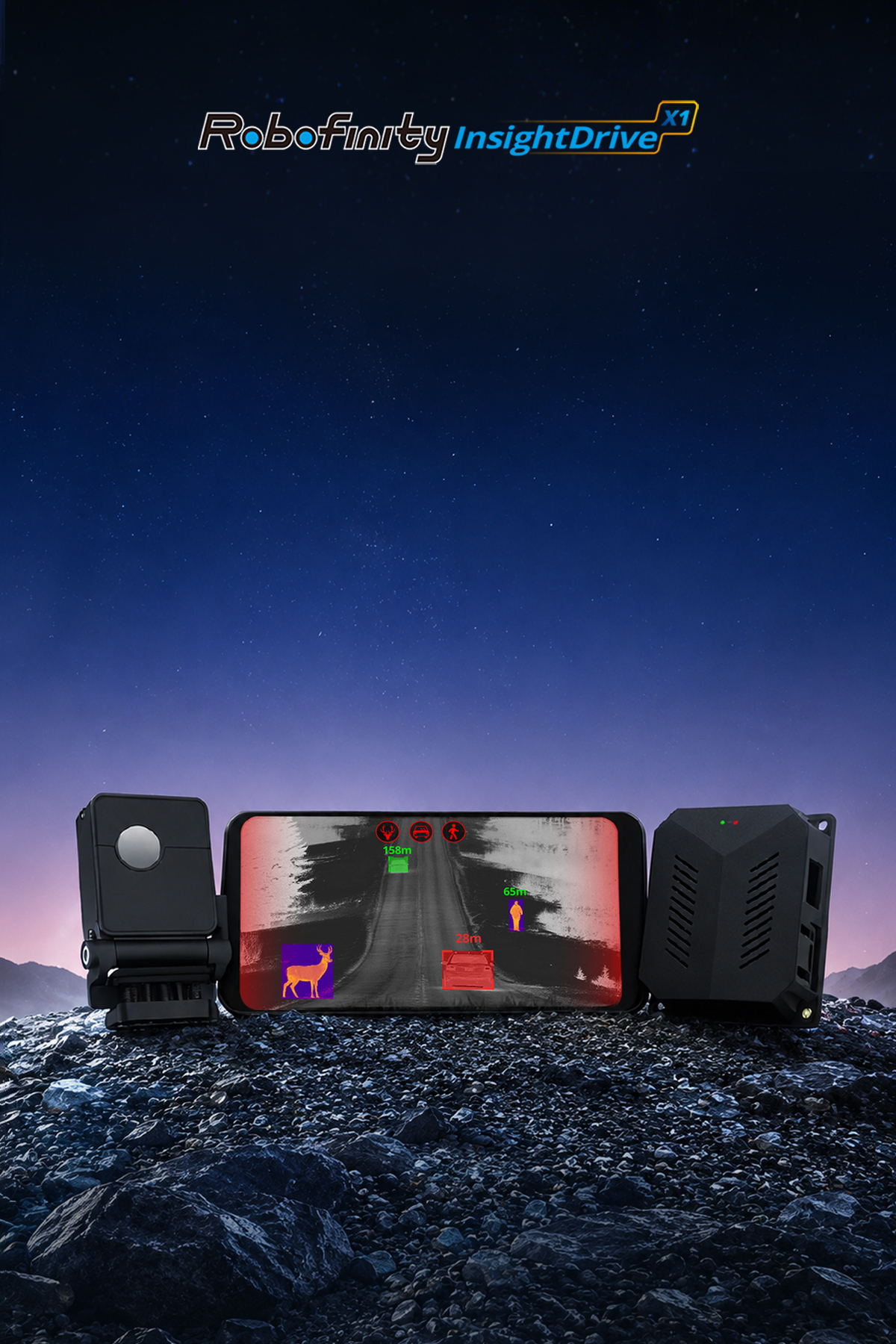
As one relevant example, Robofinity InsightDrive is a vehicle thermal imaging night vision system that combines AI-powered thermal imaging with recognition of pedestrians, animals, and vehicles. It is intended to support road awareness in low-light or poor-visibility conditions, but like other driver-assistance products, it should not be treated as a replacement for headlights, mirrors, appropriate speed, braking distance, or driver attention.
How to Compare Systems Before Buying
Marketing descriptions often emphasize maximum range or image appearance. Those details matter, but they do not tell the entire story. A practical evaluation should consider how well the complete system fits the vehicle and the driver.
Detection and Recognition
Ask whether the stated capability refers to detecting that something is present, recognizing the type of object, or identifying a potential hazard. These are different thresholds.
A distant heat source may be detectable before software can classify it reliably. More range can be useful, but only if the display and alerts communicate actionable information rather than showing ambiguous shapes.
Field of View
A narrow view may show farther down a straight road but miss activity near the shoulders. A wider view can improve roadside coverage while making distant objects appear smaller.
The best balance depends on the environment. Rural drivers may prioritize shoulder awareness, while highway drivers may place greater value on longer forward coverage.
Alert Design
Evaluate whether alerts are understandable without studying the display. Consider:
- Whether pedestrians, animals, and vehicles are marked differently.
- Whether warning sounds can be adjusted.
- Whether frequent alerts could become distracting.
- Whether brightness can be reduced for night driving.
- Whether the system starts quickly and operates consistently.
- Whether warnings remain visible long enough to interpret.
An alert that is confusing, late, or overly frequent may be less useful than a simpler but well-designed warning.
Camera Durability and Maintenance
An exterior camera is exposed to rain, snow, salt, insects, stones, road spray, and repeated temperature changes. Confirm the manufacturer’s mounting and care requirements. Determine whether the lens can be cleaned easily and whether replacement components are available.
A dirty camera can degrade the image just as a dirty windshield or headlight does. Owners should inspect the lens regularly without using abrasive materials that could damage its protective surface.
Installation and Compatibility
Before purchasing, confirm:
- Suitable mounting locations on the vehicle.
- Power and wiring requirements.
- Display dimensions and placement.
- Whether professional installation is recommended.
- Potential interference with grilles, shutters, sensors, or number plates.
- Whether installation could affect vehicle systems or warranty coverage.
- Whether local rules restrict windshield-mounted displays or accessories.
Requirements can vary by vehicle and jurisdiction. A qualified installer should assess uncertain mounting, wiring, and airbag considerations.
Recording and Data Handling
Some products may offer real-time video recording. If recording matters to you, check storage capacity, file access, overwrite behavior, and privacy implications. Recording laws and expectations can differ between countries and regions, particularly when audio or identifiable individuals are involved.
Night vision and dash-camera functions should be evaluated separately. A system can provide a useful live thermal view without being the ideal device for documenting road signs, license plates, traffic lights, or fine visible details.
A Practical Buying Framework
Use the following process to determine whether the upgrade fits your actual driving rather than an imagined worst-case scenario.
1. Audit Your Night Driving
For two to four weeks, note how many journeys occur after dark, where they happen, and what visibility problems recur. Separate occasional inconvenience from a consistent exposure.
A driver commuting on an unlit country road five nights a week has a stronger use case than someone who makes one short nighttime trip each month.
2. Identify the Main Hazard
Decide whether your concern is primarily pedestrians, animals, stopped vehicles, headlight glare, fog, or general fatigue. Thermal imaging is particularly relevant to heat-emitting road users, but it may not be the best answer for faded lane markings, poor headlight output, or tiredness.
3. Fix Basic Safety Deficiencies First
Before buying additional technology, inspect:
- Tire tread, pressure, and age.
- Brake condition.
- Headlight clarity and alignment.
- Windshield cleanliness and damage.
- Wiper performance and washer fluid.
- Mirrors and exterior lighting.
These fundamentals affect every journey, day or night.
4. Consider the Full Ownership Cost
The purchase price is only one part of the decision. Account for installation, replacement parts, camera cleaning, potential repairs, display mounting, software support, and whether the equipment can transfer to another vehicle.
A cheaper unit with an awkward display or unreliable mount may deliver poor value even if its thermal sensor works.
5. Judge Whether You Will Use It Correctly
A system is more likely to help a driver who can respond to alerts calmly, glance at the display briefly, and keep primary attention on the road. It may be unsuitable for someone already overwhelmed by dashboard notifications or tempted to watch the thermal image continuously.
Real-World Scenarios
Family Driving After Dark
Parents transporting children on winter evenings may value earlier awareness near bus stops, residential roads, and poorly lit crossings. The system could add useful information, but reducing speed near homes and crossings remains the primary response to limited visibility.
Rural Commuting
This is one of the clearest cases for thermal night vision. Unlit roads, wildlife, narrow shoulders, bends, and limited roadside infrastructure create recurring conditions in which animal or pedestrian recognition may be valuable.
Highway and Long-Distance Travel
On long overnight trips, thermal imaging may help identify activity ahead or near the roadside. It cannot address fatigue, which can impair attention and reaction. Breaks, proper rest, and stopping when drowsy are more important than any display.
Urban Driving
Cities contain many warm objects, pedestrians, cyclists, vehicles, reflections, and competing alerts. Thermal imaging can still help in dark side streets or inconsistent lighting, but the environment may be visually complex. Drivers should place particular emphasis on interface simplicity and false-alert management.
Bad Weather
A thermal system may add information during rain, light fog, or snow, but its capability changes with conditions. The appropriate response to reduced visibility remains lower speed, greater following distance, clean windows and lights, and postponing travel when conditions become unsafe.
Who Can Probably Skip It?
The upgrade may not be a priority for drivers who:
- Rarely drive at night.
- Travel almost exclusively on well-lit urban streets.
- Are replacing the vehicle soon.
- Have unresolved tire, brake, lighting, or windshield issues.
- Do not have a safe display or camera mounting location.
- Find additional screens and alerts distracting.
- Expect the technology to compensate for speed, fatigue, or poor attention.
In these cases, money may be better directed toward vehicle maintenance, high-quality tires suitable for local conditions, professionally checked headlights, or other safety features used on every trip.
Frequently Asked Questions
Can thermal night vision see through fog?
It may provide useful thermal contrast in some foggy conditions, but it cannot see through all fog. Moisture, fog density, temperature, and camera characteristics affect performance. Drivers must still slow down and maintain a safe following distance.
Does a thermal camera work in complete darkness?
Yes, a thermal camera does not require visible light to form an image from heat differences. Its usefulness still depends on thermal contrast, camera condition, field of view, and whether objects are obstructed.
Can automotive thermal imaging detect deer?
Many systems can detect the heat signature of deer and other animals when they are within range and not physically obscured. Recognition is not guaranteed, and an alert cannot predict the animal’s movement.
Is an aftermarket system as good as factory night vision?
It depends on sensor performance, software, installation quality, display design, and vehicle integration. Factory systems often offer cleaner integration, while aftermarket systems make the technology available to more vehicles. Product specifications and installation requirements should be compared carefully.
Will thermal night vision reduce my insurance premium?
Do not assume it will. Insurance treatment varies by provider, vehicle, location, and policy. Ask the insurer directly before treating any potential discount as part of the purchase decision.
Does thermal night vision replace high-beam headlights?
No. High beams illuminate signs, road markings, curves, and low-contrast objects that thermal imaging may not represent clearly. Use vehicle lighting legally and appropriately, and dim high beams when required for other road users.
Conclusion: Base the Decision on Exposure, Not Novelty
Automotive thermal night vision can be a worthwhile practical driving upgrade when nighttime exposure is frequent and the recurring hazards are ones thermal imaging handles well, especially pedestrians and animals on dark roads. Its value is less compelling for mainly daytime drivers or those who travel almost entirely in well-lit areas.
The strongest buying decision starts with an honest audit of your routes, visibility problems, and driving habits. Prioritize tires, brakes, headlights, glass, and wipers first. Then compare thermal systems by detection quality, alert design, field of view, display placement, installation requirements, and ongoing ownership cost.
Most importantly, treat the system as an extra source of information. Safe speed, adequate stopping distance, functioning headlights, proper rest, and continuous attention remain the foundations of nighttime road safety.