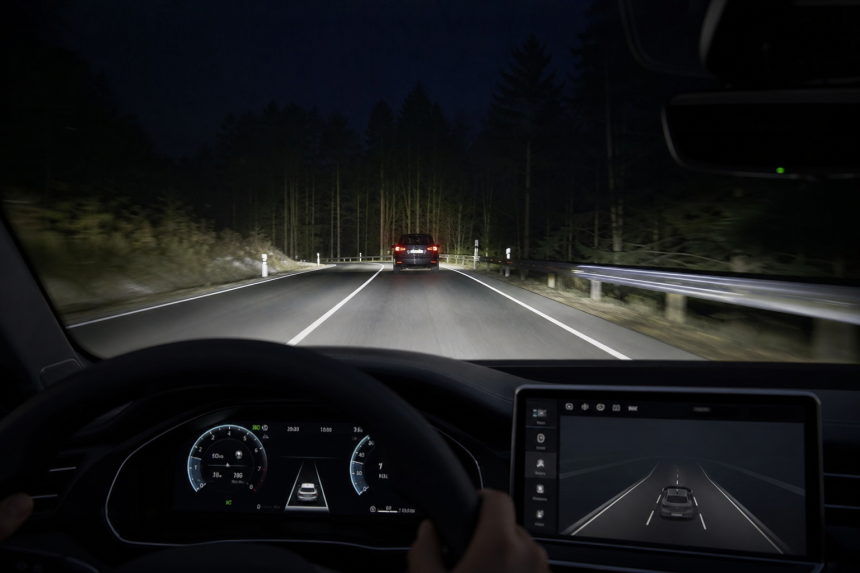
Night driving is riskier because your eyes struggle with low light, glare, and reduced contrast. Night driving assistance systems help bridge that gap by extending awareness, improving illumination, and providing earlier alerts for common hazards after dark. This guide walks through the major types, what each one does well, and what to keep in mind so you can use them safely.
- Why Night Driving Assistance Systems Are Needed
- 1. Automatic High-Beam Assist
- 2. Adaptive Headlights and Automatic Headlight Leveling
- 3. Matrix LED and Pixel Headlight Systems
- 4. Night Vision Systems Using Near-Infrared Cameras
- 5. Thermal Imaging Night Vision
- Why thermal imaging can be valuable
- Detection and recognition are not the same
- Limitations of thermal imaging
- 6. Pedestrian and Animal Detection
- 7. Forward Collision Warning and Automatic Emergency Braking
- 8. Radar-Based Blind-Spot and Cross-Traffic Alerts
- 9. Lane Departure Warning and Lane-Centering Assistance
- 10. Driver Monitoring and Drowsiness Alerts
- Comparing the Main Night Driving Systems
- Which System Fits Different Driving Situations?
- What to Consider Before Buying a System
- Sensor placement and cleaning
- Display design
- Alert quality
- Integration with braking and steering
- Installation and compatibility
- Ownership costs
- How to Use Night Driving Assistance Safely
- FAQ
- What is the most useful night driving assistance system?
- Does night vision work in complete darkness?
- Can thermal imaging detect pedestrians and animals?
- Do automatic high beams replace manual control?
- Are aftermarket night driving systems worth considering?
- Can driver-assistance systems prevent nighttime crashes?
- Conclusion
- Why Night Driving Requires Additional Assistance
- 1. Automatic High-Beam Assist
- 2. Adaptive Headlights and Automatic Headlight Leveling
- 3. Matrix LED and Pixel Headlight Systems
- 4. Night Vision Systems Using Near-Infrared Cameras
- 5. Thermal Imaging Night Vision
- 6. Pedestrian and Animal Detection
- 7. Forward Collision Warning and Automatic Emergency Braking
- 8. Radar-Based Blind-Spot and Cross-Traffic Alerts
- 9. Lane Departure Warning and Lane-Centering Assistance
- 10. Driver Monitoring and Drowsiness Alerts
- Comparing the Main Night Driving Systems
- Which System Fits Different Driving Situations?
- What to Consider Before Buying a System
- How to Use Night Driving Assistance Safely
- FAQ
Why Night Driving Assistance Systems Are Needed
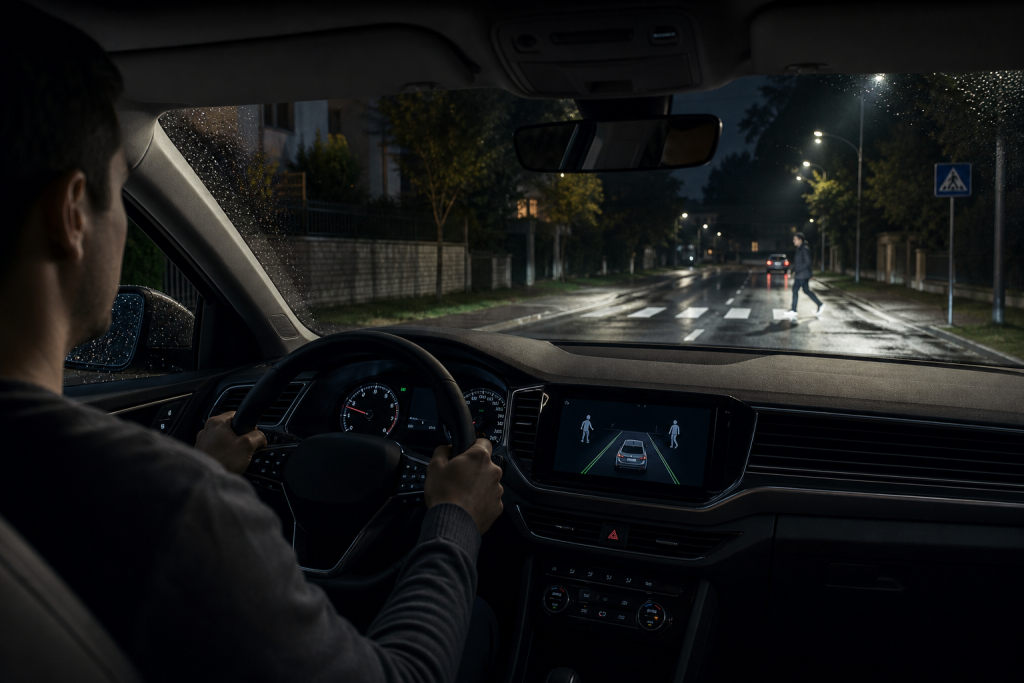
Human vision performs differently in low light. Drivers may see headlights, reflective signs, and bright objects clearly while missing dark clothing, animals near the shoulder, cyclists outside the beam pattern, or debris lying on the road.
Several factors make nighttime driving more demanding:
- Reduced contrast between objects and the road
- Limited headlight reach on curves and hills
- Glare from approaching or following vehicles
- Wet pavement reflecting light
- Fatigue during long evening or overnight trips
- Poor visibility in fog, rain, or snow
- Unlit roads with few visual reference points
Night Driving Assistance Systems are designed to support road awareness. They may illuminate more of the roadway, adapt lighting automatically, identify potential hazards, or provide visual and audible alerts. However, they do not replace headlights, mirrors, safe speed selection, braking distance, traffic laws, or driver attention.
The most useful way to evaluate these technologies is not to ask which system is universally “best.” Instead, consider what type of hazard you encounter most often and how the assistance systems respond to it.
1. Automatic High-Beam Assist
Automatic high-beam assist uses a forward-facing camera or light sensor to detect conditions and switch between high and low beams. The goal is to provide additional illumination on dark roads without requiring the driver to operate the high-beam control constantly.
How it works
The vehicle monitors the road ahead for:
- Oncoming headlights
- Taillights of vehicles traveling in the same direction
- Street lighting
- Changing ambient brightness
When the system determines that high beams are appropriate, it activates them. When it detects another vehicle or brighter surroundings, it returns to low beams.
Benefits
Automatic high-beam assist is most helpful on dark rural roads, country lanes, and highways with limited street lighting. It can reduce workload associated with repeatedly switching beams—one of the practical advantages of many night driving assistance systems.
It may also help drivers maintain better forward illumination when traffic conditions change quickly. A driver who is focused on steering, road position, and surrounding traffic may not always switch beams at the ideal moment.
Limitations
The system may not recognize every situation correctly. Curves, hills, roadside lighting, reflective signs, cyclists, and vehicles partially hidden by vegetation can affect decisions. Some driver-assistance features may also react slowly or switch modes when the driver would prefer to retain control.
Drivers should remain prepared to override the feature manually. High beams can create serious glare for other road users, and automatic operation should not be treated as permission to ignore normal courtesy or local lighting rules.
2. Adaptive Headlights and Automatic Headlight Leveling
Adaptive headlights adjust the direction, intensity, or distribution of the light beam according to steering input, vehicle speed, road curvature, or load. Automatic headlight leveling keeps the beam aimed correctly when passengers or cargo change the vehicle’s ride height.
Cornering lights
Cornering lights illuminate the area beside the vehicle when the driver turns the steering wheel or activates a turn signal. This can help reveal:
- Pedestrians near an intersection
- Cyclists approaching from the side
- Road edges and curbs
- Animals near a bend
- Driveway entrances or side streets
These lights are particularly useful in urban areas and on winding roads where a conventional forward-facing beam may not illuminate the direction of travel soon enough.
Dynamic bending headlights
Some systems physically swivel the headlamp assembly as the vehicle turns. Others use electronically controlled light distribution. The objective is similar: provide more light around a curve instead of illuminating only the area directly ahead of the vehicle.
Automatic leveling
Headlights aimed too high can create glare for other drivers. Headlights aimed too low reduce forward visibility. Automatic leveling compensates for changes caused by passengers, luggage, towing equipment, or suspension movement.
Practical considerations
Adaptive headlights can improve visibility without adding a separate warning interface for the driver. Their performance depends on vehicle design, calibration, and headlamp condition. Damaged suspension components, incorrect tire pressures, poor alignment, or incorrectly installed replacement parts can affect the beam pattern for low-light driving assistance.
3. Matrix LED and Pixel Headlight Systems
Matrix LED and pixel headlight systems use multiple individually controlled light segments. Instead of switching the entire high beam on or off, these night driving assistance systems can shade specific areas while keeping other portions of the road brightly illuminated.
What makes them different
A conventional high beam generally creates one broad pattern. A matrix system divides the beam into zones. Cameras identify vehicles or other bright objects, and the system dims or disables selected segments around them.
For example, the vehicle may keep the roadside and lane ahead illuminated while creating a darker area around an oncoming car. This can provide more continuous lighting than a simple low-beam setting.
Where they help
These night driving assistance systems are useful on:
- Dark highways
- Winding rural roads
- Roads with intermittent traffic
- Areas where roadside hazards are difficult to see
- Long-distance night journeys
They can improve the driver’s ability to notice road signs, lane boundaries, bends, and objects outside the immediate low-beam area.
Limitations and trade-offs
Matrix lighting relies on cameras, software, and precise headlamp calibration. Heavy dirt, snow, ice, or damage near the camera may reduce performance. The system may also have legal or market-specific operating restrictions because lighting regulations differ between regions.
The driver still needs to monitor the road directly. A shaded area around one vehicle does not mean every road user has been detected, and these assistance features cannot correct poor speed choices or insufficient following distance.
4. Night Vision Systems Using Near-Infrared Cameras
Near-infrared night vision systems use an infrared light source and a camera that detects reflected infrared energy. The image is displayed on a dashboard screen, instrument cluster, or head-up display—an approach used by some night driving assistance systems.
Unlike ordinary headlights, the camera may provide a visible image of objects beyond the brightest part of the headlamp beam. Depending on the system, it can display pedestrians, animals, vehicles, and other objects in a contrasting image.
How near-infrared night vision differs from thermal imaging
Near-infrared systems actively illuminate the scene with infrared light. Their performance is influenced by the camera, infrared emitter, surface reflectivity, and viewing conditions.
Thermal imaging, by contrast, detects heat differences emitted by objects. It does not depend on visible light in the same way and may be particularly useful for identifying warm-bodied people and animals against a cooler background.
Both technologies can support low-light driving, but they provide different types of information. Near-infrared night vision systems may create a more conventional camera-like view, while thermal systems emphasize temperature contrast.
Strengths
Near-infrared night vision can help drivers recognize people or objects that are difficult to see with ordinary headlights. The display may also make roadside movement easier to interpret on dark roads.
Limitations
The driver must learn to use the display without becoming distracted. A screen showing an object does not automatically indicate its distance, movement path, or whether it is in the vehicle’s lane. Rain, dirt, road spray, and camera placement can also affect the image for night driving assistance.
5. Thermal Imaging Night Vision
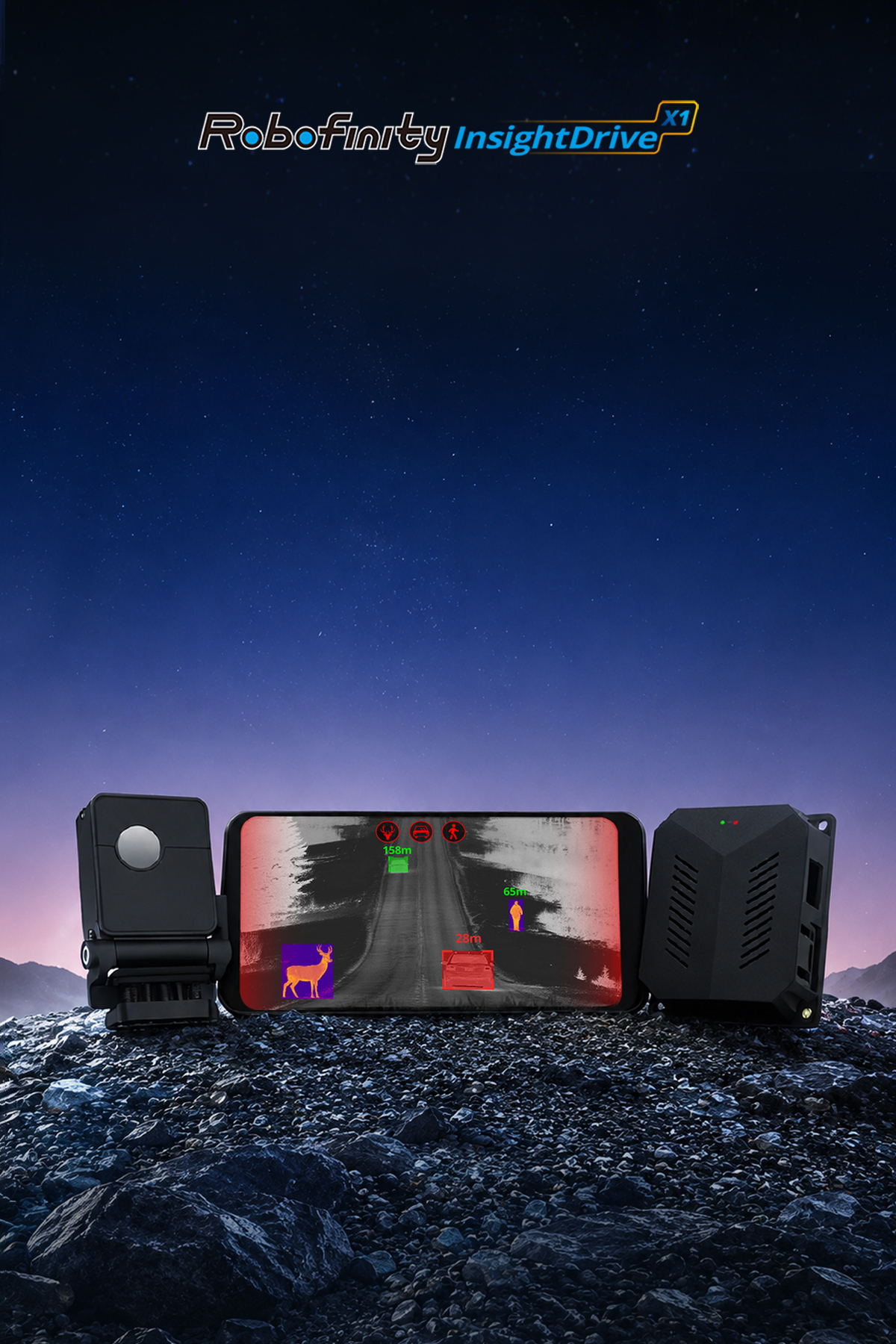
Thermal imaging night vision uses an infrared sensor to detect heat rather than relying primarily on visible light. People, animals, engines, and other warm objects can stand out from cooler backgrounds even when the scene is dark—one reason thermal systems are popular among night driving assistance systems.
This technology is sometimes called vehicle thermal imaging, thermal night vision, or car thermal night vision.
Why thermal imaging can be valuable
Thermal imaging may help reveal hazards that blend into the background in ordinary headlight illumination. Examples include:
- A pedestrian wearing dark clothing
- A deer near the roadside
- Livestock crossing an unlit road
- A cyclist outside the main headlight beam
- A stalled vehicle with warm components
- A person near a dark roadside or field
The system can be particularly relevant on rural roads, wooded routes, and long-distance journeys where animals or pedestrians may appear with little warning.
Detection and recognition are not the same
A thermal camera may identify a warm object, but recognizing an object and understanding its intended movement are separate tasks. A driver still needs to determine whether the object is moving toward the road, crossing the lane, standing safely on the shoulder, or located farther away than it appears on the display.
Some advanced night driving assistance systems combine thermal imaging with software-based recognition. Such technology may add useful information, but it should be treated as driver assistance rather than a substitute for direct observation and defensive driving.
Limitations of thermal imaging
Thermal imaging does not provide a perfect view of the road. It generally does not replace the visual detail supplied by headlights, such as lane markings, traffic signs, pavement damage, or object color. Glass, weather, obstructions, and sensor placement can also influence what the camera detects.
Drivers should use the thermal display as an additional source of information, not as the only view used to steer or judge distance in any low-light driving setup.
6. Pedestrian and Animal Detection
Pedestrian and animal detection systems use cameras, radar, thermal sensors, or a combination of technologies to identify vulnerable road users and wildlife—an important category of night driving assistance systems.
Pedestrian detection
A pedestrian detection system may recognize a person near or within the vehicle’s projected path. Depending on the vehicle, it may provide a visual warning, audible alert, seat vibration, or emergency braking support.
These assistance systems can be valuable in:
- Poorly lit urban streets
- Residential areas
- Crosswalk approaches
- Parking areas
- Roads near schools or parks
- Rural roads with pedestrians walking along the shoulder
Animal detection
Animal detection is especially relevant on rural roads and forested routes. Some systems can identify larger animals based on shape, movement, heat signature, or position relative to the lane.
Wildlife detection can be difficult because animals may be partly concealed, move unpredictably, or enter the road from the side. A warning is useful only if the driver has enough time and space to respond safely with the vehicle’s normal braking and steering.
Important limitations
No detection system identifies every pedestrian or animal. Small animals, groups of people, unusual body positions, heavy rain, obstructions, and complex backgrounds can affect performance. Drivers should continue scanning both sides of the road and reduce speed when conditions make a collision more difficult to avoid.
7. Forward Collision Warning and Automatic Emergency Braking
Forward collision warning uses cameras, radar, lidar, or sensor combinations to estimate whether the vehicle is approaching another object too quickly. Automatic emergency braking may apply the brakes if the system determines that a collision is imminent and the driver has not responded adequately.
How the systems support night driving
At night, a forward collision warning system may detect a vehicle ahead sooner than the driver notices its slowing or stopped position. It can also provide an additional warning when visibility is reduced—helpful in many night driving assistance systems.
Automatic emergency braking is designed as a last layer of defense, not a normal driving tool. It may reduce the severity of a crash in some situations, but operation depends on sensor conditions, object type, speed, road layout, and system design.
What drivers should not assume
A forward collision system may not recognize every stationary object, animal, pedestrian, cyclist, or road obstruction. It may also struggle with sharp curves, poor lane markings, heavy spray, snow, or blocked sensors in low visibility.
The safest approach is to maintain a clear view, leave adequate following distance, and respond to hazards before night driving assistance systems need to intervene.
8. Radar-Based Blind-Spot and Cross-Traffic Alerts
Blind-spot monitoring generally uses radar sensors near the rear corners of the vehicle to detect vehicles traveling in adjacent lanes. A warning light commonly appears in the side mirror or nearby trim.
Cross-traffic alert monitors traffic approaching from the sides while reversing. It can be useful in dark parking lots, driveways, and areas where buildings or parked vehicles obstruct the view.
Why these systems matter at night
Nighttime glare and reduced contrast can make it harder to judge whether another vehicle is approaching quickly. Blind-spot alerts provide an additional indication before a lane change, while rear cross-traffic alerts may identify vehicles that are difficult to see through mirrors or the rear window in night driving assistance situations.
Limitations
Blind-spot monitoring does not remove the need for mirror checks and shoulder checks. Motorcycles, bicycles, small vehicles, and objects outside the sensor’s coverage may not trigger an alert. Cross-traffic systems can also be affected by parked vehicles, walls, road geometry, and sensor contamination.
9. Lane Departure Warning and Lane-Centering Assistance
Lane departure warning uses a forward-facing camera to track lane markings and warn the driver if the vehicle drifts without a turn signal. Lane-centering assistance can make small steering adjustments to help keep the vehicle near the center of the lane.
Benefits after dark
These night driving assistance features can support drivers on highways when fatigue, glare, or reduced visual contrast makes lane position harder to judge. A warning may draw attention to gradual drift before the vehicle leaves the lane.
Why performance varies
Lane systems depend heavily on visible and consistent road markings. They may perform less reliably when:
- Lane lines are faded or covered
- Snow or standing water hides markings
- Construction changes the lane layout
- The road has sharp curves
- The camera is dirty or obstructed
- Bright lights interfere with the image
Lane-centering is not autonomous driving. The driver must keep hands available, monitor traffic, and remain responsible for steering.
10. Driver Monitoring and Drowsiness Alerts
Night driving often coincides with fatigue. Driver monitoring systems use a cabin camera, steering behavior, lane position, or other inputs to look for signs of reduced attention—an important part of many night driving assistance systems.
Possible warnings include:
- Suggestions to take a break
- Alerts after repeated lane drift
- Steering-input warnings
- Visual or audible attention reminders
These systems can be useful on overnight trips, after long work shifts, or when a driver is traveling on monotonous highways.
Their greatest limitation is that they cannot reliably measure every form of fatigue. A driver who feels sleepy should stop in a safe location rather than trying to continue with assistance technology active.
Comparing the Main Night Driving Systems
Different technologies solve different visibility problems, and the best set of low-light assistance systems depends on where you drive and what hazards you face most often.
| System | Main purpose | Most useful situations | Key limitation |
|---|---|---|---|
| Automatic high-beam assist | Switches between high and low beams | Dark roads with changing traffic | May misread unusual lighting or road layouts |
| Adaptive headlights | Directs light around bends | Curvy roads and intersections | Requires correct calibration and clean components |
| Matrix LED headlights | Shades selected beam areas | Dark roads with occasional traffic | Dependent on camera and software performance |
| Near-infrared night vision | Displays an infrared view | Unlit roads and roadside awareness | Requires attention to a separate display |
| Thermal imaging | Highlights heat differences | Pedestrian, animal, and obstacle awareness | Does not replace normal visual road information |
| Forward collision warning | Warns of closing hazards | Highways and reduced-visibility driving | Recognition varies by object and conditions |
| Blind-spot monitoring | Warns of adjacent vehicles | Night lane changes and heavy traffic | Does not replace mirror and shoulder checks |
| Lane departure warning | Alerts to lane drift | Highways and fatigue-prone drives | Depends on visible lane markings |
| Driver monitoring | Detects possible inattention | Long or overnight trips | Cannot replace rest or responsible judgment |
Which System Fits Different Driving Situations?
City driving
Adaptive headlights, cornering lights, pedestrian detection, and cross-traffic alerts are often more relevant in cities. Intersections, parked cars, cyclists, and pedestrians create hazards at the sides of the vehicle rather than only directly ahead—so many assistance systems focus on side and front-left/right risk.
Rural roads
Thermal imaging, animal detection, automatic high-beam assist, and adaptive headlights can be useful on roads with limited street lighting. If you want to compare coverage and performance ideas, you can also review Night Vision Distance: Can Thermal Night Vision See Farther Than Headlights? for context. Drivers should still slow down near wooded areas, fields, and known wildlife crossings.
Highway driving
Forward collision warning, automatic emergency braking, blind-spot monitoring, lane departure warning, and driver monitoring address common highway risks. Adequate following distance remains essential because stopping space increases with speed. No night driving assistance system can “beat physics” when you travel too fast.
Rain, fog, and snow
No single low-light assistance system works equally well in every weather condition. Cameras may lose clarity because of spray or condensation. Radar can remain useful in some conditions but may also have limitations. Thermal imaging can add information about warm objects, but it does not make lane markings or road geometry automatically clear.
During severe weather, reducing speed and postponing a trip when practical may be more effective than relying on additional equipment.
Family driving and long trips
Families may value night driving assistance systems that reduce workload without demanding constant interaction, such as automatic high beams, blind-spot alerts, and forward collision warning. On long trips, driver monitoring can provide a useful reminder to take breaks, but it cannot compensate for insufficient sleep.
What to Consider Before Buying a System
Whether you are choosing a new vehicle or considering an aftermarket upgrade, evaluate night driving assistance systems in the context of your regular driving.
Sensor placement and cleaning
Cameras and radar sensors need an unobstructed field of view. Mud, ice, road salt, insects, and water spots can reduce performance. Ask how easily the sensors can be cleaned and whether their position makes them vulnerable to damage.
Display design
A night driving assistance system is only useful if the information can be interpreted quickly. Consider whether alerts appear in the instrument cluster, head-up display, central screen, or a separate monitor. A poorly placed display can create distraction instead of improving awareness.
Alert quality
Frequent false alerts can cause drivers to ignore warnings. Ask whether the feature distinguishes between objects in the lane, objects near the road, and objects safely outside the vehicle’s path.
Integration with braking and steering
A warning-only system gives the driver information. A system connected to emergency braking or steering assistance may take action under certain conditions. Understand exactly what the vehicle can do and what remains the driver’s responsibility.
Installation and compatibility
Aftermarket equipment should be compatible with the vehicle’s electrical system, dashboard layout, mounting locations, and driver sightlines. Installation should not interfere with airbags, factory cameras, controls, or legal lighting requirements.
Ownership costs
Consider more than the purchase price. Potential ownership factors include sensor replacement, calibration, software support, screen placement, wiring repairs, and maintenance after windshield or bumper damage.
If you’re specifically comparing thermal options, it can also help to review Automotive Thermal Night Vision Buying Guide before you narrow down your setup.
How to Use Night Driving Assistance Safely
Good technology use depends on good driving habits. The best results come from treating night driving assistance systems as an extra layer—not as a substitute for attention.
- Clean the windshield, headlights, mirrors, and sensor areas before driving.
- Use the correct headlight setting and adjust speed for visibility.
- Look beyond the illuminated area rather than staring only at the brightest section.
- Scan both road edges for pedestrians, cyclists, animals, and debris.
- Treat warnings as prompts to investigate, not as proof that the road is clear.
- Keep a safe following distance and avoid driving faster than you can see and stop.
- Override automatic high beams when conditions require manual control.
- Take regular breaks on long nighttime journeys.
- Stop driving if fatigue, poor weather, or vision problems make the trip unsafe.
For practical road-safety guidance around visibility and safe speed, see the U.S. National Highway Traffic Safety Administration’s Road Safety resources.
FAQ
What is the most useful night driving assistance system?
There is no single best system for every driver. Automatic high beams and adaptive headlights help with illumination, while thermal imaging and pedestrian or animal detection support hazard awareness. Many drivers get the most benefit by combining different types of low-light assistance systems based on city streets, rural roads, and highways.
Does night vision work in complete darkness?
Many night vision technologies can provide useful information in darkness, but their performance depends on the sensor type and conditions. Near-infrared systems use infrared illumination, while thermal systems detect heat differences. Neither provides a complete replacement for headlights and normal visual observation.
Can thermal imaging detect pedestrians and animals?
Thermal imaging can help distinguish warm-bodied pedestrians and animals from cooler backgrounds. Detection quality depends on distance, obstructions, weather, sensor capability, and the object’s position. Drivers must still interpret the hazard and respond appropriately using safe speed and braking.
Do automatic high beams replace manual control?
No. Automatic high beams are an assistance feature. Drivers should remain ready to switch manually when the system does not respond appropriately or when local road conditions require more careful control.
Are aftermarket night driving systems worth considering?
They may be worth considering for drivers who regularly travel on dark rural roads, encounter wildlife, or drive in poor-visibility conditions. Before purchasing, assess display usability, installation quality, sensor maintenance, compatibility, and whether the assistance feature provides meaningful information without distracting the driver.
Can driver-assistance systems prevent nighttime crashes?
No system can eliminate nighttime driving risk. Low-light assistance systems may provide earlier warnings, improve lighting, or support hazard recognition, but safe speed, alertness, proper vehicle maintenance, and attentive driving remain essential.
Conclusion
Night Driving Assistance Systems address different parts of the visibility problem. Automatic high beams and adaptive headlights improve illumination. Matrix lighting manages glare while preserving more of the high-beam pattern. Near-infrared and thermal imaging systems add information beyond ordinary headlight vision, while pedestrian detection, forward collision warning, blind-spot monitoring, lane assistance, and driver monitoring address specific hazards and human limitations.
The best choice depends on where, when, and how you drive. A city driver may benefit most from pedestrian and cross-traffic alerts, while a rural driver may place greater value on adaptive lighting, animal detection, or thermal night vision. Whatever technology your vehicle uses, the goal is the same: improve awareness without replacing careful observation, appropriate speed, sufficient stopping distance, and an alert driver.