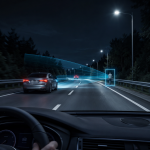
Nighttime Pedestrian Detection is evolving fast—from basic warnings to smarter driver assistance that can spot people earlier, even when lighting, weather, and road conditions make detection harder. As roads get darker and low-visibility driving becomes more risky, automakers and aftermarket developers are racing to close one of the most dangerous safety gaps: seeing pedestrians before headlights or streetlights catch up.
- Why nighttime pedestrian detection matters
- How current systems work today
- What will improve in the future
- 1. Smarter sensor fusion
- 2. Better artificial intelligence
- 3. Faster and more usable alerts
- 4. Broader poor-visibility performance
- 5. Better integration with vehicle controls
- Where it helps most
- Rural roads
- Urban streets with mixed traffic
- Suburban neighborhoods
- Long-distance night driving
- Nighttime detection and real-world scenarios
- What the technology still cannot do
- It can miss people in difficult conditions
- It can generate false alerts
- It does not replace attention
- It depends on installation and calibration
- The role of thermal imaging in the next generation of safety
- Why pedestrians and animals are often detected together
- What car buyers should look for
- Consider your driving environment
- Look at how alerts are presented
- Check whether the system is a supplement or a standalone feature
- Understand the weather limitations
- Balance cost with real-world value
- How these systems fit into safer night driving habits
- The likely direction of future development
- FAQ
- What is nighttime pedestrian detection technology?
- Does pedestrian detection work well at night?
- Is thermal imaging better than a camera at night?
- Can these systems detect animals too?
- Do nighttime detection systems replace safe driving?
- Are aftermarket systems worth considering?
- Conclusion
Table of Contents
- Why nighttime pedestrian detection matters
- How current systems work today
- What will improve in the future
- Where it helps most
- What the technology still cannot do
- The role of thermal imaging in the next generation of safety
- Nighttime detection and real-world scenarios
- What car buyers should look for
- How these systems fit into safer night driving habits
- The likely direction of future development
- FAQ
Why nighttime pedestrian detection matters
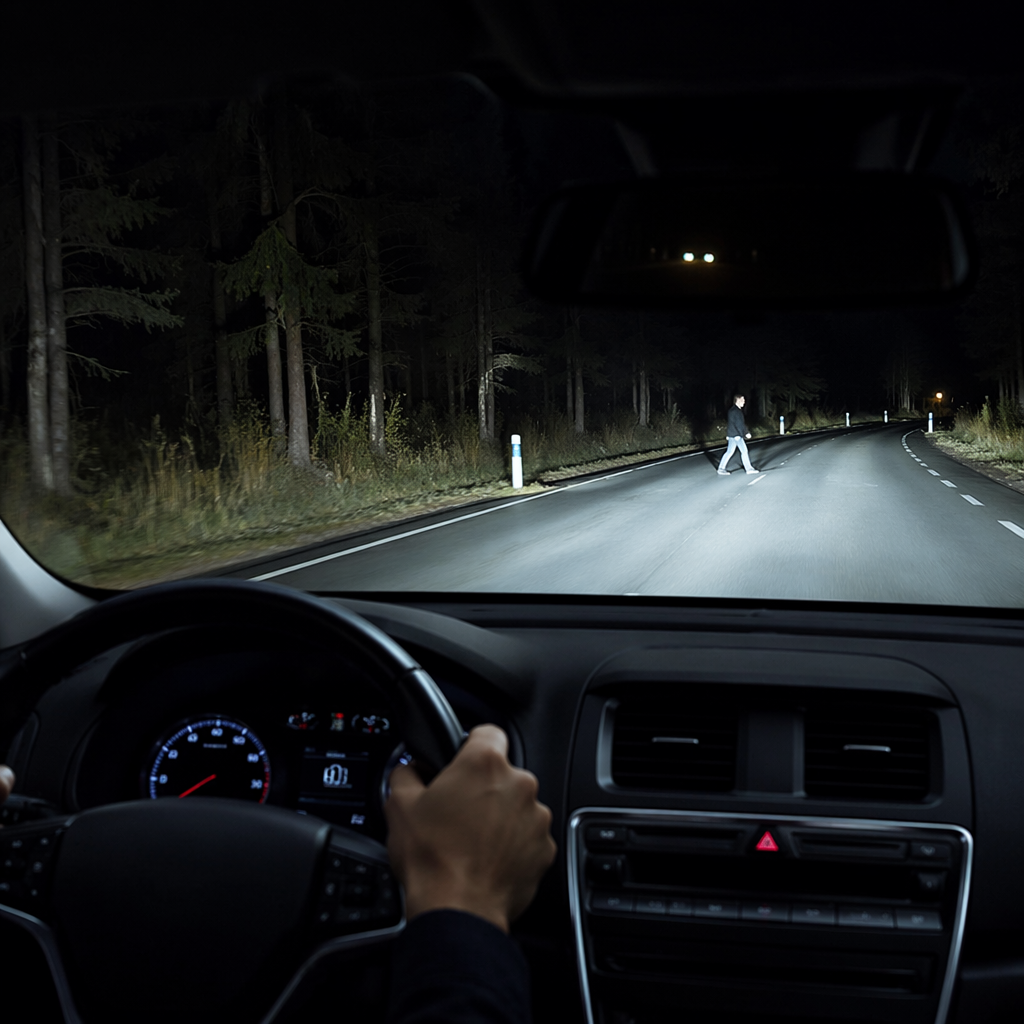
Pedestrian detection systems are designed to identify people in or near the vehicle’s path and alert the driver before a collision becomes likely. During daylight, camera-based systems can rely on contrast, shape recognition, and object tracking. At night, the same approach faces a tougher challenge.
Low-light conditions reduce visual detail. Streetlights don’t cover every road. Headlights can wash out contrast. Rain, fog, snow, and reflective surfaces can confuse sensors. A person crossing a dark road, stepping off a sidewalk, or walking near the shoulder may appear only briefly before the driver must react.
That is why nighttime pedestrian detection technology is moving beyond simple camera vision. The goal is to combine multiple sensing methods so the vehicle can identify a hazard sooner and with fewer false alarms.
How current systems work today
Most modern pedestrian detection rely on a combination of sensors, usually including cameras and radar. Some designs also use lidar or thermal imaging. Each sensor type has strengths and weaknesses—especially after dark.
Camera-based detection
Cameras capture detailed visual information, and software can analyze shape, motion, lane position, and pedestrian behavior. The downside is that camera performance depends heavily on lighting and clear visibility. At night, their output may drop in poor weather or when glare is present.
Radar-based detection
Radar detects objects by measuring reflected radio waves. It’s useful in darkness, fog, and rain because it does not depend on visible light. However, radar is less precise for identifying exactly what an object is. It can detect presence and movement well, but it may need help from other sensors to reliably distinguish a pedestrian from a roadside object.
Thermal imaging and night vision
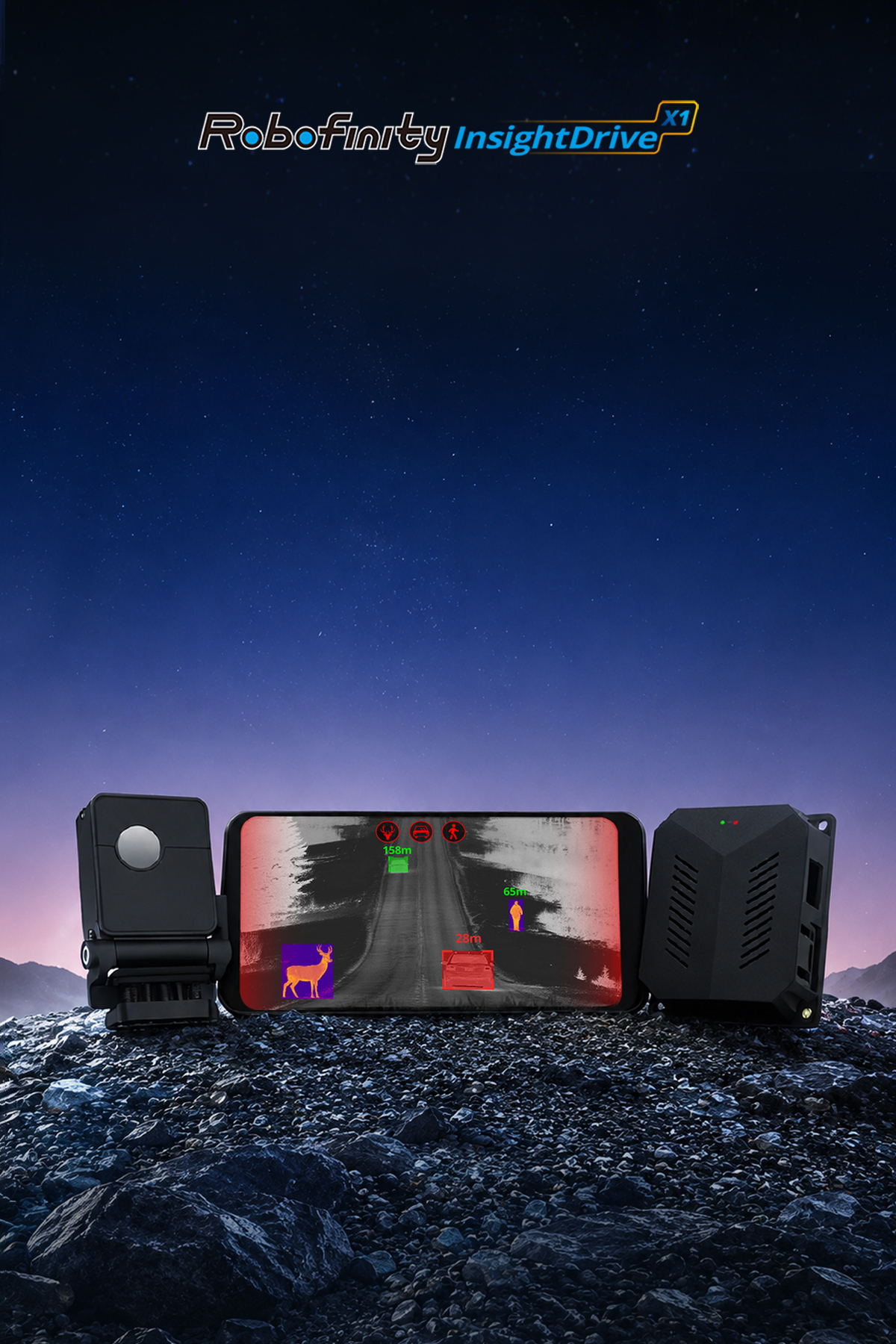
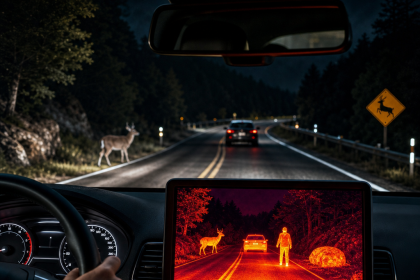
Thermal systems detect heat differences rather than visible light. That makes thermal especially useful for identifying living beings, such as people and animals, in dark or poor-visibility conditions. Thermal imaging does not “see” the same way the human eye does; it creates a heat-based picture that can highlight a person long before they are clearly visible in headlights.
If you want a deeper look at how thermal night assistance fits into road safety, see Thermal Night Vision Camera for a Car: What It Is and How It Works.
What will improve in the future
The future of nighttime pedestrian detection technology will likely be shaped by five major improvements: better sensor fusion, stronger AI interpretation, faster alerts, wider operating conditions, and more practical integration with the driver.
1. Smarter sensor fusion
One of the most important trends is sensor fusion, which means combining data from different systems rather than relying on one sensor alone. A camera may spot a pedestrian shape, radar may detect movement, and thermal imaging may confirm a heat signature. When those signals are combined, the vehicle can make a better judgment.
Nighttime hazards are complex. A person standing still at the edge of a road can be harder to detect than someone crossing directly in front of the car. A dog, cyclist, or reflective sign can also confuse a simple system. Nighttime pedestrian detection technology improves when fusion reduces both missed detections and false alerts.
2. Better artificial intelligence
Pedestrian detection is becoming more sophisticated on the software side. Modern AI models can learn patterns in how people move, pause, cross roads, and emerge from obscured areas. Future systems should become better at understanding not only “what is there,” but “what is likely to happen next.”
That predictive ability is important at night, where seconds matter. A person stepping off a curb may not yet be in the lane, but if the system can anticipate the trajectory early enough, it can warn the driver sooner or support braking assistance.
3. Faster and more usable alerts
A detection system only helps if the driver understands the alert in time. Future versions are expected to improve how warnings are delivered, including clearer dashboard visuals, head-up displays, audio cues, steering-wheel alerts, or haptic feedback.
The challenge is balance. Too many alerts can annoy drivers, while too few can delay reaction. The next phase of development for nighttime pedestrian detection technology will likely focus on making warnings timely, less distracting, and better matched to real risk.
4. Broader poor-visibility performance
Nighttime is only part of the problem. Drivers also face fog, heavy rain, snow, glare, and shadowed rural roads. Future pedestrian detection systems will likely be designed to perform more consistently across those conditions.
Thermal imaging is especially relevant here because it can still detect heat signatures when visible-light systems struggle. That does not make thermal perfect, but it can provide another awareness layer when cameras are impaired by darkness or weather.
5. Better integration with vehicle controls
Some future systems may do more than warn. They could interact with braking, steering, and speed management features. However, integration must be careful: a vehicle should not act aggressively or unpredictably based on a single uncertain detection.
The best outcomes typically come from assistance rather than override—supporting driver decision-making without creating new risks through overreaction.
Where it helps most
Not every road situation benefits equally from advanced detection. Nighttime pedestrian detection is most useful where human visibility is naturally weaker.
Rural roads
Dark rural roads can be among the most difficult driving environments because they often have limited street lighting and may include pedestrians, cyclists, wildlife, or roadside workers. A multi-sensor approach, including thermal input when available, can add useful awareness here.
Urban streets with mixed traffic
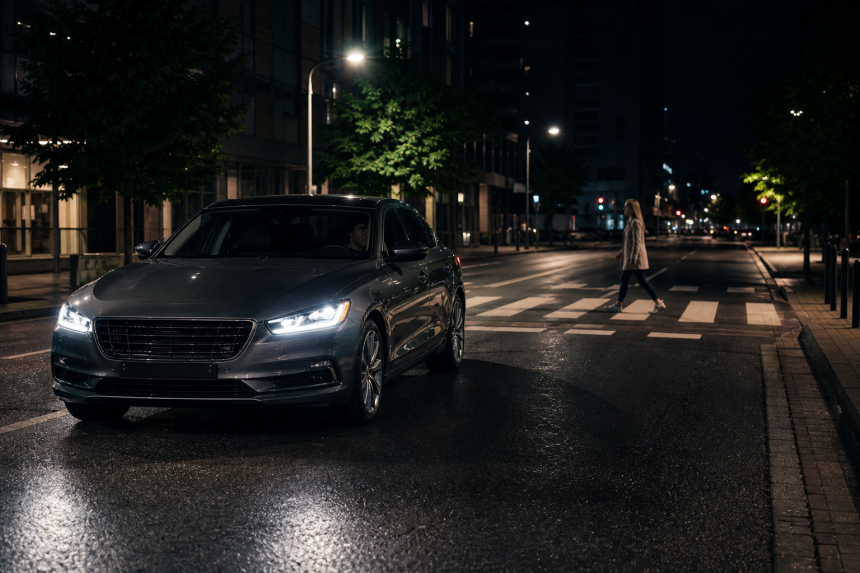
Cities may be better lit, but they create different problems. Pedestrians can emerge from between parked vehicles, cross mid-block, or step into the street while looking at a phone. Glare from storefronts, headlights, and wet pavement can also reduce contrast.
Suburban neighborhoods
Suburban roads often have children, joggers, pets, and parked cars that obscure movement. Systems can be especially helpful when visibility is inconsistent and pedestrians aren’t using reflective gear.
Long-distance night driving
Drivers who spend hours on the highway experience fatigue and reduced reaction speed late at night. Even with good headlights, human scanning for people at the road edges declines over time. Well-designed nighttime pedestrian detection technology can provide an extra margin of awareness.
Nighttime detection and real-world scenarios
Many of the hardest moments happen when the pedestrian is partly visible or the scene is cluttered. Nighttime pedestrian detection technology is gradually getting better at handling edge cases such as:
- stepping from behind a parked vehicle or street sign
- crossing at an unexpected angle while moving toward the lane
- walking near an unlit shoulder where headlights create shadows
- low-contrast clothing that blends into dark pavement
- work zones where reflections and cones reduce sensor clarity
As sensor fusion and AI improve, nighttime pedestrian detection can reduce the time gap between “the driver notices” and “the system alerts,” which is critical for nighttime braking and avoidance maneuvers.
What the technology still cannot do
It’s easy to assume any advanced safety feature solves the problem completely, but nighttime pedestrian detection technology has real limits.
It can miss people in difficult conditions
A pedestrian hidden behind a vehicle, sign, curve, or embankment may not be visible to the sensors at all. Heavy rain, snow, fog, road spray, and dirty lenses can also reduce performance.
It can generate false alerts
A system may sometimes react to a roadside object, warm engine parts, animals, or reflections. That is why drivers should learn how the system behaves rather than assuming every alert signals an immediate emergency.
It does not replace attention
The biggest limitation is the driver. Detection systems can’t replace safe speed, proper following distance, consistent scanning, and obeying traffic laws. Night driving still requires the driver to do the primary work of observation and decision-making.
It depends on installation and calibration
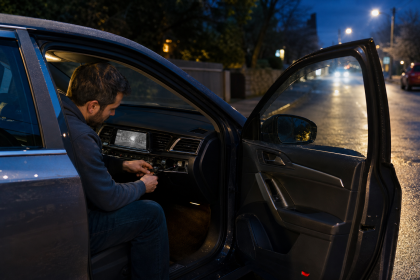
For aftermarket systems, correct installation matters. Sensor placement, alignment, wiring, and display integration all affect performance. A poorly installed setup may underperform even if the underlying technology is strong.
The role of thermal imaging in the next generation of safety
Thermal imaging is likely to play a growing role in nighttime road safety because it helps address a key challenge: heat can be visible even when light is not.
Unlike a standard camera, thermal can highlight warm bodies in the dark. That can support identifying pedestrians, cyclists, and animals at distance in many poor-visibility scenarios. It is not magic and it does not show fine visual detail like a daytime camera, but nighttime pedestrian detection technology can use thermal to reveal a hazard a driver might not notice until much later.
For drivers who regularly travel outside well-lit areas, thermal assistance may become one of the most practical additions to broader driver-assistance technology. If you’re comparing night systems by how they affect real visibility, you may also find these safety benefits useful: Automotive Night Vision: 7 Powerful Safety Benefits.
Why pedestrians and animals are often detected together
Many systems are designed to recognize both pedestrians and animals because nighttime hazards overlap. A deer near the roadside, a dog crossing a dark street, or a person walking near an unlit shoulder can all create similar reaction-time problems for drivers.
From a technology perspective, detecting living objects based on movement and heat can be more useful than trying to classify every object perfectly in real time. The practical goal is to alert the driver early enough to respond safely, not necessarily to label each target with perfect accuracy.
That is why future nighttime pedestrian detection technology may focus more on hazard recognition than narrow “pedestrian only” classification. A broader approach often works better on real roads.
What car buyers should look for
If nighttime pedestrian detection is important to you, evaluate detection features based on how they match your driving habits rather than on feature names alone.
Consider your driving environment
Think about where you drive most often:
- dark highways
- rural roads
- unlit neighborhoods
- foggy or rainy routes
- long commutes after sunset
The more your environment limits visibility, the more value you are likely to get from advanced nighttime pedestrian detection technology.
Look at how alerts are presented
A good system should be easy to understand without distracting you. Check whether warnings are visual, audio, or both, and whether you can recognize the severity quickly in real traffic.
Check whether the system is a supplement or a standalone feature
Some systems are factory-integrated, while others are aftermarket driver-assistance upgrades. Both can be helpful, but performance depends on vehicle compatibility and installation quality.
Understand the weather limitations
No system performs equally well in every condition. If you drive through snow, heavy rain, or dense fog, look for solutions designed to remain useful in poor-visibility conditions.
Also consider how quickly sensor performance can recover after conditions like heavy rain or dirty lenses. That can influence the effectiveness of nighttime pedestrian detection during repeated trips through the same area.
Balance cost with real-world value
The most advanced option isn’t always the most practical. A good choice adds meaningful awareness in the situations you actually face—not just the longest feature list.
If you want to compare safety value across lighting and detection options, you can also review Automotive Night Vision: 7 Powerful Safety Benefits to understand how different night systems contribute to awareness.
How these systems fit into safer night driving habits
Nighttime Pedestrian Detection works best when paired with basic safer driving habits. That means:
- keeping headlights clean and properly aimed
- reducing speed in low-light areas
- scanning beyond the center of the lane
- avoiding distraction
- expecting people near crosswalks, parked cars, and roadside shoulders
- slowing down in rain, fog, or glare
- maintaining extra braking distance at night
These habits still matter even with advanced nighttime pedestrian detection technology. The best safety outcomes usually come from combining human caution with technology that helps fill visibility gaps.
When drivers treat alerts as helpful input—rather than a substitute for observation—nighttime pedestrian detection technology can contribute to smoother, earlier decisions that reduce last-second braking and steering.
The likely direction of future development
Looking ahead, nighttime pedestrian detection technology will likely become less noticeable to the driver when it works well. That’s a good sign. Strong safety technology is often subtle: it watches quietly, warns only when needed, and supports the driver without demanding constant attention.
Key trends are especially likely:
- More vehicles will combine camera, radar, and thermal input.
- AI systems will become better at recognizing risk patterns.
- Alerts may become more personalized and less annoying.
- Detection may extend to more edge cases, such as cyclists, roadside workers, and animals.
- Aftermarket systems may become more accessible to drivers seeking added night awareness.
The core challenge will remain the same: improving awareness without overclaiming what the system can do. As nighttime pedestrian detection technology improves, the best future systems will also make it easier for drivers to understand when the system is confident versus when it may be uncertain.
FAQ
What is nighttime pedestrian detection technology?
It is a vehicle safety feature that helps identify pedestrians in low-light or dark driving conditions and can warn the driver before a potential collision.
Does pedestrian detection work well at night?
It can work well, but real performance depends on sensor type, road conditions, weather, and whether the pedestrian is visible to the system.
Is thermal imaging better than a camera at night?
Thermal imaging can be better for spotting warm bodies in darkness or poor visibility, but it doesn’t replace cameras. Many of the most effective systems combine both to strengthen nighttime pedestrian detection.
Can these systems detect animals too?
Many advanced setups can assist with detecting animals as well as pedestrians, particularly when thermal imaging or broader hazard recognition is used.
Do nighttime detection systems replace safe driving?
No. They are driver-assistance tools, not substitutes for attention, correct speed, properly aimed headlights, or careful scanning.
Are aftermarket systems worth considering?
They can be, especially for drivers who regularly travel on dark rural roads or in poor-visibility conditions where extra awareness is valuable.
Conclusion
Nighttime Pedestrian Detection technology is moving toward better awareness, faster recognition, and more consistent performance in the situations where drivers need help most. The most promising systems combine multiple sensors, smarter software, and clearer alerts so drivers can react earlier—without being overwhelmed.
Still, realistic expectations matter. Nighttime pedestrian detection can improve visibility support and help with safer decisions, but it cannot eliminate risk or replace attentive driving. For guidance on pedestrian safety and how visibility affects risk, refer to the NHTSA guidance on pedestrian safety. Understanding what nighttime pedestrian detection technology can and cannot do is the best way to judge what it may offer as systems continue to evolve.