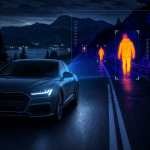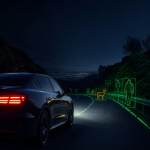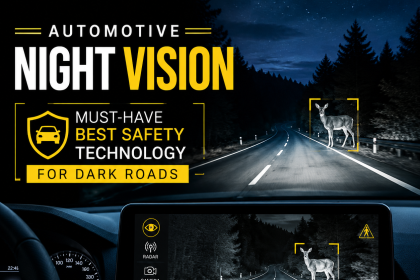
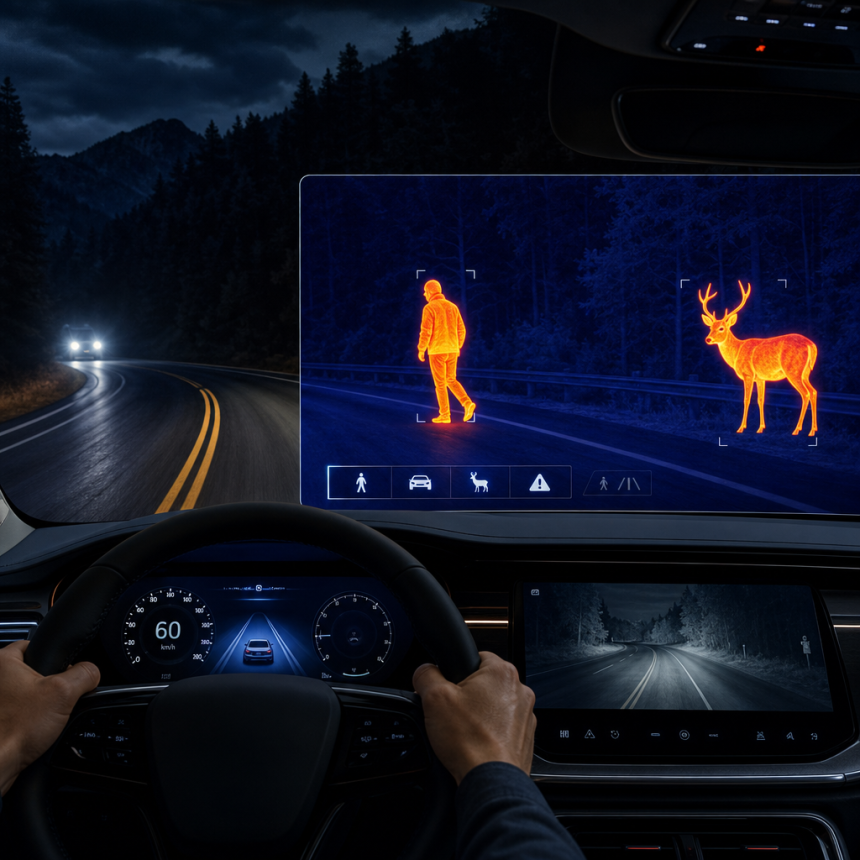
Driving at night can be challenging even when you feel confident behind the wheel. Headlights only illuminate what they can reach, glare from oncoming traffic can wash out contrast, and hazards like pedestrians, cyclists, animals, or stalled vehicles may blend into the dark. A thermal night vision camera for a car is built to help with that problem by detecting heat patterns instead of relying on visible light.
- What Is a Thermal Night Vision Camera for a Car?
- Understanding Thermal Night Vision Technology
- How a Thermal Night Vision Camera Works
- Thermal Night Vision vs. Traditional Night Vision
- What a Thermal Night Vision Camera Can Detect
- Why Thermal Night Vision Is Useful in Cars
- 1. Early hazard detection
- 2. Better performance in darkness
- 3. Improved situational awareness
- 4. Assistance for professional drivers
- Where Thermal Night Vision Cameras Are Installed
- How Drivers View the Thermal Image
- Benefits of a Thermal Night Vision Camera for a Car
- Better detection of living beings
- Works without light
- Can reduce reaction time
- Useful in adverse conditions
- Adds an extra layer of safety
- Limitations and Challenges
- It does not show fine visual detail
- It can be affected by environmental conditions
- It may not detect every hazard equally well
- It is a driver aid, not autonomous control
- Thermal Night Vision in Factory Vehicles
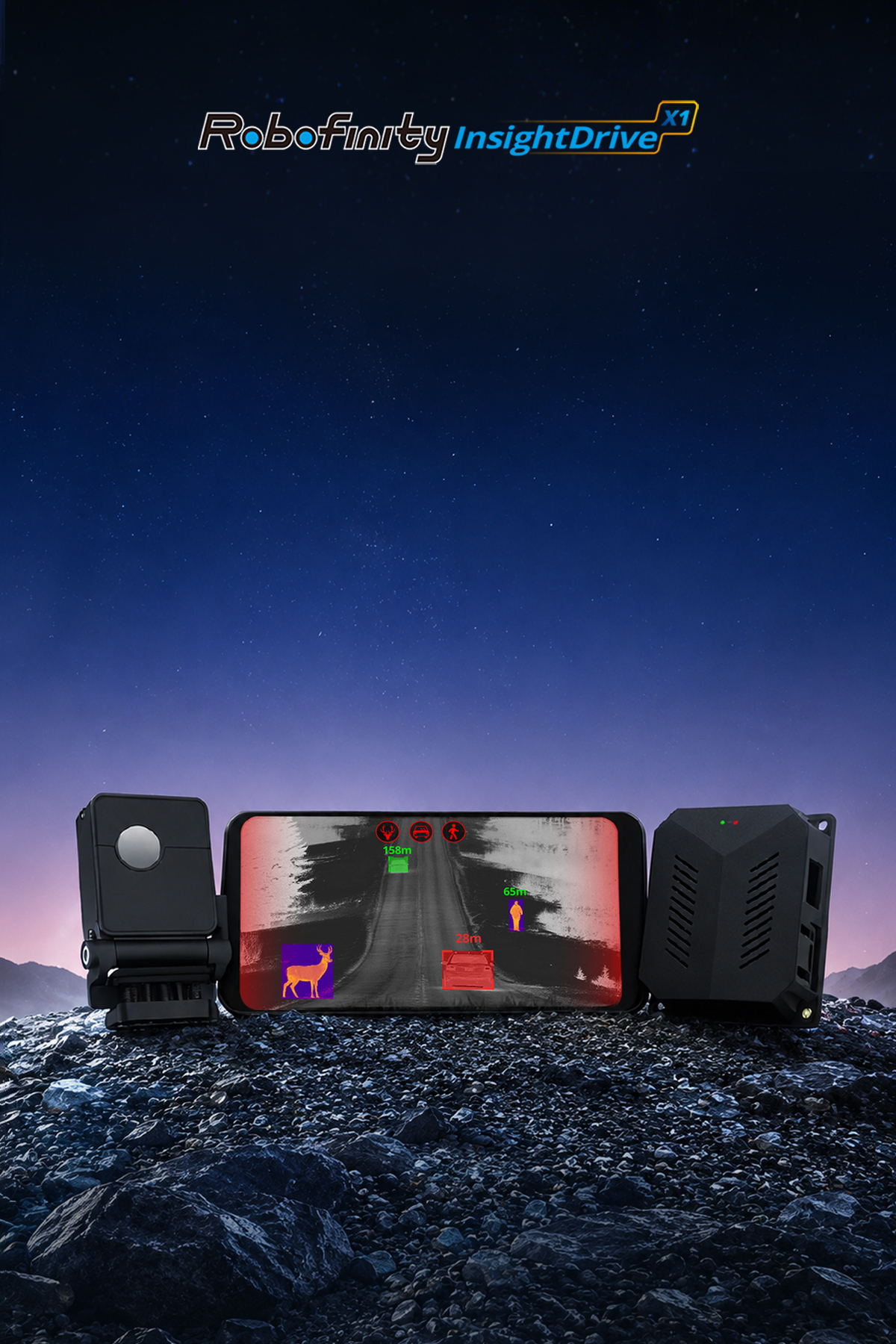
- Aftermarket Thermal Night Vision Systems
- Thermal Camera vs. Infrared Camera: Are They the Same?
- Real-World Example: Why Thermal Night Vision Matters
- Who Can Benefit Most from a Thermal Night Vision Camera?
- What to Look for When Choosing a Thermal Night Vision Camera
- Image quality
- Detection range
- Field of view
- Weather resistance
- Display quality
- Ease of integration
- Optional alerts and overlays
- Is Thermal Night Vision Worth It?
- The Future of Thermal Night Vision in Cars
- Conclusion
In this guide, you’ll learn what this technology is, how it works, what it can realistically detect, where it’s installed, and what to look for when choosing a system.
Table of Contents
- What It Is
- Understanding Thermal Night Vision Technology
- How It Works
- Thermal Night Vision vs. Traditional Night Vision
- What a Thermal Night Vision Camera Can Detect
- Why Thermal Night Vision Is Useful in Cars
- Where Thermal Night Vision Cameras Are Installed
- How Drivers View the Thermal Image
- Benefits of a Thermal Night Vision Camera for a Car
- Limitations and Challenges
- Thermal Night Vision in Factory Vehicles
- Aftermarket Thermal Night Vision Systems
- Thermal Camera vs. Infrared Camera: Are They the Same?
- What to Look for When Choosing a Thermal Night Vision Camera
- Is Thermal Night Vision Worth It?
- The Future of Thermal Night Vision in Cars
- Conclusion
What Is a Thermal Night Vision Camera for a Car?
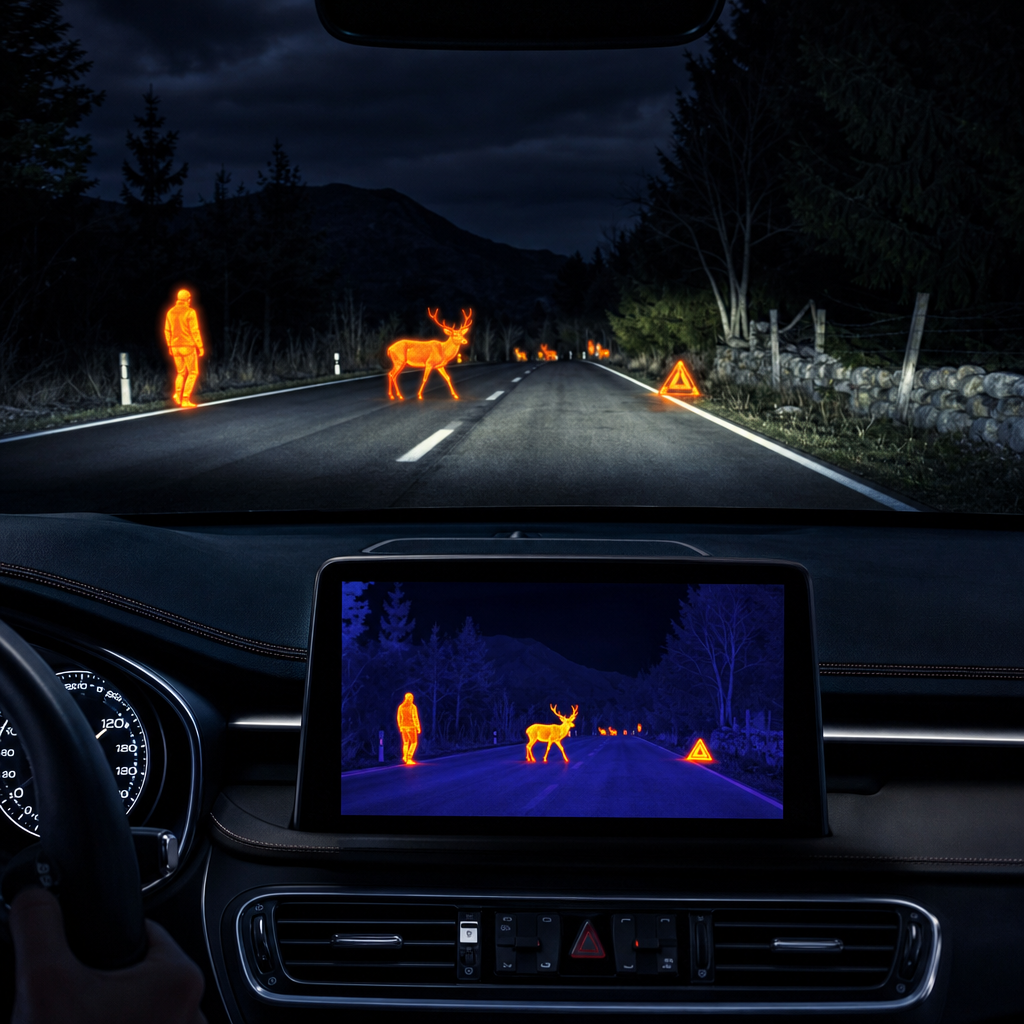
A thermal night vision camera for a car is a heat-sensing imaging system mounted on or integrated into a vehicle. Instead of capturing a scene the way your eyes see it, the system creates an image based on temperature differences across the road environment.
Warm objects typically stand out against cooler backgrounds, which can make it easier to spot living beings and certain road hazards in low-light or no-light conditions. In many real-world situations, this can help you notice threats earlier than you would with headlights alone.
Understanding Thermal Night Vision Technology
A thermal night vision camera for a car is built around an infrared sensor that detects infrared radiation emitted by objects. All objects above absolute zero emit some energy in the infrared spectrum, but warmer targets usually emit more than cooler surroundings.
Thermal cameras measure those differences and convert them into a viewable image. In a typical display:
- Warm objects often appear brighter
- Cooler objects appear darker
- Temperature contrast helps define shapes and movement
This is why a thermal system is often described as “seeing” heat. It can be especially helpful for identifying people, animals, cyclists, and pedestrians near the roadway—particularly when they are hard to see with traditional lighting.
Unlike standard cameras that depend on ambient light, a thermal night vision camera for a car does not require streetlights or headlights to function. That independence is part of what makes it valuable on rural roads, highways, and poorly lit routes.
How a Thermal Night Vision Camera Works
A thermal night vision camera for a car uses an infrared sensor to capture heat patterns. The sensor measures temperature variations in the environment, then converts that information into an electronic signal. The camera software processes the signal and displays it as a thermal image on the vehicle’s screen.
Basic process
-
Objects emit infrared energy
Every object gives off heat to some degree. -
Sensor detects heat differences
The camera’s infrared detector measures these differences across the scene. -
Image is processed
Software translates heat data into a viewable thermal picture. -
Driver sees the output
The image appears on the dashboard display, infotainment screen, or a dedicated monitor.
Thermal image styles
Manufacturers represent thermal data in different ways. Some common color palettes include:
- White-hot: hotter objects appear white
- Black-hot: hotter objects appear black
- Colorized palettes: different temperatures mapped to different colors
In a car, the image is typically optimized for quick recognition rather than scientific measurement. Your goal is hazard awareness—spotting a warm target and understanding where it is moving—so the view should be easy to interpret at a glance.
Thermal Night Vision vs. Traditional Night Vision
People often confuse thermal imaging with low-light night vision systems, but they are not the same. A thermal night vision camera for a car focuses on heat signatures, while traditional night vision focuses on amplifying or enhancing visible light.
Thermal imaging
- Detects heat (temperature differences)
- Can work with little to no visible light
- Helps identify living beings and warm objects
- Is less dependent on illumination conditions
Low-light night vision
- Amplifies available light
- Relies on ambient light such as moonlight or streetlights
- May struggle in complete darkness
- Can produce clearer visible detail when light is available
In short: thermal systems are best for heat detection, while low-light systems are better at enhancing visible detail. Some vehicles and advanced driver assistance packages combine both approaches.
What a Thermal Night Vision Camera Can Detect
Thermal cameras excel at finding heat-emitting objects that may be difficult to notice with regular headlights—especially when the background is dark and featureless. When contrast is strong, a thermal night vision camera for a car can reveal movement and shapes earlier than you might expect.
Common detections
- Pedestrians crossing the road
- Wild animals near highways
- Cyclists in dark clothing
- Stopped vehicles with little reflectivity
- Engine heat from cars or motorcycles
- People near the roadside
Because living things and warm machinery generally emit more heat than the environment, they can stand out even from a distance.
Limitations in detection
Even with strong contrast, a thermal night vision camera for a car can struggle with certain targets and conditions:
- Objects that have similar temperatures to the background
- Items hidden behind walls, glass, or thick obstacles
- Very small or thin objects
- Rapid scene changes that reduce stable contrast (such as hot pavement after sunset)
Thermal imaging improves awareness, but it does not replace attentive driving, safe speeds, and proper scanning of the road.
Why Thermal Night Vision Is Useful in Cars
Nighttime collisions remain a serious concern, especially on rural roads and highways where visibility changes quickly. A thermal night vision camera for a car can extend your situational awareness beyond what headlights reveal.
1. Early hazard detection
A thermal system may detect a pedestrian or animal well before the target becomes visible through standard headlights. Those extra moments can make braking and steering decisions easier.
2. Better performance in darkness
Unlike visible-light cameras, thermal systems don’t rely on illumination. A thermal night vision camera for a car can be useful in:
- Complete darkness
- Foggy conditions (results vary by density)
- Light smoke
- Shadowy roads
- Poorly lit areas
3. Improved situational awareness
On long, empty stretches of road, you may not realize hazards are present until they are close. Thermal awareness can help you understand what’s ahead—especially along the shoulder and where lighting is inconsistent.
4. Assistance for professional drivers
Fleet vehicles, delivery trucks, emergency responders, and long-haul transport often operate at night. A thermal night vision camera for a car can help reduce risk by identifying warm targets in low visibility.
Where Thermal Night Vision Cameras Are Installed
Thermal cameras for vehicles are typically mounted at the front of the car, often in or near the grille, bumper, or windshield area. The exact placement depends on vehicle design and whether the system is factory-installed or aftermarket.
Common installation locations
- Front grille
- Front bumper
- Behind the windshield
- Integrated into the headlight system
- Dashboard display units for aftermarket kits
For best results, the camera needs a clear forward-facing view and protection from dirt, water, and vibration. Even strong technology can underperform if the lens area is frequently obscured.
How Drivers View the Thermal Image
Most systems do not project the thermal view directly onto the windshield like a dedicated heads-up display (unless the vehicle is built that way). Instead, a thermal night vision camera for a car typically sends the processed image to a screen on the dashboard or instrument panel.
Display options
- Dedicated thermal screen
- Multifunction infotainment display
- Instrument cluster integration
- Heads-up display in some premium vehicles
Some systems overlay warnings or combine thermal information with regular camera feeds, lane indicators, navigation cues, or driver alerts. That kind of integration can help you respond faster because key context is presented in one place.
For more on how thermal detection supports obstacle awareness, see Thermal Imaging Camera for Car: How to Choose Over Infrared for Night Safety.
Benefits of a Thermal Night Vision Camera for a Car
Thermal imaging offers several advantages for night driving and low visibility. A thermal night vision camera for a car can be a supplemental safety tool that helps you spot hazards sooner.
Better detection of living beings
One of the biggest strengths of thermal cameras is identifying warm targets such as humans and animals—especially when someone is wearing dark clothing or stands near the edge of the headlight beam.
Works without light
A thermal system does not require streetlights or headlights to function. That makes it useful for remote roads, unlit highways, farms, and construction zones.
Can reduce reaction time
Earlier detection gives the driver more time to react. Even short improvements in timing can reduce the likelihood of panic braking or late evasive maneuvers.
Useful in adverse conditions
Thermal imaging isn’t magic, but it can outperform regular visible-light cameras in some darkness and low-contrast situations. Performance can vary with weather, surface temperatures, and target contrast.
Adds an extra layer of safety
Thermal detection is designed to complement your driving. It provides additional information when your eyes and mirrors have limited visibility.
Limitations and Challenges
Thermal imaging can be extremely useful, but it isn’t a perfect safety solution. A thermal night vision camera for a car works best when you understand what it does and doesn’t show.
It does not show fine visual detail
Thermal cameras reveal heat patterns, not textures, colors, or facial features. You might detect a person, but you likely won’t be able to read signs or confirm clothing details through thermal alone.
It can be affected by environmental conditions
Thermal contrast can change due to hot pavement, heated buildings, sun-warmed objects after sunset, heavy rain, dense fog, and snow or slush that obscures the lens.
It may not detect every hazard equally well
Some road items—like low metal barriers, tires, or debris—may not stand out as clearly as living targets if their temperature is close to the background. The system is strongest for heat contrast, not every obstacle type.
It is a driver aid, not autonomous control
Thermal imaging helps you see, but it does not drive the car. You remain responsible for decisions, braking, and steering. Treat it like a safety enhancement, not a replacement for judgment.
Thermal Night Vision in Factory Vehicles
Some automakers include thermal cameras as built-in safety technology, typically in higher-end vehicles or specific models focused on advanced driver assistance. In these cases, the thermal night vision camera for a car is integrated into the vehicle’s electronics and designed to work with other sensing systems.
Typical factory integration features
- Thermal image shown on the dashboard display
- Pedestrian detection alerts
- Animal detection warnings
- Integration with collision warning functions
- Automatic adjustments for brightness and contrast
Factory-installed systems tend to offer smoother user experience and better coordination with vehicle settings than many basic aftermarket options.
Examples of use in premium vehicles
Thermal night vision has appeared in luxury sedans, SUVs, and performance models, often marketed as a safety enhancement to help drivers spot hazards earlier than headlights alone.
Aftermarket Thermal Night Vision Systems
Drivers without factory support may consider an aftermarket thermal camera. These kits can range from simple forward-facing thermal displays to more integrated solutions with mounting hardware and wiring.
What aftermarket systems may include
- Thermal camera unit
- Display monitor
- Wiring and mounting hardware
- Optional recording or alert features
Benefits of aftermarket options
- Can be added to existing vehicles
- May be more affordable than replacing a vehicle for the feature
- Useful for commercial fleets or specialized use
Considerations before buying
- Image quality
- Field of view
- Night performance and processing
- Weather resistance and sealing
- Installation complexity
- Compatibility with your car’s mounting and power needs
Not all systems are equal. Lower-cost kits may deliver less usable clarity or simplified software. If you choose a thermal night vision camera for a car aftermarket, prioritize reliability and easy-to-interpret output.
Thermal Camera vs. Infrared Camera: Are They the Same?
These terms are sometimes used casually, but there are differences depending on what a product actually measures.
Thermal camera
A thermal camera measures heat emitted by objects and creates an image based on temperature differences.
Infrared camera
The term “infrared camera” can refer to multiple approaches, including thermal imaging and other systems that use infrared illumination to enhance visibility.
For cars, “thermal night vision” generally refers to true thermal imaging rather than only infrared-enhanced viewing. That distinction matters because the technology behaves differently and supports different driving tasks.
For background on remote sensing and infrared measurement principles, you can refer to NASA’s Earth observation and sensing overview.
Real-World Example: Why Thermal Night Vision Matters
Imagine driving on a dark rural highway at 55 mph. Your headlights light the lane ahead, but the shoulder and tree line remain mostly unlit. Suddenly, a deer steps into the roadway.
With standard headlights alone, the animal may not become noticeable until it is already close. A thermal night vision camera for a car may detect the deer earlier because the animal’s body heat stands out against the cooler road and grass temperatures.
That earlier detection can give you valuable seconds to slow down, steer safely, and avoid a collision. The same idea applies to pedestrians walking near an unlit road, workers near a construction zone, and stopped vehicles with limited rear lighting.
Who Can Benefit Most from a Thermal Night Vision Camera?
Many drivers can appreciate heat-based detection, but some use cases benefit more than others.
Good candidates include:
- Rural drivers and night commuters
- Fleet operators and commercial vehicles
- Long-distance truck drivers
- Emergency responders
- Off-road and utility vehicle users
- Drivers in areas with frequent wildlife crossings
For city drivers on well-lit streets, the benefit may feel less dramatic. However, thermal detection can still improve awareness during low-light conditions, construction detours, and times when lighting is uneven.
What to Look for When Choosing a Thermal Night Vision Camera
If you are considering a thermal night vision camera for a car, use a checklist so you can match the system to your driving needs.
Image quality
Look for strong contrast and sufficient resolution. Higher clarity helps you interpret shapes and movement more easily.
Detection range
The system should detect targets far enough ahead to provide useful reaction time—especially at highway speeds.
Field of view
A wider view helps you cover more of the road environment. A narrower view can emphasize distant hazards but may reduce peripheral awareness.
Weather resistance
The camera should be built for rain, dust, vibration, and temperature changes. Outdoor durability matters because the lens area will collect grime over time.
Display quality
A thermal camera is only as useful as the screen you use to interpret it. The display should be bright, readable, and understandable at a glance.
Ease of integration
Choose a system that fits your vehicle and your comfort level. Factory integration is often simpler, but aftermarket solutions can work well when installed correctly.
Optional alerts and overlays
If your thermal night vision camera for a car includes detection alerts, make sure they are clear and not distracting. The best systems help you act sooner without overwhelming you with noise.
Is Thermal Night Vision Worth It?
Whether a thermal night vision camera for a car is worth the cost depends on where and how you drive.
It may be worth it if:
- You frequently drive at night
- You travel on rural or poorly lit roads
- Wildlife collisions are common in your area
- You want an additional safety tool to help spot hazards earlier
- You operate a fleet or commercial vehicle
It may be less necessary if:
- You mostly drive in well-lit urban areas
- You rarely drive after dark
- Your vehicle already includes advanced night-driving aids
- You are looking for a substitute for safe driving habits
Ultimately, thermal detection is best treated as a premium safety enhancement. It can help you see hazards sooner, but it does not eliminate the need for caution, attention, and proper speed selection.
If you’re comparing solutions, you may also want to review how thermal approaches stack up against other night vision technologies in practical scenarios.
The Future of Thermal Night Vision in Cars
Thermal imaging is likely to become more common as safety technology evolves. As sensors improve and costs decrease, more vehicles may offer thermal night vision as part of driver assistance packages.
Possible future developments
- Better image resolution
- More accurate object recognition
- Integration with automatic braking and other safety functions
- Improved pedestrian and animal alerts
- Smarter software that highlights hazards automatically
- Wider availability across mainstream vehicles
As vehicles become more connected and intelligent, a thermal night vision camera for a car may play a larger role in helping drivers see what traditional headlights cannot.
Conclusion
A thermal night vision camera for a car is a heat-based imaging system that helps drivers detect people, animals, and other hazards in darkness or low visibility. Instead of relying on visible light, thermal cameras sense infrared energy and display temperature differences as a viewable image.
This technology can improve nighttime awareness, increase reaction time, and add an extra layer of safety on dark roads. However, it is not a substitute for attentive driving, and it does have limitations, including reduced fine detail and sensitivity to changing environmental conditions.
For drivers who regularly travel at night—especially on rural roads or in wildlife-prone areas—a thermal night vision camera for a car can be a practical safety upgrade that makes after-dark driving less stressful and more controlled.