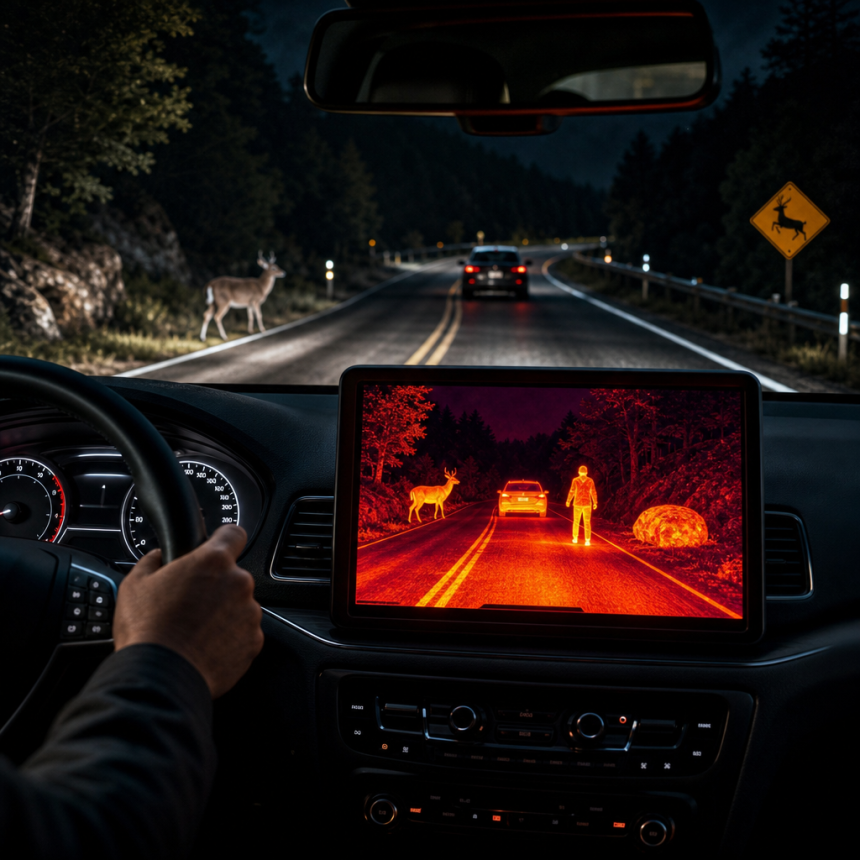
A Thermal Night Vision Camera For Cars is becoming one of the most valuable technologies for drivers who want better visibility, safer reaction time, and greater confidence after dark. Unlike standard headlights or regular dash cameras, this system detects heat signatures rather than relying only on visible light. That means it can reveal pedestrians, animals, vehicles, and other hazards long before they become obvious to the human eye. For drivers who frequently travel at night, on poorly lit roads, or in challenging weather, this technology can make a real difference in preventing accidents.
- What Is a Thermal Night Vision Camera For Cars?
- How It Works in Real Driving Conditions
- Why Thermal Night Vision Camera For Cars Improves Safety
- Key Features to Look For
- Detection Range
- Image Clarity and Resolution
- Display Integration
- Automatic Alerts
- Weather Resistance
- Night and Day Functionality
- Who Benefits Most from This Technology?
- Thermal Night Vision vs. Standard Headlights
- Installation and Maintenance Considerations
- When Thermal Imaging Makes the Biggest Difference
- Is It Worth the Investment?
- Final Thoughts
Because night driving often creates hidden risks, the right camera can add a meaningful safety layer. In practical terms, a Thermal Night Vision Camera For Cars helps you notice threats sooner, react more calmly, and maintain better awareness when conditions change quickly. For many motorists, that extra time is the difference between a close call and a collision.
Table of Contents
- What Is a Thermal Night Vision Camera For Cars?
- How It Works in Real Driving Conditions
- Why Thermal Night Vision Camera For Cars Improves Safety
- Key Features to Look For
- Who Benefits Most from This Technology?
- Thermal Night Vision vs. Standard Headlights
- Installation and Maintenance Considerations
- When Thermal Imaging Makes the Biggest Difference
- Is It Worth the Investment?
- Final Thoughts
What Is a Thermal Night Vision Camera For Cars?
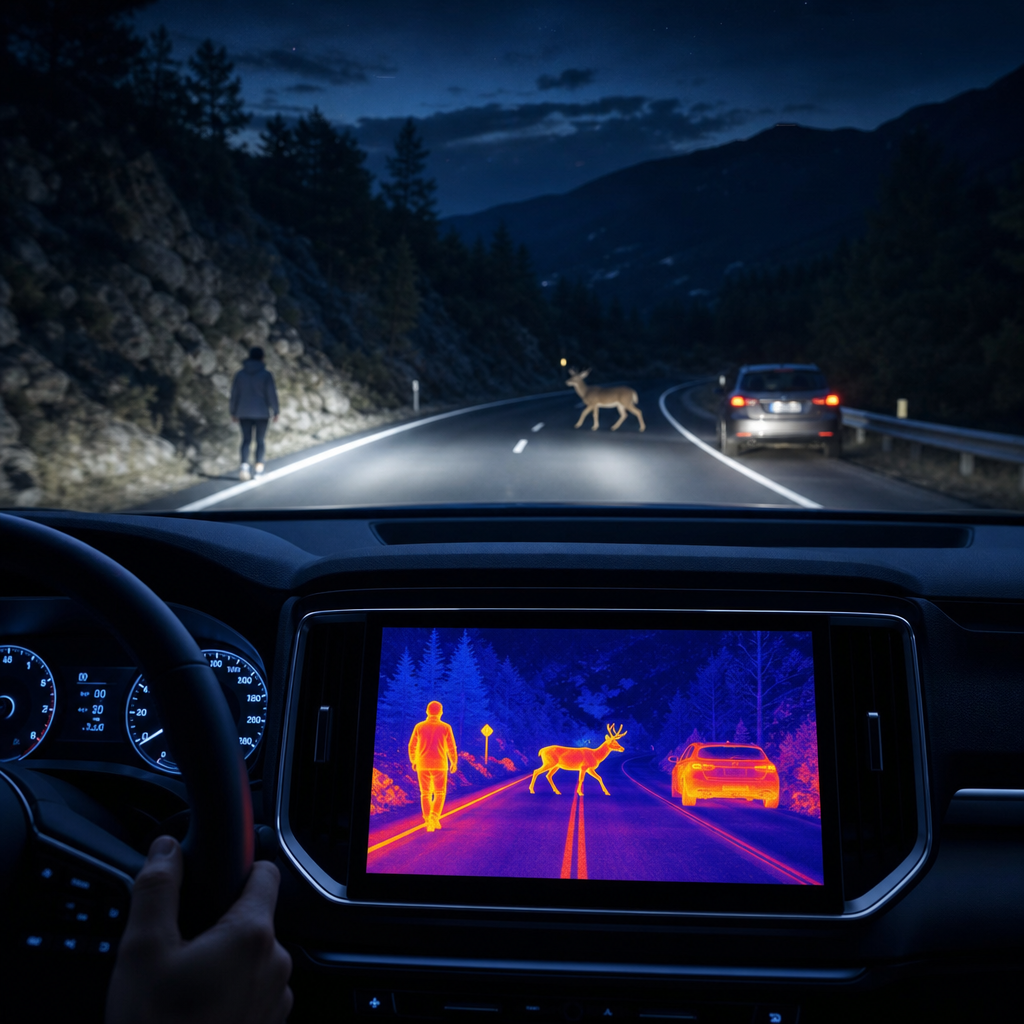
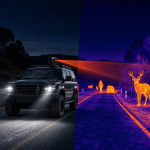
A thermal night vision camera for cars uses infrared sensing to capture temperature differences in the environment. Instead of producing a normal color image, it creates a heat-based view that highlights warmer objects against cooler backgrounds. People, animals, and running engines often appear more clearly because they generate more heat than the road or surrounding scenery.
This is especially useful in darkness, fog, light rain, smoke, or glare conditions where traditional headlights and regular cameras may struggle. Because the system does not depend on visible light alone, it can continue to detect hazards in situations where the driver’s natural vision is limited.
In other words, the camera does not replace your eyes. Instead, it extends what you can perceive. That is why a Thermal Night Vision Camera For Cars is often described as a warning tool first and a visibility tool second.
Many drivers first explore thermal systems after learning how a Thermal Night Vision Camera For Cars can reveal hazards that blend into the road surface. That advantage matters most when small changes in visibility can affect safety.
How It Works in Real Driving Conditions
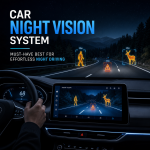
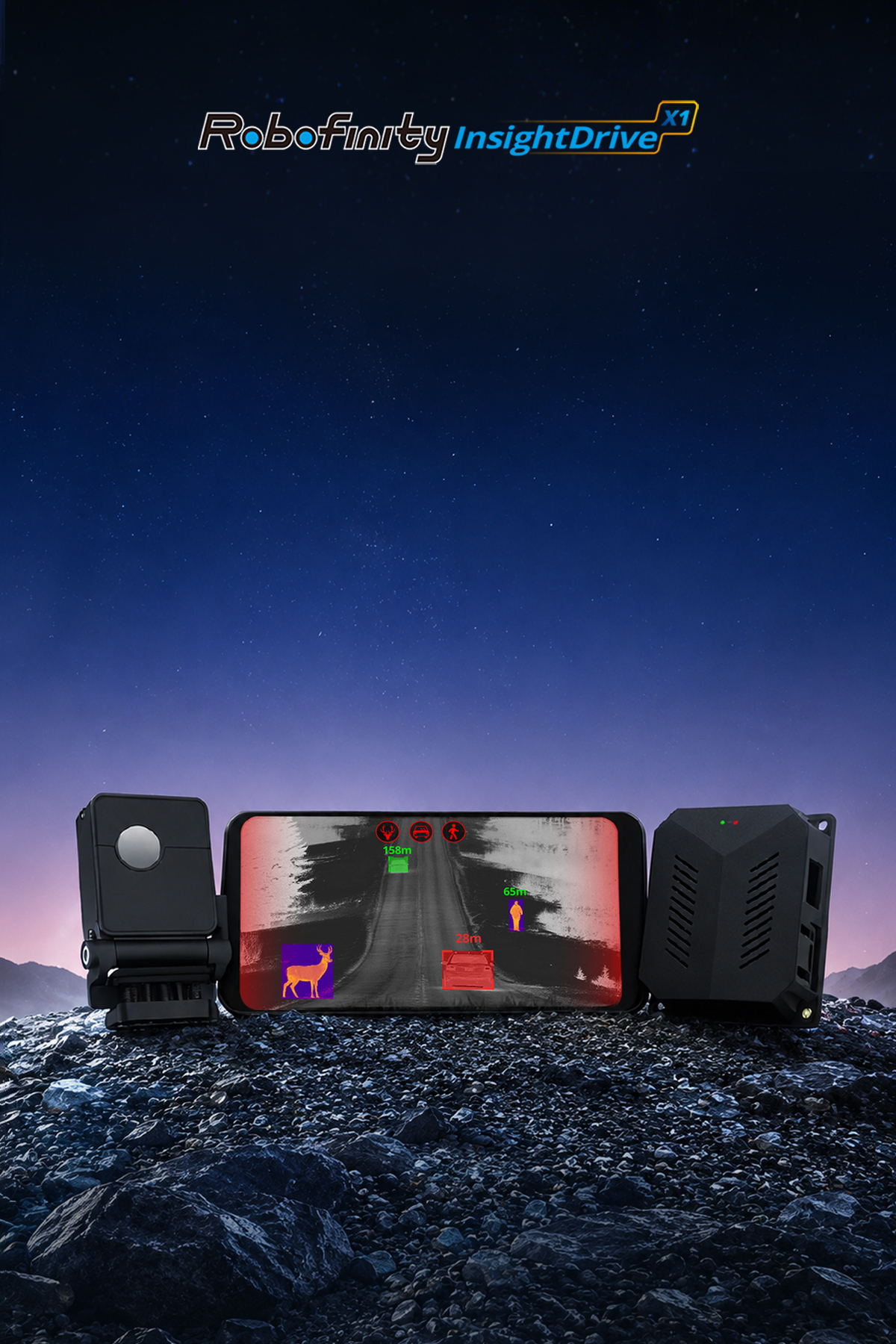
A thermal camera scans the road ahead and converts heat patterns into a visual display. The driver can view this on an in-car screen or integrated dashboard display. Many systems use software to enhance contrast and outline important objects, making it easier to identify movement and potential threats.
For example, if a deer is standing near the roadside on a dark rural highway, a regular camera may not capture it clearly until the headlights illuminate it. A thermal system can detect the animal much earlier because of its body heat. The same applies to pedestrians wearing dark clothing, cyclists, or stopped vehicles in low-light conditions.
This early detection gives drivers more time to slow down, change lanes, or prepare to stop. Even a few extra seconds can significantly reduce the chance of a collision. When a Thermal Night Vision Camera For Cars is paired with careful driving habits, the result is a more informed and controlled response.
According to the National Highway Traffic Safety Administration, improved awareness and hazard recognition are important parts of reducing roadway crashes, especially in low-visibility situations.
In real traffic, a Thermal Night Vision Camera For Cars can help the driver spot movement at the edge of the scene before headlights reach it. That added margin can change how you brake, steer, or prepare for a sudden hazard.
Why Thermal Night Vision Camera For Cars Improves Safety
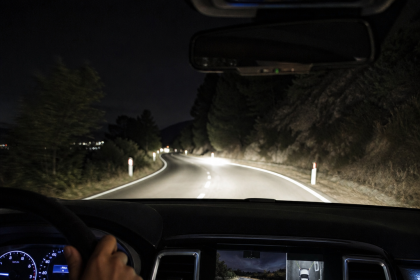
Night driving presents several risks. Visibility is reduced, reaction times are slower, and the likelihood of encountering unexpected obstacles is higher. Thermal imaging helps address these problems by extending what the driver can see beyond standard headlight range.
Here are some of the key safety benefits:
- Earlier hazard detection: Heat signatures can reveal people or animals before they become visible to the naked eye.
- Better visibility in poor weather: Fog, smoke, and light precipitation can make headlights less effective, but thermal sensing often remains useful.
- Reduced glare issues: Oncoming headlights, reflective signs, and streetlights can create visual distraction; thermal imaging is less affected by glare.
- Improved awareness on dark roads: Rural highways, unlit streets, and parking areas become easier to navigate.
- Support for faster decision-making: Drivers can respond sooner to sudden movements or road obstructions.
These advantages make the technology especially important for families, commuters, rideshare drivers, long-distance travelers, and anyone who regularly drives in low-light conditions.
In practice, a Thermal Night Vision Camera For Cars works best as a warning system. It helps you notice danger sooner, but it does not replace attentive driving. You still need to scan mirrors, watch the road, and keep a safe speed.
Another important benefit is consistency. Headlights can help only when an object sits inside the beam. A thermal camera can still highlight warmth at the edge of the scene. That broader awareness can be especially helpful on curves, hills, and roads with sudden changes in terrain.
For many families, a Thermal Night Vision Camera For Cars adds peace of mind because it supports safer decisions without changing driving habits. The tool is most effective when it works alongside alertness and steady judgment.
Key Features to Look For
Not all systems are the same. When choosing a thermal night vision camera for cars, it helps to compare features carefully to ensure the system fits your driving needs.
Detection Range
A longer detection range gives you more time to react. Some cameras are designed to identify heat signatures at hundreds of feet ahead, which is useful for highway driving. If you often drive in rural areas, range should be a top priority.
Image Clarity and Resolution
Higher-resolution thermal cameras provide clearer outlines and better object differentiation. This can help you identify whether a heat source is a person, animal, or vehicle.
Display Integration
Some systems connect to the infotainment display, while others come with a separate screen. A good display should be easy to view without distracting the driver. Ideally, the layout should be simple enough to read at a glance.
Automatic Alerts
Advanced systems may offer visual or audible warnings when they detect an object in the vehicle’s path. These alerts can enhance safety by grabbing the driver’s attention quickly.
Weather Resistance
Since the camera is mounted on the vehicle exterior, it should be built to handle rain, dust, temperature changes, and road debris.
Night and Day Functionality
Although thermal cameras are especially useful at night, some can also support day driving by helping detect heat-emitting objects in difficult visibility conditions.
If you are comparing options, this guide on choosing a thermal imaging camera for car systems can help you understand the main trade-offs before you buy.
It also helps to think about mounting position, wiring quality, and screen visibility. A well-placed camera with a clear forward angle will usually perform better than a more expensive unit installed poorly. That is why setup matters almost as much as the hardware itself.
When buyers compare features carefully, a Thermal Night Vision Camera For Cars often stands out for its ability to combine range, clarity, and faster recognition in one system. Those three details matter most when safety is the priority.
Who Benefits Most from This Technology?
Thermal imaging is useful for nearly every driver, but some groups benefit more than others.
Night commuters often drive home after sunset and face reduced visibility on busy roads.
Rural drivers may encounter wildlife or unlit hazards more often than city drivers.
Professional drivers such as delivery drivers, taxi drivers, and truck operators spend long hours on the road and need every possible safety advantage.
Parents and family drivers gain added peace of mind when traveling with children.
Older drivers may appreciate the extra visual support that helps compensate for reduced night vision.
In many cases, this technology acts as a useful safety layer rather than a replacement for careful driving. It works best when combined with alertness, proper vehicle maintenance, and responsible speed management.
Drivers who want a broader safety upgrade may also benefit from nighttime driving safety advice that combines lighting, attention, and early hazard detection.
For fleet operators, the value can be even more practical. A Thermal Night Vision Camera For Cars or trucks can reduce downtime, lower the risk of costly incidents, and make night routes less stressful for drivers who spend many hours on the road.
That same benefit can matter in family vehicles too. A Thermal Night Vision Camera For Cars can help parents feel more confident on long trips, especially when routes include dark highways or unfamiliar roads.
Thermal Night Vision vs. Standard Headlights
Standard headlights are still essential, but they have clear limitations. They illuminate only a certain distance ahead and can be affected by weather, road curvature, and obstacles. Bright lights can also cause reflections that reduce visibility.
A thermal night vision camera for cars complements headlights by detecting what light alone cannot reveal. For example, a dark object in the road may blend into the pavement, but its body heat or engine heat may make it stand out on the thermal display. This extra layer of awareness can help prevent avoidable collisions.
The difference matters most when the unexpected happens. A car stopped on the shoulder, a person crossing outside a crosswalk, or an animal stepping into the road can all appear late in normal low-light driving. A thermal camera gives the driver a better chance to notice the scene early.
For a deeper comparison between thermal and infrared options, this article on a best night vision camera for car setup explains what matters most for safer driving after dark.
In the same way, a Thermal Night Vision Camera For Cars works best when it supports the driver instead of replacing basic road awareness. It adds information, but it does not remove the need for safe speed and constant attention.
Installation and Maintenance Considerations
Most thermal systems require professional installation for the best results, especially if they are intended to integrate with the vehicle’s electronics and display. Proper mounting is important because the camera needs a clear forward view and minimal obstruction.
Maintenance is usually straightforward. The lens should be kept clean, and the system should be checked periodically to ensure it remains properly aligned and functioning. If the camera is exposed to harsh conditions, it is wise to inspect it regularly for dirt, damage, or software issues.
Drivers should also familiarize themselves with how the display works before relying on it in real traffic. Like any safety feature, thermal imaging is most effective when the driver knows how to interpret the information quickly and accurately.
Good installation also matters for related safety systems, such as thermal imaging obstacle detection, because the camera must be positioned to capture threats early.
If the system includes alerts, test them in a safe setting before driving at speed. That way, you will understand how the warnings sound and look when the camera identifies a heat source. Preparation helps the technology support you instead of distracting you.
Once the setup is complete, a Thermal Night Vision Camera For Cars usually needs only simple upkeep. Clean glass, correct alignment, and regular checks will help the system perform as intended.
When Thermal Imaging Makes the Biggest Difference
A Thermal Night Vision Camera For Cars tends to matter most in situations where the road is unpredictable. Rural highways are a common example because animals may move into the lane without warning. Foggy mornings and light rain can also limit what the headlights reveal.
Dark urban streets create another challenge. Parked vehicles, pedestrians in dark clothing, and unlit intersections can all hide danger in plain sight. In those situations, thermal imaging can help you notice warm shapes before you recognize them visually.
Parking lots and side streets deserve attention too. People walking between cars, delivery workers crossing behind vehicles, and cyclists approaching from the edge of the frame may be hard to see with ordinary lighting alone.
Emergency situations are another area where heat-based visibility can help. A vehicle that has stopped unexpectedly, or a hazard near a roadside shoulder, may stand out sooner when the camera detects a temperature contrast. If you want a broader overview of these use cases, explore how thermal imaging can enhance emergency safety.
In all of these settings, a Thermal Night Vision Camera For Cars gives the driver more time to react. That small time advantage can be especially important when traffic, weather, and visibility all work against you.
Is It Worth the Investment?
For many drivers, the answer is yes. A thermal night vision camera for cars can provide a meaningful safety upgrade, especially if you drive often after dark or in areas with wildlife, fog, or limited street lighting. While the technology may cost more than standard accessories, the added visibility and reaction time can be invaluable.
Accidents caused by poor nighttime visibility can be expensive, stressful, and dangerous. In that context, the cost of thermal imaging may be justified by the protection it offers to passengers, pedestrians, and the vehicle itself.
That is why many owners see the Thermal Night Vision Camera For Cars as a smart long-term investment rather than a luxury add-on. It offers practical benefits every time the sun goes down, especially when conditions are not ideal.
It is also worth considering how often you drive in high-risk conditions. If your trips are mostly short and well lit, the upgrade may feel optional. However, if you regularly travel on remote roads, commute before sunrise, or drive through changing weather, the value becomes much clearer.
For drivers comparing the option with other safety upgrades, the Thermal Night Vision Camera For Cars often stands out because it helps before a hazard is obvious. That early warning can be more useful than a feature that only reacts after danger is already close.
Final Thoughts
Thermal night vision camera for cars technology is more than a modern convenience. It is a practical driving aid that helps reveal hidden dangers and improves awareness in conditions where the human eye and standard lighting fall short. By detecting heat instead of visible light, it gives drivers a clearer picture of what is ahead and more time to respond safely.
For anyone serious about nighttime road safety, this technology deserves strong consideration. Whether you drive on city streets, rural highways, or unpredictable roads after dark, thermal imaging can help make every trip safer and more controlled.
Used wisely, a Thermal Night Vision Camera For Cars supports better decisions, calmer reactions, and greater confidence behind the wheel. That combination is exactly what many drivers need when the road gets dark, busy, or difficult to read.
To explore the topic further, review the main benefits of thermal imaging as a safety technology for vehicles and emergency awareness.
When you weigh the benefits, a Thermal Night Vision Camera For Cars can be one of the most practical upgrades for safer driving after dark. It helps you see more, decide sooner, and stay more in control.