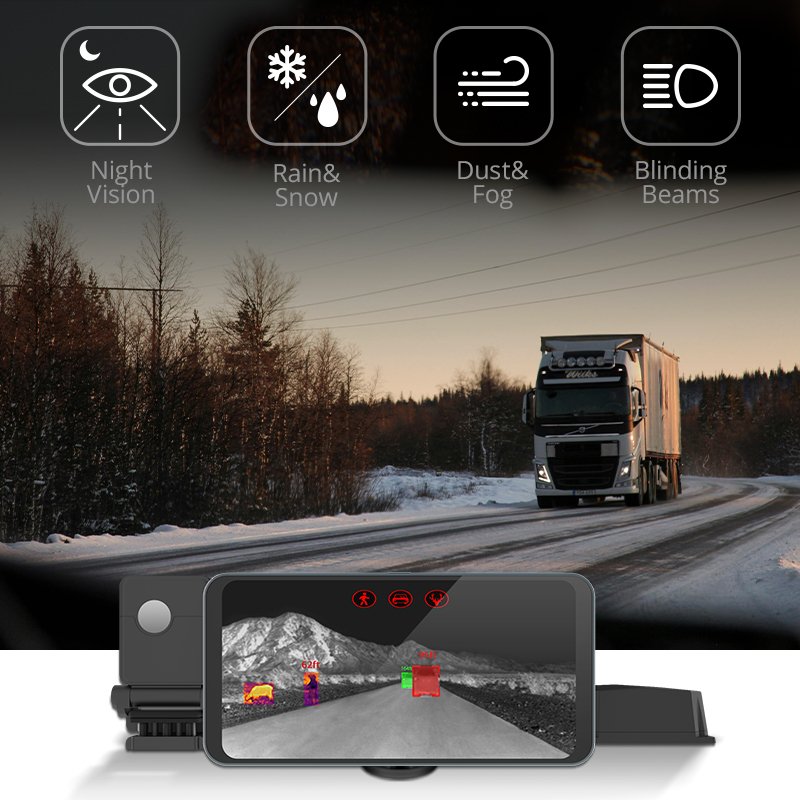
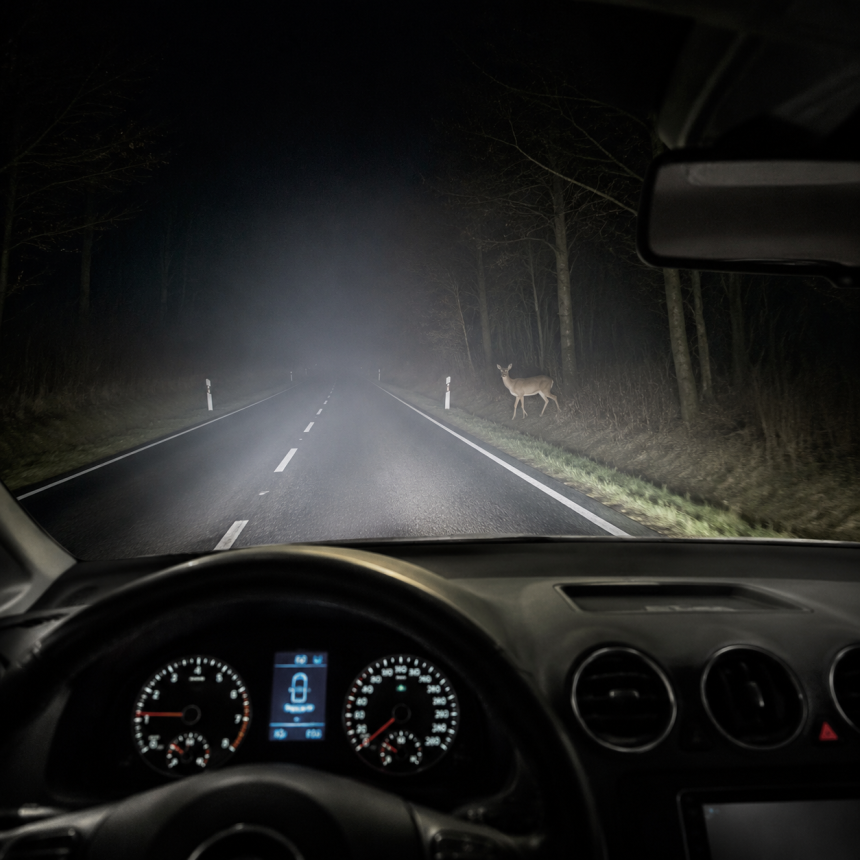
Automotive Thermal Night Vision is a safety upgrade that helps drivers see heat-emitting hazards in darkness and poor visibility. If you commute after dark, drive rural roads, or often face fog, rain, snow, and glare, this guide will help you understand what thermal night vision can realistically do, which features matter most, and how to choose a system that fits your vehicle and driving habits.
- What Automotive Thermal Night Vision Actually Does
- Who Should Consider Buying One
- Key Features To Compare Before You Buy
- Image clarity and detection usefulness
- Detection range
- Object recognition
- Alert behavior
- Screen quality and placement
- Build quality and weather resistance
- Power and installation fit
- Field of view and coverage
- Night driving alerts versus continuous display
- How To Match The System To Your Driving Habits
- For city drivers
- For rural drivers
- For highway drivers
- For families and frequent travelers
- For drivers dealing with glare and storms
- What Limits Thermal Night Vision
- How Thermal Night Vision Compares With Other Safety Upgrades
- Where Robofinity Fits Into The Picture
- What To Avoid When Shopping
- A Simple Buying Checklist
- How To Think About Value
- FAQ
- Is automotive thermal night vision worth it for everyday driving?
- Does thermal night vision replace normal headlights?
- Can thermal systems detect pedestrians and animals?
- Is thermal night vision useful in fog or rain?
- What matters more, range or image clarity?
- Should I buy thermal night vision or a dash cam first?
- Conclusion
Table of Contents
- What Automotive Thermal Night Vision Actually Does
- Who Should Consider Buying One
- Key Features To Compare Before You Buy
- How To Match The System To Your Driving Habits
- What Limits Thermal Night Vision
- How Thermal Night Vision Compares With Other Safety Upgrades
- Where Robofinity Fits Into The Picture
- What To Avoid When Shopping
- A Simple Buying Checklist
- How To Think About Value
- FAQ
- Conclusion
What Automotive Thermal Night Vision Actually Does
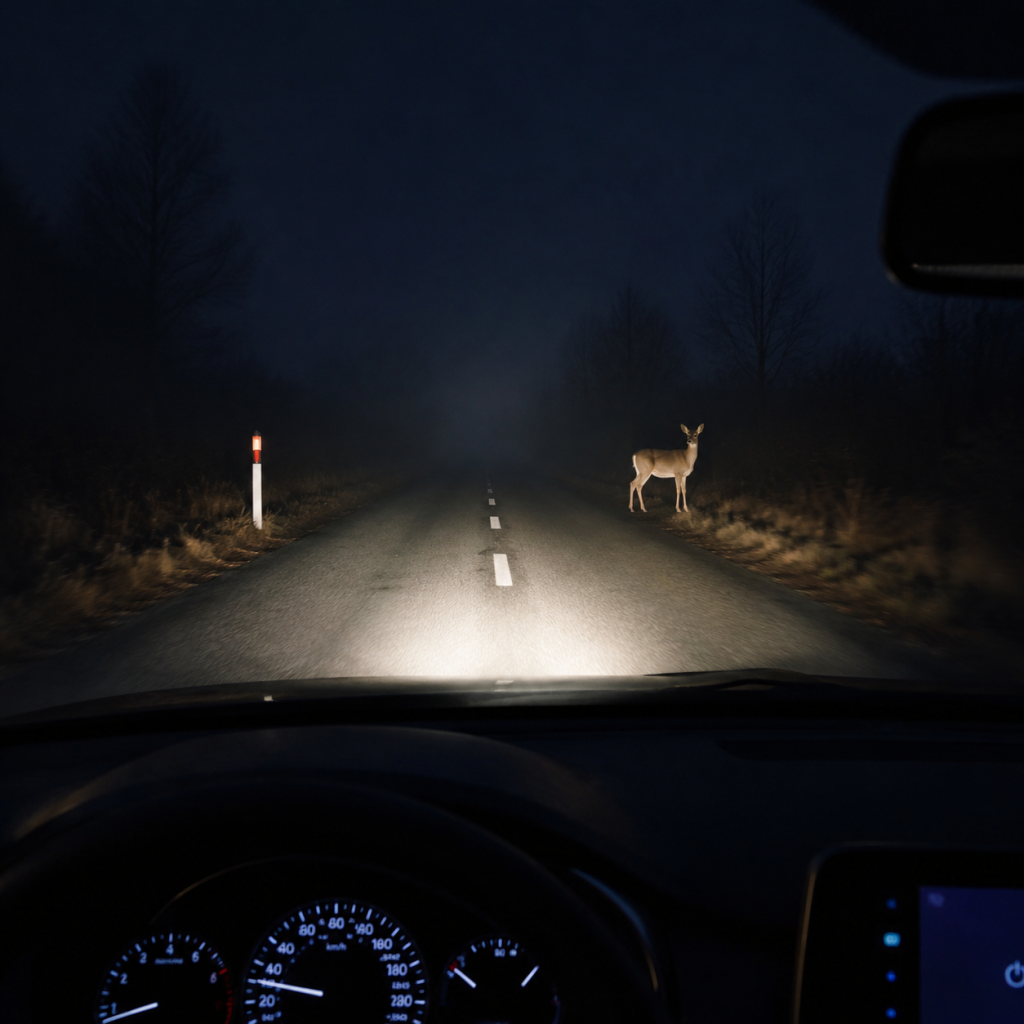
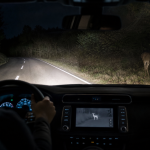
Automotive Thermal Night Vision is designed to make heat-emitting objects more visible in low light and poor visibility. In many setups, you use a forward-facing camera or imaging unit that converts thermal data into a view on an in-cabin screen.
Unlike a standard camera, thermal imaging detects heat signatures. That can help you notice pedestrians, animals, vehicles, or other obstacles that may blend into the dark when you rely only on headlights. The key is to treat automotive thermal night vision as an awareness tool, not a replacement for safe driving habits, mirrors, braking distance, or your own attention.
This technology is often most relevant for night driving, rural routes, mountain roads, long highway trips, fog, rain, snow, and glare-heavy conditions where headlights can only do so much. In the right setting, automotive thermal night vision can give you a more complete picture of the road ahead.
Who Should Consider Buying One
Not every driver needs automotive thermal night vision. The people most likely to benefit are those who regularly travel in conditions where visibility is limited and surprise hazards are more likely.
That includes commuters who drive before sunrise or after dark, long-distance drivers, rural residents, and families who spend time on roads with wildlife crossings. It can also make sense for drivers who want an extra layer of road awareness beyond factory-installed driver-assistance systems.
If you mostly drive in well-lit city areas, spend little time on dark roads, and already have strong lighting and safety features, the value may be lower. In that case, a thermal system may be more of a specialty upgrade than a necessity. For some buyers, automotive thermal night vision is the right tool only for occasional use rather than daily dependence.
Key Features To Compare Before You Buy
The most important buying decision is not simply whether the unit is thermal. It is whether the system fits your driving habits, your vehicle, and your expectations for real-world performance.
Image clarity and detection usefulness
Thermal systems vary in how clearly they render heat signatures. The practical question is whether the image is readable enough to help you identify what is ahead without straining your attention.
Some systems are better at outlining people and larger vehicles, while others are better at showing heat contrast more broadly. A clearer display is helpful, but the real value is whether it gives you enough time to react to a hazard in a normal driving scenario. Automotive thermal night vision should feel intuitive quickly, not like a display you have to study.
When comparing products, look for descriptions that explain how the image looks during motion and in changing light conditions. A strong spec sheet matters, but usability is about whether the screen helps you make decisions while you are driving.
Detection range
Range matters because it affects how early you may notice a hazard. A longer range can be useful on highways and rural roads where speeds are higher and stopping distance is greater.
For example, a system designed with up to 200 meters (656 feet) of detection range may be more useful for drivers who regularly travel fast or far from street lighting. But range alone is not the full story. Even strong automotive thermal night vision range is only useful if the image remains readable and the alerts are timely.
Object recognition
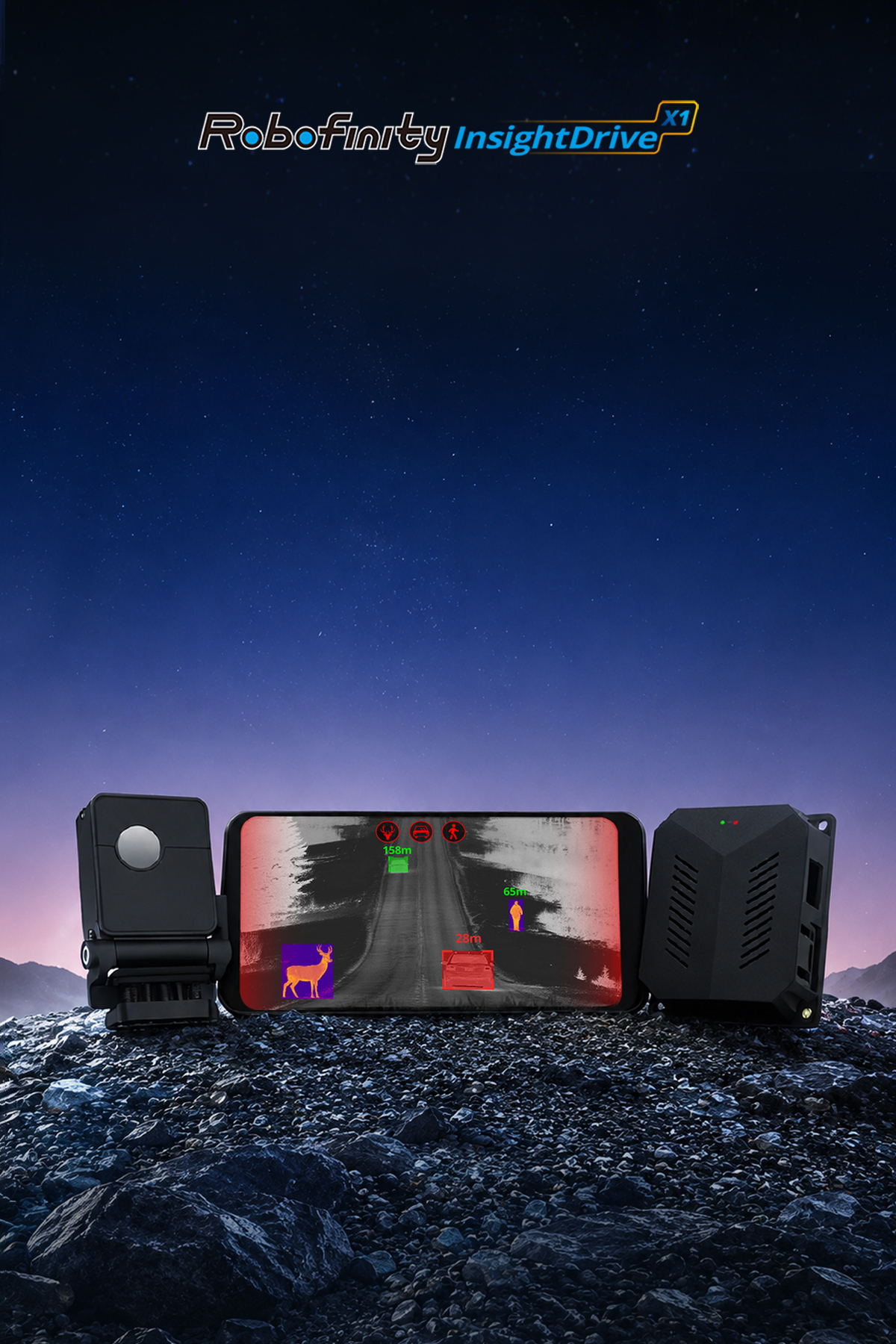
Some systems are just thermal displays, while others also classify what they detect. Pedestrian recognition, animal recognition, and vehicle recognition can make automotive thermal night vision more useful because they reduce the chance that you misinterpret what you’re seeing.
This matters most in mixed driving conditions. On a dark country road, for instance, a heat source could be a person, a deer, or a parked vehicle. Recognition features can help you interpret what you are seeing faster and with less uncertainty.
If animal detection is a priority, also consider whether the system distinguishes animals at different distances and whether it provides alerts that feel actionable rather than vague.
For a deeper look at how heat-sensing imagery helps at night, see Thermal cameras detect animals: Can at Night? How Heat-Sensing Imaging Helps.
Alert behavior
A good system should assist without becoming distracting. Real-time alerts are useful if they provide meaningful notice before a hazard becomes urgent, but too many alerts can reduce trust in the system.
When comparing products, think about whether alerts seem practical for normal driving. You want support, not a constant stream of unnecessary warnings. In practice, automotive thermal night vision works best when it stays quiet until there is something worth your attention.
Screen quality and placement
The display matters more than many buyers expect. A screen that is too small, too dim, or awkwardly placed can limit the value of the entire system.
You want to be able to glance at it naturally without taking too much attention away from the road. Screen size, brightness, resolution, and mounting position all affect usability. For automotive thermal night vision, a better display is one that is easy to interpret at a glance rather than one that merely looks impressive on a product listing.
Build quality and weather resistance
If the camera is mounted outside the vehicle, protection matters. Look for weather resistance that fits real-world use in rain, snow, road spray, dust, and temperature swings.
Durability is especially important if you drive year-round or live in a region with harsh winters. A system that works well in ideal conditions but struggles in bad weather is not much help when you need it most. That is especially true for automotive thermal night vision, where outdoor mounting and constant exposure are part of normal use.
Power and installation fit
A practical buying guide should include installation, not just imaging performance. Some thermal units are easier to add to a vehicle than others, and power requirements may affect compatibility.
If a unit uses a simple 12V power supply, that can simplify installation for many drivers. Still, the layout of your dashboard, screen mounting options, and camera placement will affect how well the automotive thermal night vision system integrates into daily use.
Field of view and coverage
Detection range is only part of the story. Field of view affects how much of the roadway the system can monitor at once. A wider coverage angle can help you notice hazards coming into the lane, while a narrower view may require more careful interpretation when objects enter from the sides.
When comparing options, consider whether the coverage matches your typical driving. If you often drive on winding rural roads, you may prefer coverage that captures more of the forward scene. If your main concern is quick detection of hazards close to your lane center, coverage requirements may differ.
Night driving alerts versus continuous display
Some systems emphasize a continuous view, while others rely more heavily on alerts. If you already have strong lighting and driver-assistance features, you may prefer an approach that minimizes on-screen interruptions. If you often drive with fewer supports, a clearer continuous view and customizable alert intensity can be more helpful.
How To Match The System To Your Driving Habits
The right choice depends less on the brand name and more on your normal driving environment.
For city drivers
If you mainly drive in lit urban areas, you may value visibility support only occasionally. In that case, automotive thermal night vision may be more of a specialized tool for late-night trips, odd routes, or bad weather rather than a core daily feature.
For rural drivers
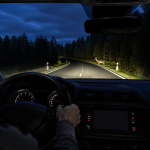
Rural roads create a different risk profile. Lower lighting, higher speeds, and wildlife crossings make thermal detection more relevant. Drivers in these areas often benefit the most from added awareness, and automotive thermal night vision can be especially useful where headlights do not reveal hazards early enough.
For highway drivers
On highways, the value comes from earlier notice of stopped vehicles, debris, or people near the roadway. Speed matters here because extra reaction time can be useful when visibility is limited or traffic conditions change unexpectedly.
For families and frequent travelers
If you often drive with children or take long road trips, automotive thermal night vision can be worth considering as part of a broader safety mindset. It is not about replacing factory safety systems; it is about adding another layer of awareness for the conditions where those systems may be less directly helpful.
Drivers comparing options may also want to read Car Night Vision Technology: How It Works and Why It Helps for a broader look at how these systems fit into modern vehicles.
For drivers dealing with glare and storms
Fog, rain, snow, and oncoming glare can make it hard to see what is beyond the headlight beam. Thermal imaging focuses on heat differences rather than reflected light, which can help in scenarios where normal contrast is reduced. However, the system still needs to be paired with safe speed, lane awareness, and proper headlight use.
If your region commonly sees storms, prioritize weather resistance and stable performance. Also plan to clean and inspect the camera location so road grime does not interfere with the image.
What Limits Thermal Night Vision
A good buying decision starts with the limitations.
Thermal imaging does not replace headlights. It does not replace mirrors. It does not eliminate stopping distance. It also does not make a driver immune to road conditions, traffic, or sudden hazards.
It has practical limits, too. Thermal systems highlight heat differences, but they are not a magic substitute for visual judgment. Some road objects, weather conditions, and environments can still make interpretation harder, even with strong automotive thermal night vision performance.
That is why the best use case is support, not dependence. A thermal system should help you become more aware, but your driving behavior still has to match the conditions. Treat automotive thermal night vision as one more layer of information, not the only one.
How Thermal Night Vision Compares With Other Safety Upgrades
Many shoppers compare automotive thermal night vision with dash cams, parking cameras, or factory driver-assistance systems. These tools solve different problems.
Dash cams record events. Parking cameras help with low-speed maneuvering. Lane support and emergency braking systems assist in specific driving situations. Thermal night vision is aimed more directly at detecting hazards in darkness and poor visibility.
If your main concern is backing into tight spaces, a parking camera may matter more. If your main concern is spotting pedestrians or animals on unlit roads, thermal imaging is a more relevant category.
A practical buying approach is to ask which problem you are trying to solve before comparing products. If you are also exploring alternatives, you may want to review Thermal Imaging Camera for Car: How to Choose Over Infrared for Night Safety for a deeper comparison of night driving options.
And if you want a quick baseline for how different night-vision approaches compare, you can also review Thermal Infrared Night Vision vs Infrared Night Vision: What’s the Difference?.
Where Robofinity Fits Into The Picture
Drivers who spend time on dark highways, rural routes, or other poor-visibility roads sometimes look at aftermarket driver-assistance upgrades as part of their safety planning. Robofinity InsightDrive is one example of a vehicle thermal imaging night vision system designed to support awareness of pedestrians, animals, vehicles, and obstacles in low-light conditions.
That makes it a relevant reference point for shoppers who want automotive thermal night vision features in a practical, road-focused package. It is the kind of product that helps clarify how thermal imaging may be used outside the factory environment.
As with any system, compare the details that affect daily usability: display readability, alert behavior, mounting approach, weather protection, and how performance holds up in real conditions.
What To Avoid When Shopping
It is easy to get distracted by product pages that focus on buzzwords instead of real usefulness. A careful buyer should avoid a few common mistakes.
Do not assume the longest range automatically means the best system. Do not choose a thermal unit because it sounds advanced if the display is too hard to read. Do not buy automotive thermal night vision expecting it to solve every visibility problem. And do not treat any driver-assistance technology as a replacement for good judgment.
Also be cautious with unsupported claims. If a product page makes broad promises without clear details about how it works in real conditions, that is a sign to slow down. The best automotive thermal night vision products are the ones that explain their strengths and limits plainly.
Misunderstanding “infrared” versus “thermal”
Some marketing can blur terminology. Thermal imaging generally refers to capturing heat signatures, while other infrared-based approaches may rely on reflected or assisted illumination. Before buying, confirm what the system is actually detecting and how that translates to what you will see on the screen during driving.
A Simple Buying Checklist
Before you decide, it helps to review the following questions:
- Will I actually drive in conditions where thermal imaging is useful?
- Can I see the screen clearly without distraction?
- Does the system recognize the types of hazards I care about most?
- Is the camera protected well enough for year-round use?
- Will the installation fit my vehicle and daily routine?
- Do I want automotive thermal night vision as my main upgrade, or as one part of a broader safety plan?
- Does the field of view match my typical road type (city, rural, highway, winding routes)?
If you can answer those questions clearly, your purchase decision is usually on much firmer ground. That process also helps separate genuine automotive thermal night vision value from features that only look impressive on paper.
How To Think About Value
The value of thermal night vision is tied to the kinds of roads you drive, not just the feature list. For a city-only driver, the extra cost may not feel justified. For someone crossing dark rural stretches every night, the value can be much easier to see.
The right way to judge value is to think in terms of risk exposure and driving pattern. If your normal routine includes darkness, glare, poor weather, or wildlife risk, automotive thermal night vision may offer more practical usefulness than many cosmetic upgrades or convenience add-ons.
For general guidance on driving safety in reduced visibility, you can consult the U.S. Federal Highway Administration’s resources on roadway visibility and driving safety.
In other words, automotive thermal night vision is most valuable when the road environment creates repeated visibility problems, not just occasional inconvenience.
FAQ
Is automotive thermal night vision worth it for everyday driving?
It can be, but mainly for drivers who regularly face darkness, rural roads, glare, or poor visibility. For mostly urban driving, the value may be more limited.
Does thermal night vision replace normal headlights?
No. It supports awareness, but it does not replace headlights, mirrors, braking distance, or driver attention.
Can thermal systems detect pedestrians and animals?
Some systems can. Recognition features vary by product, so it is important to check whether pedestrian, animal, or vehicle recognition is included.
Is thermal night vision useful in fog or rain?
It can be helpful in poor visibility, but performance still depends on the system and the conditions. It should be treated as an aid, not a guarantee.
What matters more, range or image clarity?
Both matter, but clarity and usability often matter more in real driving. A long-range automotive thermal night vision system is less useful if the display is difficult to interpret quickly.
Should I buy thermal night vision or a dash cam first?
They serve different purposes. A dash cam records events, while thermal night vision helps with forward awareness in low-light conditions. The better choice depends on your main concern.
Conclusion
Automotive Thermal Night Vision is less about chasing advanced tech and more about matching a tool to the roads you actually drive. If your routine includes night travel, rural roads, or poor-visibility conditions, the right system can add useful awareness. If you drive mostly in well-lit areas, the benefit may be smaller.
Focus on image clarity, recognition features, detection range, display usability, weather resistance, and installation fit. Just remember: thermal imaging is an aid, not a substitute for careful driving. A well-chosen automotive thermal night vision system should fit into your safety routine and support it, not replace it.