- Table of Contents
- Electric Cars Long-Distance Driving: The Short Answer
- What Determines an EV’s Long-Distance Ability?
- What an Electric Road Trip Is Actually Like
- How Weather Changes EV Road-Trip Range
- Speed, Terrain, and Load Matter More Than Many Buyers Expect
- Can an EV Tow Over Long Distances?
- Long-Distance Costs: Charging Is Not Always Cheap
- A Practical EV Road-Trip Planning Method
- Start With the Difficult Leg
- Build in Backup Options
- Coordinate Charging With Real Breaks
- Arrive With Enough Energy to Adapt
- Keep Basic Equipment Ready
- Night Driving and Poor Visibility on Long Trips
- When an EV Is a Strong Long-Distance Choice
- When Another Powertrain May Be More Convenient
- How to Choose an EV for Frequent Highway Travel
- Common Long-Distance EV Mistakes
- Treating the Advertised Range as Guaranteed
- Charging Too Full at Every Stop
- Ignoring the Destination
- Depending on One App or Network
- Starting a Demanding Trip Without Testing
- Overlooking Human Needs
- Frequently Asked Questions
- How far can an electric car travel on a long journey?
- How long does charging add to an EV road trip?
- Are electric cars suitable for cross-country travel?
- Is an EV practical for long-distance driving in winter?
- Should I charge an EV to 100% before a road trip?
- Is a hybrid better than an EV for frequent long trips?
- Conclusion
Questions about electric cars long-distance driving usually come down to real-world range, charging speed, and whether the available charging network fits the journey. Modern EVs can handle highway trips, family holidays, and cross-country routes, but they usually require more planning than petrol- or diesel-powered vehicles. Charging stops, winter range loss, towing, and charger reliability can all affect the experience. The practical question is therefore not simply whether an EV can travel far, but whether a particular EV suits your routes, schedule, and driving conditions.
Table of Contents
Electric Cars Long-Distance Driving: The Short Answer
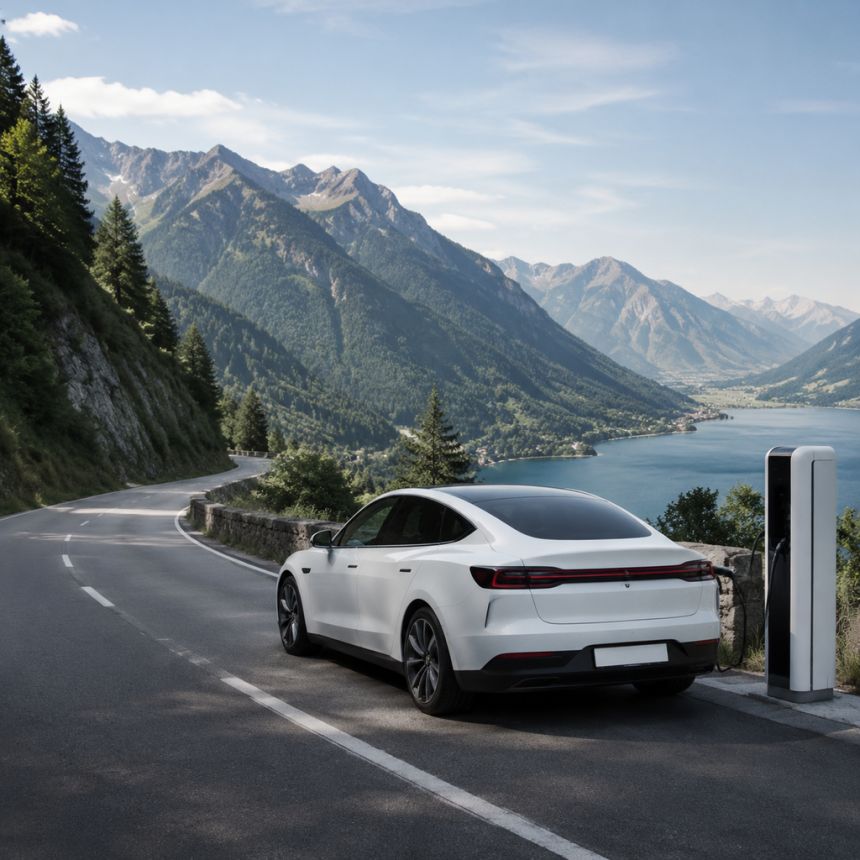
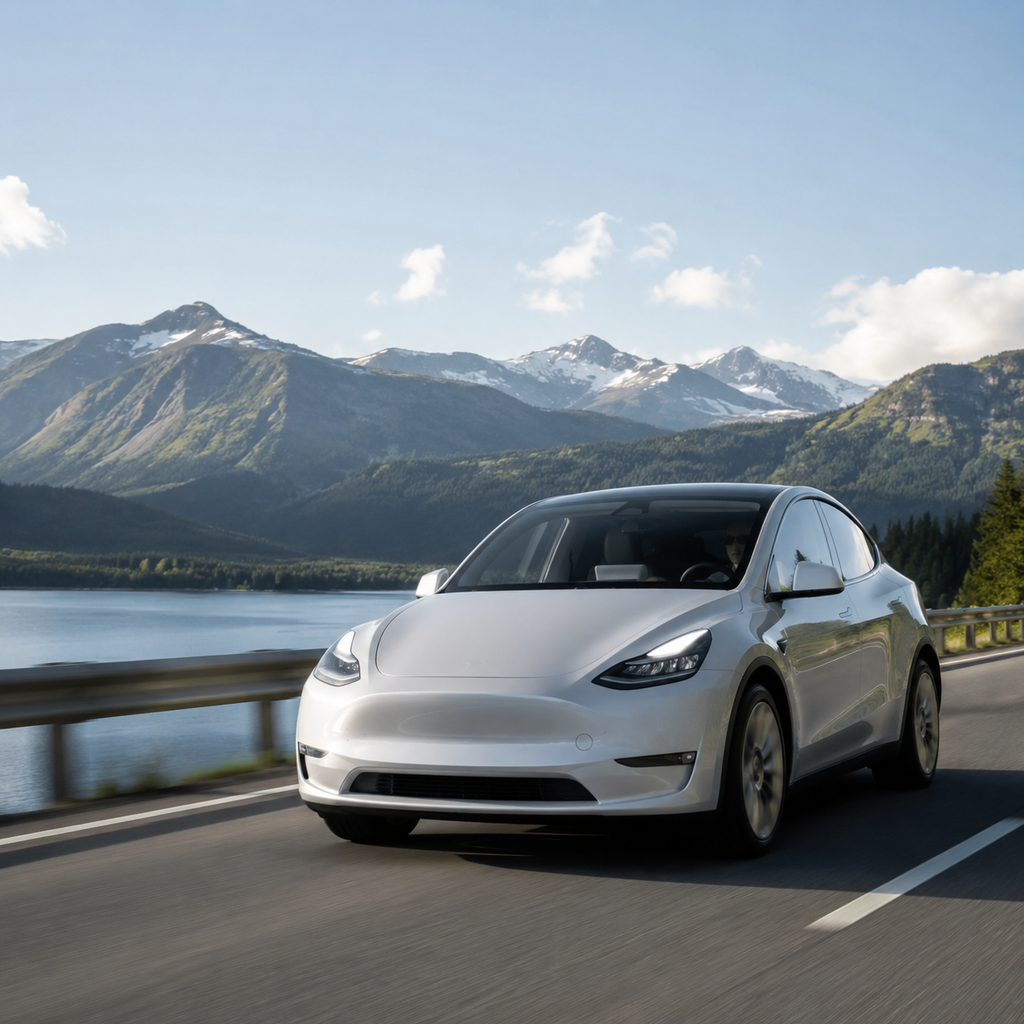
For many drivers, an electric vehicle is a comfortable and capable road-trip car. EVs are generally quiet at speed, smooth in traffic, and easy to drive for extended periods. A well-chosen model can cover substantial motorway or highway distances between stops, while rapid charging allows the trip to continue after a scheduled break. For buyers comparing electric cars long-distance driving capability should include both range and charging time.
However, suitability varies considerably by vehicle and route. Two electric cars with similar advertised ranges may deliver very different long-distance experiences because of differences in highway efficiency, charging performance, battery preconditioning, software, and access to compatible chargers. A sound electric cars long-distance driving comparison therefore considers the complete journey rather than battery capacity alone.
An EV is likely to work well for long journeys when:
- Its realistic highway range comfortably covers the distance between reliable charging locations.
- It can sustain useful rapid-charging speeds rather than reaching a high peak only briefly.
- The route has dependable, compatible chargers near food, restrooms, and other services.
- The driver is willing to coordinate charging with normal rest stops.
- Severe cold, towing, roof loads, or high-speed driving will not reduce the range below the route’s requirements.
Drivers who regularly travel through remote areas, tow heavy trailers, or follow unpredictable schedules may still find a combustion vehicle or suitable hybrid more convenient. Any electric cars long-distance driving decision should reflect the driver’s most demanding regular journey. The right answer depends on the use case, not the powertrain alone.
What Determines an EV’s Long-Distance Ability?
Advertised range is useful for comparing vehicles, but it does not fully describe road-trip performance. A useful electric cars long-distance driving assessment also examines charging performance, route coverage, weather, and vehicle efficiency. Several factors matter in real-world travel.
Realistic Highway Range
Official range figures come from standardized test procedures. These tests help buyers compare models, but their results should not be treated as guaranteed motorway or highway range. Reliable electric cars long-distance driving estimates must account for the conditions expected on the actual route. The U.S. Department of Energy’s electric vehicle guide explains how driving conditions, temperature, and vehicle use can affect efficiency and range.
Sustained high-speed travel consumes more energy because aerodynamic resistance increases significantly with speed. Cold weather, cabin heating, strong winds, steep terrain, heavy loads, and wet roads can further reduce efficiency.
A practical plan should include a reserve rather than assuming the full battery capacity is available for every leg. Conservative electric cars long-distance driving plans leave enough energy to reach an alternative charging site. Most drivers will not want to arrive at a charger with almost no energy remaining, particularly at night, in bad weather, or where alternative charging locations are scarce.
When comparing EVs, look beyond the headline figure and consider:
- Expected range at typical highway speeds
- Winter and cold-weather efficiency
- Wheel and tire configuration
- Heat-pump availability and performance
- Energy use with passengers and luggage
- Range while carrying roof boxes or bicycles
- Towing consumption, when relevant
Larger wheels and performance tires may improve appearance or handling, but they can reduce efficiency. This detail can materially affect electric cars long-distance driving efficiency over repeated highway journeys. A long-range version with smaller wheels may therefore be the more practical touring car.
Charging Speed and Charging Curve
Maximum charging power is only one part of the story. For electric cars long-distance driving performance depends more on sustained charging speed than a brief peak rate. An EV may advertise an impressive peak rate but hold it for only a short period. What matters on a road trip is how quickly the car can add usable range across a normal charging session.
The charging curve describes how charging power changes as the battery fills. Understanding that curve makes electric cars long-distance driving schedules easier to estimate. Many EVs charge fastest at a relatively low state of charge and slow down as the battery approaches full. This is why several shorter charging stops can sometimes be faster than waiting for one near-full charge.
Useful questions for buyers include:
- How long does a typical rapid charge take under suitable conditions?
- Does the car maintain a strong rate across much of the session?
- Can it precondition the battery before reaching a charger?
- Does route planning automatically include charging stops?
- Can it estimate charger availability and arrival battery level?
- Is charging performance consistent in cold weather?
Battery preconditioning can make a substantial practical difference to electric cars long-distance driving in both hot and cold conditions. When the navigation system knows a rapid charger is the destination, some vehicles heat or cool the battery toward an efficient charging temperature. Without preconditioning, a cold battery may charge more slowly.
Charging Network Coverage
A long-range battery cannot compensate for a route with poorly located or unreliable chargers. Successful electric cars long-distance driving requires infrastructure that matches the vehicle and intended route. Charging infrastructure is often dense around major urban corridors but less consistent in rural areas, mountainous regions, or places with limited motorway services.
Coverage also varies across the United States and Europe, making local research important when planning electric cars long-distance driving across unfamiliar regions. Connector compatibility, payment methods, network access, and charging speeds may differ by country, operator, vehicle, and location.
Before departure, check:
- Whether the station supports the vehicle’s connector
- The number of charging stalls
- Recent availability or reliability information, where accessible
- Maximum charging output
- Nearby backup stations
- Access hours and parking restrictions
- Payment or account requirements
- Amenities and personal security after dark
A site with multiple rapid chargers is usually a more resilient stop than an isolated single-unit location. That resilience improves electric cars long-distance driving by reducing dependence on one charger. If one unit is occupied or unavailable, alternatives at the same site reduce delay.
What an Electric Road Trip Is Actually Like
A successful EV journey often follows a different rhythm from a petrol or diesel trip. Adapting to that rhythm is a central part of electric cars long-distance driving. Instead of driving until the battery is nearly empty and then filling completely, the driver may stop more often and charge only enough to reach the next practical location.
For example, a family may stop after two or three hours for restrooms and food. If the car charges while everyone takes a break, the added travel time may be modest. A solo driver who prefers very long, uninterrupted stretches may notice charging delays more. In practice, electric cars long-distance driving works best when charging sessions overlap with breaks that passengers already need.
The electric cars long-distance driving experience also changes from one journey to another. A well-served highway route in mild weather can feel effortless. A winter trip involving headwinds, elevation changes, and sparse infrastructure demands more conservative planning.
Comfort Can Be a Major Advantage
Electric motors deliver power smoothly and without gear changes. The cabin is often quieter because there is no combustion engine, although wind and tire noise remain. Regenerative braking can also reduce the need to move repeatedly between the accelerator and brake in variable traffic.
These characteristics can make electric cars long-distance driving more relaxing over several hours. Buyers should still evaluate conventional touring qualities, including seat comfort, ride quality, cabin noise, cargo space, climate control, and driver-assistance features. An efficient powertrain does not compensate for an uncomfortable seat or poor luggage capacity.
Charging Breaks Can Encourage Better Rest Habits
Planned stops can support regular breaks, which are important on any long journey. In this respect, electric cars long-distance driving can encourage drivers to pause at sensible intervals. Charging should not be treated as a substitute for fatigue management, however. Drivers still need to stop when tired, even if the battery does not require energy.
The best charging locations allow passengers to use the time productively. Restrooms, food, lighting, shelter, and safe pedestrian access can matter as much as the charger’s headline output.
How Weather Changes EV Road-Trip Range
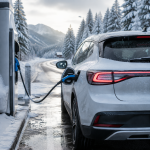
Temperature has a direct effect on electric cars long-distance driving range and charging performance. Cold conditions can reduce battery performance and increase energy use because the vehicle must heat the cabin and battery. Snow, slush, winter tires, and denser cold air can add further consumption.
Hot weather can also influence electric cars long-distance driving efficiency, especially when air conditioning and battery cooling are working hard. The impact may be less noticeable than severe winter loss, but it should still be included in planning.
Practical cold-weather strategies include:
- Preheating the cabin while the vehicle remains connected to external power
- Using seat and steering-wheel heaters where appropriate
- Navigating to rapid chargers so the vehicle can precondition its battery, if supported
- Allowing a larger energy reserve
- Reducing speed when necessary and safe
- Checking tire pressures regularly
- Avoiding unnecessary roof-mounted cargo
Do not rely on a warm-weather journey as proof that electric cars long-distance driving will work identically in winter. Regular long-distance drivers should assess an EV against the most demanding season they expect to encounter.
Speed, Terrain, and Load Matter More Than Many Buyers Expect
Because aerodynamic drag rises rapidly with speed, a small reduction in cruising speed can noticeably improve electric cars long-distance driving efficiency. This does not mean driving unusually slowly; it means recognizing that consistently traveling at the upper end of legal limits may shorten the distance between charging stops.
Elevation also changes the electric cars long-distance driving calculation. Climbing consumes additional energy, while regenerative braking can recover some energy on the descent. It will not normally recover everything used during the climb, so mountainous routes still require planning.
Passengers and luggage add weight, but roof boxes, bicycles, trailers, and other external loads can have an even larger effect because they alter aerodynamics. These loads should be included in any electric cars long-distance driving estimate. Before a holiday trip, estimate range using the car in its actual touring configuration rather than its lightly loaded everyday condition.
Can an EV Tow Over Long Distances?
Many electric vehicles can tow, but towing may substantially increase the energy required for electric cars long-distance driving. Trailer shape, weight, road speed, wind, and terrain all influence the result.
Charging access creates another complication for electric cars long-distance driving with a trailer. Some stations are not designed for a car and trailer to pull through. The driver may need to disconnect the trailer or block several spaces, neither of which is convenient.
Anyone buying an EV for frequent electric cars long-distance driving with a trailer should verify:
- The vehicle’s approved towing capacity
- Realistic towing range with the intended trailer
- Charger spacing on common routes
- Whether charging sites have pull-through bays
- Payload limits after passengers and equipment are included
- How cold weather and hills affect the plan
Occasional local towing and regular cross-country caravan or travel-trailer use are very different ownership cases. Buyers should evaluate the demanding case rather than assuming ordinary range figures apply.
Long-Distance Costs: Charging Is Not Always Cheap
Home charging can make everyday EV use economical, but electric cars long-distance driving often involves a different price structure. Rapid charging may cost considerably more per unit of energy than charging at home. Pricing can be based on energy delivered, connection time, session fees, or membership status, depending on the region and operator.
To compare trip costs responsibly:
- Estimate the vehicle’s highway energy consumption.
- Include weather, speed, cargo, and elevation.
- Check current prices on the charging networks along the route.
- Account for membership fees or idle charges.
- Compare the result with the realistic fuel consumption of an equivalent combustion car.
A realistic electric cars long-distance driving cost comparison should use current rapid-charging prices rather than the household electricity rate alone. Charging to a high level at home before departure can reduce reliance on more expensive public charging. Destination charging at a hotel or rental property can also improve convenience, provided access and compatibility are confirmed in advance.
Purchase price, depreciation, insurance, tire wear, taxes, maintenance, and local incentives all affect total ownership cost. A cheap daily commute does not automatically make every long trip inexpensive.
A Practical EV Road-Trip Planning Method
Good electric cars long-distance driving planning does not require calculating every mile manually. It does require treating the route, vehicle, and conditions as a connected system.
Start With the Difficult Leg
Identify the longest distance between dependable rapid chargers, especially in remote regions. Confirm that the vehicle can cover it with a reasonable reserve under the expected weather and load.
A car that works comfortably on urban motorways may be less suitable for a rural route where chargers are widely spaced. Testing electric cars long-distance driving performance on a familiar highway can help establish realistic energy use before a more demanding trip.
Build in Backup Options
A backup charging option makes electric cars long-distance driving more resilient when equipment is occupied or unavailable. Avoid depending on a single charger where possible. Mark an alternative before reaching the primary stop. A backup is particularly important when traveling late at night, during holidays, or through sparsely populated areas.
Coordinate Charging With Real Breaks
Choose stops that match meals, restrooms, or driver changes. This makes charging part of the trip instead of dead time. A faster charger in an inconvenient or unsafe location is not always the best choice.
Arrive With Enough Energy to Adapt
Running the battery exceptionally low may produce faster charging, but it leaves little flexibility if the charger is occupied or unavailable. The appropriate reserve depends on weather, terrain, traffic, location, and nearby alternatives.
Keep Basic Equipment Ready
Carry the charging cables and adapters appropriate for the vehicle and destination. Pack for delays as you would in any car: water, weather-appropriate clothing, phone charging, and essential medication. In winter, include suitable emergency equipment for the route.
Night Driving and Poor Visibility on Long Trips
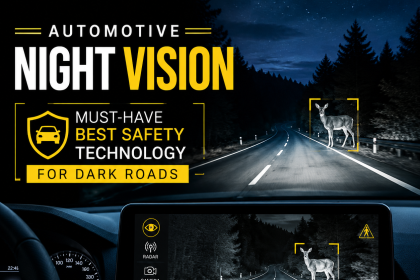
Long journeys often extend into darkness, rain, fog, or poorly lit rural roads, so electric cars long-distance driving plans should account for visibility and fatigue. Headlight glare, pedestrians, animals, and unexpected roadside hazards can make these conditions more demanding. Clean headlights, an unobstructed windscreen, correctly adjusted mirrors, suitable speed, and adequate following distance remain fundamental. This guide to night driving assistance systems explains the technologies, benefits, and limitations drivers may encounter on demanding routes.
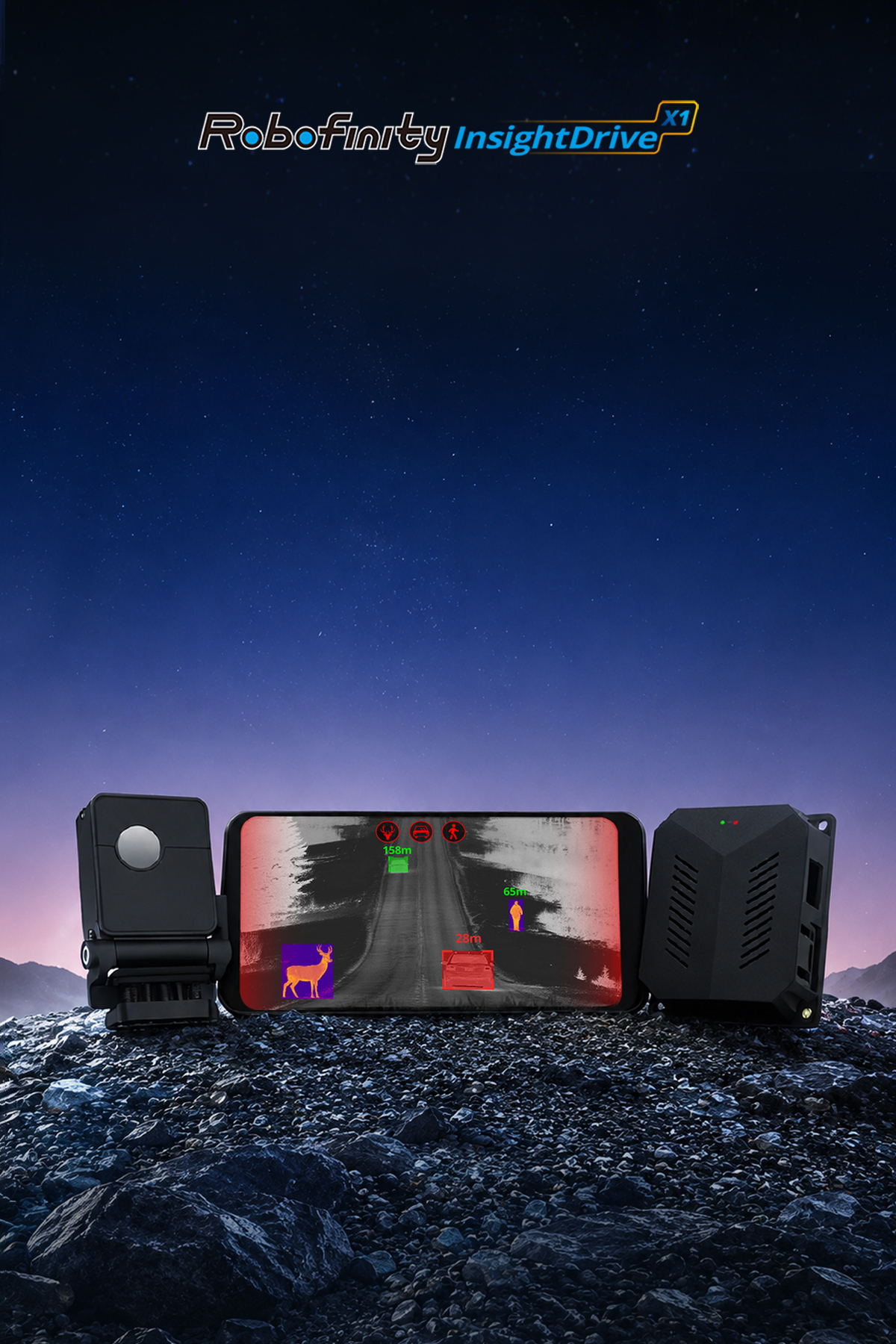
Advanced driver-assistance technology can provide another layer of awareness. As one aftermarket example, Robofinity InsightDrive is a vehicle thermal imaging night vision system designed to support recognition of pedestrians, animals, vehicles, and obstacles in low-light or poor-visibility conditions. Such technology may help the driver notice hazards, but it does not replace headlights, mirrors, braking distance, traffic laws, or attentive driving.
When planning an EV trip, also consider where charging stops occur after dark. Prefer well-lit sites with clear pedestrian routes and open facilities. If fatigue develops, stop and rest rather than trying to reach the next charger simply because the navigation system recommends it.
When an EV Is a Strong Long-Distance Choice
An electric car is particularly suitable for drivers who:
- Mostly use major routes with established rapid-charging coverage
- Can begin trips with a full or substantial home charge
- Naturally stop every few hours
- Travel without frequent heavy towing
- Have flexible meal or rest breaks
- Choose a model with efficient highway performance and capable rapid charging
- Can charge at the destination
This profile includes many commuters who occasionally take long holidays, families traveling between cities, and business drivers using predictable motorway corridors.
When Another Powertrain May Be More Convenient
A combustion vehicle, hybrid, or plug-in hybrid may remain easier for drivers who:
- Regularly cross remote regions with limited charging
- Frequently tow heavy or aerodynamically inefficient trailers
- Need highly unpredictable routing
- Cannot reliably charge at home, work, or destinations
- Operate in extreme cold without dependable infrastructure
- Need very rapid refueling with minimal schedule flexibility
A plug-in hybrid can provide electric driving for shorter daily trips while retaining fuel-based flexibility for long journeys. Its benefits depend on regular charging; without that habit, the driver may carry the weight and complexity of two powertrains without using the electric capability effectively.
How to Choose an EV for Frequent Highway Travel
For a long-distance car buying guide, prioritize practical capability over the largest advertised range or fastest claimed charging peak.
Evaluate these areas:
- Highway efficiency: How much energy does the vehicle use at your typical cruising speed?
- Charging consistency: How long does a realistic charging stop take?
- Battery preconditioning: Can the car prepare the battery automatically?
- Route-planning software: Does it provide credible arrival estimates and charger information?
- Network access: Are compatible chargers available on your regular routes?
- Winter capability: How does the vehicle manage cabin and battery heating?
- Comfort: Are the seats, ride, controls, and cabin noise suitable for several hours?
- Cargo and payload: Can it carry your family and luggage without compromise?
- Destination charging: Can it charge where you normally stay?
- Backup planning: Are alternative charging sites reasonably close?
Where possible, take an extended test drive that includes motorway or highway travel. Check seating comfort, road noise, visibility, control layout, and energy consumption. A brief urban demonstration cannot reveal how the vehicle feels after several hours.
Common Long-Distance EV Mistakes
Treating the Advertised Range as Guaranteed
Official range is a comparison tool, not a promise for every route. Plan around realistic conditions and preserve a sensible reserve.
Charging Too Full at Every Stop
Charging usually slows as the battery fills. Waiting for a very high state of charge may increase journey time when a shorter session would safely reach the next stop.
Ignoring the Destination
The outbound route is only half the plan. Confirm overnight or nearby charging before departure, particularly in rural areas.
Depending on One App or Network
Using multiple sources can provide better visibility into charger locations and status. Have a workable payment method for each likely operator.
Starting a Demanding Trip Without Testing
Before attempting a remote winter journey, learn how the car behaves on a shorter highway route. Understand its navigation, charging process, range estimates, and preconditioning controls.
Overlooking Human Needs
Passengers may need food, restrooms, medication, or rest before the battery needs charging. The safest schedule serves the people in the car, not only the charging algorithm.
Frequently Asked Questions
How far can an electric car travel on a long journey?
The distance depends on the model, battery, speed, weather, terrain, tires, and load. Use realistic highway-range estimates rather than relying only on the official combined figure, and retain a reserve for delays or unavailable chargers.
How long does charging add to an EV road trip?
It varies by vehicle and charger. Cars with strong rapid-charging performance can add substantial usable range during a normal rest stop, while slower-charging models may require longer breaks. Charging typically slows as the battery approaches full.
Are electric cars suitable for cross-country travel?
They can be, especially on routes with dependable rapid-charging infrastructure. Cross-country travel requires more preparation in regions where chargers are widely spaced or where extreme weather may reduce range. A reliable electric cars long-distance driving strategy includes backup chargers and a reserve for unexpected detours.
Is an EV practical for long-distance driving in winter?
Yes, but cold weather can reduce range and slow charging when the battery is not at a suitable temperature. Preconditioning, conservative route planning, correct tire pressure, and larger energy reserves make winter travel more manageable.
Should I charge an EV to 100% before a road trip?
A high departure charge can be useful when the trip begins immediately, subject to the manufacturer’s guidance. During the journey, repeated charging to 100% is often inefficient because charging slows near full. Battery-care recommendations vary by vehicle and battery type.
Is a hybrid better than an EV for frequent long trips?
A hybrid may be more convenient where charging is scarce, towing is common, or schedules are unpredictable. An EV may offer a quieter, smoother experience and convenient charging where infrastructure is strong. The better option depends on regular routes and access to charging.
Conclusion
Electric vehicles are capable long-distance cars, but the quality of the experience depends on more than battery size. Realistic highway range, a useful charging curve, reliable infrastructure, seasonal conditions, and destination charging determine whether a journey feels easy or restrictive.
For buyers considering electric cars long-distance driving should be evaluated against the trips they actually take, including winter travel, rural sections, family luggage, towing, and nighttime stops. Compare suitable vehicles against those demanding scenarios, not just a laboratory range figure. With the right EV and sensible planning, long-distance electric driving can be comfortable and practical. Where charging coverage or operating needs create persistent constraints, a hybrid or combustion vehicle may still be the more functional choice.