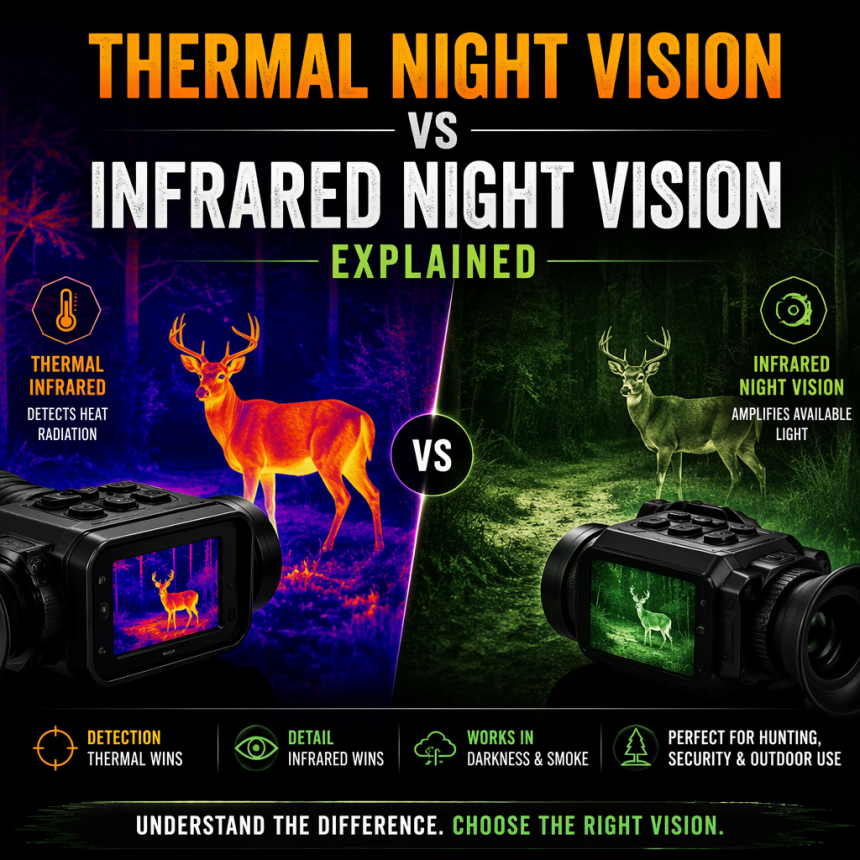
Thermal Infrared Night Vision is a common comparison for drivers who want better visibility after dark. The terms sound similar, and both are often grouped under night-vision technology, but they work in different ways and serve different needs. If you’re trying to understand which system is better for road awareness, nighttime driving, or a vehicle safety upgrade, the distinction matters.
- Understanding the Difference Between Thermal and Infrared Night Vision
- What Thermal Night Vision Does
- What Infrared Night Vision Does
- Thermal vs Infrared Night Vision at a Glance
- How Each System Performs in Real Driving Conditions
- Why Drivers Confuse the Two
- Where Thermal Imaging Fits in Modern Vehicle Safety Technology
- How to Think About Night Vision as a Buyer
- Common Misunderstandings About Thermal and Infrared Systems
- Thermal Infrared Night Vision sees through everything
- Infrared night vision is the same as thermal imaging
- These systems replace headlights
- More expensive always means better
- Practical Examples of the Difference
- FAQ
- Is thermal night vision better than infrared night vision?
- Can infrared night vision work without headlights?
- Does thermal infrared night vision work in fog or rain?
- Is night vision useful for city driving?
- Can these systems replace driver attention?
- Are thermal and infrared systems only for luxury vehicles?
- Conclusion
Table of Contents
- Understanding the Difference Between Thermal and Infrared Night Vision
- What Thermal Night Vision Does
- What Infrared Night Vision Does
- Thermal vs Infrared Night Vision at a Glance
- How Each System Performs in Real Driving Conditions
- Why Drivers Confuse the Two
- Where Thermal Imaging Fits in Modern Vehicle Safety Technology
- How to Think About Night Vision as a Buyer
- Common Misunderstandings About Thermal and Infrared Systems
- Practical Examples of the Difference
- FAQ
- Conclusion
Understanding the Difference Between Thermal and Infrared Night Vision
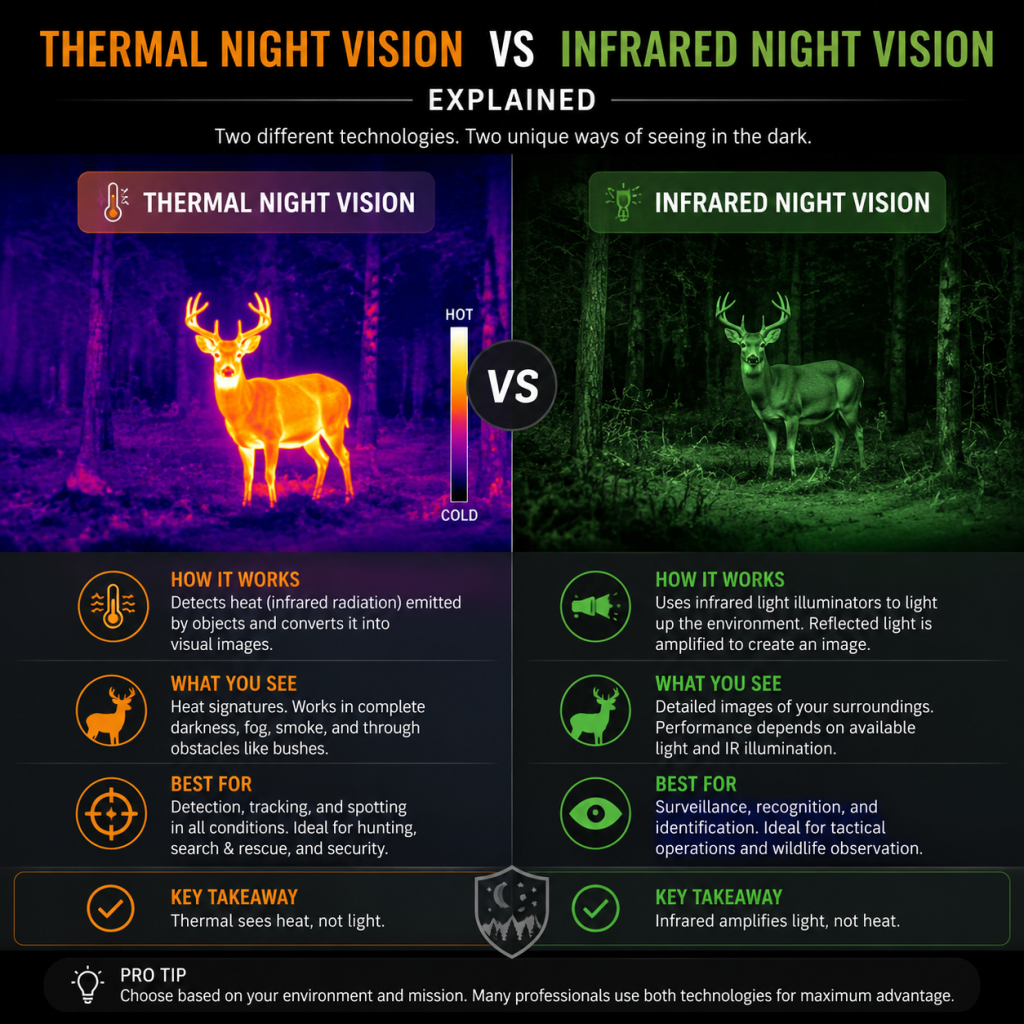
Drivers search for “thermal infrared night vision” because both approaches can improve low-light awareness, but they are not the same. One system detects heat, while the other uses infrared light to illuminate a scene that a camera can capture. That difference affects what each system can see, how far it can see, and how useful it is in fog, rain, glare, or complete darkness.
At a high level, thermal systems detect heat, while infrared systems rely on near-infrared illumination. For drivers comparing vehicle safety technology, that is the core question: not which label sounds more advanced, but which sensing method matches your driving environment. In many cases, thermal infrared night vision is the phrase people use when they want a heat-based system for driving at night.
To understand the broader category of in-vehicle sensing, it also helps to see how thermal tools fit into Automotive Thermal Night Vision System: What Is It?
What Thermal Night Vision Does
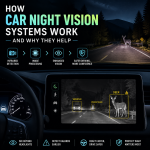
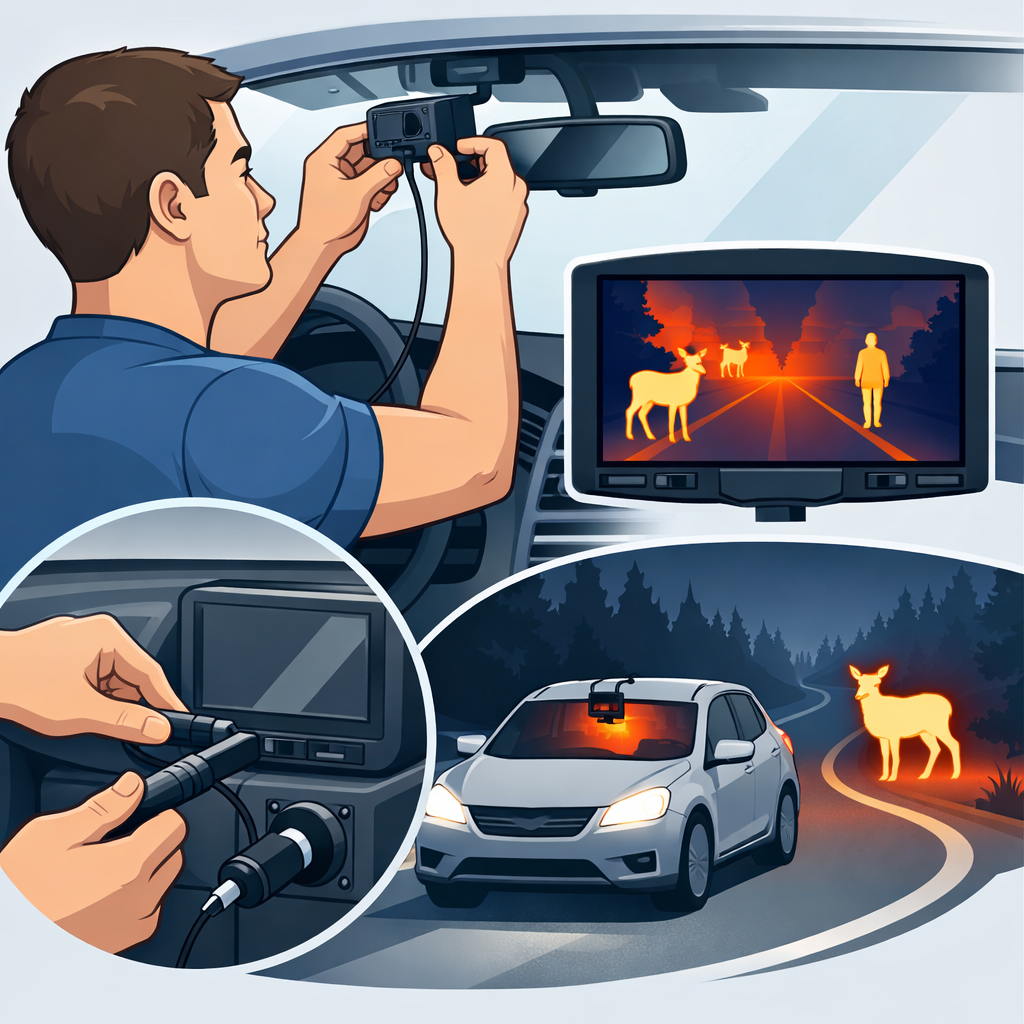
Thermal night vision detects heat energy rather than visible light. Objects that give off heat—people, animals, running engines, and warm road elements—appear as visible thermal contrasts on the display. The system does not need headlights or ambient light in the same way a regular camera does.
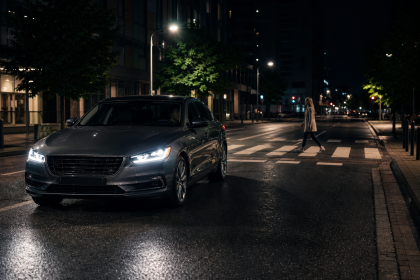
This makes thermal imaging especially useful for low-light driving and poor-visibility conditions. A person walking along the edge of a rural road may be difficult to spot with headlights alone, but thermal infrared night vision can make that heat signature more noticeable. The same idea applies to animals near the roadway or vehicles that are not yet clearly visible to the naked eye.
Thermal systems are often valued for road awareness because they focus on warm objects that stand out from cooler surroundings. That is why they are commonly discussed in conversations about pedestrian detection, animal detection, and nighttime road safety. For a broader overview of how these systems work in vehicles, see Automotive Thermal Night Vision System: What Is It?
Where thermal systems are most useful
Thermal Infrared Night Vision is often most helpful in situations such as:
- Rural roads with little lighting
- Highway driving at night
- Fog, rain, or snow
- Glare-heavy conditions from opposing headlights
- Long stretches of dark roadway where hazards are hard to pick out early
In these settings, thermal detection can help a driver notice something ahead sooner than with regular headlights alone. It is still an assistance tool, though, not a substitute for attentive driving or safe following distance.
What Infrared Night Vision Does
Infrared night vision works differently. Instead of reading heat signatures, it uses infrared light—usually near-infrared—to illuminate the scene. An infrared camera then captures that reflected light and displays an image that can be easier to see in low light.
This approach can be effective in darkness, especially when the system has its own infrared illumination. However, infrared performance depends more on line of sight and the behavior of reflected light. It does not inherently detect heat in the way thermal imaging does.
That means infrared systems can be useful for seeing objects in dark spaces, but they are typically less specialized for identifying living heat sources such as people or animals. They can be helpful for visibility, yet they do not provide the same heat-based contrast that makes thermal systems stand out in many driving scenarios. For a deeper comparison with camera-based options, read Thermal Night Vision Camera for a Car: What It Is and How It Works.
Where infrared systems fit
Infrared night vision is often used when the goal is to brighten or clarify a dark scene rather than detect heat. It can help a driver or camera system see road edges, parked vehicles, or obstacles when illumination is limited.
For some drivers, that is enough. For others—especially those who want better hazard detection on dark rural routes—the thermal approach is often more relevant.
Thermal vs Infrared Night Vision at a Glance
The simplest way to compare the two is to think about what each one is actually sensing.
Thermal Infrared Night Vision senses heat. It helps separate warm objects from cooler backgrounds, which is useful for pedestrian awareness, animal detection, and spotting moving road hazards in poor visibility.
Infrared night vision senses reflected infrared light. It can improve visibility in the dark, but it is more about illumination and image capture than heat-based detection.
That difference leads to practical tradeoffs:
- Thermal imaging is often stronger for detecting living beings and warm objects.
- Infrared systems may provide a more camera-like view of the scene.
- Thermal technology can work without adding visible light.
- Infrared systems may rely on an infrared light source or more favorable lighting conditions.
For drivers, the choice is less about which sounds more advanced and more about which matches the driving environment. In other words, thermal infrared night vision is usually the better fit when heat signatures matter most.
How Each System Performs in Real Driving Conditions
Search intent around this topic usually comes down to a practical question: which system helps more on the road?
The answer depends on what you need to see.
On dark rural roads
Thermal Infrared Night Vision can have a clear advantage in many rural driving situations because animals, pedestrians, and other warm objects can stand out against a dark background. That can be especially useful when road lighting is limited and hazards may appear suddenly near the shoulder.
Infrared night vision can still help by making the scene easier to view, but it may not highlight heat-emitting hazards as distinctly.
On long unlit stretches, many drivers prefer thermal infrared night vision because it can call attention to movement and body heat before headlights fully reveal the hazard.
In fog, rain, or snow
Thermal imaging is often discussed as a poor-visibility driving aid because it can remain useful where visible-light cameras struggle. It does not eliminate the effects of weather, but thermal infrared night vision can provide better contrast than systems that depend on reflected light.
Infrared systems can also face limitations in harsh weather, since moisture and glare can affect image quality.
That is why thermal infrared night vision is frequently associated with safer night travel in uncertain conditions, even though it still has limits.
In urban driving
In cities or well-lit areas, the practical advantage of either system may shrink. Streetlights, traffic, storefronts, and reflective surfaces can already provide enough visual information for most drivers. In that setting, the value of thermal infrared night vision is less dramatic and more situational.
For drivers who mostly commute on bright streets, thermal infrared night vision may be less noticeable day to day than it is on dark roads or highways.
For parked or stopped vehicles ahead
Both technologies can help, but thermal infrared night vision is less about identifying a make or model and more about detecting a heat-emitting object in the roadway. Infrared may provide a clearer image of the object’s shape, while thermal detection may flag it as a hazard sooner if the surface is warm enough to stand out.
That difference matters when the goal is not just visibility, but early hazard recognition.
Why Drivers Confuse the Two
The confusion is understandable. Both systems are marketed as night vision, both are associated with dark-road visibility, and both can appear on advanced safety technology lists. They may even be presented together in product categories or vehicle feature descriptions.
The difference is that infrared night vision usually improves the image of a dark scene, while thermal infrared night vision reveals heat signatures. One is not automatically better in every case, but they are not interchangeable.
If a driver wants a general low-light view, infrared may be enough. If the goal is to help identify pedestrians, animals, and other hazards in poor-visibility conditions, thermal imaging is often the more relevant tool. That is also why the phrase thermal infrared night vision keeps appearing in buyer searches: it signals a stronger focus on detection, not just illumination.
Where Thermal Imaging Fits in Modern Vehicle Safety Technology
Thermal imaging is increasingly discussed as part of a broader driver-assistance technology ecosystem. It does not replace headlights, mirrors, braking skills, or traffic awareness, but it can add another layer of information when visibility drops.
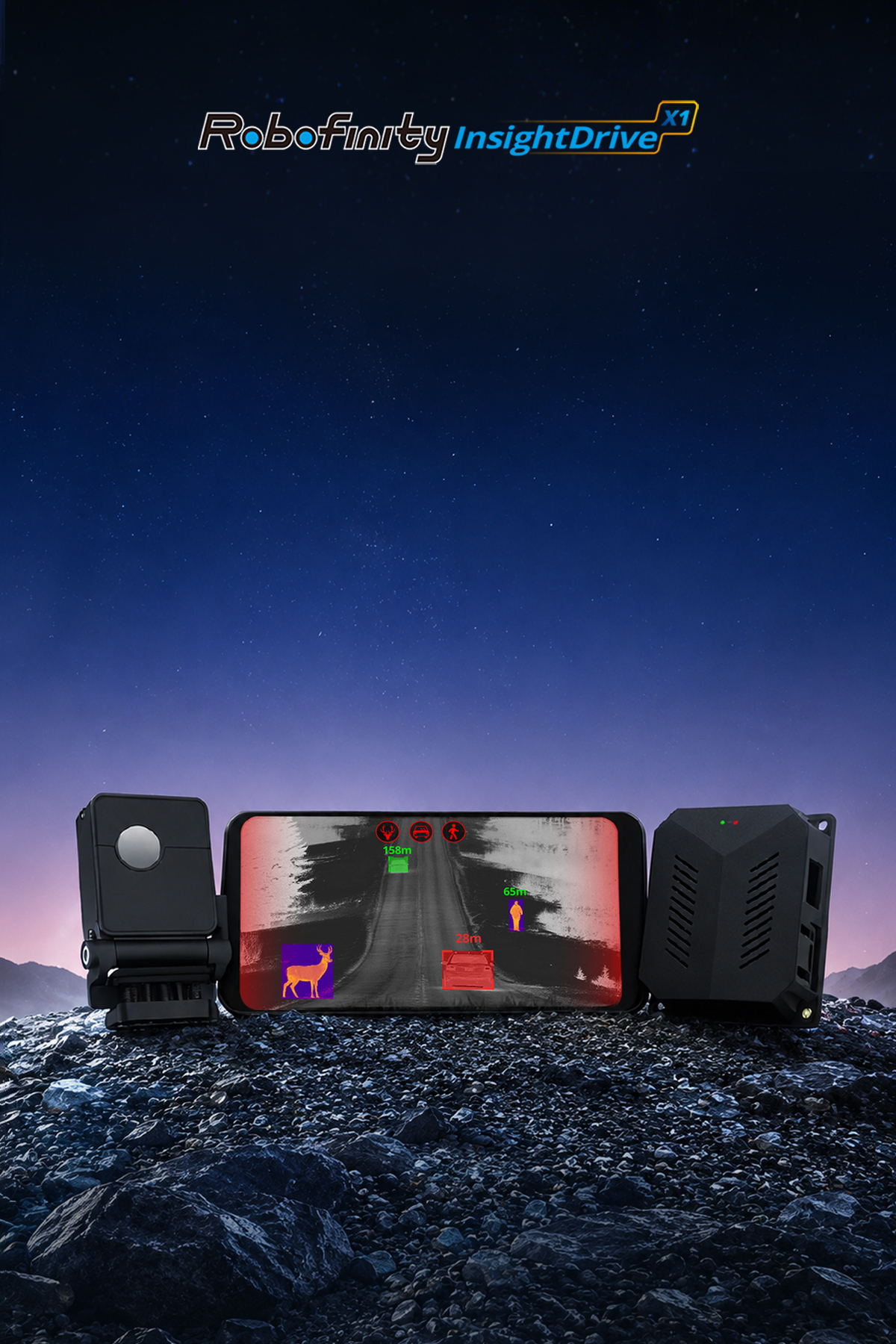
For example, drivers who often travel on rural roads, mountain routes, or dark highways may consider aftermarket safety upgrades that support hazard detection beyond factory lighting. Some thermal infrared night vision solutions are designed to support awareness of pedestrians, animals, vehicles, and obstacles ahead in low-light conditions.
For background on obstacle detection and why early hazard spotting matters, review the research and resources from the National Highway Traffic Safety Administration (NHTSA). That kind of system fits a specific use case. It is not necessary for every driver, but for people who regularly face nighttime road awareness challenges, it can be a practical supplement to ordinary driving habits.
When paired with careful driving, thermal infrared night vision can add another layer of warning time, which is often the real advantage drivers are looking for.
How to Think About Night Vision as a Buyer
If you are evaluating a night vision system for your vehicle, it helps to start with your driving patterns rather than the technology label.
Ask yourself:
- Do I drive at night often?
- Do I use rural roads, highways, or unlit roads?
- Do I want better awareness of pedestrians or animals?
- Am I mainly looking for a clearer image, or for heat-based hazard detection?
- Will this be a factory feature, or an aftermarket upgrade?
Those questions matter more than the marketing terms. A driver who mostly uses bright city streets may not gain much from thermal infrared night vision. A driver who regularly commutes through dark, poorly lit areas may find the added road awareness more meaningful.
It also helps to remember that night vision is an aid, not a substitute for judgment. Safe speed, proper headlights, alert driving, and adequate following distance still matter more than any camera-based system. In the right setting, though, thermal infrared night vision can be a useful extra layer of awareness.
Common Misunderstandings About Thermal and Infrared Systems
There are a few misconceptions that come up often when people compare these technologies.
Thermal Infrared Night Vision sees through everything
It does not. Thermal imaging can help in darkness and some poor-visibility conditions, but it does not see through solid obstacles, and weather can still reduce clarity.
Infrared night vision is the same as thermal imaging
It is not. Infrared night vision uses reflected light. Thermal infrared night vision detects heat. That is the key difference.
These systems replace headlights
They do not. Headlights remain essential for safe driving, and night vision systems are best thought of as supplemental awareness tools.
More expensive always means better
Not necessarily. The right system depends on how and where you drive. A simpler solution may be perfectly adequate for one driver and not enough for another. That is why thermal infrared night vision should be judged by fit, not by price alone.
Practical Examples of the Difference
A few real-world scenarios make the comparison easier to understand.
A driver on a dark country road sees a warm shape near the shoulder before the headlights fully illuminate it. Thermal infrared night vision may make that shape stand out as an animal or person more quickly.
A driver in an unlit parking area wants a clearer view of parked cars and nearby objects. Infrared night vision may improve the visible image enough to make the area easier to navigate.
A commuter on a wet highway faces glare and reduced contrast. Thermal imaging can help identify warm objects ahead better than a standard low-light camera, while infrared may still be affected by lighting and reflection conditions.
These are not guarantees, but they show how thermal and infrared approaches solve different visibility problems. In each case, thermal infrared night vision is most useful when the hazard itself gives off enough heat to stand out.
FAQ
Is thermal night vision better than infrared night vision?
Thermal Infrared Night Vision is often better for detecting people, animals, and warm objects in darkness, while infrared is better for illuminating and capturing a dark scene. The better choice depends on your driving needs.
Can infrared night vision work without headlights?
Some infrared night vision systems can work with their own infrared illumination, but performance depends on the system design. Thermal infrared night vision does not rely on visible light in the same way.
Does thermal infrared night vision work in fog or rain?
It can still be useful in poor-visibility conditions, but weather can affect clarity. It should be viewed as an aid, not a solution that removes the challenge of bad weather.
Is night vision useful for city driving?
It can be, but the benefit is usually smaller in well-lit urban areas. Drivers on dark roads tend to see the most value.
Can these systems replace driver attention?
No. They are support tools. Safe speed, road awareness, and proper driving habits still matter most.
Are thermal and infrared systems only for luxury vehicles?
No. While they may have appeared in higher-end vehicles, aftermarket safety upgrades have made some forms of night vision more accessible to everyday drivers.
Conclusion
Thermal Infrared Night Vision comes down to heat detection versus reflected infrared light. Thermal systems are generally better suited for detecting pedestrians, animals, and other hazards in low-light driving and poor-visibility conditions, while infrared systems focus more on improving the visibility of a dark scene.
For drivers who spend a lot of time on rural roads, highways at night, or in weather that reduces visibility, understanding the difference helps you make a smarter buying decision. The best choice is the one that fits how you drive, supports road awareness, and complements—rather than replaces—attentive driving. If your priority is spotting warm hazards sooner, thermal infrared night vision is usually the more relevant option.