SEO Title: Is a Car Thermal Night Vision System Worth It? A Practical Guide
- What Is a Car Thermal Night Vision System?
- The Short Answer: When Is Thermal Night Vision Worth It?
- How Thermal Imaging Can Improve Nighttime Road Awareness
- Earlier Awareness of Pedestrians
- Animal Detection on Rural Roads
- Additional Context Beyond Headlight Reach
- Support in Some Poor-Visibility Conditions
- Thermal Night Vision Versus Other Vehicle Safety Technologies
- Thermal Imaging Versus Headlights
- Thermal Imaging Versus Visible-Light Night Cameras
- Thermal Imaging Versus Automatic Emergency Braking
- Thermal Imaging Versus Radar
- The Main Benefits in Everyday Use
- Important Limitations Before You Buy
- A Thermal Image Does Not Show Everything Equally Well
- Weather Can Reduce Performance
- Alerts Can Be Imperfect
- The Display Can Become a Distraction
- Installation Quality Affects Usefulness
- A Relevant Aftermarket Example
- Who Is Most Likely to Benefit?
- Rural and Remote-Area Drivers
- Night-Shift Workers and Early Commuters
- Long-Distance and Touring Drivers
- Drivers Concerned About Pedestrians and Cyclists
- Owners of Older Vehicles
- Who May Not Need One?
- How to Evaluate a System Before Purchasing
- Image and Detection Performance
- Alert Design
- Display Placement and Night Brightness
- Camera Protection and Maintenance
- Electrical and Installation Requirements
- Support and Updates
- A Practical Value Test
- Getting the Most From Thermal Night Vision
- Frequently Asked Questions
- Can thermal night vision see through fog or heavy rain?
- Does a thermal camera replace high beams?
- Can car thermal imaging detect deer and other animals?
- Is aftermarket thermal night vision as good as a factory system?
- Will thermal night vision automatically stop the car?
- Is thermal night vision useful during the day?
- Conclusion
Meta Description: Is car thermal night vision system worth it? Learn its benefits, limitations, costs, and value for rural, nighttime, and poor-visibility driving.
Driving at night reduces the visual information available to a driver, especially on unlit roads where pedestrians, wildlife, stopped vehicles, and debris may be difficult to distinguish. That leads many drivers to ask: is car thermal night vision system worth it as an aftermarket safety upgrade? The practical answer is yes for some drivers, particularly those who frequently travel after dark on rural or poorly illuminated roads. For occasional night driving in well-lit areas, however, the cost, installation requirements, and need to monitor another display may outweigh the benefit.
A thermal night vision system can support earlier hazard awareness, but it is not a substitute for effective headlights, appropriate speed, sufficient braking distance, or attentive driving. Its value depends less on novelty and more on where, when, and how often you drive.
What Is a Car Thermal Night Vision System?
A car thermal night vision system uses a thermal camera to detect infrared energy emitted by objects in the camera’s field of view. It translates differences in heat into an image that the driver can see on a dedicated display or, in some factory systems, on an instrument panel or head-up display.
People and many animals are often easier to distinguish in a thermal image because their body heat contrasts with cooler surroundings. Vehicles, recently operated machinery, road surfaces, and other objects can also show thermal contrast, although their appearance varies with temperature and environmental conditions.
This is different from a conventional visible-light camera. A standard camera depends on ambient light, headlights, or infrared illumination to produce a useful image. A thermal imaging system reads heat patterns, so it can remain useful in darkness and certain conditions involving glare or reduced visible contrast.
That distinction is important: thermal imaging does not simply make the road look brighter. It presents a separate kind of information that can reveal warm road users or objects that are difficult to identify with normal vision alone.
The Short Answer: When Is Thermal Night Vision Worth It?
A vehicle thermal imaging system is most likely to justify its cost when several of these conditions apply:
- You regularly drive at night rather than only occasionally.
- Your routes include unlit rural roads, forested areas, or wildlife corridors.
- Pedestrians or cyclists commonly travel along roads with poor lighting.
- You commute before sunrise or return after dark.
- You take long overnight trips where visual fatigue is a concern.
- Your routes have frequent headlight glare or uneven illumination.
- You want an additional awareness tool and will use it without becoming distracted.
It may offer less practical value when most trips occur during daylight or on well-lit urban streets. It is also less compelling if installation would obstruct the driver’s view, if the screen is poorly positioned, or if the driver expects the technology to identify every hazard automatically.
The question is therefore not whether thermal imaging can be useful. It can. The better buying question is whether your driving environment gives you enough opportunities to benefit from it.
How Thermal Imaging Can Improve Nighttime Road Awareness
Earlier Awareness of Pedestrians
A person wearing dark clothing can blend into an unlit background, particularly when standing beyond the strongest portion of a vehicle’s headlight beam. Thermal contrast may make that person more noticeable on the display.
This can be useful near rural homes, unlit crossings, roadside breakdowns, and suburban roads without sidewalks. Earlier awareness gives the driver more time to evaluate the situation and respond smoothly.
However, detecting a heat signature is not the same as predicting its movement. A pedestrian may step into the road unexpectedly, remain hidden behind another object, or appear outside the camera’s field of view. The driver still needs to reduce speed where pedestrian activity is possible.
Animal Detection on Rural Roads
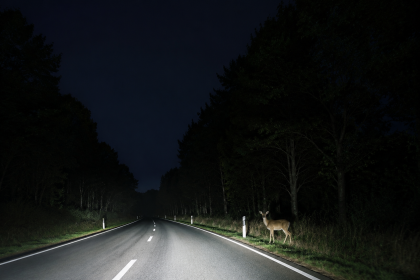
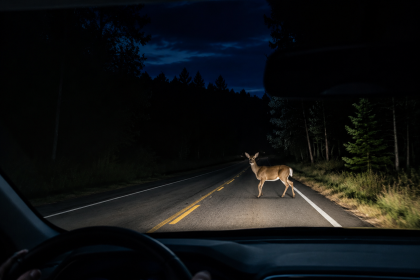
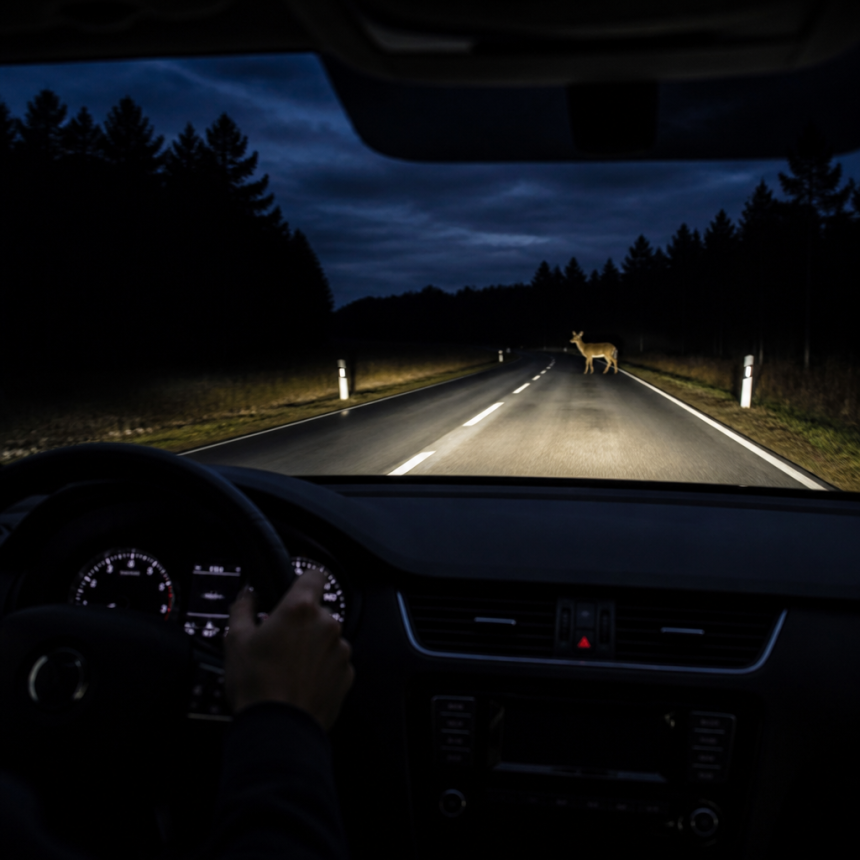
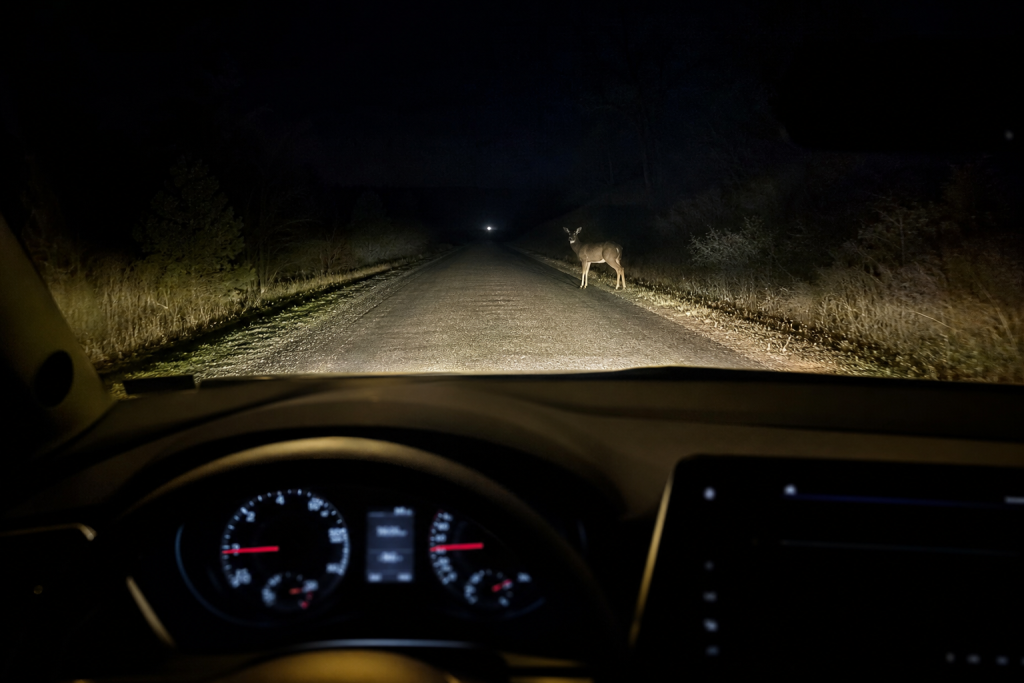
Wildlife is one of the strongest use cases for automotive thermal imaging. Animals can emerge from vegetation with little warning, and visible-light cameras may struggle when the animal’s coloring blends into the background.
Thermal imaging may reveal a warm animal near the road before it is obvious through the windshield. That can be valuable for drivers crossing wooded, agricultural, or mountainous areas after dark.
Results are not uniform, though. A small animal may occupy only a few pixels at longer distances, while vegetation, road geometry, weather, and the animal’s position can affect detection. No system should be treated as permission to maintain a high speed through a known wildlife area.
Additional Context Beyond Headlight Reach
Headlights illuminate the area directly ahead, but their effective range and pattern depend on design, adjustment, road elevation, weather, and whether low or high beams are being used. A properly installed thermal camera may provide information about warm objects before the driver can clearly identify them in visible light.
That extra context can be valuable on roads with dips, bends, inconsistent lighting, or glare from approaching vehicles. Even then, the thermal display should be treated as a supporting reference. The road visible through the windshield remains the driver’s primary source of information.
Support in Some Poor-Visibility Conditions
Because a thermal camera does not rely on visible illumination in the same way as an ordinary camera, it may retain useful contrast in darkness, headlight glare, haze, or some forms of light fog.
Conditions matter. Dense fog, heavy rain, snow accumulation, road spray, and moisture on the camera lens can reduce image quality or obscure hazards. Thermal imaging may offer useful supplementary information, but it does not make severe weather transparent.
Thermal Night Vision Versus Other Vehicle Safety Technologies
Thermal imaging overlaps with other driver-assistance technology, but it does not replace it.
Thermal Imaging Versus Headlights
Headlights illuminate lane markings, signs, pavement edges, and objects. Thermal cameras highlight temperature differences but may not present lane geometry, surface damage, signs, or cold obstacles as clearly.
Good headlights are foundational equipment. Before adding night vision, check that the lenses are clear, the lamps work correctly, the aim is appropriate, and the windshield is clean. An expensive display cannot compensate for neglected basic visibility.
Thermal Imaging Versus Visible-Light Night Cameras
A low-light camera can produce an image that resembles the scene seen through the windshield, which may make road context easier to interpret. Its performance usually depends more heavily on available light and can be affected by glare.
Thermal systems are often better at separating warm road users from a dark background. The trade-off is that the image can look less familiar, and cool obstacles may not stand out.
Thermal Imaging Versus Automatic Emergency Braking
Automatic emergency braking may intervene when vehicle sensors determine that a collision risk is developing. Thermal night vision generally has a different purpose: improving the driver’s awareness through an image, alert, or recognized-object indication.
The presence of thermal imaging does not mean the car will brake automatically. Buyers should verify exactly what a system does instead of assuming all safety technologies are connected.
Thermal Imaging Versus Radar
Radar is useful for measuring distance and relative motion, especially for adaptive cruise control and collision-warning functions. Thermal cameras provide visual heat-based context and can help a driver understand whether a detected object resembles a person, animal, or vehicle.
These technologies can complement one another, but they are not interchangeable. An aftermarket thermal display should not be assumed to integrate with factory radar or braking systems unless that capability is explicitly documented.
The Main Benefits in Everyday Use
A well-designed system can add practical value in several ways.
It can improve detection contrast. A warm pedestrian or animal may stand out against a cooler background even when clothing, coloring, or poor lighting makes the subject difficult to see normally.
It can increase available reaction time. Noticing a potential hazard earlier can allow a driver to ease off the accelerator, cover the brake, or create more space without making a sudden maneuver.
It can reduce uncertainty on dark routes. An unexplained shape near the road can be difficult to interpret. A thermal view may provide another clue about whether it is a person, animal, vehicle, or background object.
It can support long-distance night driving. On repetitive, poorly lit roads, an additional source of road information may help a driver scan for hazards. It does not solve fatigue, however. A tired driver needs a safe place to stop and rest.
It can be added to vehicles without factory night vision. Aftermarket systems make the technology accessible without requiring the purchase of a particular premium vehicle or trim level.
These benefits are strongest when the system has a clear image, sensible display placement, reliable alerts, and a camera positioned to view the relevant part of the road.
Important Limitations Before You Buy
A Thermal Image Does Not Show Everything Equally Well
Heat contrast changes with the environment. A person may stand out clearly on a cold night but have less contrast against warm surroundings after a hot day. Roads, buildings, parked vehicles, exhaust systems, and reflections can create complex thermal scenes.
Cold hazards also matter. Fallen cargo, road debris, potholes, lane markings, and some stationary objects may not be obvious on a thermal display. Drivers must continue scanning the actual road.
Weather Can Reduce Performance
Thermal cameras may work in some poor-visibility conditions, but performance is not unlimited. Water droplets, mud, ice, snow, road salt, and condensation on the exterior camera window can degrade the view.
Mounting position matters as well. A camera installed low on the vehicle may be more exposed to road spray and dirt. A higher position may improve the viewing angle but create different installation challenges.
Alerts Can Be Imperfect
Systems with pedestrian, animal, or vehicle recognition may issue helpful real-time alerts, but object-recognition software is not infallible. It may miss a partially hidden subject or classify a warm object incorrectly. Frequent non-urgent alerts can also encourage the driver to ignore warnings.
Look for a system that communicates risk clearly without demanding constant attention. Alert volume, brightness, sensitivity, and placement should be adjustable where possible.
The Display Can Become a Distraction
A thermal display adds another visual task. If the driver repeatedly looks away from the road to interpret the image, the upgrade can undermine its intended benefit.
The screen should be within a quick glance of the forward view without blocking the windshield, mirrors, instruments, or controls. It should also dim sufficiently for nighttime use. A bright screen can impair dark adaptation and make the road outside appear harder to see.
Installation Quality Affects Usefulness
Camera alignment, vibration, wiring, weather protection, and display placement all influence performance. A poorly aimed camera may show too much sky or hood and too little road. Loose mounting can make the image difficult to interpret.
Professional installation may be appropriate when wiring must pass through the firewall, trim must be removed, or the vehicle has sensitive electronic systems. Before installation, confirm that the work will not interfere with airbags, factory cameras, radar sensors, active grille shutters, or required forward visibility.
A Relevant Aftermarket Example
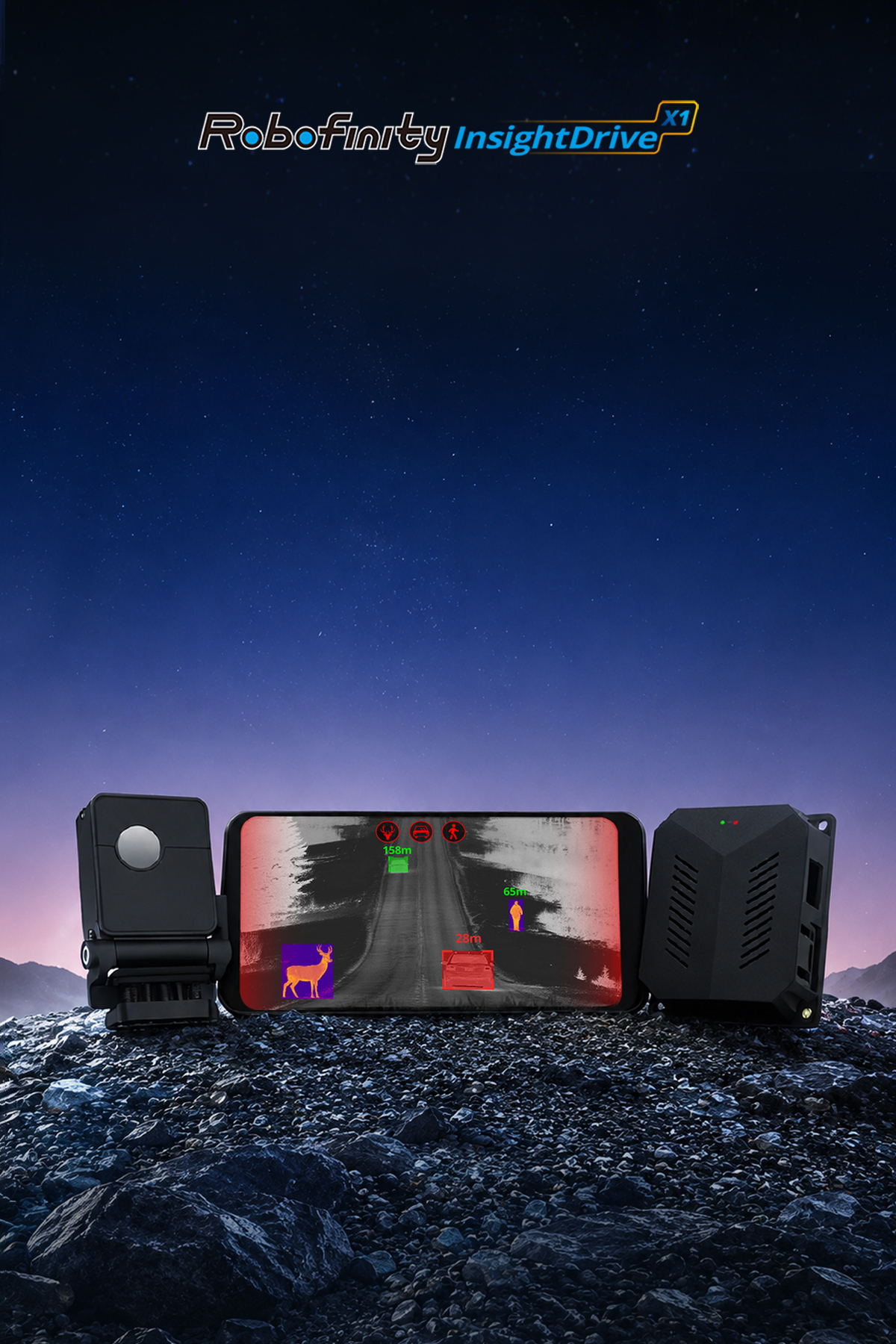
Robofinity InsightDrive is one example of a vehicle thermal imaging night vision system intended to support awareness in low-light and poor-visibility driving. Its recognition functions cover pedestrians, animals, and vehicles, with real-time alerts designed to draw attention to potential hazards. These capabilities illustrate what buyers may find in a modern aftermarket system, but they remain driver-assistance features rather than guarantees of detection or collision avoidance.
As with any product in this category, suitability depends on installation, display ergonomics, the driver’s normal routes, and the conditions in which it will be used. Product specifications should be reviewed in context instead of relying on one headline feature.
Who Is Most Likely to Benefit?
Rural and Remote-Area Drivers
Drivers who routinely travel on unlit roads face a combination of wildlife, limited roadside lighting, concealed driveways, and long distances between towns. Thermal night vision has a clear role here because it addresses hazards that may have meaningful heat contrast but poor visible contrast.
The system still needs to be paired with conservative speed. A potential hazard shown on a display is useful only if sufficient stopping distance remains.
Night-Shift Workers and Early Commuters
Healthcare staff, logistics workers, emergency personnel, airport employees, and others with overnight schedules may drive in darkness almost every working day. Frequent use improves the value proposition because the system is not sitting idle for most journeys.
These drivers should prioritize simple alerts and low-glare display settings. After a long shift, a complicated interface is a liability.
Long-Distance and Touring Drivers
People who take regular cross-country trips or drive between cities at night may encounter construction zones, stranded motorists, wildlife, and variable weather. Thermal imaging can provide another layer of road awareness where lighting changes frequently.
It should never be used to justify driving through serious fatigue. Night vision can reveal a hazard, but it cannot restore judgment, attention, or reaction speed.
Drivers Concerned About Pedestrians and Cyclists
A thermal system may be useful around poorly lit residential roads, industrial areas, rural bus stops, or routes used by runners and cyclists before dawn. Its value is lower in dense city traffic where speeds are low, street lighting is strong, and the display may be crowded with numerous heat sources.
Owners of Older Vehicles
An older vehicle may lack modern pedestrian detection or advanced forward cameras. Thermal imaging can add a separate awareness tool, although it does not transform the vehicle into one with fully integrated factory assistance.
Owners should first address basic safety needs: tires, brakes, windshield condition, exterior lighting, mirrors, and suspension. A technology upgrade belongs after essential maintenance, not before it.
Who May Not Need One?
Thermal night vision is unlikely to be a priority for drivers who rarely travel after dark or stay mainly on illuminated urban routes. It may also be unnecessary for someone planning to replace the vehicle soon, especially if installation is vehicle-specific or difficult to transfer.
Drivers who find secondary displays distracting should think carefully before adding one. A system with audible or visual alerts may reduce the need for constant monitoring, but warnings themselves can become distracting if poorly configured.
Budget matters too. When funds are limited, worn tires, weak brakes, damaged lighting, an old windshield, or overdue vision correction should take priority. Thermal technology provides supplementary information; it does not repair deficiencies in the vehicle or driver.
How to Evaluate a System Before Purchasing
A useful comparison goes beyond advertised detection distance. Consider the complete ownership experience.
Image and Detection Performance
Review the stated operating range, field of view, frame rate, display resolution, and environmental operating limits. A long maximum detection range does not necessarily mean a small object will be recognizable at that distance.
Ask what “detection” means. Seeing a heat source, recognizing it as a person, and issuing a reliable warning are different performance thresholds.
Alert Design
Determine whether the system identifies pedestrians, animals, vehicles, or generic warm objects. Check whether alerts can be adjusted and whether the interface distinguishes an immediate path hazard from an object safely beside the road.
An alert that conveys urgency and location quickly is more useful than one requiring detailed interpretation.
Display Placement and Night Brightness
Confirm that the display will fit without obstructing the driver’s normal sightlines. It should be readable at a glance and dim enough to avoid glare. Test the proposed location from the actual driving position, not just while parked outside the vehicle.
Camera Protection and Maintenance
An exterior camera must tolerate rain, dust, vibration, temperature changes, and routine vehicle use. Check how easy the lens is to inspect and clean. A camera hidden behind a difficult-to-reach grille opening may be neglected until the image becomes unusable.
Electrical and Installation Requirements
Understand whether the system requires permanent wiring, an accessory socket, a fuse tap, or integration with ignition power. Poor wiring can create reliability issues or drain the battery.
Also determine whether installation could affect a vehicle warranty, leased-vehicle terms, inspection requirements, or local rules. These details vary by vehicle and jurisdiction, so they should be confirmed before modifying the car.
Support and Updates
For recognition-based products, software support can matter over time. Review the manufacturer’s documentation for update procedures, compatibility, troubleshooting, and replacement components. Avoid assuming that updates or long-term support are included unless clearly stated.
A Practical Value Test
Instead of asking whether thermal night vision is universally worthwhile, score it against your own use.
Give yourself one point for each statement that applies:
- I drive after dark at least several times per week.
- A meaningful portion of my route has no street lighting.
- Wildlife is common along roads I use.
- Pedestrians or cyclists may be present on poorly lit roads.
- I regularly take long nighttime journeys.
- Fog, glare, rain, or changing visibility is common on my routes.
- My vehicle does not have comparable factory-installed awareness technology.
- I can install the system without obstructing visibility or essential controls.
- The purchase will not delay necessary tire, brake, lighting, or windshield work.
- I understand that I must still watch the road rather than rely on the display.
A high score suggests the system could see frequent, relevant use. A low score indicates it may be an interesting feature with limited day-to-day value. This is not a safety rating, but it is a practical way to keep the decision tied to real driving conditions.
Getting the Most From Thermal Night Vision
If you install a system, establish responsible habits from the beginning:
- Learn how people, animals, vehicles, and roadside objects appear before relying on the image in demanding conditions.
- Adjust screen brightness at night so it is visible without dominating the cabin.
- Keep the camera window clean and inspect it after snow, rain, muddy roads, or winter salt exposure.
- Treat every alert as information to verify through the windshield, mirrors, and normal road scanning.
- Slow down when sight distance is shorter than stopping distance.
- Do not attempt to drive primarily by looking at the thermal screen.
- Check the mount and wiring periodically for movement, damage, or corrosion.
- Stop driving when fatigued instead of relying on technology to compensate.
The safest use is “eyes up, brief glance, verify, respond.” Thermal night vision should extend awareness without becoming the center of attention.
Frequently Asked Questions
Can thermal night vision see through fog or heavy rain?
It may preserve useful contrast in some haze, light fog, rain, or glare, but it cannot reliably see through every weather condition. Dense fog, heavy precipitation, road spray, and water or ice on the camera lens can reduce performance significantly.
Does a thermal camera replace high beams?
No. High beams illuminate the road, signs, lane edges, and many objects that may not stand out thermally. A thermal system provides supplementary heat-based information and should be used alongside legal, properly adjusted vehicle lighting.
Can car thermal imaging detect deer and other animals?
It may help reveal animals whose body heat contrasts with the surroundings, making wildlife detection a strong potential use case. Actual recognition depends on distance, animal size, visibility, camera position, environment, and system capability.
Is aftermarket thermal night vision as good as a factory system?
Not necessarily better or worse in every case. Factory systems may offer cleaner integration with the instrument panel and other vehicle sensors. Aftermarket products can make thermal imaging available to more vehicles and may offer dedicated displays or recognition features. Installation quality and interface design are particularly important for aftermarket equipment.
Will thermal night vision automatically stop the car?
A thermal display or warning system should not be assumed to control the brakes. Some factory safety packages integrate multiple sensors and vehicle functions, but an aftermarket thermal system may provide only video and alerts. Verify the exact capability in the product documentation.
Is thermal night vision useful during the day?
Thermal imaging can show heat contrast during daylight, but its strongest practical value is generally in darkness or situations where visible contrast is poor. Hot ambient conditions can reduce the contrast between people, animals, and the surrounding environment.
Conclusion
A car thermal night vision system can be a worthwhile practical driving upgrade when nighttime exposure is frequent and the routes involve poor lighting, wildlife, pedestrians, or long rural stretches. Its value is less convincing for occasional night drivers who remain mostly on well-lit city roads.
The decision should account for more than detection claims. Camera positioning, alert quality, screen brightness, weather limitations, installation, maintenance, and driver behavior determine whether the system becomes useful support or an expensive distraction.
Start with the fundamentals: sound tires and brakes, clean glass, effective headlights, appropriate speed, adequate following distance, and attentive driving. Once those are in order, thermal imaging can add another layer of information in the conditions where human vision and visible-light cameras have the least to work with.