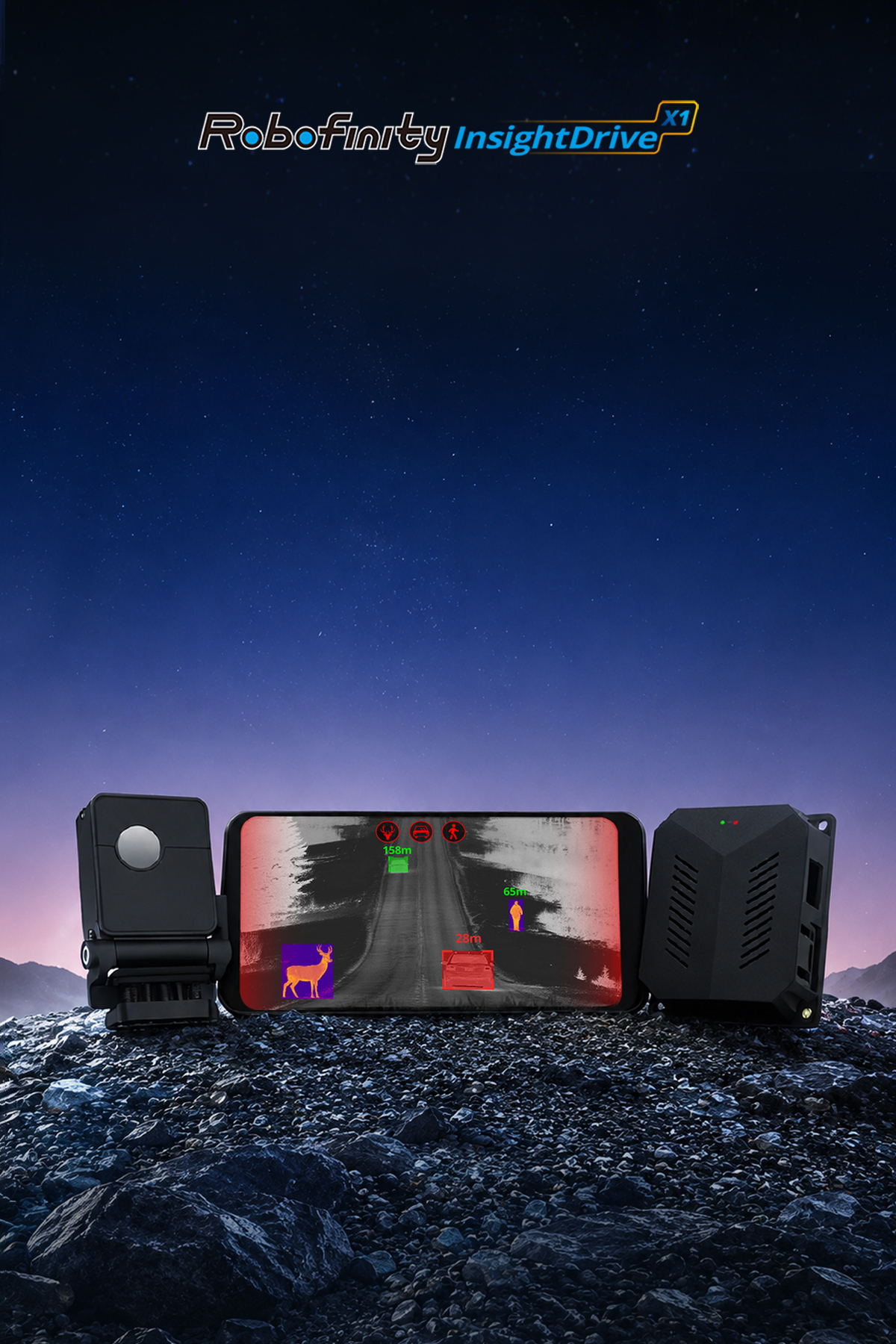
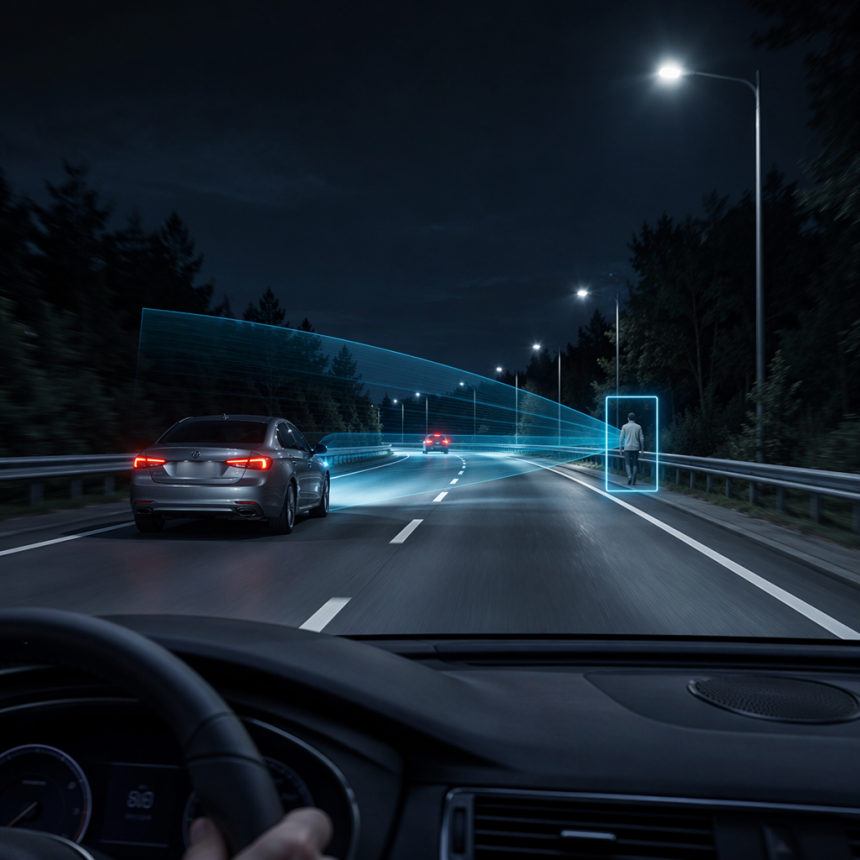
Automotive Thermal Imaging supports autonomous driving perception by helping vehicles recognize hazards when visible light is weak, contrast is poor, or weather makes the scene hard to interpret. Instead of relying only on reflected light like traditional cameras, thermal sensors measure temperature differences—creating a different kind of information that can strengthen object detection, tracking, and decision support in real-world driving.
- How Automotive Thermal Imaging Supports Autonomous Driving Perception
- What Automotive Thermal Imaging Actually Does
- Why Autonomous Vehicles Need More Than One Sensor
- Where Thermal Imaging Helps Autonomous Perception Most
- How Thermal Imaging Fits Into Autonomous Driving Perception
- The Real Advantages of Thermal Imaging
- The Limits You Should Understand
- It does not identify everything
- It is not equally strong in every scene
- It can be affected by environmental conditions
- It does not replace safe driving logic
- It requires careful integration
- What “Good” Thermal Integration Looks Like
- Use Cases That Show the Value Clearly
- Family driving at night
- Highway cruising after dark
- Rural and suburban edge roads
- Poor-weather commuting
- Where This Connects With Real-World Safety Upgrades
- How Buyers Should Think About Thermal Imaging
- Thermal Imaging and Autonomous Driving: The Bigger Picture
- FAQ
- What is automotive thermal imaging used for?
- Does thermal imaging replace cameras in autonomous vehicles?
- Is thermal imaging useful in fog or rain?
- Can thermal imaging detect pedestrians at night?
- Is thermal imaging enough for safe autonomous driving?
- Do drivers still need to pay attention if a vehicle has thermal imaging?
- Conclusion
- How Automotive Thermal Imaging Supports Autonomous Driving Perception
- What Automotive Thermal Imaging Actually Does
- Why Autonomous Vehicles Need More Than One Sensor
- Where Thermal Imaging Helps Autonomous Perception Most
- How Thermal Imaging Fits Into Autonomous Driving Perception
- The Real Advantages of Thermal Imaging
- The Limits You Should Understand
- Use Cases That Show the Value Clearly
- How Buyers Should Think About Thermal Imaging
- FAQ
How Automotive Thermal Imaging Supports Autonomous Driving Perception
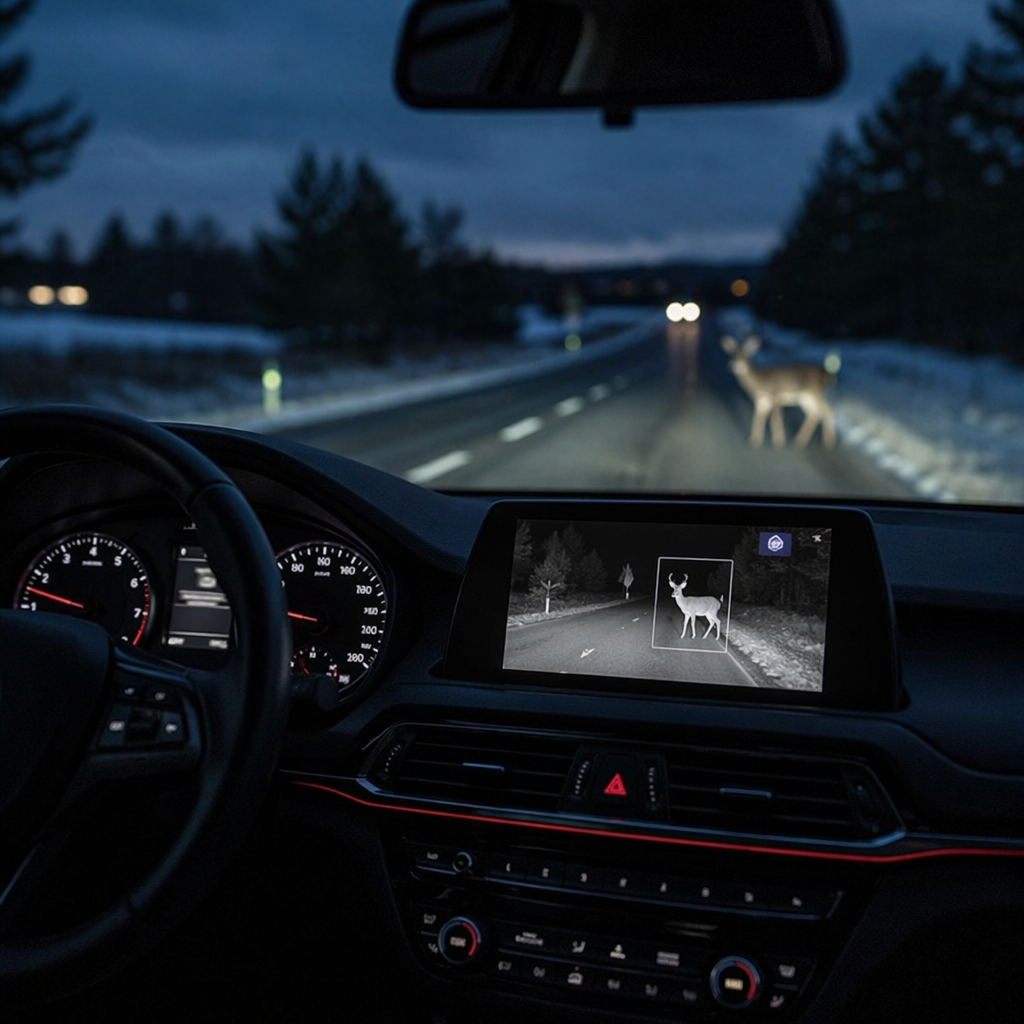
Autonomous driving depends on perception: the vehicle’s ability to understand what is around it, what is moving, and what may become a hazard in the next few seconds. That is where automotive thermal imaging enters the discussion. Unlike standard cameras, thermal sensors detect heat signatures, which can help a vehicle perceive pedestrians, animals, vehicles, and other objects in low-light or poor-visibility conditions.
This matters because real roads are messy. Headlights glare off wet pavement, fog reduces contrast, dark clothing blends into the background, and animals can appear suddenly at the edge of the road. Thermal imaging is not a replacement for cameras, radar, or lidar, but it can add another layer of awareness that helps autonomous systems interpret the world more reliably.
For many perception stacks, the goal is not to “see an image that looks clear.” The goal is to reduce uncertainty. When a vehicle can confirm that something is present (and track it over time) even when visual contrast fails, it can improve safety outcomes—especially in edge cases where human drivers also struggle.
What Automotive Thermal Imaging Actually Does
Thermal imaging captures infrared radiation, which is emitted as heat. In practical terms, that means warm objects often stand out more clearly than the surrounding environment. A pedestrian crossing a dark road, a deer near the shoulder, or a vehicle parked without proper lighting can be easier to detect than with visible-light imaging alone.
For autonomous driving perception, the value is not in producing a pretty picture. It is in highlighting objects that matter for safety. A thermal sensor can make certain hazards easier to separate from the background, especially when headlights, streetlights, fog, rain, or snow reduce the performance of conventional cameras.
That does not mean thermal imaging “sees everything.” It sees temperature contrast, not identity. A hot engine, a recently driven car, and a pedestrian can all appear bright in different ways, so the perception software still has to interpret the scene carefully.
It is also helpful to understand why the signal can change. Temperature depends on surface material, how long something has been exposed to ambient air, and whether an object has recently been heated or cooled. In other words, automotive thermal imaging provides a strong clue, but software still needs context.
Why Autonomous Vehicles Need More Than One Sensor
No single sensor is reliable in every driving condition. That is why autonomous systems use sensor fusion, combining data from multiple sources to build a more complete understanding of the road.
Cameras
Cameras are good at reading lane markings, traffic lights, signs, and visual detail. They are also relatively affordable and familiar. Their weakness is that they depend heavily on light and contrast. Night driving, direct sun, fog, snow, and dirty lenses can all reduce performance.
Radar
Radar measures distance and movement well, even in poor weather. It is useful for tracking vehicles and detecting motion through rain or fog. Its weakness is limited detail. Radar can tell the system that something is there, but not always exactly what it is.
Lidar
Lidar builds precise distance maps and helps autonomous systems understand shape and space. It is strong for object localization, but it can still be affected by weather, contamination, cost, and system design choices.
Thermal Imaging
Thermal imaging adds a different kind of signal. It is especially useful when a visible image is weak but a heat signature is still clear. That makes it valuable for road awareness in low-light driving, rural roads, and other poor-visibility scenarios.
The practical point is simple: thermal imaging is strongest when it complements other sensors. It fills a gap rather than replacing the rest of the stack.
If you want a deeper look at how low-visibility conditions influence performance, see Thermal Imaging in Low Visibility: How Do Thermal Cameras Perform?.
Where Thermal Imaging Helps Autonomous Perception Most
Thermal imaging becomes most useful when the driving environment makes visual cues unreliable.
Night driving
Dark roads reduce contrast and can hide people, animals, and obstacles. Thermal imaging can help an autonomous system recognize a warm body or recently occupied vehicle before standard camera vision becomes confident enough. When the visual channel is uncertain, automotive thermal imaging can provide a stable alternative for initial awareness and early tracking.
Rural roads
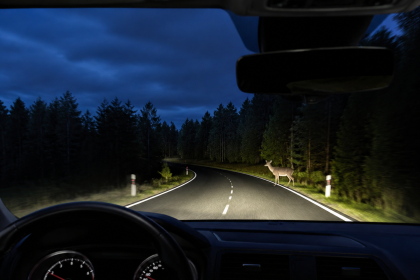
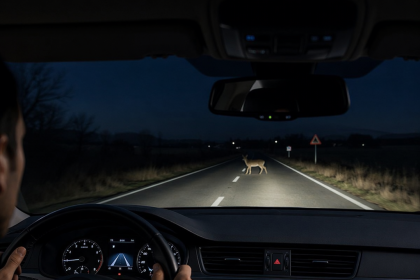
Rural roads often have limited street lighting, sharp curves, and unpredictable wildlife activity. A thermal sensor can help the vehicle identify animals near the roadway earlier than a visible-light camera might. This is also where shoulder obstructions, parked vehicles, and unmarked hazards can appear suddenly.
Fog, rain, and snow
Weather can wash out visual detail and create glare or reflections. Thermal imaging is not immune to weather, but it can provide another signal when visible images become harder to trust. In many cases, fusion helps compensate for the weaknesses of each sensor in different conditions.
Headlight glare and backlighting
High beams, oncoming traffic, reflective signs, and low-angle sun can all create optical confusion. Thermal imaging is less dependent on these lighting effects, which helps autonomous systems maintain awareness when the image feed is visually distorted.
Vulnerable road users
Pedestrians, cyclists, and roadside workers are not always easy to detect in the dark. Thermal contrast can help the system identify human-shaped heat sources in time to support braking or path planning decisions. Even when classification is imperfect, earlier detection can buy time for safer behavior.
How Thermal Imaging Fits Into Autonomous Driving Perception
Thermal imaging does not make driving decisions by itself. It usually feeds into a perception pipeline where software classifies, tracks, and prioritizes objects.
Object detection
The system first needs to identify that something is present. Thermal imaging can make a pedestrian or animal stand out against a cooler background, improving the chances of detection.
Classification
Once an object is found, the software tries to determine what it is. This is where thermal alone can be limiting. Heat signatures can help, but they are not always enough to distinguish a person from another warm object without support from other sensors.
In practice, classification often improves when thermal cues are combined with radar motion patterns and camera shape information. For example, a moving warm shape with a consistent trajectory across frames may be treated differently than a stationary heat source.
Tracking over time
Autonomous systems need to know whether an object is stationary, moving toward the road, or crossing it. Thermal imaging can help maintain visibility when the object is hard to see visually, especially in darkness.
Decision support
After detection and tracking, the vehicle must decide whether to continue, slow down, steer around the object, or stop. Thermal imaging contributes to that decision, but the final behavior depends on the full sensor suite and the vehicle’s control logic.
Think of thermal as part of the “confidence building” stage. It helps the perception module avoid late surprises—an important safety goal when driving exposure time is short.
The Real Advantages of Thermal Imaging
Thermal imaging is attractive because it solves a very specific visibility problem: some hazards are easier to detect by heat than by reflected light.
The main advantages include:
- Better contrast for warm objects in the dark
- Useful support in low-light and poor-visibility driving
- Earlier awareness of pedestrians, animals, and some vehicles
- Less dependence on ambient light than visible cameras
- Potentially more stable perception in certain glare conditions
For autonomous driving, that means a more resilient perception stack. If one sensor struggles, another may still provide useful information. That redundancy can help the system maintain safe operation when conditions degrade.
The Limits You Should Understand
Thermal imaging is useful, but it has real limitations. Treating it as a complete solution would be a mistake.
It does not identify everything
Thermal sensors can highlight heat sources, but they do not always explain what the object is. A perception system still needs context from other sensors and software.
It is not equally strong in every scene
If everything around the road is warm, contrast drops. A hot day, a recently driven vehicle, or warm pavement can reduce the distinction thermal imaging relies on.
It can be affected by environmental conditions
Thermal imaging can help in fog or light rain, but heavy weather can still complicate the scene. No sensor is fully immune to poor visibility.
It does not replace safe driving logic
Even in advanced driver-assistance systems, thermal imaging cannot replace braking distance, traffic laws, route awareness, or conservative speed choices. For autonomous vehicles, it is one piece of the safety stack, not the whole answer.
It requires careful integration
A thermal sensor is only as good as the system interpreting it. Poor calibration, weak fusion logic, or sloppy object prioritization can reduce its value quickly. Integration includes timing synchronization, accurate sensor alignment, and appropriate thresholds so the system can respond without overreacting to irrelevant heat sources.
What “Good” Thermal Integration Looks Like
To get real safety value, automotive thermal imaging must be used with an approach that matches its strengths. That typically includes:
- Fusion-aware design: thermal contributes confidence where visible data is weak.
- Robust tracking: object tracks should persist through temporary drops in contrast.
- Clear priority rules: the system should focus on road-relevant hazards rather than every heat source.
- Conservative behavior: uncertain detections should trigger appropriate caution, not aggressive maneuvers.
When these elements work together, thermal imaging can improve the perception layer that sits between sensors and driving decisions.
Use Cases That Show the Value Clearly
Family driving at night
A parent driving home late with children in the car has little margin for surprise. Thermal imaging can help the vehicle detect a person stepping off a curb or an animal near the roadside before the visual system is fully confident. With fusion, the system can cross-check the thermal cue using other sensors.
Highway cruising after dark
Long-night highway driving can be monotonous, which is exactly why missing a stray object becomes dangerous. Thermal support can help maintain awareness when the road is dim and fatigue is a concern.
Rural and suburban edge roads
These roads often sit between town lighting and open darkness. That is where thermal imaging may help most, because pedestrians, bicycles, wildlife, and parked vehicles are easier to miss.
Poor-weather commuting
Rain and fog do not make every sensor useless, but they can weaken visual perception. Thermal imaging gives the system another point of reference when contrast is low.
Where This Connects With Real-World Safety Upgrades
Not every vehicle using thermal capability is fully autonomous. In many cases, thermal sensing supports advanced driver-assistance features that help drivers or automate certain safety-critical functions.
Drivers who regularly travel at night, on dark highways, or through rural areas may also benefit from better road awareness systems. For more on thermal night awareness, you can explore Automotive Thermal Night Vision System: What Is It?. And for a broader look at safety outcomes, Car Thermal Cameras: Can They Improve Driving Safety? covers how thermal detection can contribute to earlier recognition of hazards.
How Buyers Should Think About Thermal Imaging
If you are evaluating a vehicle with thermal imaging or considering an aftermarket system, focus on practical value rather than marketing language.
Ask these questions:
- Does it support the kind of driving I actually do?
- Is my main problem night visibility, wildlife detection, or general road awareness?
- Does the system work as a supplement to cameras and radar?
- How clear are the alerts and how distracting are they?
- Is the display or integration easy to interpret quickly?
- Does the setup fit my vehicle and driving habits?
That is the right way to assess the technology. It should solve a specific visibility issue, not merely sound advanced.
If your goal is animal awareness, thermal is often discussed for night detection. You can also review Thermal cameras detect animals: Can at Night? How Heat-Sensing Imaging Helps to understand why heat signatures matter so much.
Thermal Imaging and Autonomous Driving: The Bigger Picture
Autonomous perception is a layered problem. The vehicle must know where lanes are, where objects are, how far away they are, and how those objects may move next. Thermal imaging helps mostly in the part of the stack that asks, “Is something important out there that we should not miss?”
That makes it particularly relevant to safety-critical edge cases. The routine parts of driving are usually easy; the hard part is the unexpected pedestrian, the animal in the beam of the headlights, the stalled vehicle on a dark shoulder, or the obstacle that blends into the road.
Automotive Thermal Imaging is valuable because it helps reduce the chance that those edge cases remain invisible for too long.
For a reputable reference on how sensors contribute to perception and safety, the NHTSA provides general guidance on advanced driver assistance and vehicle safety considerations: NHTSA: Advanced Driver Assistance Systems (ADAS).
FAQ
What is automotive thermal imaging used for?
It is used to detect heat signatures and help identify people, animals, vehicles, and obstacles in low-light or poor-visibility conditions. In sensor fusion systems, thermal cues can support earlier detection and improved tracking.
Does thermal imaging replace cameras in autonomous vehicles?
No. It works alongside cameras, radar, and sometimes lidar. Each sensor contributes different information, and fusion combines their strengths.
Is thermal imaging useful in fog or rain?
It can be helpful in some poor-visibility situations, but it is not immune to weather. Performance still depends on the severity of conditions and the overall sensor suite.
Can thermal imaging detect pedestrians at night?
Yes, that is one of its strongest use cases. Warm human bodies can stand out clearly against a cooler background, especially when automotive thermal imaging is integrated into a fusion-based perception pipeline.
Is thermal imaging enough for safe autonomous driving?
No. Safe autonomous driving depends on sensor fusion, software logic, validation, and conservative system behavior. Thermal imaging is one part of that larger system.
Do drivers still need to pay attention if a vehicle has thermal imaging?
Yes. Driver-assistance tools support awareness, but they do not replace attention, headlights, mirrors, safe speed, or legal driving responsibility.
Conclusion
Automotive Thermal Imaging supports autonomous driving perception by giving the vehicle another way to recognize hazards when visible light is weak, contrast is poor, or weather complicates the scene. Its real strength is not in replacing other sensors, but in making the whole perception system more resilient in the situations where conventional cameras struggle most.
For readers, the practical takeaway is straightforward: thermal imaging is worth understanding if you care about night driving safety, poor-visibility performance, or the direction vehicle safety technology is heading. Used well, automotive thermal imaging can improve awareness. Used alone, it is incomplete.