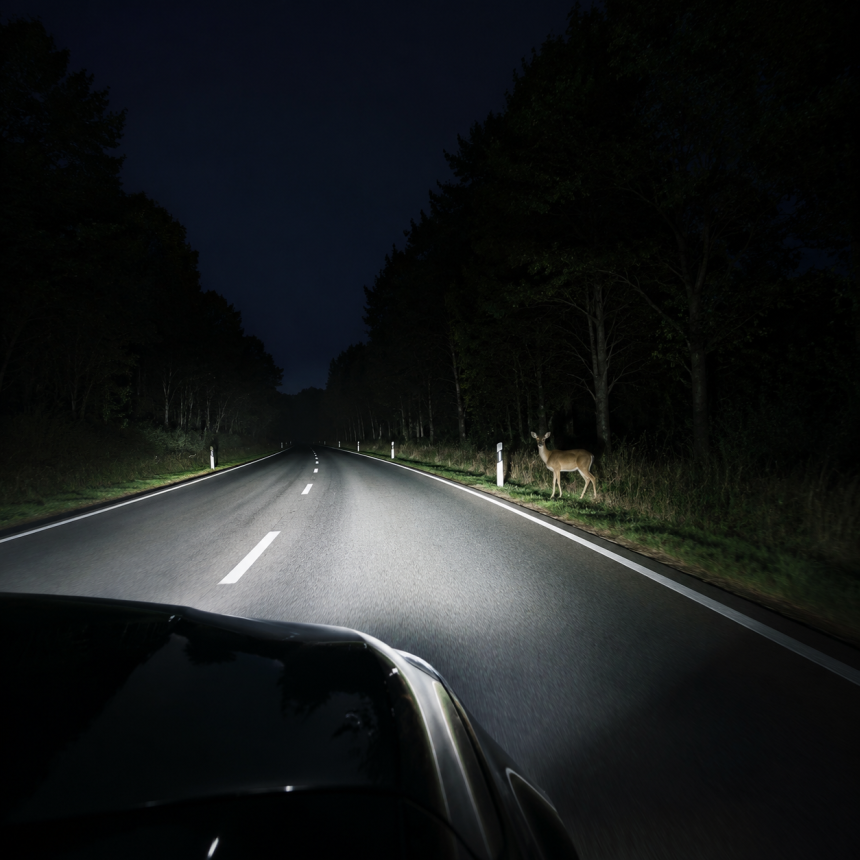
Night Vision Distance matters because night driving is not only about how far the road stretches ahead. It is about noticing hazards early enough to react. Many drivers wonder whether thermal night vision can see farther than headlights when the road is dark, and the answer depends on what kind of “farther” you mean and which hazards you are trying to spot.
- What Thermal Night Vision Actually Sees
- How Headlights Work Differently
- Can Thermal Night Vision See Farther Than Headlights?
- Where Thermal Imaging Offers a Real Advantage
- Where Headlights Still Win
- What Thermal Night Vision Cannot Do
- Thermal Night Vision vs Headlights in Real-World Scenarios
- How to Interpret Night Vision Distance in Practice
- FAQ
- Does thermal night vision work in complete darkness?
- Is thermal night vision better than high beams?
- Can thermal night vision detect animals?
- Does thermal night vision replace safe driving?
- Is thermal imaging useful in rain or fog?
- Should every car have thermal night vision?
- Conclusion
- What Thermal Night Vision Actually Sees
- How Headlights Work Differently
- Can Thermal Night Vision See Farther Than Headlights?
- Where Thermal Imaging Offers a Real Advantage
- Where Headlights Still Win
- What Thermal Night Vision Cannot Do
- Thermal Night Vision vs Headlights in Real-World Scenarios
- How to Interpret Night Vision Distance in Practice
- FAQ
- Conclusion
What Thermal Night Vision Actually Sees
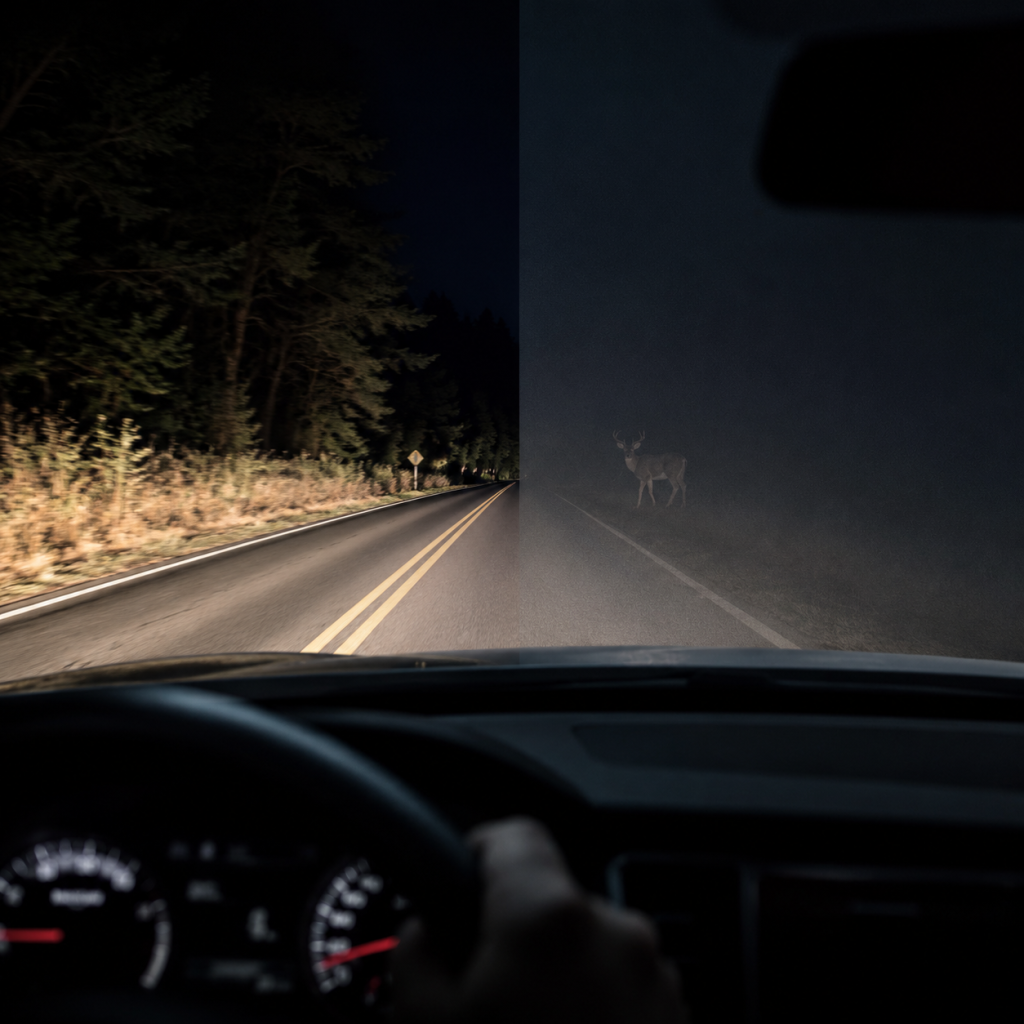
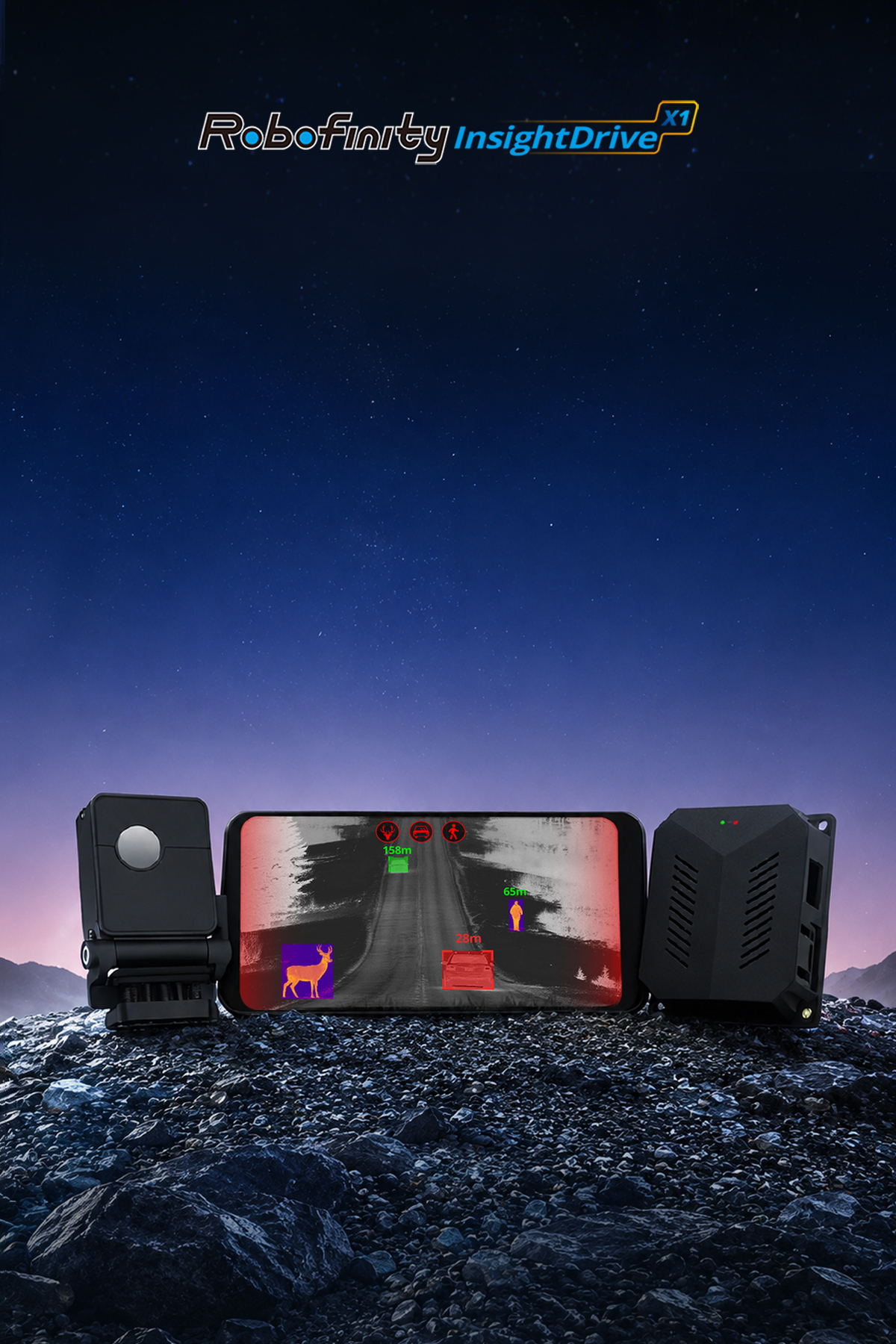
Thermal night vision does not work like a normal camera. Instead of relying on visible light, it detects infrared radiation associated with heat. That means warm bodies, such as people and animals, can appear differently from the cooler background of pavement, trees, and roadside structures.
This makes thermal imaging especially useful when the visual environment is difficult. A pedestrian wearing dark clothing may blend into a shadowy shoulder area. An animal near the edge of a road may be hard to notice until it moves. In these moments, night vision distance for thermal systems can help you spot heat-emitting objects earlier than your eyes alone might allow.
However, thermal imaging is not the same as seeing everything farther away. It does not provide detailed, color-rich scene information the way headlights do. It is better at highlighting living things and heat sources than at reading road signs, judging lane paint, or tracking small debris.
That is why drivers should think about thermal imaging as a visibility aid with a specific job, not a full replacement for ordinary night driving tools. It can extend awareness in the right conditions, but it does not make the road transparent.
For a deeper look at how these systems are positioned in vehicles, see Automotive Thermal Night Vision System: What Is It?.
How Headlights Work Differently
Headlights illuminate the road by projecting visible light forward. Their job is to help you see the driving environment directly: lane markings, signs, curbs, reflectors, potholes, and the general shape of the road.
The limitation is that headlights only help if an object reflects enough light back into your eyes. A dark-coated animal on a black road, a pedestrian in an unlit area, or an obstacle beyond the brightest portion of the beam can still be difficult to notice early. Fog, rain, snow, glare, and dirty headlight lenses can also reduce how effective headlights feel in real-world driving.
So while headlights are essential for night driving, they are not equally good at every task. They help you see the road itself, but they may not always make certain hazards stand out soon enough. This is where night vision distance becomes a useful comparison point, because the issue is not just brightness but how early a hazard becomes recognizable.
For a broader look at how vehicle-based infrared systems are positioned in the market, see Automotive Thermal Night Vision Buying Guide.
Can Thermal Night Vision See Farther Than Headlights?
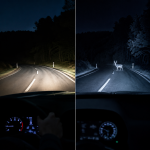
In practical driving terms, night vision distance with thermal imaging can sometimes detect hazards at distances where they are still difficult to make out with ordinary sight, or even with the limited reach of low beams.
That is especially true for pedestrians, animals, and some vehicles or roadside obstacles that show a stronger heat contrast against the background. A shape that is nearly invisible in the dark may become obvious once the thermal image separates warm and cool areas.
However, “farther” is not a universal answer. Headlights can light up the road surface and provide usable detail over a wider visual area, while thermal imaging may be less useful for understanding road geometry. If your goal is spotting a person, animal, or other heat-emitting hazard earlier, thermal imaging can offer an advantage. If your goal is seeing the actual road clearly, headlights remain the main tool.
A more accurate way to think about it is this: thermal systems may extend your awareness of certain hazards beyond what headlights immediately reveal, but they do not replace the overall visibility headlights provide.
That distinction matters because safe night driving depends on both detection and interpretation. A driver can detect a heat source early and still need headlights to confirm whether the object is on the shoulder, in the lane, or well off the road.
Where Thermal Imaging Offers a Real Advantage
Night Vision Distance improvements with thermal cameras tend to matter most when a hazard is hard to distinguish from its surroundings. Examples include:
- Dark rural roads where animals may enter unexpectedly
- Poorly lit highways where a pedestrian is near the roadside
- Foggy or rainy conditions where contrast is reduced
- Snowy environments where brightness can be uneven
- Glare-heavy situations where visible-light detail is harder to interpret
On roads like these, a thermal camera can make a heat source stand out before your eyes pick it out from the darkness. That extra awareness can give a driver more time to notice something unusual ahead and react appropriately.
Thermal imaging can also be useful when a moving object is partially hidden by shadows, roadside brush, or uneven lighting. In those cases, the image may not look detailed in the traditional sense, but the heat signature can still be enough to alert a careful driver.
In the broader safety conversation, this is why thermal systems are often discussed alongside other vehicle visibility tools. The value is not only in distance, but in how earlier detection can improve decision-making at normal driving speeds.
If you want a practical breakdown of system selection and use cases, the Thermal Night Vision Camera for a Car: What It Is and How It Works article covers the basics in more detail.
Drivers who want a plain-language overview of why these systems help in darkness can also review Thermal Night Vision: Never Get Blinded by Headlights Again.
Where Headlights Still Win
Despite the value of thermal imaging, headlights remain better for many everyday driving tasks, including:
- Reading lane markings and road signs
- Seeing the shape of turns and curves
- Recognizing reflective road furniture
- Judging distance to nearby vehicles
- Identifying potholes, debris, and surface changes
- Understanding the full context of the road
Thermal imaging is selective. It highlights heat differences, but it does not provide the same level of scene detail that a lit roadway gives you. A driver still needs headlights to understand what kind of road they are on and how to navigate it safely.
That is why thermal night vision should be treated as a complement to headlights, not a replacement. If the road is unfamiliar, winding, or cluttered with visual cues, you still need the information that visible light delivers.
On the highway, that difference becomes even more important because a thermal camera may tell you that something is there, but headlights help you judge how far away it is and how it relates to the lane.
What Thermal Night Vision Cannot Do
It is just as important to understand limits as benefits. Thermal night vision is not a magic solution, and it has constraints:
- It does not replace headlights, mirrors, or the windshield view
- It may not clearly identify non-living objects with no heat contrast
- It does not help much with road signs or lane markings
- It cannot predict what a hazard will do next
- It does not eliminate the need for braking distance or safe speed
- It cannot compensate for distraction or driver inattention
A system may show a pedestrian or animal on-screen, but the driver still has to interpret that information and respond correctly. For safe reaction, you still need to slow down when needed, keep scanning, and maintain enough space to respond if the situation changes.
It also helps to remember that thermal systems vary in resolution, display quality, processing speed, and field of view. Those differences can change how useful night vision distance feels in real driving even when the underlying technology is the same.
For a general overview of the system category and how it fits into vehicle safety, Automotive Thermal Night Vision System: What Is It? is a useful follow-up.
Thermal Night Vision vs Headlights in Real-World Scenarios
A useful way to compare the two is to look at common driving scenarios.
On a city street
Headlights usually do the main job. Street lighting helps, and night vision distance via thermal imaging may be less necessary unless you are focused on spotting pedestrians near darker side streets or parking areas.
In cities, the challenge is often not raw distance but clutter. Reflective signs, storefront lighting, parked cars, and traffic all compete for attention. Thermal imaging can still help, but its strongest value may be in picking out a person or animal that would otherwise blend into the background.
On a rural road
Thermal imaging can be especially useful because animals and people may appear with little warning. Headlights still light the lane, while thermal detection can help you notice a heat source near the roadside earlier.
This is one of the clearest examples of how night vision distance can matter in practice. A few extra seconds of warning can make a real difference when a deer, dog, or pedestrian is near the travel lane.
On a highway
Headlights help with lane position and road reading, while thermal imaging may provide extra awareness if something unusual appears ahead in darkness. The value depends on road layout, traffic, and lighting conditions.
At highway speed, the question is often not whether you can see something eventually, but whether you can identify it early enough to act smoothly. Thermal imaging can support that early recognition when a hazard is hot enough to stand out.
In rain, fog, or snow
Both face challenges, but in different ways. Headlights can reflect off precipitation and create glare. Thermal imaging may still help highlight warm objects, though heavy weather can limit performance and reduce clarity.
This is where expectations matter. Thermal systems are not a universal fix for poor weather. They may preserve some detection capability when visibility drops, but the driving speed still needs to match conditions.
On winding or mountain roads
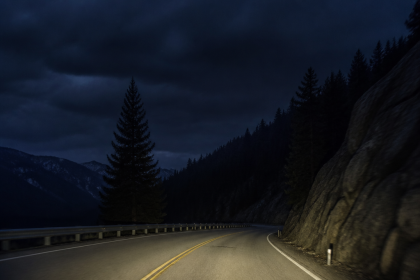
Headlights are essential for seeing curves and road boundaries. Thermal imaging may help spot a person, animal, or vehicle near the roadway before it becomes clearly visible in the beam pattern.
On these roads, night vision distance is only one part of the picture. The driver also needs shape recognition, depth judgment, and an accurate sense of road edge, which still come primarily from visible light.
How to Interpret Night Vision Distance in Practice
The phrase night vision distance can sound like a single number, but in real driving it is closer to a range of useful awareness. A thermal camera may notice a warm object much earlier than a human eye would, yet that does not automatically mean the object is fully identifiable or that the driver can safely react at maximum speed.
The practical question is whether the system gives enough time to reduce risk. If a heat source appears far ahead, the driver may have more time to slow down, move over, or prepare for a possible crossing animal. If it appears only slightly sooner than the headlights would reveal it, the benefit may be modest.
That is why image quality, display placement, alert behavior, and driver attention all matter. A strong thermal system can help, but only if the information is visible and understandable quickly enough to support action.
Drivers who travel long distances after dark often find the biggest value in reducing surprise. That is a subtle but important benefit: the system may not make the road look brighter, but it can make the driving environment feel more predictable.
For drivers comparing system types, Car Night Vision Technology: How It Works and Why It Helps gives useful background on how infrared support fits into night driving.
FAQ
Does thermal night vision work in complete darkness?
Yes. Thermal imaging does not depend on visible light the same way a standard camera does. That is why it can be useful in very dark conditions. Still, usefulness depends on heat contrast, weather, and the type of object being detected.
Is thermal night vision better than high beams?
Not in every situation. High beams are better for lighting the road and seeing details far ahead on empty stretches. Thermal imaging is better at highlighting heat-emitting hazards that can be hard to spot visually.
Can thermal night vision detect animals?
Yes. Thermal imaging is often useful for detecting animals because they emit heat. It may bring attention to animals near the road sooner than you would notice with standard headlights alone.
Does thermal night vision replace safe driving?
No. It is an added driver-assistance tool. Safe speed, careful scanning, proper headlights, and good following distance are still required.
Is thermal imaging useful in rain or fog?
It can be, but performance varies. Thermal imaging may still help detect warm objects, while heavy rain, fog, or snow can reduce clarity and limit effective range.
Should every car have thermal night vision?
Not necessarily. It is most helpful for drivers who frequently travel at night, on rural roads, or in poor visibility. For many drivers, standard headlights and good driving habits are sufficient.
Conclusion
Night Vision Distance can improve when thermal imaging helps you detect certain hazards earlier than headlights reveal them, especially heat-emitting targets that blend into darkness. But the healthiest comparison is still this: headlights show the road, while thermal imaging helps reveal some heat-based hazards that may be difficult to spot with visible light alone. Each technology has strengths, and each has limits.
For everyday driving, headlights remain essential. For night driving on rural roads, in poor weather, or in low-visibility environments, thermal imaging can add a meaningful layer of awareness. Use it as a support tool alongside good driving habits, not as a replacement for attentive driving.
For background on how vehicle lighting and visibility factor into safety, you can also review resources from the National Highway Traffic Safety Administration (NHTSA).