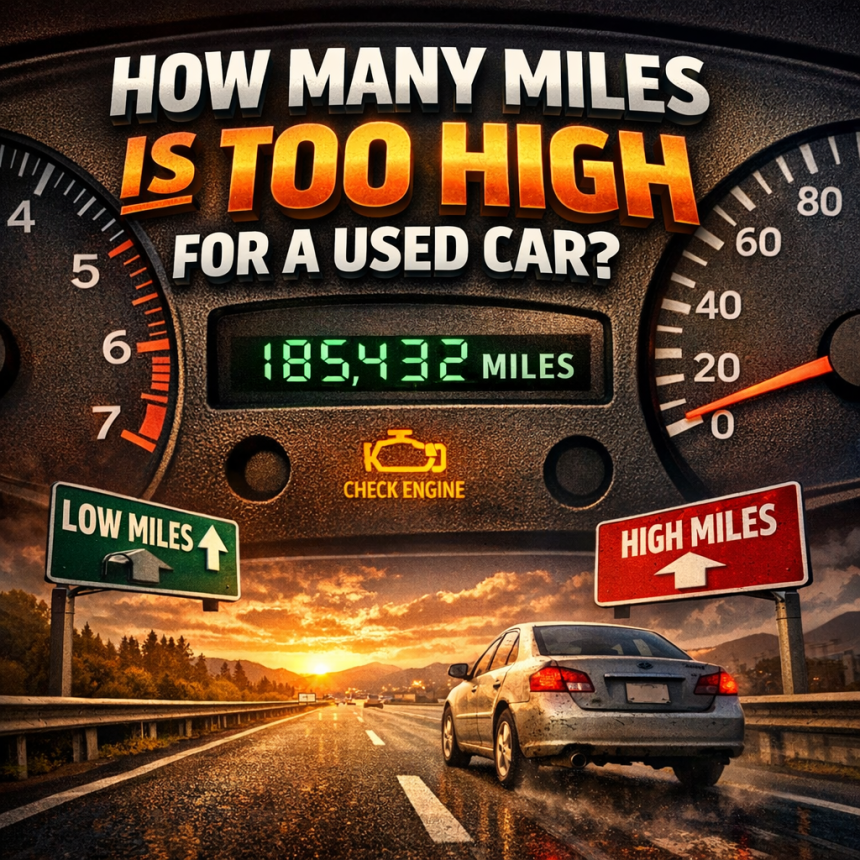
Used Car Mileage is one of the first things buyers check, but it should never be the only thing they check. A car with more miles can still be a smart buy if it has a strong maintenance record, sensible ownership history, and a solid reputation for reliability. The real question is not just how many miles are on the odometer, but what those miles mean for future repairs, value, and overall condition.
- What Mileage Really Tells You
- General Mileage Benchmarks
- Factors That Matter More Than Mileage Alone
- Maintenance History
- Vehicle Age
- Make and Model Reputation
- Driving Environment
- Accident and Repair History
- Storage and Ownership Pattern
- When High Mileage Is Still a Good Buy
- Signs a Used Car May Be Too High Risk
- Frequent Repairs
- Unusual Noises or Leaks
- Worn Interior and Controls
- Rust and Corrosion
- Poor Documentation
- How to Judge Mileage the Smart Way
- Used Car Mileage and Price Negotiation
- Maintenance Checklist for Higher Mileage Cars
- What Mileage Means by Vehicle Type
- Common Myths About Mileage
- The Bottom Line
In many cases, used car mileage becomes less important than how the car was driven and cared for. Highway miles, regular servicing, and careful ownership often matter more than a single number. That is why shoppers who understand used car mileage can make better decisions and avoid paying too much for a vehicle that is about to need major work.
Table of Contents
- What Mileage Really Tells You
- General Mileage Benchmarks
- Factors That Matter More Than Mileage Alone
- When High Mileage Is Still a Good Buy
- Signs a Used Car May Be Too High Risk
- How to Judge Mileage the Smart Way
- Used Car Mileage and Price Negotiation
- Maintenance Checklist for Higher Mileage Cars
- What Mileage Means by Vehicle Type
- Common Myths About Mileage
- The Bottom Line
What Mileage Really Tells You
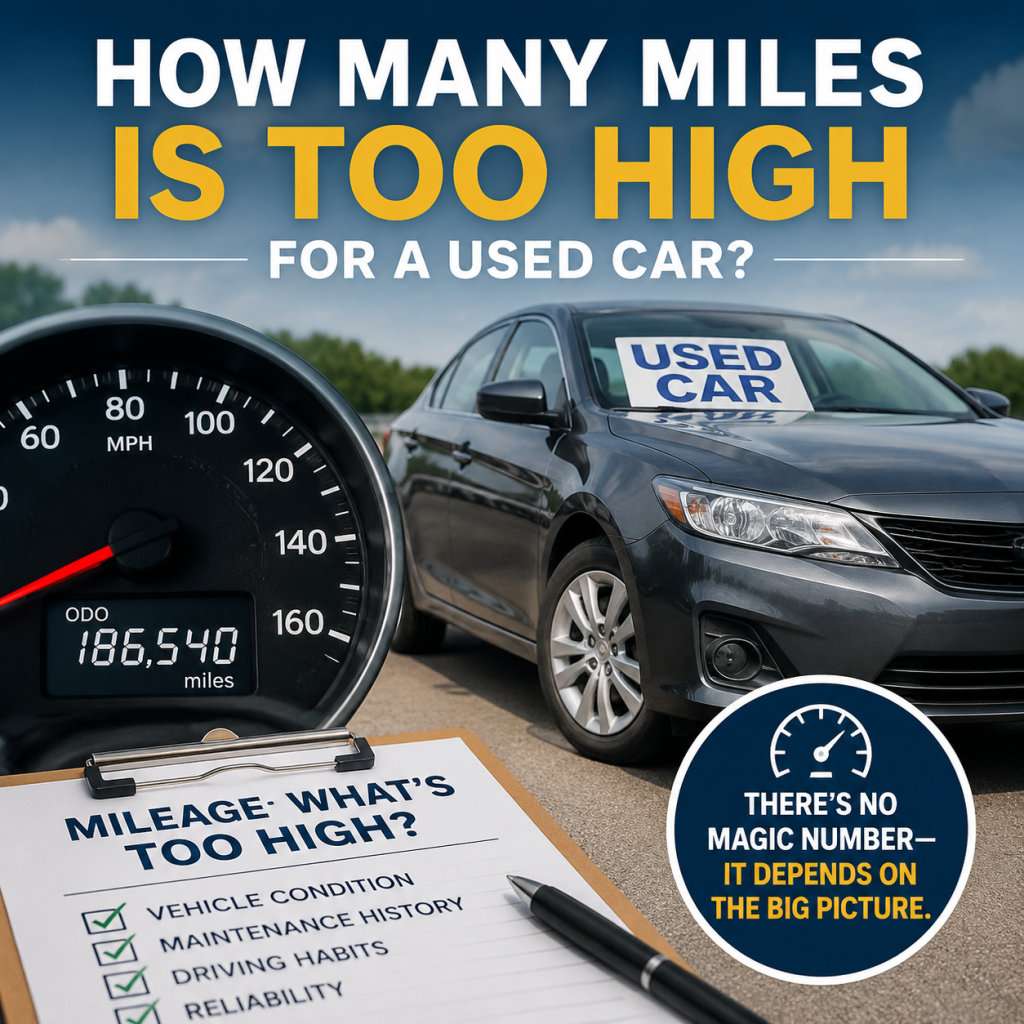
Used Car Mileage gives a rough estimate of how much use a vehicle has seen. More miles usually mean more wear on the engine, transmission, brakes, suspension, and other systems. Still, the odometer cannot tell the full story by itself.
A car that has spent most of its life on highways often wears more slowly than one used for short trips in stop-and-go traffic. Highway driving keeps the engine at steady temperatures and reduces brake and transmission strain. By contrast, a car used for short commutes may have many cold starts, which can increase wear even if the total mileage looks low.
That is why smart buyers look beyond the number on the dash. They review service records, inspect tire wear, check fluid condition, and look for accident history. Used car mileage matters, but it matters most when viewed alongside the car’s condition and maintenance history.
It also helps to think about how the miles were accumulated over time. Ten thousand miles per year on a well-maintained commuter can be easier on a car than fewer miles gathered through repeated short trips, towing, or stop-and-go driving. The shape of the use matters just as much as the total.
For example, a car used daily for a long highway commute may show more total mileage, but fewer start-stop cycles and less brake wear. A city-driven car with lower mileage may still need more attention if it spent its life idling in traffic, making short runs, or sitting for long periods between trips.
General Mileage Benchmarks
There is no universal mileage cutoff that makes a car a bad buy, but a few broad ranges can help set expectations.
Under 50,000 Miles
Cars in this range are generally considered low mileage. They often have plenty of life left and may need fewer immediate repairs. Even so, used car mileage alone does not guarantee quality. A low-mileage car that sat unused for long periods can develop issues with batteries, seals, fluids, and tires.
Low mileage is helpful, but it is best treated as a starting point rather than a verdict. A car can look attractive on paper and still be due for expensive age-related maintenance if it has not been driven consistently or serviced on time. Buyers should still ask for records and inspect the vehicle carefully.
50,000 to 100,000 Miles
This range is often attractive for buyers because it can offer a good balance between price and remaining lifespan. Many vehicles in this bracket still have strong value, especially if the previous owner followed the maintenance schedule. For shoppers comparing used car mileage, this is often the sweet spot.
At this stage, the condition of wear items starts to matter more. Tires, brakes, belts, suspension components, and fluids can become overdue depending on the car’s history. If those items have already been serviced, a car in this range can be one of the best values on the market.
100,000 to 150,000 Miles
This is the range where careful evaluation matters most. Some vehicles are just getting broken in at 100,000 miles, while others may begin showing age-related issues. If the service history is strong and the vehicle passes inspection, it may still be a worthwhile purchase. Buyers should also budget for repairs that become more likely as used car mileage climbs.
Cars in this bracket often need a closer look at cooling system parts, suspension wear, and transmission behavior. Even if the engine is healthy, the rest of the vehicle may need catch-up maintenance. That does not automatically make it a bad purchase, but it does mean the seller’s asking price should reflect the added risk.
Over 150,000 Miles
Vehicles above 150,000 miles are usually considered high mileage, but that does not mean they are automatically poor choices. Some models are built to last well beyond this point. Still, the likelihood of mechanical problems rises, so used car mileage in this range deserves extra caution and a closer look at the vehicle’s history.
In this range, the key question is not whether the car has high mileage, but whether it has already proven its durability. A well-kept vehicle with a strong repair history may still have years of useful life left, while a neglected one can become expensive quickly. The same odometer reading can mean very different things depending on the car.
As mileage rises, the cost of a surprise repair also becomes more important. If a high-mileage vehicle is priced aggressively enough to leave room in your budget for maintenance, it may still be a sensible buy. If the seller is asking premium money, the risk may outweigh the savings.
Factors That Matter More Than Mileage Alone
Used Car Mileage is only one part of the decision. Several other factors can matter just as much, or even more, when deciding whether a car is worth buying.
Maintenance History
A detailed service record is one of the strongest signs of a healthy car. Regular oil changes, fluid flushes, brake service, and scheduled inspections suggest that the previous owner took care of the vehicle. Missing maintenance can be a red flag even if the used car mileage is relatively low.
Look for proof that maintenance was done on time, not just claims from the seller. Receipts, dealership records, and dated service entries can tell you a lot about the life of the car. If the records are incomplete, assume there may be hidden needs and price accordingly.
Vehicle Age
Age matters because rubber parts, seals, hoses, and electronics wear out over time even if the car is not driven much. A 10-year-old car with low used car mileage may still need significant maintenance simply because of age-related deterioration.
This is especially important for cars that have spent years sitting. A vehicle can avoid adding miles yet still age in all the ways that matter mechanically. Dry seals, old fluids, weak batteries, and brittle components can all create expensive surprises.
Make and Model Reputation
Some vehicles are known for long-term durability, while others run into problems earlier. A high-mileage Toyota, Honda, or well-maintained truck may still be a strong option, while a less reliable model may become risky sooner. For broader ownership context, you can also read Cost to Own a Car: What You Really Need to Budget to understand how repairs and upkeep fit into the total price of ownership.
Model reputation does not replace inspection, but it helps set expectations. Vehicles with strong reliability records often tolerate higher mileage better because their engines, transmissions, and supporting systems are built with longevity in mind. That can make a big difference when comparing two cars with similar odometer readings.
Driving Environment
Cars used in harsh climates or difficult driving conditions often wear out faster. Salted winter roads can lead to rust. Extreme heat can age fluids and plastics. Heavy towing, off-road use, and rough roads can shorten a vehicle’s life, even when used car mileage does not seem extreme.
Driving environment can also affect how the cabin and underbody look. A car from a dry, mild climate may show less corrosion than a similar vehicle that spent years in snow, rain, or coastal air. When possible, match the car’s history to the environment it lived in.
Accident and Repair History
A vehicle with modest used car mileage but a serious accident history may have hidden issues. Frame damage, poor repairs, and alignment problems can create long-term headaches. Always check a vehicle history report and inspect the car carefully for signs of previous damage.
Even a car that looks clean can have underlying issues if repairs were rushed or low quality. Uneven panel gaps, mismatched paint, and odd tire wear can be clues. If anything feels off, a pre-purchase inspection is worth it.
Storage and Ownership Pattern
A car that was stored indoors, driven gently, and serviced on time often holds up better than one that was parked outside and neglected. Ownership pattern matters too. A one-owner car with consistent records often gives buyers more confidence than a vehicle that changed hands multiple times with no documentation.
Single-owner history is not automatically better, but it can make the story easier to verify. The more continuity you can trace, the easier it is to judge whether the mileage reflects careful use or hard use.
When High Mileage Is Still a Good Buy
High used car mileage should not automatically scare away a buyer. In some situations, it can even signal better value.
A car with 130,000 or 160,000 miles may still be a good purchase if it has complete service records, no major accidents, and a reputation for reliability. If the price reflects the mileage and condition, you may still get several years of useful life from it. That is especially true for highway-driven vehicles, fleet vehicles with documented maintenance, and models known for strong engines and transmissions.
The key is to compare the asking price with the likely repair costs. If a high-mileage car is priced low enough to leave room in your budget for maintenance, it may be a practical choice. If it is priced like a low-mileage car, the value may not be there. Used car mileage only helps when the price matches the risk.
It also helps to compare the car against market data from trusted references such as Kelley Blue Book pricing guidance, especially if you want a sense of how mileage changes resale value. That comparison can reveal whether the seller’s price is fair for the car’s age and condition.
Another good sign is when the seller can explain exactly what has already been replaced. A high-mileage car may be more appealing if the major wear items have recently been handled. New brakes, fresh tires, a documented timing belt service, or a recent cooling system repair can reduce the chance of early ownership expenses.
In some cases, the right high-mileage car can be the most sensible option for a budget-conscious buyer. It may cost less up front, depreciate more slowly, and still offer dependable transportation if it has been cared for properly. The trick is knowing which examples are honest bargains and which ones are just delayed problems.
Signs a Used Car May Be Too High Risk
Rather than focusing only on a mileage number, look for warning signs that the vehicle may be reaching the end of its useful life.
Frequent Repairs
If the seller mentions ongoing issues or a long list of recent repairs, the car may be moving into a cycle of expensive problems. High used car mileage is less concerning when the vehicle has been stable and dependable.
One repair by itself is not necessarily a deal breaker. But a pattern of repeated fixes can show that the vehicle is wearing out faster than expected. When the stories keep changing or the invoices are vague, treat that as a caution sign.
Unusual Noises or Leaks
Engine knocking, transmission hesitation, suspension clunks, or visible fluid leaks can point to deeper trouble, especially on a car with high used car mileage. These symptoms often deserve a professional inspection before you buy.
Small noises sometimes turn into large expenses. A squeak may be minor, while a knock, slip, or grind can point to significant mechanical wear. If the seller brushes off obvious symptoms, that is another sign to walk away or negotiate hard.
Worn Interior and Controls
A heavily worn steering wheel, faded seats, broken switches, and loose pedals may indicate hard use, even if the odometer reading is moderate. Wear inside the cabin often reveals how the car was treated.
Interior wear is not just cosmetic. It can tell you whether the car was cleaned regularly, driven gently, and stored with care. If the cabin looks far older than the odometer suggests, the rest of the vehicle may tell a similar story.
Rust and Corrosion
Rust on the frame, underbody, or suspension components is a serious concern. It can be expensive to repair and may affect safety. This matters even more when used car mileage is high because structural wear and corrosion can combine.
Surface rust is not always a deal breaker, but structural rust is. Check around wheel wells, door edges, brake lines, and the underside of the vehicle. If corrosion appears deep or widespread, the car may no longer be worth the asking price.
Poor Documentation
If the seller cannot provide maintenance records or ownership history, you have less confidence in how the car was treated. Missing paperwork does not always mean trouble, but it should lower your confidence when used car mileage is already on the higher side.
Good paperwork adds credibility. Without it, you may not know whether routine maintenance was done on time, whether major parts were replaced, or whether the car has unresolved issues. That uncertainty should be reflected in the price.
How to Judge Mileage the Smart Way
A better approach is to think in terms of expected lifespan, maintenance, and total cost of ownership. Before buying, ask yourself:
- Does this car have a strong reliability record?
- Are the maintenance records complete?
- Does the used car mileage match the car’s age and condition?
- Has it been used in a way that likely caused extra wear?
- Will the asking price leave room for repairs?
A pre-purchase inspection by a trusted mechanic can answer many of these questions. That small upfront cost can save you from buying a car that looks fine on paper but is mechanically weak. In many cases, the inspection tells you far more than used car mileage ever could.
If you want to compare ownership costs more broadly, Car affordability: What Makes a Car Affordable? can help you think through the full budget instead of focusing on sticker price alone. That matters because a cheaper car with higher used car mileage is not always the better deal if repairs arrive quickly.
It is also wise to take a slow, methodical test drive. Pay attention to how the engine starts cold, how the transmission shifts, whether the brakes feel smooth, and whether the suspension feels tight over bumps. These clues can tell you whether mileage has been managed well or whether the car is hiding wear.
When you inspect a car, do not just look for major failures. Notice the small things too: uneven tire wear, delayed shifting, warning lights, weak air conditioning, rough idle, or electrical glitches. Small flaws can add up fast on a higher-mileage vehicle and affect the real value of the purchase.
Used Car Mileage and Price Negotiation
Used Car Mileage can also help you negotiate. If the car is near or above common benchmark ranges, you may have room to ask for a lower price, especially if the tires, brakes, or fluids are due soon. Buyers who understand the relationship between mileage and wear can make a more realistic offer.
When negotiating, keep the discussion focused on condition rather than just the odometer. Point out missing service records, visible wear, or upcoming maintenance. A seller may be more willing to adjust the price when you can explain why the used car mileage changes the value of the vehicle.
It also helps to compare similar listings. If other vehicles with similar age and used car mileage are priced lower, you have a stronger case. If the car is in unusually good shape, a higher mileage reading may matter less.
Another useful tactic is to separate cosmetic value from mechanical value. A clean interior and shiny paint do not replace worn suspension parts or overdue service. If the maintenance needs are real, they should have a direct impact on the price. That is especially true if the car will need several items soon after purchase.
Buyers can also use mileage to ask about recent work. For example, if the odometer is above 100,000 miles, ask whether the transmission fluid, coolant, brake fluid, spark plugs, or timing components have been serviced. If they have not, those future costs may justify a lower offer.
Maintenance Checklist for Higher Mileage Cars
If you are considering a higher-mileage car, ask whether these items have been addressed:
- Oil and filter changes on schedule
- Transmission fluid service
- Brake pads, rotors, and brake fluid
- Coolant and other fluid changes
- Tire wear and alignment
- Battery age and charging system condition
- Timing belt or timing chain service, if applicable
- Suspension parts such as shocks, struts, and bushings
These items help explain whether the used car mileage has already been managed properly or whether major maintenance is still waiting to be done. A car that has already had much of this work completed can be a stronger choice than one that still needs several overdue repairs.
It also helps to ask about the condition of consumables that are easy to overlook. Wiper blades, air filters, cabin filters, hoses, and belts may not sound major, but they often tell you how closely the vehicle was maintained overall. When the little things are cared for, the big things are often less risky too.
Higher-mileage ownership often means being more proactive once you buy. A good inspection report can guide your first months of ownership and help you plan for the repairs most likely to arrive next. That planning makes the car cheaper and less stressful to own in the long run.
What Mileage Means by Vehicle Type
Used Car Mileage does not affect every vehicle the same way. Some categories tend to age differently.
Compact sedans and commuter cars often see steady use and regular maintenance, which can make them dependable even at higher mileage. Trucks and SUVs may handle high mileage well too, especially when used for highway driving or light-duty work. Luxury vehicles can be more expensive to maintain once mileage rises, even if the core engine and transmission are still healthy.
Electric and hybrid vehicles can also age differently because battery health becomes part of the equation. In those cases, mileage is still useful, but battery condition, warranty coverage, and charging history can be just as important as the odometer reading.
It is worth remembering that some vehicles are designed for longevity while others are not. A family sedan that was built for efficiency may have a different wear pattern than a body-on-frame SUV or pickup. Likewise, a performance car may feel strong at higher mileage but cost more to keep in top shape.
Because of those differences, it is better to judge mileage against the vehicle’s purpose. A commuter car that has done easy highway miles may be a better used buy than a sporty car with a shorter life spent in hard driving. The right comparison is always between mileage, use case, and maintenance history.
Common Myths About Mileage
Many buyers rely on simple rules that do not always hold up.
One common myth is that any car over 100,000 miles is a bad buy. In reality, used car mileage above that point can still represent good value if the car was maintained properly. Another myth is that low mileage always means a better car. A vehicle that sat unused for years may have more problems than a higher-mileage commuter that was driven regularly.
It is also a mistake to assume all brands age the same way. Some vehicles are known for staying reliable well past 150,000 miles, while others start needing expensive repairs much earlier. Used car mileage should be interpreted through the lens of the specific model, not just general habit.
Another myth is that mileage alone can tell you the remaining life of a vehicle. It cannot. Two identical cars with the same odometer reading can be in completely different condition depending on the driver, maintenance routine, climate, and repair history. That is why a careful inspection matters so much.
Some buyers also overvalue “garage kept” or “highway miles” without checking the rest of the facts. Those details can be positive, but they are only part of the picture. A well-kept car still needs proof that it was maintained on schedule and repaired properly when needed.
For a broader view of how mileage and costs interact, the U.S. Department of Transportation’s FuelEconomy.gov ownership resources can help you think beyond the sticker price and compare ongoing expenses more realistically.
The Bottom Line
There is no exact mileage number that makes a used car too high to buy. For many vehicles, anything over 100,000 miles deserves closer scrutiny, and cars above 150,000 miles require especially careful evaluation. Still, used car mileage should never be judged in isolation. A well-maintained high-mileage car from a dependable model can be a better purchase than a neglected low-mileage one.
The smartest buyers look at the full picture: condition, service history, age, brand reliability, and overall value. When those factors line up, a used car with higher miles can still be a solid, dependable choice. In other words, used car mileage matters most when it helps you understand the real story behind the car.
If you approach the search patiently, compare examples carefully, and verify the car’s history, mileage becomes a useful tool instead of a hard cutoff. That mindset leads to better decisions, fewer surprises, and a better chance of finding a used car that fits your budget and your needs.
For many buyers, the best outcome is not the car with the lowest odometer reading. It is the car that has the right balance of mileage, maintenance, price, and reliability. When those pieces align, you can buy with more confidence and enjoy the vehicle longer.