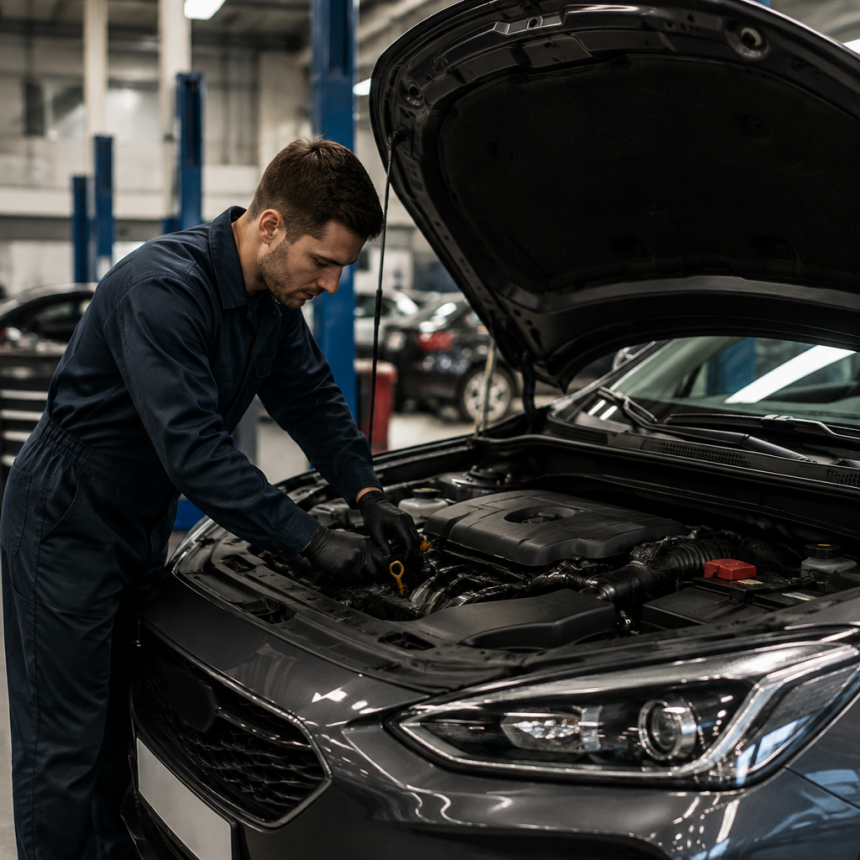
A new car may feel too fresh to need maintenance, but its car first service is an important part of responsible ownership. This early appointment allows a technician to perform scheduled work, inspect key systems, identify developing problems, and confirm that the vehicle is operating as intended. It also establishes a maintenance record that may support warranty coverage and resale value later.
- Table of Contents
- When Is a Car First Service Due?
- What Happens During a Car First Service?
- Engine Oil and Filter Service
- Tire Inspection
- Brake Inspection
- Fluid-Level Checks
- Lights, Wipers, and Safety Equipment
- Diagnostic and Software Checks
- New Cars Still Need a Thorough Owner Check
- How to Prepare for the Appointment
- Dealership or Independent Workshop?
- How Much Does a Car First Service Cost?
- Car First Service Considerations by Powertrain
- Does the First Service Affect the Warranty?
- Driving Conditions Can Change Maintenance Needs
- Safety Technology Also Needs Owner Attention
- What to Check Before Leaving the Workshop
- Common Mistakes to Avoid
- Treating the Service Reminder as the Entire Schedule
- Approving Every Suggested Add-On
- Ignoring Minor Problems Because the Car Is New
- Failing to Keep Records
- Using the Wrong Fluid or Specification
- Assuming Electric Cars Are Maintenance-Free
- Frequently Asked Questions
- Can I drive past the first-service interval?
- Do I need to return to the dealership that sold the car?
- How long does a first service take?
- Should the tires be rotated at the first appointment?
- Is the first service different for an electric car?
- What happens if the workshop finds a fault?
- Start the Ownership Record Properly
Table of Contents
- When is a car first service due?
- What happens during the appointment?
- Checks to perform before the visit
- How to prepare
- Dealership or independent workshop?
- Expected service costs
- Considerations by powertrain
- Warranty and maintenance records
- Checks before leaving the workshop
- Frequently asked questions
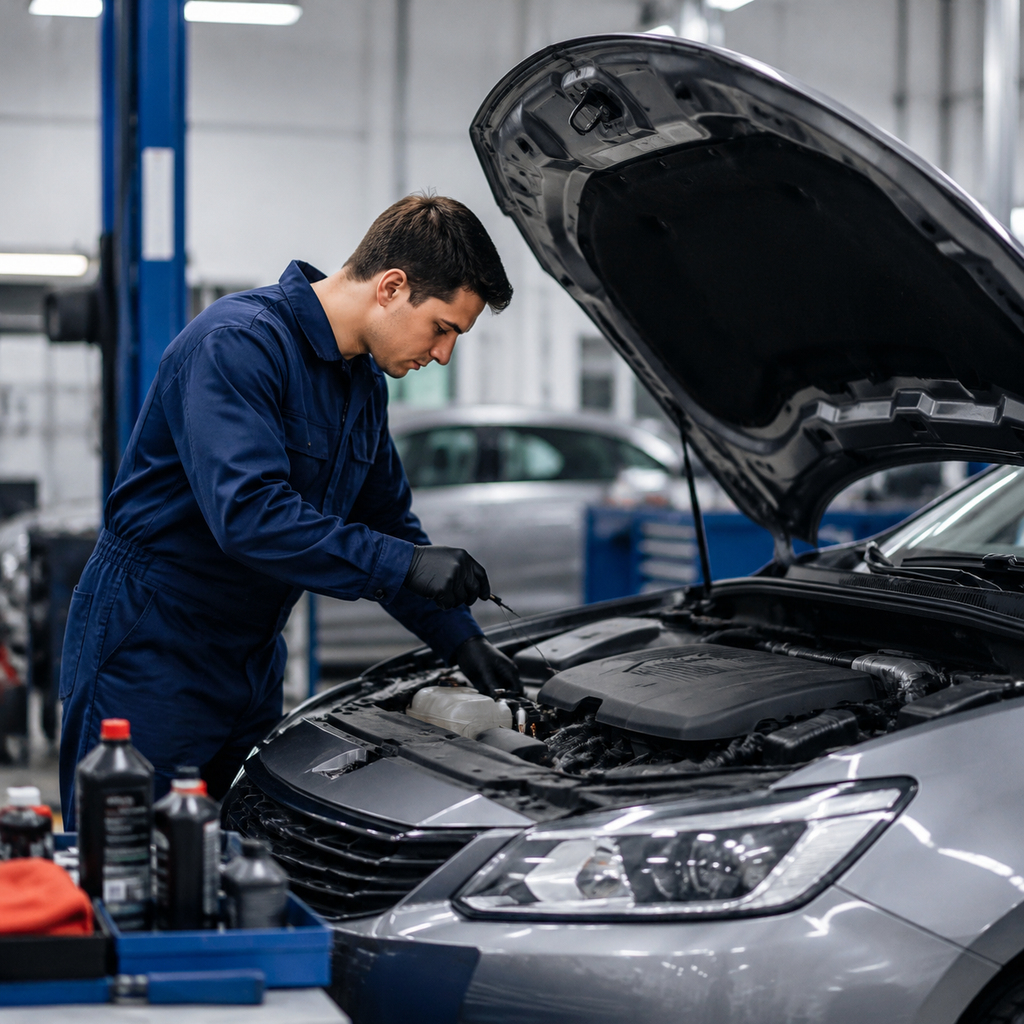
The exact timing and required work depend on the manufacturer, model, engine, powertrain, market, and driving conditions. Some vehicles need an early inspection or oil change, while others have a longer initial interval or rely on an electronic maintenance reminder. The owner’s manual and manufacturer-issued schedule should always take priority over general advice.
When Is a Car First Service Due?
Start by checking the maintenance schedule supplied with the vehicle. Depending on the manufacturer, this information may be found in the printed owner’s manual, a separate warranty and maintenance booklet, the infotainment system, or an official owner portal or mobile app. The correct car first service interval may be based on time, distance, or monitored operating conditions.
The first scheduled appointment may be based on:
- Time since the car was registered or delivered
- Distance traveled
- An oil-life or condition-monitoring system
- Whichever limit is reached first
- A separate early inspection requirement
Do not assume that a low odometer reading means the car first service can be postponed. Engine oil, brake fluid, tires, batteries, seals, and other components are affected by time, temperature, moisture, and storage conditions as well as mileage.
For example, a car used only for short urban trips may accumulate relatively few miles while experiencing frequent cold starts and limited time at full operating temperature. Conversely, a car driven long distances may reach its mileage limit well before the calendar interval.
What If the Dashboard Has Not Displayed a Reminder?
A dashboard reminder is useful, but it is not a substitute for reading the maintenance schedule. Some systems estimate car first service needs from mileage and operating conditions, while others work primarily from preset intervals. They may also track only certain maintenance items.
Check the documentation even if no reminder has appeared. A vehicle can have time-based inspection requirements that are not obvious from its oil-life display.
Is an Early Oil Change Necessary?
Opinions about early oil changes vary because vehicle requirements vary. Modern engines are manufactured to close tolerances, and many manufacturers do not call for a special break-in oil change. Changing the oil much earlier than the scheduled car first service may provide little practical benefit in those cases.
However, an early change may be required for a particular engine, operating environment, or service category. Follow the official schedule rather than relying on a universal rule from another model or an older generation of vehicle. Always use oil that meets the specified viscosity and manufacturer standard.
What Happens During a Car First Service?
A car first service is generally less extensive than a major service, but it should be more than a quick glance under the hood. The technician should work from the maintenance checklist for that specific vehicle.
Common tasks include the following.
Engine Oil and Filter Service
If the maintenance schedule calls for it, the engine oil and oil filter will be replaced during the car first service. Correct oil matters because viscosity alone does not describe every requirement. The oil may also need to meet a particular manufacturer approval or industry specification.
Using an unsuitable oil can affect lubrication, emissions equipment, fuel economy, and warranty questions. Ask for the oil specification to be shown on the invoice, especially if the car has a turbocharged engine, diesel particulate filter, or other system with specific lubrication requirements.
Battery-electric vehicles do not need engine oil changes, but they still require scheduled inspections and maintenance.
Tire Inspection
Tires should be checked during the car first service for pressure, damage, abnormal wear, and adequate tread depth. The technician may also verify whether rotation is due under the manufacturer’s schedule.
New tires can still develop problems. Incorrect pressure, an impact with a pothole, or an alignment issue can cause uneven wear surprisingly early. The recommended pressure is normally listed on a placard in the driver’s door opening or another location specified by the manufacturer. The maximum pressure molded into the tire sidewall is not the routine inflation target.
If the car pulls to one side, the steering wheel sits off-center, or one tire shows unusual wear, mention it before the inspection begins. Wheel alignment is not always included in routine servicing and may require a separate assessment.
Brake Inspection
A car first service may include visual checks of brake pads, discs or rotors, hoses, lines, and fluid level. Electric and hybrid vehicles also need brake inspections even though regenerative braking may reduce use of the friction brakes.
Surface corrosion can occur when a vehicle sits for extended periods or when friction brakes are used infrequently. Light surface rust may clear during normal braking, but persistent noise, vibration, pulling, or weak braking requires professional attention.
Fluid-Level Checks
At a car first service, the technician may inspect:
- Brake fluid
- Engine coolant
- Windshield-washer fluid
- Transmission or driveline fluids where applicable
- Power-steering fluid on systems that use it
- Emissions-system fluids on relevant diesel vehicles
- Thermal-management coolant circuits on hybrid or electric models
A top-up should not be treated as the complete solution to unexplained fluid loss. If a level is unexpectedly low, the cause should be investigated.
Lights, Wipers, and Safety Equipment
Exterior lights, warning lamps, windshield wipers, washers, seat belts, and the horn are typical inspection points. The car first service visit is also a good time to report intermittent camera, parking-sensor, keyless-entry, or driver-assistance warnings.
Dirty cameras and sensors can affect some vehicle functions, but cleaning them will not resolve every fault. A recurring dashboard message should be recorded and diagnosed rather than repeatedly dismissed.
Diagnostic and Software Checks
During a car first service, a workshop may scan the vehicle for stored fault codes, review warning messages, and check whether relevant manufacturer software updates or service actions apply. Not every software update is automatically installed during routine maintenance, so ask what was checked and what changed.
A diagnostic trouble code does not always identify a failed component by itself. It points the technician toward a system or operating condition that may require further testing.
New Cars Still Need a Thorough Owner Check
Before the car first service, spend a few minutes inspecting the vehicle yourself. You are not trying to replace a technician; you are collecting useful observations.
Check for:
- Fluid spots where the car is normally parked
- Warning lights or messages
- Changes in fuel or energy consumption
- Steering vibration or pulling
- Squeaks, rattles, clunks, or wind noise
- Slow starting or electrical irregularities
- Weak air conditioning or heating
- Uneven tire wear
- Poor wiper performance
- Charging problems on a plug-in vehicle
Write down when each issue occurs. “A vibration at approximately highway speed after 20 minutes of driving” gives a workshop more useful information than “the car feels strange.”
Photos or short recordings can help document intermittent warning messages and sounds, provided they can be captured safely while the vehicle is stationary or by a passenger. Never use a phone to document a fault while driving.
How to Prepare for the Appointment
A little preparation before a car first service reduces misunderstandings and helps ensure that concerns are recorded while the vehicle may still be covered by its new-car warranty.
Gather the Relevant Information
Bring the records and information needed to make the car first service efficient:
- The owner’s manual or digital service schedule
- Warranty information
- Current mileage
- A list of symptoms and when they occur
- Photos of intermittent dashboard messages
- Previous repair orders or dealer communications
- The locking wheel-nut key, if applicable
Remove valuables and make the trunk or cargo area accessible if the spare tire, battery, tools, or other service points are located there.
Confirm the Work in Advance
Ask the service provider to identify the car first service requirements at the vehicle’s current age and mileage. Request an estimate that separates scheduled maintenance from optional treatments, repairs, and diagnostic work.
Useful questions include:
- Which items are required by the manufacturer now?
- Which items are inspections rather than replacements?
- What fluids and parts will be used?
- Are any reported defects being handled as warranty concerns?
- Will software updates or active service campaigns be checked?
- Are there charges for diagnosis if the issue is not covered?
This distinction matters because car first service packages are not standardized. A package advertised under that name may include more or less than the manufacturer’s actual schedule.
Discuss Authorization Limits
Before the car first service begins, tell the workshop whether it must contact you before carrying out work beyond the agreed estimate. This prevents an inspection finding from automatically becoming an unapproved repair.
A request for authorization does not mean every additional item is unnecessary. It gives you the chance to understand the evidence, urgency, price, and warranty status before deciding.
Dealership or Independent Workshop?
The appropriate provider for a car first service depends on warranty terms, local law, service quality, and convenience. Rules differ between countries and regions, so broad claims about where a new car “must” be serviced can be misleading.
A franchised dealership usually has direct access to manufacturer procedures, model-specific diagnostic systems, software resources, service campaigns, and warranty administration. That can be particularly useful when the car has a developing defect or complex electronic issue.
A qualified independent workshop may offer competitive labor rates and convenient service, provided it follows the correct schedule, uses suitable parts and fluids, and maintains detailed records. Before choosing one, confirm how using an independent provider affects warranty documentation in your jurisdiction and under the vehicle’s specific warranty terms.
Regardless of workshop type, keep an itemized car first service invoice showing:
- Service date and mileage
- Work completed
- Parts installed
- Fluid grades and specifications
- Inspection findings
- Diagnostic results
- Workshop details
If the vehicle uses a digital service record, confirm that the record has been updated correctly.
How Much Does a Car First Service Cost?
There is no dependable universal price for a car first service. Cost varies with the vehicle, powertrain, labor market, required oil quantity, parts, service plan, taxes, and whether additional problems are found. Remember to consider routine maintenance alongside the other car ownership costs after buying a car.
Some new cars include prepaid or complimentary scheduled maintenance, but the coverage may have time, mileage, location, or item-specific limits. “Included servicing” does not necessarily cover wear items, wheel alignment, tire damage, consumables, or work caused by outside influences.
A car first service estimate should make the following categories clear:
- Manufacturer-scheduled work
- Additional repairs
- Wear items
- Diagnostic charges
- Optional treatments or add-ons
- Taxes and disposal fees where applicable
Be cautious when a package includes services that are not listed in the maintenance schedule and are not supported by an inspection finding. Fuel-system cleaning, air-conditioning treatments, wheel alignment, and engine flushes may be appropriate in some circumstances, but they should not be presented as universally necessary for every new vehicle.
Car First Service Considerations by Powertrain
The basic goals are similar across powertrains, but the maintenance details differ.
Gasoline and Diesel Vehicles
For gasoline and diesel vehicles, a car first service commonly includes attention to engine oil, the oil filter, cooling systems, emissions equipment, belts, hoses, and air filters according to schedule. Diesel models may have additional requirements related to particulate filters and emissions-fluid systems.
Frequent short journeys can be demanding because the engine may not remain warm long enough to manage moisture and emissions processes effectively. Follow the severe-use schedule if the manufacturer says your driving pattern qualifies.
Hybrid and Plug-In Hybrid Vehicles
A hybrid car first service must account for both the combustion engine and high-voltage electrical components. The engine still needs scheduled maintenance even if it runs less often than it would in a conventional car.
Cooling circuits, friction brakes, tires, charging hardware, and software also deserve attention. High-voltage components should be inspected or repaired only by personnel with the appropriate training and equipment.
Battery-Electric Vehicles
An electric-vehicle car first service does not include engine oil, spark plugs, or exhaust-system maintenance. It still requires inspections of the tires, brakes, suspension, steering, cabin filter, charging equipment, thermal-management system, and low-voltage battery.
EVs can be hard on tires because of vehicle weight and readily available torque. Regular pressure checks and timely rotation, where recommended, may help promote even wear. Reduced friction-brake use also makes periodic brake inspection important.
Does the First Service Affect the Warranty?
Missing a required car first service can complicate a warranty claim, particularly if the neglected work is related to the failed component. That does not mean every late appointment automatically cancels every form of coverage, but it creates an avoidable dispute. Vehicle owners in the United States can also review the Federal Trade Commission’s guidance on auto warranties and service contracts.
The safest approach is to:
- Follow the schedule for both time and mileage.
- Use parts and fluids that meet the required specifications.
- Keep itemized receipts and service records.
- Report defects promptly.
- Separate warranty concerns from routine maintenance on the repair order.
- Check the warranty terms that apply in your country.
A service record should document what was actually done, not merely show that a generic package was purchased.
Driving Conditions Can Change Maintenance Needs
Driving conditions can alter car first service timing because many manufacturers publish a standard schedule and an additional schedule for severe or demanding use. The definition may include conditions that feel ordinary to the owner.
Examples can include:
- Repeated short journeys
- Extended idling or dense stop-and-go traffic
- Dusty or unpaved roads
- Frequent towing or heavy loads
- Very hot or cold conditions
- Mountain driving
- Extensive low-speed operation
- Commercial or delivery use
Do not decide for yourself that a condition is “severe” based only on the label. Read the manufacturer’s definition. A family car used for a short school run every day may have a different maintenance profile from the same model used mainly for long, steady highway journeys.
Safety Technology Also Needs Owner Attention
A car first service supports reliability, but safety equipment also depends on clean sensors, an unobstructed windshield, properly aimed lighting, sound tires, and current fault-free systems. If a windshield, bumper, suspension component, wheel-alignment setting, camera, or radar unit has been disturbed, some driver-assistance systems may require inspection or calibration according to the manufacturer’s procedure.
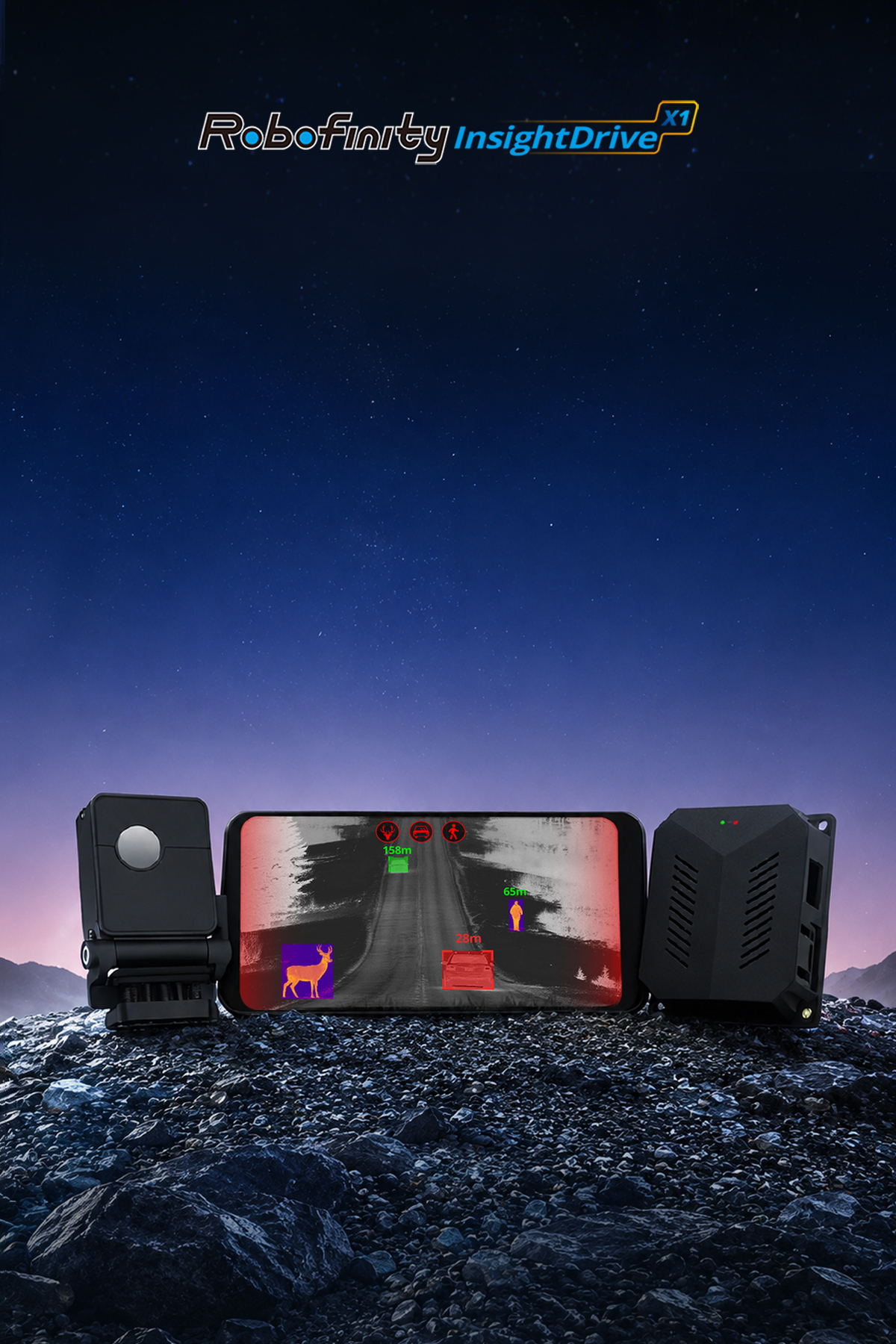
Owners who frequently drive after dark or on unlit rural roads may also evaluate aftermarket awareness tools. Robofinity InsightDrive is one example of a vehicle thermal imaging night vision system designed to support awareness of pedestrians, animals, vehicles, and obstacles in low-light or poor-visibility conditions. Such equipment is supplementary: it does not replace headlights, mirrors, safe speed, adequate braking distance, traffic-law compliance, or attentive driving.
When adding any aftermarket electronic accessory to a new car, use a competent installer. Confirm that mounting, wiring, power consumption, airbag zones, driver sightlines, and existing vehicle systems are not compromised. Keep installation documentation in case a later electrical or warranty question arises.
What to Check Before Leaving the Workshop
Do not treat collection as a simple key handover. Review the car first service invoice and ask for an explanation of findings while the details are still available.
Confirm that:
- The agreed work was completed.
- Reported concerns appear on the repair order.
- Oil and other fluids meet the required specifications.
- The service reminder was reset appropriately.
- The service record was stamped or updated digitally.
- Tire pressures were set correctly.
- No warning lights remain illuminated.
- Any recommended future work includes a reason and timeframe.
- Warranty repairs are clearly distinguished from customer-paid work.
Walk around the vehicle before leaving and check the body, wheels, cabin, and mileage. If the workshop road-tested the car, a small increase in mileage may be normal. Ask about anything unexpected.
During the first drive afterward, pay attention to braking, steering, warning lights, unusual smells, and fluid leakage. Stop safely and contact the workshop if an oil-pressure warning, overheating warning, braking problem, severe vibration, or other critical symptom appears.
Common Mistakes to Avoid
Treating the Service Reminder as the Entire Schedule
The reminder may not cover every time-based car first service inspection or replacement. Consult the official schedule.
Approving Every Suggested Add-On
Ask whether each item is required by the manufacturer, supported by an inspection, or simply optional. Request evidence for wear-related recommendations where practical.
Ignoring Minor Problems Because the Car Is New
A rattle, warning message, water leak, charging interruption, or steering concern may be easier to document and correct when reported early.
Failing to Keep Records
A complete maintenance history is useful for warranty discussions, troubleshooting, and resale. Keep digital copies of invoices in addition to any physical service booklet.
Using the Wrong Fluid or Specification
A generic product is not automatically suitable. Verify the exact specification required for oil, coolant, brake fluid, and other service materials.
Assuming Electric Cars Are Maintenance-Free
EVs have fewer routine engine-related tasks, but they still have tires, brakes, filters, suspension, steering, cooling systems, and electrical components that require inspection and care.
Frequently Asked Questions
Can I drive past the first-service interval?
It is better to schedule the car first service before the time or mileage limit is reached. If you are already overdue, contact a qualified service provider promptly and avoid assuming that a short delay is automatically harmless or automatically voids all coverage.
Do I need to return to the dealership that sold the car?
Not necessarily, but the answer depends on local consumer law and the vehicle’s warranty terms. Any provider should follow the correct schedule, use suitable materials, and document the work thoroughly.
How long does a first service take?
A straightforward car first service inspection and oil change may be completed relatively quickly, but diagnostic work, software updates, warranty repairs, workshop workload, and parts availability can extend the visit. Confirm the expected completion time when booking.
Should the tires be rotated at the first appointment?
Only if the manufacturer’s schedule calls for rotation at that interval or the wear pattern indicates a need. Some vehicles have staggered tire sizes or directional fitments that limit rotation options.
Is the first service different for an electric car?
Yes. An EV car first service does not require engine-oil maintenance, but it still includes scheduled checks of tires, brakes, steering, suspension, filters, charging components, thermal management, and other systems listed by the manufacturer.
What happens if the workshop finds a fault?
Ask whether the issue is safety-critical, covered by warranty, caused by damage or wear, or suitable for monitoring. Request a written diagnosis and estimate before authorizing customer-paid work beyond the original service.
Start the Ownership Record Properly
A car first service is less about performing a large amount of work and more about establishing disciplined ownership. Use the manufacturer’s schedule, report concerns precisely, understand what the workshop is proposing, and retain detailed documentation.
Before booking your car first service, check both the vehicle’s age and mileage, review any dashboard messages, and prepare a short list of observations. That simple process helps protect reliability, preserve a credible maintenance history, and catch small issues before they become expensive or disruptive.