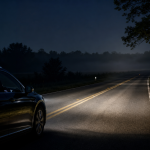
Deer Detection Systems matter because wildlife can appear suddenly on roads, often at night, in poor weather, or on rural routes where drivers have little time to react. Across Europe and America, collisions with deer and other large animals can damage vehicles, injure occupants, and create secondary crashes when drivers brake or swerve abruptly. Modern driver-assistance technology—including thermal-based animal detection—can add an extra layer of road awareness. However, deer detection systems work best as support for attentive driving, not as a replacement for headlights, sensible speed, safe following distances, or careful braking.
- What Is a Deer Detection System?
- Why Deer Collisions Are Difficult to Anticipate
- Deer may appear with little warning
- One deer often means more may follow
- Nighttime visibility is limited
- Why the Risk Is Relevant in Europe and America
- How Thermal Imaging Helps Detect Deer
- What a Deer Detection Alert Can Do
- It can draw attention to the roadside
- It can provide earlier awareness
- It can support recognition in difficult conditions
- It can reduce surprise
- What Deer Detection Systems Cannot Do
- They cannot guarantee detection
- They cannot guarantee the correct response
- They do not replace lighting
- They may not work equally well at every speed
- They may not identify every species or object
- How Drivers Should React to a Deer Warning
- Reduce speed smoothly
- Keep the vehicle in its lane
- Look for additional animals
- Use the horn when appropriate
- Do not accelerate after the first animal passes
- Driving Habits That Reduce Deer-Collision Risk
- Adjust speed for visibility
- Scan the roadside, not only the lane
- Use headlights correctly
- Avoid distractions
- Be especially cautious near warning signs
- Choosing a Deer Detection System
- Sensor type
- Detection range
- Alert format
- Animal and object recognition
- Installation and compatibility
- Weather and maintenance performance
- Who May Benefit Most?
- Rural commuters
- Night-shift workers
- Long-distance drivers
- Families traveling through rural areas
- Drivers in regions with frequent wildlife movement
- A Practical Night-Driving Checklist
- Frequently Asked Questions
- Do deer detection systems work in complete darkness?
- Can a deer detection system prevent a collision?
- Is thermal imaging better than headlights?
- Should drivers swerve to avoid a deer?
- Are deer detection systems useful during the day?
- Do these systems detect pedestrians and other animals?
- Conclusion
Table of Contents
- What Is a Deer Detection System?
- Why Deer Collisions Are Difficult to Anticipate
- Why the Risk Is Relevant in Europe and America
- How Thermal Imaging Helps Detect Deer
- What a Deer Detection Alert Can Do
- What Deer Detection Systems Cannot Do
- How Drivers Should React to a Deer Warning
- Driving Habits That Reduce Deer-Collision Risk
- Choosing a Deer Detection System
- Who May Benefit Most?
- A Practical Night-Driving Checklist
- Frequently Asked Questions
What Is a Deer Detection System?
A deer detection system uses one or more sensors to identify animals near or ahead of a vehicle. Depending on the system, these sensors may include:
- Infrared or thermal imaging cameras
- Standard visible-light cameras
- Radar
- Lidar
- Vehicle speed and steering data
- Artificial intelligence software for object classification
The system processes information from the road environment and may display an alert, sound a warning, highlight an animal on a screen, or communicate with other vehicle safety systems.
The exact capabilities vary significantly. Some deer detection systems are designed only to warn the driver. Others may be integrated with automatic emergency braking or broader pedestrian and animal detection functions. Drivers should understand whether deer detection systems identify an animal at the roadside, detect animals entering the lane, or actively assist with braking. These are different levels of technology.
A warning system may recognize a potential hazard but leave every driving decision to the person behind the wheel. An integrated emergency braking system may intervene under certain conditions, but it still has operating limits related to speed, distance, visibility, road layout, sensor performance, and the type of animal detected.
Why Deer Collisions Are Difficult to Anticipate
Deer are challenging road hazards because their movement does not follow the predictable behavior of normal traffic.
Deer may appear with little warning
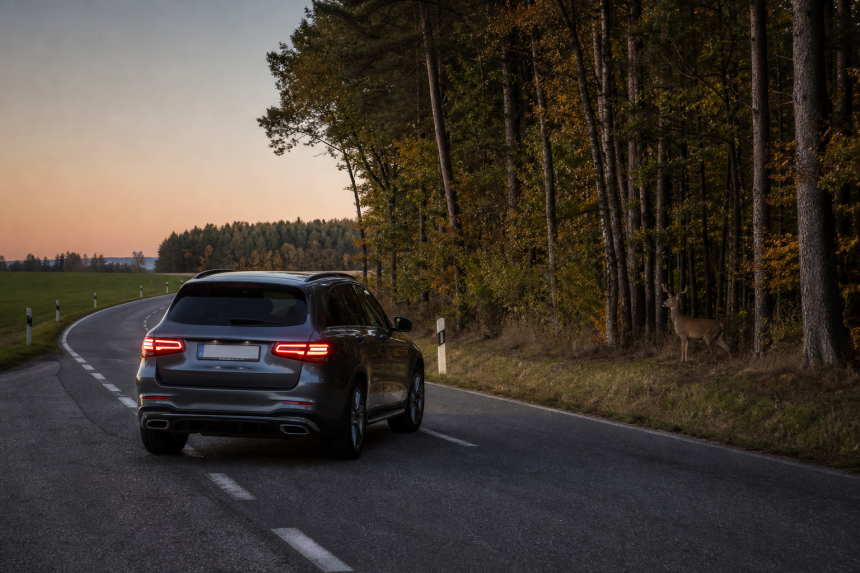
A deer standing near the edge of a road can be difficult to see against dark vegetation. It may remain still until a vehicle approaches, then move suddenly into the lane. In some situations, drivers only notice the animal when it is already close enough to create an immediate hazard.
This is especially difficult on roads bordered by forests, hedgerows, fields, or steep embankments. A vehicle’s headlights may illuminate only a limited area, while an animal beyond the beam remains hidden.
One deer often means more may follow
Deer frequently move in groups. Seeing one animal cross the road should encourage drivers to expect others. The first deer may pass quickly, but a second or third may enter the road several seconds later.
Deer Detection Systems can be useful in this situation by maintaining awareness of movement near the road edge while the driver remains focused on steering and traffic conditions. That extra attention can help when the next deer appears after the first one.
Nighttime visibility is limited
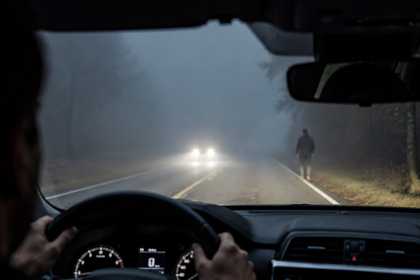
Low-light driving reduces the contrast between an animal and its surroundings. Rain, mist, snow, dirty windshields, headlight glare, and unlit rural roads can make the problem worse.
High beams may improve visibility when their use is legal and appropriate, but they are not a complete solution. Drivers must lower the beam when approaching other vehicles, and even well-designed deer detection systems still depend on sensor performance, timing, and whether the animal is within the effective field of view.
Why the Risk Is Relevant in Europe and America
Wildlife movement and road design differ between regions, but deer-related hazards affect drivers in both Europe and the United States.
Rural roads and woodland routes
Many European countries have roads that pass through forests, farmland, and open countryside. Narrow lanes, bends, roadside vegetation, and limited lighting can reduce a driver’s view of deer approaching from the side.
In America, long rural highways and suburban roads near expanding woodland can create similar conditions. Some roads have wide shoulders and higher speed limits, which may leave less time to respond when a deer enters the travel lane.
Seasonal movement
Deer activity can change during the year because of breeding, feeding, weather, and habitat conditions. The exact timing varies by region, but drivers should be particularly cautious when local wildlife is more mobile.
Seasonal risk does not mean deer are absent at other times. A deer may cross a road at any hour and in any season, so defensive driving remains important throughout the year—especially when deer detection systems are used as an aid rather than a guarantee.
Different driving environments
A driver on a dark country road faces a different hazard from someone on a divided highway or a suburban street. On a rural road, the primary challenge may be seeing the deer early enough. On a busy highway, the danger may include a chain reaction involving several vehicles.
For this reason, deer detection systems should be viewed as part of a wider road-safety strategy rather than a feature that solves one fixed problem. If you’re focused on night performance, see Night Driving Assistance Systems Explained: Types, Benefits, and Limitations for related guidance.
How Thermal Imaging Helps Detect Deer
Thermal imaging detects differences in heat rather than relying only on visible light. Because animals are generally warmer than vegetation, pavement, and other background objects, a thermal camera may help identify deer in conditions where a conventional camera or the human eye has difficulty.
Thermal imaging versus ordinary cameras
A visible-light camera depends on reflected light. At night, it may need headlights or external illumination to produce a useful image. Thermal imaging can detect heat patterns in darkness, although the quality of deer detection depends on sensor design, weather, distance, background temperature, and software processing.
Thermal imaging may be particularly helpful when:
- The road is poorly lit
- A deer is outside the headlight beam
- Fog or light rain reduces visual contrast
- Dark vegetation makes a deer hard to distinguish
- Headlight glare affects the driver’s vision
- The vehicle is traveling through wooded or rural areas
Thermal imaging is not the same as seeing through every obstacle. It cannot reliably detect deer behind a solid object, dense barrier, or terrain obstruction. It also cannot remove the need for the driver to interpret the road and act appropriately, even when deer detection systems provide an alert.
Artificial intelligence and object recognition
Some deer detection systems use software to classify objects rather than simply showing a raw camera image. Artificial intelligence may help distinguish a deer from a person, vehicle, sign, tree, or roadside feature.
A deer detection system that recognizes deer can make an alert more meaningful than a generic warning. However, classification is never perfect. The system may misidentify objects, fail to recognize a partially hidden deer, or provide an alert when the animal is not directly in the vehicle’s path.
The driver should treat the alert as information that requires confirmation, not as an automatic instruction to steer or brake.
What a Deer Detection Alert Can Do
Deer Detection Systems matter most when the alert improves a driver’s awareness in real time—without encouraging risky driving.
A useful alert system can improve the driver’s awareness in several ways.
It can draw attention to the roadside
On an unlit road, a visual display or audible warning may prompt the driver to look toward a specific area. This can be valuable when a deer is near the shoulder but not yet visible through the windshield.
It can provide earlier awareness
Earlier awareness gives drivers more time to reduce speed smoothly and assess nearby traffic. Even a short increase in reaction time can be important, especially when the road is wet or the vehicle is traveling at higher speed.
It can support recognition in difficult conditions
A thermal image may show a warm deer against a cooler background, making the hazard easier to recognize than it would be through normal headlights alone. This can support driving in darkness, light fog, rain, or other poor-visibility conditions.
It can reduce surprise
Many collisions happen because the driver is surprised by an object entering the lane. A warning may not eliminate the hazard, but deer detection systems can reduce the element of surprise and encourage a more controlled response.
What Deer Detection Systems Cannot Do
Understanding the limitations is just as important as understanding the benefits.
They cannot guarantee detection
Sensors may miss deer because of distance, obstructions, adverse weather, unusual body position, or technical limitations. A deer partly hidden behind a hedge or entering from a blind bend may not be detected in time.
They cannot guarantee the correct response
A deer detection system may identify an animal, but it cannot always know whether braking, steering, or continuing slowly is the safest option. Swerving can create a serious risk if another vehicle is nearby, especially on a highway or narrow two-way road.
They do not replace lighting
Drivers still need functioning headlights, clean lenses, and correct beam use. Deer detection systems should supplement the vehicle’s lighting and the driver’s visual checks.
They may not work equally well at every speed
A warning that is useful at moderate speed may arrive too late when the vehicle is traveling quickly. Detection distance, alert timing, road curvature, and stopping distance must all be considered together. Even the best deer detection systems cannot override physics.
They may not identify every species or object
A system designed to recognize deer may behave differently around smaller animals, livestock, cyclists, pedestrians, or unusual roadside objects. Buyers should check the manufacturer’s stated detection categories and avoid assuming that one label covers every situation.
How Drivers Should React to a Deer Warning
Deer Detection Systems are only useful if the driver responds calmly and appropriately.
Reduce speed smoothly
If an animal is detected ahead or near the road, ease off the accelerator and prepare to brake. Smooth deceleration helps maintain control and gives following drivers more time to respond.
Keep the vehicle in its lane
Avoid sudden steering movements unless a collision is unavoidable and a clear escape path exists. Swerving into oncoming traffic, a ditch, a barrier, or another lane can cause a more serious crash than striking a deer.
Look for additional animals
If one deer is visible, scan the road edges and nearby vegetation for others. Keep both hands available for steering and maintain attention on traffic behind and around the vehicle.
Use the horn when appropriate
A brief horn warning may encourage deer to move away, although drivers should not rely on this response. Deer can behave unpredictably, and loud noise may not produce the expected result.
Do not accelerate after the first animal passes
Continue at a reduced speed for some distance. Another deer may follow, or the first one may turn back across the road.
Driving Habits That Reduce Deer-Collision Risk
Technology is most effective when combined with practical driving habits. Deer detection systems support these habits, but they do not remove the need for good judgment.
Adjust speed for visibility
The posted speed limit is not always a suitable speed for darkness, rain, fog, snow, or a road bordered by dense vegetation. Drive at a speed that allows you to stop within the distance you can see clearly—because even with deer detection systems, you still must be able to react safely.
Scan the roadside, not only the lane
Drivers naturally focus on the center of the lane, but deer often enter from the side. Make a habit of scanning both shoulders, field edges, tree lines, and gaps in roadside vegetation.
Use headlights correctly
Keep headlights clean and use high beams only when conditions and traffic rules permit. If the beam is misaligned, damaged, or unusually dim, have the vehicle inspected.
Avoid distractions
A phone, infotainment screen, conversation, or fatigue can delay recognition of an animal. Deer detection systems cannot compensate for a driver who is not watching the road.
Be especially cautious near warning signs
Wildlife-crossing signs indicate that animals may be present in the area. They do not identify an exact crossing point or guarantee that deer will appear only at certain times. Treat the entire surrounding route as a potential wildlife zone.
Choosing a Deer Detection System
Deer Detection Systems matter, but the best choice depends on how the technology fits your routes and your driving needs. Compare practical capability rather than relying on marketing language.
Sensor type
Thermal cameras can offer advantages in darkness and low contrast. Radar may provide useful distance and movement information, while visible-light cameras can contribute to object classification. Some deer detection systems combine multiple sensor types.
Ask what the system actually uses and whether it is intended to operate independently or alongside existing vehicle systems.
Detection range
A longer stated range does not automatically mean better real-world protection. The driver also needs enough time to understand the alert, react, and stop safely. Range should be considered alongside vehicle speed, road geometry, weather, and alert design.
Alert format
Consider whether warnings are:
- Audible
- Visual
- Displayed on a dedicated screen
- Sent through the vehicle’s existing interface
- Linked to braking or other assistance functions
Alerts should be noticeable without creating excessive distraction. A complicated interface may be less useful if it forces drivers to look away from the road.
Animal and object recognition
Find out whether the system is designed for deer only or can also identify pedestrians, livestock, cyclists, vehicles, and other obstacles. Broader recognition may be useful for drivers who regularly travel through rural areas, but it should not be assumed without clear documentation.
Installation and compatibility
Aftermarket deer detection systems may require careful camera placement, wiring, calibration, and display mounting. Poor installation can affect the field of view or create new distractions. Check compatibility with the vehicle and confirm whether installation should be handled by a qualified professional.
Weather and maintenance performance
A camera lens covered by mud, ice, road salt, or condensation may produce reduced performance. Ask how the system should be cleaned and whether it has stated environmental protection for exterior components.
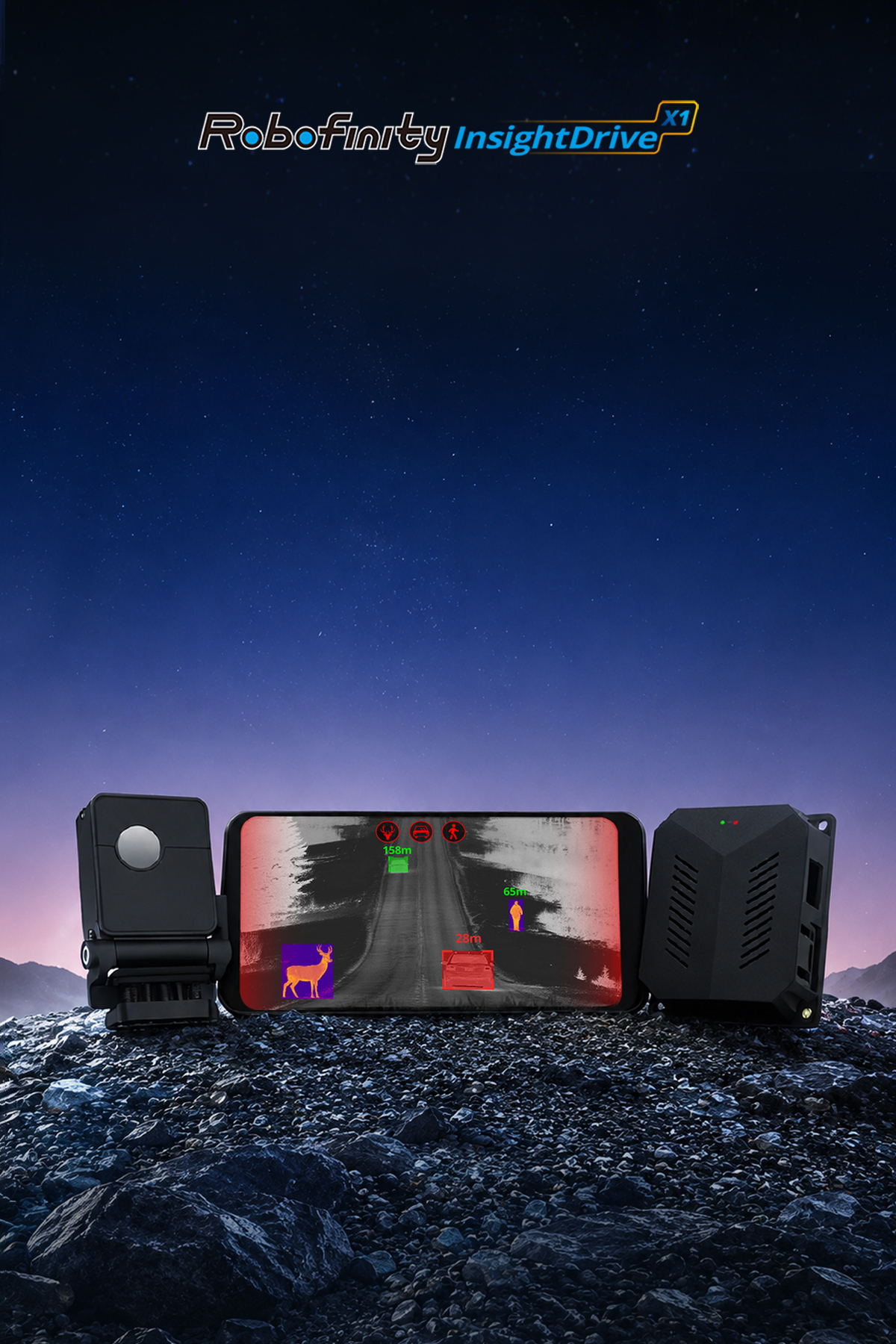
Advanced safety is not limited to factory-installed features. Drivers who regularly travel at night, on rural roads, or in poor-visibility conditions may consider aftermarket awareness upgrades such as Robofinity InsightDrive, a vehicle thermal imaging night vision system that can support recognition of pedestrians, animals, vehicles, and obstacles with real-time alerts.
For additional technical background on thermal and perception systems, the European Commission provides an overview of road safety and technology priorities: European Commission – Road Safety.
Who May Benefit Most?
Deer detection technology is not equally valuable for every driver or journey. Deer detection systems tend to matter most when the risk is consistent and the response time gap is tight.
Rural commuters
People who travel daily through wooded areas, farmland, or unlit roads may encounter deer frequently enough to value additional roadside awareness from deer detection systems.
Night-shift workers
Drivers traveling before dawn or after dark often face reduced visibility and may benefit from technology that highlights heat-producing objects beyond the normal headlight view. Deer detection systems designed for low-light conditions can be especially helpful.
Long-distance drivers
Long highway journeys can involve fatigue, changing weather, and unfamiliar roads. A deer detection system may provide another source of information, although drivers still need regular breaks and full attention.
Families traveling through rural areas
Parents may appreciate additional awareness when traveling with passengers, but deer detection systems should not encourage faster driving or reduce normal precautions.
Drivers in regions with frequent wildlife movement
Local knowledge matters. If deer crossings are common near a home, workplace, or holiday route, deer detection systems may be a relevant safety upgrade. It is still important to assess cost, installation quality, maintenance, and actual driving needs.
A Practical Night-Driving Checklist
Before driving through an area where deer may be present:
- Clean the windshield, headlights, mirrors, and camera lenses.
- Check that all exterior lights operate correctly.
- Reduce speed when visibility is limited.
- Scan both sides of the road continuously.
- Leave extra space behind the vehicle ahead.
- Expect more deer after seeing one.
- Keep steering movements controlled.
- Treat detection alerts as warnings, not guarantees.
- Avoid using a handheld phone or adjusting equipment while moving.
- Take a break if fatigue affects concentration.
This checklist remains useful even in vehicles with sophisticated driver-assistance systems. If you also want to prepare for other wildlife threats, consider how Detect Animals at Night: How to Spot Wildlife on Rural Roads Safely complements deer-focused alerts.
Frequently Asked Questions
Do deer detection systems work in complete darkness?
Deer Detection Systems with thermal imaging can detect heat differences without depending entirely on visible light, so they may assist in darkness. Performance still depends on sensor quality, distance, weather, obstructions, software, and the animal’s position.
Can a deer detection system prevent a collision?
No system can guarantee that a collision will be avoided. Deer detection may provide earlier warning, but the driver must still respond, and the vehicle may not have enough distance or traction to stop safely.
Is thermal imaging better than headlights?
Thermal imaging and headlights serve different purposes. Headlights illuminate the road and help the driver see lane markings, signs, traffic, and ordinary objects. Thermal imaging may help reveal heat-producing animals or people in low-light conditions. It should supplement, not replace, normal vehicle lighting.
Should drivers swerve to avoid a deer?
Sudden swerving can create a serious risk, particularly when another vehicle, barrier, or drop-off is nearby. Drivers should generally brake firmly while maintaining control and staying in their lane, unless a clearly safer path is available.
Are deer detection systems useful during the day?
They can be useful during the day, especially when animals blend into vegetation, appear around bends, or are difficult to see because of rain, fog, glare, or shadows. Their value depends on the specific system and driving environment.
Do these systems detect pedestrians and other animals?
Some deer detection systems are designed to recognize multiple categories, such as pedestrians, animals, vehicles, and obstacles. The exact capabilities vary, so drivers should review the system’s documentation rather than assume that all detection technology works the same way.
Conclusion
Deer Detection Systems matter because wildlife can enter the road with very little warning, particularly on dark rural routes and during poor-visibility conditions. Thermal imaging, radar, cameras, and intelligent alerts may improve a driver’s awareness by drawing attention to deer that are difficult to see with headlights alone.
Deer Detection Systems also have clear limitations: they may miss partially hidden animals, produce false alerts, or provide too little time for a safe response. They cannot replace correct speed, working headlights, careful scanning, safe braking, or driver attention.
For drivers who regularly travel through deer habitats, especially at night or in changing weather, a well-chosen deer detection system can be a practical addition to a broader safety strategy. The most responsible approach is to treat deer detection systems as an extra source of information: useful, potentially valuable, but never a substitute for sound judgment behind the wheel.