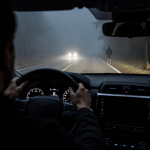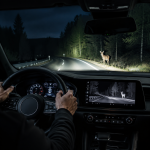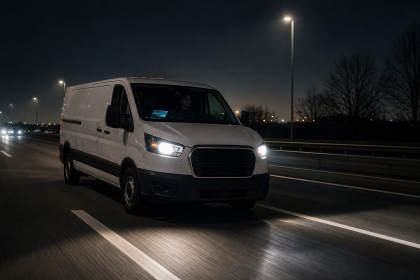
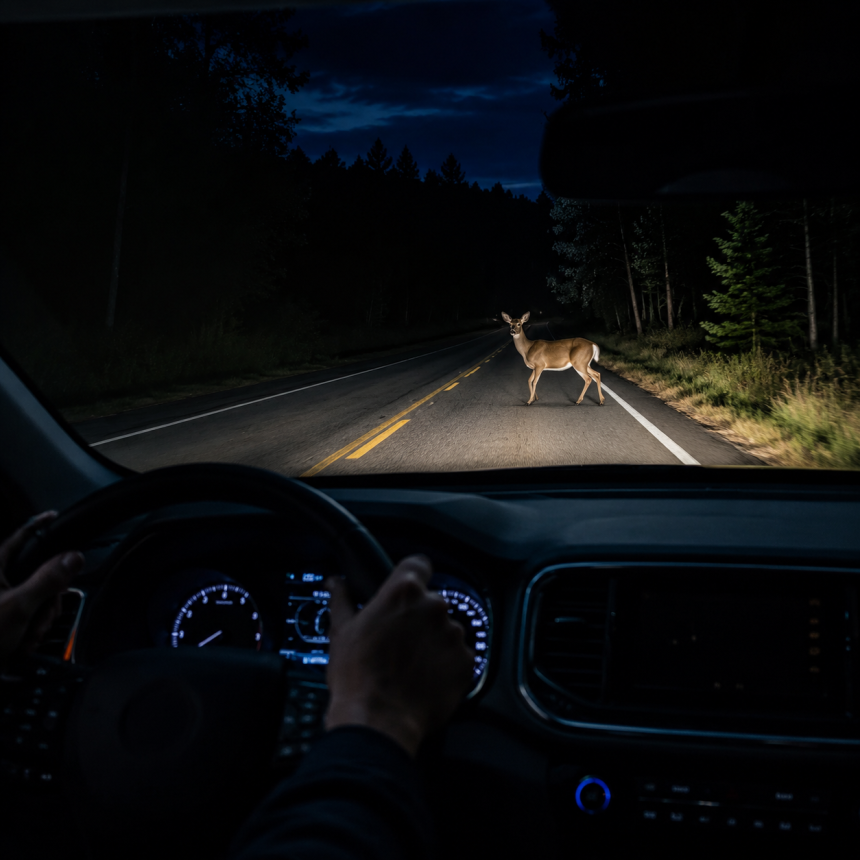
Hitting Animals While Driving at Night is a serious risk on rural roads, wooded routes, and highways near open land. Deer, dogs, cats, raccoons, sheep, horses, and other animals can appear suddenly in headlights, so the best protection is a mix of slower speeds, better scanning, and smarter route awareness. You cannot control wildlife, but you can change how you approach low-light driving.
- Why animal collisions happen more often at night
- The best driving habits to reduce the risk
- Where animals are most likely to appear
- How to read the road for animal warning signs
- What to do when you see an animal ahead
- If a collision seems unavoidable
- Common mistakes drivers make at night
- Why vehicle condition matters
- How driver-assistance technology can help
- What to teach new or family drivers
- FAQ
- Conclusion
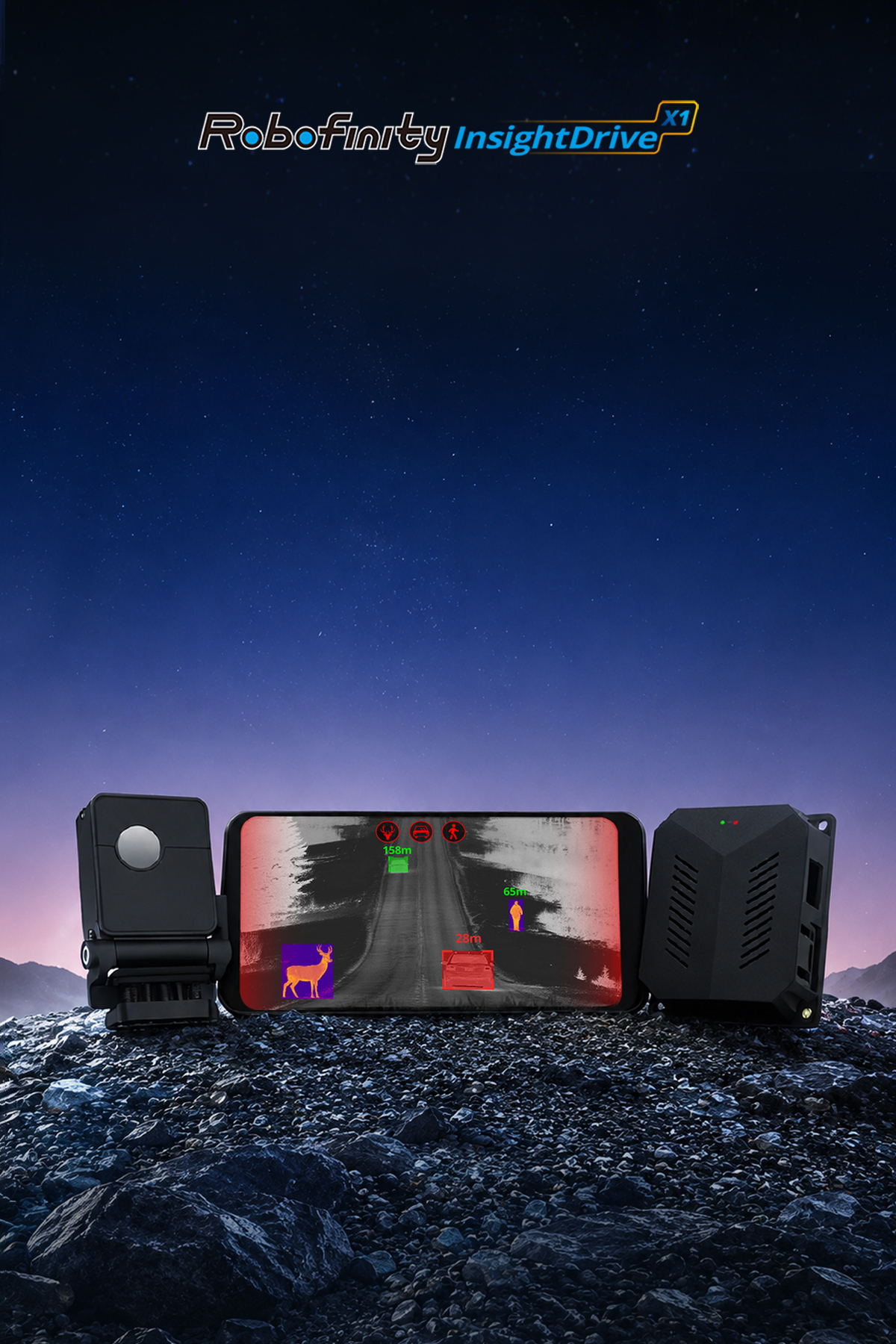
This is an informational, practical topic, so the most useful advice is not one single trick. It is a combination of speed management, road awareness, proper headlight use, understanding animal behavior, and knowing what to do if an animal appears in your path. In some cases, advanced driver-assistance technology can add another layer of awareness. For example, Robofinity InsightDrive is a vehicle thermal imaging night vision system designed to support visibility of pedestrians, animals, vehicles, and obstacles in poor-visibility conditions.
Table of Contents
- Why animal collisions happen more often at night
- The best driving habits to reduce the risk
- Where animals are most likely to appear
- How to read the road for animal warning signs
- What to do when you see an animal ahead
- If a collision seems unavoidable
- Common mistakes drivers make at night
- Why vehicle condition matters
- How driver-assistance technology can help
- What to teach new or family drivers
- FAQ
Why animal collisions happen more often at night
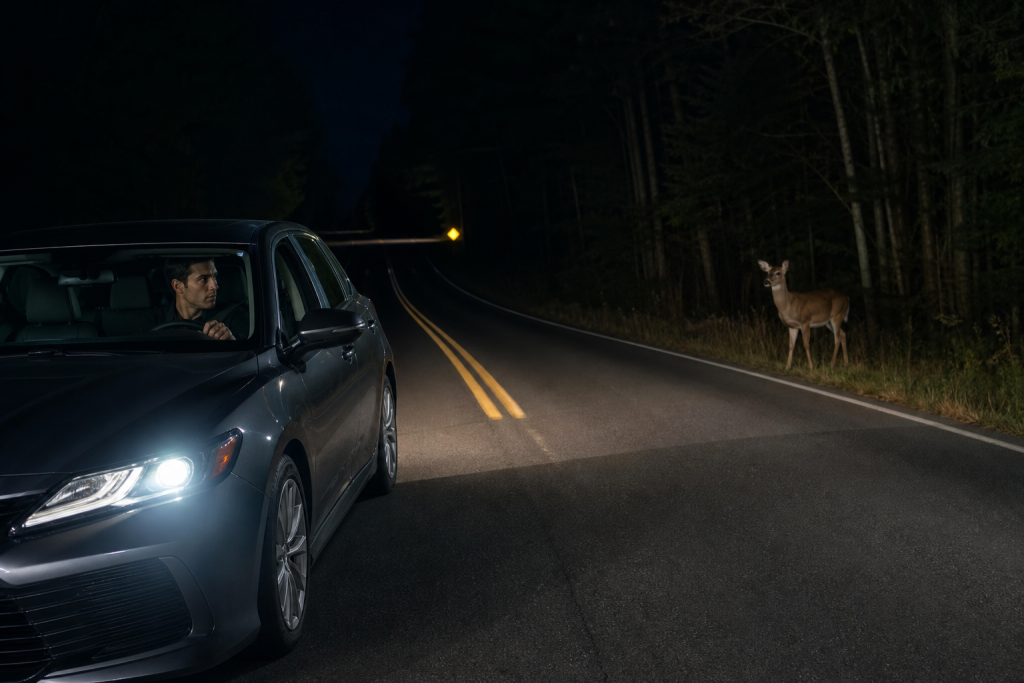
Hitting Animals While Driving at Night is more likely after dark because visibility drops and many animals are most active during dawn, dusk, and nighttime hours. Drivers often see too little, too late. A few common factors make these situations more dangerous:
Reduced visibility
Headlights illuminate only part of the road, and many animals blend into dark shoulders, tree lines, or tall grass.
Sudden movement
Animals do not always move predictably. Some freeze in the beam of the headlights, while others dart across the road without warning.
Roadside habitat
Rural roads, forest edges, farmland, and open highways near water sources or feeding areas tend to attract wildlife.
Driver fatigue
Tired drivers react more slowly and may not spot subtle movement near the roadside.
Seasonal patterns
In many regions, wildlife movement increases during mating season, migration periods, or colder months when animals search more actively for food.
Knowing these patterns helps you stay alert in the places and times where risk is highest—especially when you’re hitting animals while driving at night through familiar corridors.
The best driving habits to reduce the risk
Hitting Animals While Driving at Night is not about reacting at the last second. It starts before you even reach the risk area.
Slow down in high-risk zones
Speed is one of the biggest factors in whether you have time to react. If you are on a rural road, near wooded shoulders, or passing through a wildlife corridor, reducing speed gives you more seconds to notice movement and more distance to stop—one of the most practical ways to reduce the chance of hitting animals while driving at night.
Use high beams when appropriate
High beams can help you spot eyes reflecting light farther ahead, but only when there is no oncoming traffic and local rules permit them. Lower your speed if you need to switch back to low beams on a dark road. If you’re frequently encountering deer crossings, this habit can meaningfully reduce the likelihood of hitting animals while driving at night.
Scan beyond the pavement
Do not focus only on the lane directly ahead. Look farther down the road and also toward the shoulder, ditches, fencing gaps, and roadside tree lines. Animals often wait at the edge before entering the road.
Watch for one animal and expect more
If you see one deer or another animal, assume there may be others nearby. Many species travel in groups, especially around feeding times. When you’re hitting animals while driving at night, that “one becomes several” pattern is why cautious speed and continued scanning matter.
Avoid driving distracted
A few seconds of looking away from the road can be enough to miss a moving animal. Keep your eyes forward and limit screen use while driving at night.
Be especially cautious at dawn and dusk
Many animal collisions happen during twilight, when the sky still has some light but contrast is poor. Drivers often underestimate how hard animals are to spot in this in-between lighting.
Where animals are most likely to appear
Some roads carry a much higher risk than others. If you know the type of environment you are driving through, you can prepare accordingly—especially if your routes often involve areas where animals step onto the roadway.
Rural and country roads
These are among the highest-risk routes because they often border fields, woods, and open land. Visibility may also be limited by curves, hills, and narrow lanes.
Highways near open land
Fast roads can be especially dangerous because an animal crossing the shoulder may be difficult to see until you are very close.
Mountain roads
Sharp bends, steep drop-offs, and limited shoulders can make it harder to spot animals early.
Roads near farms or pastures
Livestock can enter the roadway if fencing is damaged, gates are open, or animals escape enclosures.
Suburban edges
Even neighborhoods near wooded areas can have deer, coyotes, foxes, rabbits, and stray pets close to the road.
If you regularly drive through these areas at night, it is worth treating the road as a shared space rather than assuming it is clear. For more on the broader safety side of night travel, see Night Highway Driving: Thermal Imaging Can Save Lives. This approach can reduce the chance of hitting animals while driving at night even when traffic is light.
How to read the road for animal warning signs
One of the most practical ways to avoid hitting animals while driving at night is to notice small clues before you see the animal itself.
Look for reflective eyes
Animals often reflect headlights from the roadside. A quick glint near the ditch or tree line can be your first warning.
Notice movement at the edges
A dark shape shifting near the shoulder or a sudden pause in brush can signal an animal preparing to enter the road.
Pay attention to roadside signs
Wildlife crossing signs are not decorative. They are usually placed where collisions have happened before or where animal movement is known to be common.
Watch the behavior of nearby traffic
If cars ahead brake unexpectedly, slow down and look carefully. Another driver may have seen something you have not yet noticed.
Listen as well as look
Open windows in slower traffic or on country roads can sometimes help you hear animals moving near the roadside, though this should never replace visual scanning.
For a deeper look at why thermal systems can help in darkness, review the National Highway Traffic Safety Administration for vehicle safety guidance and related driver-awareness resources.
What to do when you see an animal ahead
The safest response depends on where the animal is and how much space you have, but calm, controlled action matters most. When you’re hitting animals while driving at night, your reaction time is everything—so try to move from observation to controlled driving quickly.
Reduce speed smoothly
Ease off the accelerator and brake in a controlled way. Hard braking can create a hazard if traffic is behind you, but slowing down quickly and safely gives you more reaction time.
Keep the vehicle straight
If you have time, stay in your lane and avoid sudden swerving. A sharp steer can lead to losing control, crossing into oncoming traffic, or leaving the roadway.
Use the horn carefully
A short horn tap may help some animals move away, but it can also freeze them. Do not rely on it as a complete solution.
Expect unpredictable movement
Even if the animal seems to be leaving the road, it may turn back or stop in place. Continue to watch it until you are sure the road is clear.
Brake, don’t panic
The goal is to remain in control. Controlled braking is usually safer than a sudden steering correction.
If you can see a second animal or you notice group behavior, maintain caution for several seconds after the first sighting. Many near-misses happen right after the first animal passes, when drivers speed up again before the road is truly clear—an important detail for preventing hitting animals while driving at night.
If a collision seems unavoidable
No driver wants to face this situation, but being prepared helps you respond more safely.
Hold your lane if possible
A direct collision with an animal is often less dangerous than swerving into a tree, barrier, ditch, or another vehicle.
Protect yourself and passengers
Keep both hands on the wheel, remain seated properly, and stay focused on vehicle control.
After impact, pull over safely
If the vehicle is drivable, move to a safe location away from traffic. Turn on hazard lights and check for injuries before inspecting the vehicle.
Do not approach a wounded animal
An injured animal may be frightened and may react aggressively. Stay at a safe distance and contact local authorities or animal control if appropriate in your area.
Check for hidden damage
Even if the vehicle seems okay, damage to the bumper, radiator, lights, or tires may not be obvious right away.
Common mistakes drivers make at night
Many animal collisions happen because drivers repeat a few avoidable habits. If you want to reduce the odds of hitting animals while driving at night, focus on the patterns below.
Driving too fast for the conditions
Speed limits are not always the safest speed for a dark road with poor visibility.
Overdriving the headlights
If you cannot stop within the distance illuminated by your headlights, you may be driving faster than your visibility allows.
Fixating on the center of the lane
Animal movement is often visible at the edges first, not straight ahead.
Assuming the road is empty
A road that looks clear for a few seconds can still have an animal step into it unexpectedly.
Ignoring fatigue
Tired drivers are less likely to notice small changes in the roadside environment.
These mistakes are common because night driving reduces contrast and makes the brain work harder. Staying alert is not just about watching the road. It is also about managing your speed and attention—especially when hitting animals while driving at night in low-contrast conditions.
Why vehicle condition matters
Good driving habits are important, but the car itself also plays a role in nighttime road awareness.
Keep headlights clean and aligned
Dirty lenses and poor aim reduce the reach and usefulness of your lights.
Replace dim bulbs when needed
Worn bulbs can lower visibility significantly, especially on unlit roads.
Use windshield wipers and a clean windshield
Streaks, glare, and dirt can make it harder to see animals at the edge of the light beam.
Check tires and brakes
If you need to slow down quickly, your tires and brakes must be in good condition.
Adjust mirrors correctly
While mirrors do not help you spot animals ahead, they do help you avoid making a risky maneuver that could affect other traffic.
Basic maintenance cannot eliminate wildlife risk, but it supports better control and visibility—two key ingredients for avoiding hitting animals while driving at night.
How driver-assistance technology can help
Modern driver-assistance features may help with road awareness, especially in dark or poor-visibility conditions. Depending on the vehicle, systems like forward collision warning, automatic emergency braking, and pedestrian detection may give extra time to react. These tools are helpful, but they still depend on sensors, weather, road layout, and the limits of the system itself.
For drivers who frequently travel at night on rural roads or in low-visibility conditions, aftermarket upgrades may also be worth considering. Robofinity InsightDrive is one example of a vehicle thermal imaging night vision system that can support awareness of pedestrians, animals, vehicles, and obstacles ahead in darkness, fog, rain, snow, and headlight glare. It is not a substitute for safe driving, but it can add another layer of information when standard visibility is limited.
Animal detection is part of the same broader safety picture discussed in Thermal cameras detect animals at night, where visibility limits and heat-based detection are explained in more detail.
When technology is used correctly—paired with slower speeds and steady scanning—it can complement your prevention plan for hitting animals while driving at night.
What to teach new or family drivers
If multiple people use the same vehicle, night-driving habits should be shared clearly. This is also one of the most effective ways to reduce the risk of hitting animals while driving at night across the entire household.
Explain local wildlife risks
Younger drivers or new drivers may not know where animals are most active.
Set expectations about speed
Make it clear that driving a little slower at night is a smart choice, not a sign of hesitation.
Practice scanning habits
Show newer drivers how to look farther down the road and toward the shoulders.
Review what to do in an emergency
A calm reaction can prevent panic if an animal suddenly appears.
Families that drive through rural or wooded areas regularly should treat this as part of normal road safety education.
FAQ
What is the safest thing to do if an animal runs into the road?
Brake in a controlled way, stay in your lane if possible, and avoid sudden swerving. A controlled impact is usually safer than losing control of the vehicle.
Do high beams help you avoid hitting animals at night?
They can help by extending visibility farther ahead, but only when conditions and traffic allow them. They are helpful, but not enough on their own.
Are deer the only animals drivers need to worry about?
No. Dogs, cats, raccoons, coyotes, sheep, horses, and other animals can also be a hazard, depending on the area.
Should I swerve around an animal?
Only if you have a clear, safe escape path. Swerving without enough space can create a worse crash risk than hitting the animal.
Can technology stop animal collisions completely?
No system can guarantee that. Driver-assistance tools may improve awareness, but they do not replace attention, speed control, headlights, or safe driving judgment. The best results still come from prevention habits that reduce the chance of hitting animals while driving at night.
Conclusion
Hitting Animals While Driving at Night comes down to preparation, scanning, and restraint. The most effective habits are often simple: slow down in high-risk areas, look beyond the beam of the headlights, expect animals near roads bordered by fields or woods, and resist the urge to swerve suddenly. Good vehicle maintenance and responsible driving support those habits, especially in poor-visibility conditions when hitting animals while driving at night is most dangerous.
If you drive often on rural roads or through areas with frequent wildlife activity, it may also be worth looking into additional driver-assistance tools that support nighttime road awareness. Used as a supplement to careful driving, technologies like Robofinity InsightDrive can add another layer of visibility when animals or other hazards are hard to spot.
Quick night-driving reminder
When the road is dark and the shoulders are unclear, treat every stretch as a potential wildlife zone. Slower speeds, wider scanning, and a steady response give you the best chance of avoiding hitting animals while driving at night.
More ways to stay alert on dark roads
If you want to go deeper, review your regular driving route and note where the risk of hitting animals while driving at night is highest. Curves, unlit shoulders, farm access points, and wooded stretches deserve extra caution. A small speed reduction in these areas can make a major difference in stopping distance and reaction time.
It also helps to prepare before you leave. Clean lenses, working wipers, and properly aimed headlights all support a better view of the road. When those basics are combined with patient scanning, you are less likely to miss the early signs that an animal is near the roadside.
For family cars, a simple reminder can go a long way: if the area looks dark, quiet, and open, do not assume it is empty. Hitting animals while driving at night often happens because the driver had only a moment to respond. Giving yourself more time is the safest strategy.
What to remember on repeat night drives
Drivers who travel the same route regularly can become less alert over time, even when the risk stays the same. That is why it is useful to refresh the habit of watching shoulders, treelines, and roadside gaps each time you drive. Animals do not follow a schedule, and a road that was clear yesterday may not be clear tonight.
High-risk roads deserve a high-risk mindset. If you are near open fields, brush, water, or farmland, assume an animal may appear without warning. That mindset keeps your speed in check and helps you avoid overdriving your headlights. It also keeps the focus on prevention rather than reaction, which is the best approach for hitting animals while driving at night.