When shoppers compare the Toyota RAV4 vs Honda CR-V for 2026, they are usually looking for the same thing: a compact SUV that balances practicality, comfort, fuel efficiency, and long-term value. Both models have built strong reputations over many years, and both continue to evolve with updated technology, safer driver-assistance systems, and more refined everyday driving manners. The real question is not whether one is “good” and the other is not; it is which one fits your priorities better in areas such as performance, interior space, efficiency, and ownership experience.
- Overview of the 2026 Battle
- Exterior Design and Road Presence
- Interior Comfort and Cabin Space
- Honda CR-V: One of the Roomiest in the Class
- Toyota RAV4 vs Honda CR-V: Functional with a Slightly More Compact Feel
- Performance and Driving Experience
- Fuel Efficiency and Powertrain Choices
- Technology and Infotainment
- Safety and Driver Assistance
- Reliability and Ownership Value
- Which One Is Better?
- Final Verdict
For buyers who want a broader look at the class, it can also help to compare these two against other top family haulers in our guide to Family SUVs in 2026: KBB’s Top 12 Picks. That larger view makes the Toyota RAV4 vs Honda CR-V decision even easier because it shows where each model fits among the best compact and midsize options.
The Toyota RAV4 vs Honda CR-V debate is still one of the most useful comparisons in the segment because these SUVs appeal to a very similar audience. Commuters, young families, retirees, and buyers upgrading from a sedan all tend to cross-shop the same two vehicles. The Toyota RAV4 vs Honda CR-V choice often comes down to whether you care more about rugged style and powertrain variety or interior space and a smoother ride.
Table of Contents
Overview of the 2026 Battle
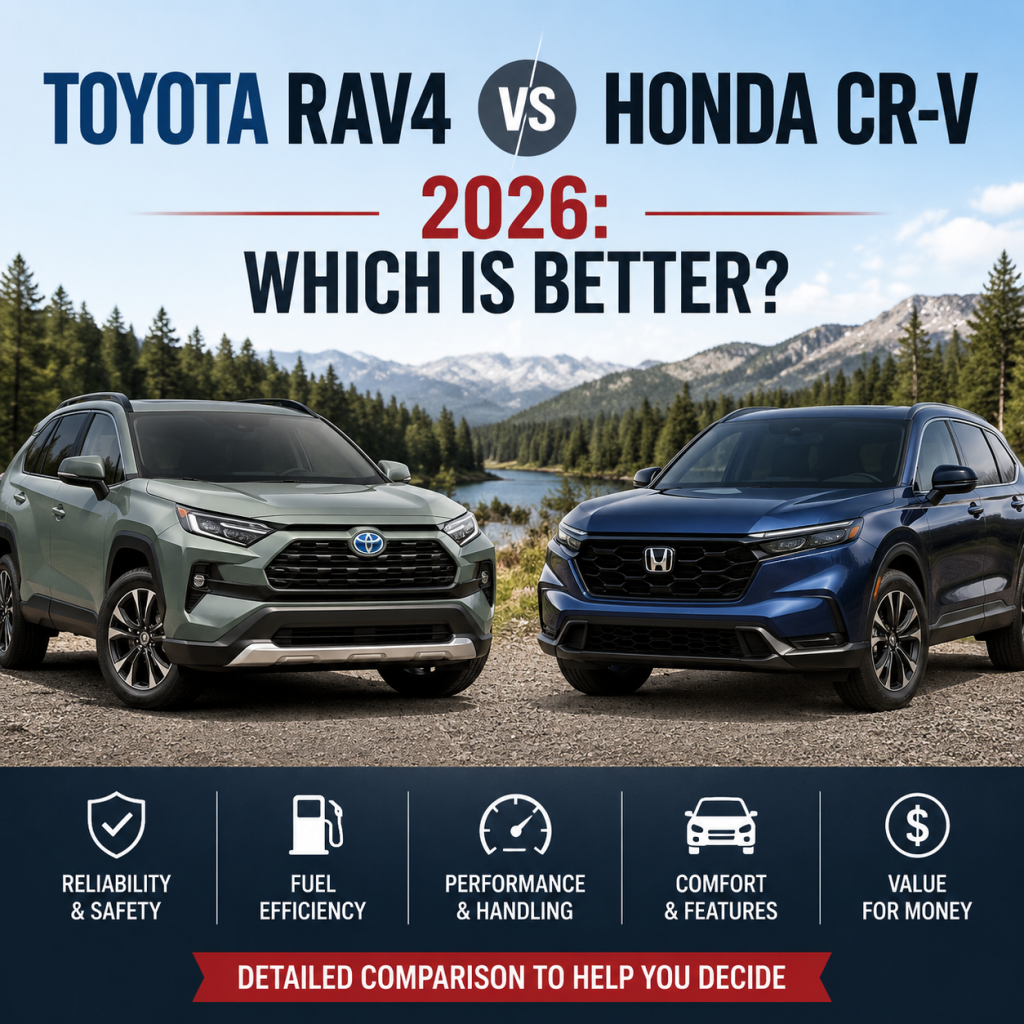
The Toyota RAV4 vs Honda CR-V matchup remains one of the most competitive choices in the compact SUV segment. Each appeals to families, commuters, and buyers who want a vehicle that feels easy to live with. The RAV4 often stands out for its broader trim variety, rugged image, and available hybrid-focused efficiency. The CR-V, meanwhile, has earned praise for its smooth ride, roomy cabin, and user-friendly design.
For 2026, both SUVs continue to push toward better fuel economy, improved tech, and stronger safety features. While exact trim configurations may vary by market, the core identity of each model remains consistent. The RAV4 leans slightly more adventurous, while the CR-V focuses on comfort and everyday refinement. That contrast is exactly why the Toyota RAV4 vs Honda CR-V comparison stays so relevant for shoppers who want a practical vehicle without giving up personality.
There is also a value angle to consider. Buyers who are comparing the Toyota RAV4 vs Honda CR-V usually want long-term peace of mind, which means reliability, resale value, and efficiency matter almost as much as cabin comfort. In that sense, this is not just a spec-sheet comparison; it is a real-world ownership decision.
Exterior Design and Road Presence
Toyota RAV4 vs Honda CR-V: Bold and Purposeful
The Toyota RAV4 vs Honda CR-V comparison begins with styling, and the Toyota has long carried a more angular, athletic look. Its design language tends to feel tougher and more SUV-like, especially in off-road-inspired trims. That styling helps the RAV4 appeal to buyers who want their vehicle to look ready for more than just daily commuting.
In 2026, the RAV4 is expected to continue that rugged personality with sharp body lines, a confident stance, and trim-specific styling that can range from practical to sporty. For many buyers, this gives the Toyota a stronger visual identity. If your ideal compact SUV should look confident in a driveway, at a trailhead, or outside the office, the Toyota RAV4 vs Honda CR-V styling contest may already be leaning Toyota.
The RAV4’s road presence also works in its favor because it appears slightly more substantial than some rivals without becoming bulky. That helps it feel like a versatile tool instead of a soft crossover. Shoppers who like a vehicle with a little attitude often respond well to this approach, especially when they want a compact SUV that still feels capable.
Honda CR-V: Clean and Mature
The Honda CR-V has moved toward a more upscale and understated appearance in recent generations. Its shape is smooth, modern, and less aggressive than the Toyota’s. This design approach gives the CR-V a more polished feel, which may appeal to buyers who prefer a sophisticated rather than adventurous look.
The Honda’s exterior may not shout for attention, but it does communicate maturity and balance. In a suburban driveway or city parking lot, that can be exactly what many shoppers want. The styling is especially effective for drivers who plan to keep the SUV for years and do not want it to feel tied to a passing trend. In a head-to-head Toyota RAV4 vs Honda CR-V appearance comparison, the Honda is the calmer, more timeless option.
That calmness also makes the CR-V feel approachable. It does not try too hard, and for many buyers, that is part of the appeal. Instead of looking rugged, it looks resolved and practical, which lines up well with its broader mission as a family-friendly daily driver.
Interior Comfort and Cabin Space
Honda CR-V: One of the Roomiest in the Class
The CR-V has historically been a standout for interior space, and that continues to be one of its biggest strengths. Rear-seat passengers generally enjoy generous legroom, and the cabin feels open and easy to settle into. The seating position is comfortable, visibility is excellent, and the layout is intuitive.
Cargo capacity is also a major advantage. The CR-V is known for practical storage solutions and a well-shaped cargo area, making it especially appealing for families, road trips, and everyday hauling. If your version of the Toyota RAV4 vs Honda CR-V comparison starts with back-seat comfort and everyday usability, the Honda usually earns strong marks right away.
Small details matter too. Cupholders, door pockets, and storage cubbies are arranged in a way that feels genuinely useful rather than gimmicky. That can make a big difference when you are loading school bags, groceries, sports gear, or luggage. In real family life, those details are part of what makes the CR-V such an easy recommendation.
Toyota RAV4 vs Honda CR-V: Functional with a Slightly More Compact Feel
The Toyota RAV4 vs Honda CR-V interior comparison shows that the RAV4 offers a comfortable and versatile cabin, but it generally feels a bit more compact than the Honda’s interior. Up front, the driving position is supportive and the controls are easy to reach. In back, the space is adequate for most adults, though the CR-V usually offers a little more generosity.
The Toyota makes up some ground with durable materials, smart storage options, and a layout that feels built for simple, everyday use. It may not be the roomiest in the class, but it remains highly practical. The RAV4 cabin also tends to feel sturdier in an everyday sense, which will appeal to buyers who value durability over a lounge-like atmosphere.
Another advantage of the Toyota RAV4 vs Honda CR-V interior battle is that the RAV4’s cockpit usually feels a little more driver-focused. That gives it a slightly more active feel behind the wheel. While the Honda emphasizes openness, the Toyota emphasizes control and function.
For shoppers who regularly carry teenagers, adults, or child seats, the CR-V’s extra space can be a major win. For those who mostly drive solo or with one passenger and want a compact SUV that is easier to park and maneuver, the RAV4’s more compact footprint may feel just right.
Performance and Driving Experience
RAV4: More Variety, Including More Adventurous Options
One of the RAV4’s strongest points is its wide range of powertrain choices. Depending on trim and market, buyers may find gas, hybrid, and plug-in hybrid-style options that deliver different levels of performance and efficiency. This variety gives the Toyota an edge for shoppers who want flexibility.
On the road, the RAV4 usually feels composed and confident. It is easy to maneuver in traffic, stable at highway speeds, and capable enough for light outdoor use when equipped appropriately. Some versions may feel firmer or less refined than the Honda, but others bring a more engaging personality. The Toyota RAV4 vs Honda CR-V comparison in this category often favors the RAV4 for shoppers who want more than just a commuter appliance.
The Toyota also has a slight advantage if your driving includes mixed conditions. Whether that means steep driveways, gravel roads, snow, or just rough pavement, the RAV4 tends to project a sense of readiness. That does not make it an off-roader in every trim, but it does make it feel like the more versatile tool.
CR-V: Smooth, Comfortable, and Easygoing
The CR-V’s driving style is centered on comfort. It tends to absorb road imperfections well and delivers a calm, predictable ride. Steering is light and approachable, which makes it especially easy for daily commuting and errands.
For many buyers, the Honda’s appeal lies in how little effort it requires to drive well. It is not trying to feel sporty or rugged. Instead, it focuses on being pleasant, quiet, and reassuring. In a Toyota RAV4 vs Honda CR-V decision, that smoothness can be more valuable than extra trim variety or a tougher-looking stance.
The CR-V also tends to feel relaxed in traffic and on longer trips. Drivers who spend a lot of time on the highway may appreciate how little fatigue the Honda creates over distance. The steering and suspension tuning work together to reduce stress, and that is exactly what many compact SUV buyers are looking for.
For owners who prioritize comfort over character, the CR-V often feels like the more polished answer. It may not be the most exciting vehicle in the segment, but it is often one of the easiest to live with day after day.
Fuel Efficiency and Powertrain Choices
Toyota’s Hybrid Advantage
The RAV4 has long been a strong option for buyers interested in fuel savings, especially in hybrid form. Toyota’s experience with hybrid systems is one of the brand’s greatest strengths, and the RAV4 often benefits from that expertise. For drivers who prioritize efficiency, the Toyota may offer more compelling choices across the lineup.
If a plug-in hybrid variant is available in 2026, it could further strengthen the RAV4’s position for shoppers who want shorter electric-only commuting capability with the flexibility of gasoline backup. For a deeper look at the brand’s efficiency numbers, see our breakdown of 2026 Toyota RAV4 MPG Test: How Much the Hybrid Actually Saves. That article shows why the Toyota RAV4 vs Honda CR-V efficiency discussion often starts with Toyota’s hybrid reputation.
For many buyers, this category is where the RAV4 becomes especially compelling. If you drive a lot of city miles, make frequent short trips, or simply want to stretch every gallon, the Toyota hybrid lineup can make a noticeable difference over time. That is a meaningful advantage in the Toyota RAV4 vs Honda CR-V comparison because fuel costs can add up quickly over years of ownership.
Honda’s Balanced Efficiency
The CR-V also delivers impressive fuel economy, especially in hybrid configurations. Honda has done well at blending efficiency with smooth drivability, and the CR-V typically avoids feeling overly compromised for the sake of mpg numbers.
For buyers who want a fuel-efficient SUV without focusing too heavily on performance variations or trim complexity, the Honda presents a very balanced package. It is efficient without feeling engineered around a single selling point. In the Toyota RAV4 vs Honda CR-V matchup, that balance is part of why many shoppers see the Honda as the safer everyday choice.
The CR-V’s powertrain tuning usually aims for ease rather than excitement, and that makes sense in a vehicle designed to serve a wide audience. If your priority is a calm commute with good gas mileage and minimal drama, the Honda deserves serious attention.
Some buyers will still prefer Toyota’s hybrid depth, especially if they want more trim ladder options or a more adventurous-looking SUV. Others will appreciate the Honda’s straightforward formula and the way it quietly delivers efficiency without drawing attention to itself.
Technology and Infotainment
Toyota RAV4 Tech
Toyota generally equips the RAV4 with a straightforward infotainment setup, modern connectivity features, and driver-assistance technology. The interface tends to be functional and easy to learn, though some trims may feel more utilitarian than premium. Higher trims often bring larger displays, improved audio, and more convenience features.
For many drivers, that simplicity is a plus. You do not need to spend a long time learning the system, and the layout usually puts basic controls close at hand. In the Toyota RAV4 vs Honda CR-V technology comparison, the Toyota feels like a practical toolkit rather than a flashy gadget showcase.
That can be a strength if you value reliability and clarity over complexity. A compact SUV should make everyday tasks easy, and Toyota usually keeps the focus on that goal. On top of that, the brand’s software and controls often feel consistent across the lineup, which helps if you plan to keep the SUV for a long time.
Honda CR-V Tech
Honda has improved its technology offerings significantly in recent years, and the CR-V benefits from that progress. Its cabin design usually integrates screens and controls in a way that feels intuitive and less distracting. Wireless smartphone connectivity, digital driver information, and advanced safety systems are often key highlights.
For shoppers who want technology that feels easy rather than complicated, the CR-V may have a slight edge. Its interface is designed to reduce friction, which is important if more than one person in the household will drive the vehicle. The Toyota RAV4 vs Honda CR-V tech battle is close, but Honda’s polish can make daily use a little more pleasant.
That said, the best tech package is not always the biggest screen or the most features. Sometimes it is the system that disappears into the background and lets you drive without frustration. The CR-V generally does a very good job of staying out of the way while still offering the features most buyers expect in a modern compact SUV.
Safety and Driver Assistance
Both SUVs are expected to continue offering strong safety packages in 2026. Toyota Safety Sense and Honda Sensing are well-known suites of driver-assistance features that typically include adaptive cruise control, lane-keeping assistance, automatic emergency braking, and road-sign recognition or similar functions depending on trim.
For background on how these systems are evaluated, the Insurance Institute for Highway Safety provides detailed testing and safety guidance that can help shoppers compare features more confidently. Official safety information can be especially useful when comparing the Toyota RAV4 vs Honda CR-V because both models have strong reputations, and the details can vary by trim.
In real-world use, both systems are generally helpful and confidence-inspiring. Neither brand takes a dramatic lead here, because both are focused on the same goal: reducing stress and improving protection in everyday driving. The Toyota RAV4 vs Honda CR-V safety story is less about a clear winner and more about two mature systems that do what shoppers expect.
If you often drive in stop-and-go traffic, on long highway stretches, or with family on board, the value of these systems becomes even clearer. They are not just features to check off a list; they are tools that can make the vehicle easier and safer to use every day.
Reliability and Ownership Value
Toyota and Honda have long been associated with durability, and that reputation is a major reason these SUVs are so popular. The RAV4 often earns praise for its long-term reliability and strong resale value. The CR-V also has an excellent ownership reputation, with many buyers appreciating its low-stress maintenance profile and dependable performance over time.
If resale value is a major concern, the RAV4 may have a slight edge in some markets. If overall comfort and ease of ownership matter most, the CR-V remains a very strong contender. In the Toyota RAV4 vs Honda CR-V ownership discussion, both vehicles sit near the top of the compact SUV class for peace of mind.
That reliability reputation is not just about avoiding repair bills. It also affects how confident you feel choosing one vehicle over another. When a compact SUV is expected to last, stay efficient, and hold value, it becomes easier to justify the purchase. That is why the Toyota RAV4 vs Honda CR-V comparison remains so enduring year after year.
For shoppers who keep vehicles a long time, both models make sense. The main difference is where each brand puts its emphasis. Toyota often leans harder into value retention and hybrid strength, while Honda leans into comfort, practicality, and day-to-day livability.
Which One Is Better?
The truth is that there is no universal winner in the Toyota RAV4 vs Honda CR-V debate. Each SUV excels in different ways, and that is why both have remained segment leaders. The better choice depends on what matters most in your daily life, not just on a spec sheet.
Choose the Toyota RAV4 if you want:
- More trim and powertrain variety
- A bolder, more rugged design
- Strong hybrid-focused appeal
- Excellent resale potential
- A slightly more adventurous SUV personality
Choose the Honda CR-V if you want:
- More interior space and rear-seat comfort
- A smoother, more relaxed ride
- A refined and practical cabin
- Easy-to-use controls and technology
- A family-friendly daily driver
If your priorities line up with value retention, hybrid options, and a tougher look, the Toyota RAV4 vs Honda CR-V choice may tilt toward the RAV4. If your priorities are cabin room, comfort, and a low-effort driving experience, the CR-V is usually the better fit.
It is also worth remembering that a compact SUV should match your routine. A buyer who spends most of the week commuting alone will judge the Toyota RAV4 vs Honda CR-V contest differently from a family of five that needs cargo room for weekend trips. The best choice is the one that makes your everyday life easier.
Final Verdict
So, which compact SUV comes out on top in 2026? The answer depends on what matters most to you. The Toyota RAV4 vs Honda CR-V decision comes down to whether you want broader powertrain options, stronger rugged character, and a well-earned reputation for efficiency and resale value, or whether you prefer cabin space, comfort, and a smoother, more polished driving experience.
In short, the RAV4 is the more versatile all-rounder with a tougher personality, while the CR-V is the more comfortable and spacious everyday companion. If you value practicality with a touch of adventure, Toyota may win your vote. If you want the easiest compact SUV to live with day after day, Honda may be the smarter pick.
For most shoppers, the Toyota RAV4 vs Honda CR-V verdict will come down to a simple question: do you want the SUV that feels a little more adventurous, or the one that feels a little more accommodating? Either way, you are choosing one of the strongest compact SUVs on sale in 2026.
For a deeper look at how the Toyota’s efficiency compares across real-world driving, you can also review the 2026 Toyota RAV4 MPG Test: How Much the Hybrid Actually Saves. It adds useful context if fuel savings are high on your list.