A vehicle’s published cargo figure can look impressive without telling you whether your stroller, suitcases, sports equipment, mobility aid, or weekly groceries will actually fit. Learning how to evaluate trunk space requires more than comparing liters or cubic feet. You need to inspect the cargo area’s shape, opening, height, seat-folding arrangement, and usability under real conditions.
- How to Evaluate Trunk Space for Your Real Cargo Requirements
- Understand What Cargo-Capacity Figures Mean
- Measure the Dimensions That Affect Usability
- Measure the Cargo Opening
- Measure the Interior at Its Narrowest Points
- Check the Loading Lip and Floor
- Bring Representative Items to the Dealership
- Evaluate the Rear Seats and Load-Floor Flexibility
- Inspect Features That Make the Space Easier to Use
- Match the Body Style to Your Cargo Pattern
- Test Family, Pet, and Travel Scenarios
- Do Not Ignore Payload and Weight Limits
- Consider Safety and Visibility Alongside Cargo Space
- Use a Repeatable Dealership Checklist
- Common Trunk-Space Buying Mistakes
- Frequently Asked Questions
- How much trunk space is enough for a family?
- Are cubic feet and liters reliable for comparing cargo space?
- Should cargo space be measured to the roof?
- Is an SUV always more practical than a sedan?
- What should I bring when testing a trunk?
- Does folding the rear seats increase payload capacity?
- Conclusion
This is a buying-decision issue: the goal is to determine whether a vehicle can carry what you regularly transport without creating unnecessary inconvenience or compromising passenger comfort. A sound process to evaluate trunk space at the dealership can reveal more than a specification sheet and help prevent years of frustration.
- How to evaluate trunk space for real cargo requirements
- Understand cargo-capacity figures
- Measure the cargo area
- Perform a dealership loading test
- Check rear-seat flexibility
- Match body style to cargo needs
- Check payload and safety
- Use the dealership checklist
- Frequently asked questions
How to Evaluate Trunk Space for Your Real Cargo Requirements
Before comparing vehicles, evaluate trunk space against what the trunk needs to handle. A large published capacity is not automatically useful if the space is the wrong shape for your belongings.
Think about three levels of demand:
- Routine use: groceries, work bags, school bags, gym equipment, or a compact stroller
- Frequent heavy use: multiple suitcases, sports gear, tools, pet equipment, or a full-size stroller
- Occasional maximum use: holiday travel, airport trips, camping equipment, flat-pack furniture, or moving supplies
Write down the items that are hardest to accommodate rather than listing every small bag. Bulky, rigid objects usually determine whether a trunk works. A soft duffel can be compressed or turned, but a stroller frame, wheelchair, large suitcase, cooler, or pet crate cannot. This inventory gives you a realistic basis to evaluate trunk space instead of relying on visual impressions.
Also consider whether the cargo must fit while every passenger seat remains available. A compact SUV may carry a long object with the rear seats folded, but that capacity is less useful when two children need those seats. To evaluate trunk space properly, ask how much the car can carry in the seating configuration you normally use.
Understand What Cargo-Capacity Figures Mean
Manufacturers generally publish cargo volume in cubic feet for the United States and liters in Europe. These figures provide a starting point when you evaluate trunk space, but comparisons are not always straightforward.
Measurement methods can differ by vehicle type, market, and testing standard. One figure may describe space behind the rear seats, while another may represent maximum capacity with those seats folded. Some measurements include storage below the load floor; others may reflect space extending upward toward the roof. To evaluate trunk space accurately, confirm what each published figure includes.
This means a vehicle with a higher number is not guaranteed to be more practical than one with a lower number.
Volume Does Not Describe Shape
When you evaluate trunk space, remember that two trunks can have similar measured volume but very different usability. One may be broad, rectangular, and easy to fill. The other may be deep but narrow, with wheel-arch intrusions and a sloping rear window.
An irregular compartment can technically contain substantial volume while making it difficult to load large objects. Pay attention to:
- Width at the narrowest point between the wheel arches
- Depth from the rear seatbacks to the closed hatch or trunk lid
- Usable height below the parcel shelf or cargo cover
- Floor length with the rear seats folded
- Side trim that reduces usable width
- The amount of space lost to a sloping hatch
- Hinges or mechanisms that enter the cargo area when closing
Treat the official number as a screening tool. A physical inspection is still necessary to evaluate trunk space and reach a final verdict.
Compare Like With Like
When you evaluate trunk space across several cars, make sure you are looking at equivalent configurations. Compare space behind the second row with the second row in use, or maximum space with all relevant seats folded.
Three-row SUVs require particular care. A large maximum-capacity figure may hide limited room behind the third row. If all seats will often be occupied, the smaller behind-third-row measurement is the one that matters.
Plug-in hybrids, electric vehicles, and some all-wheel-drive models may also have different cargo arrangements from other versions of the same vehicle. Batteries, charging cables, spare wheels, audio equipment, or drivetrain components can affect underfloor storage and load-floor height. Verify the exact trim and powertrain you intend to buy whenever you evaluate trunk space.
Measure the Dimensions That Affect Usability
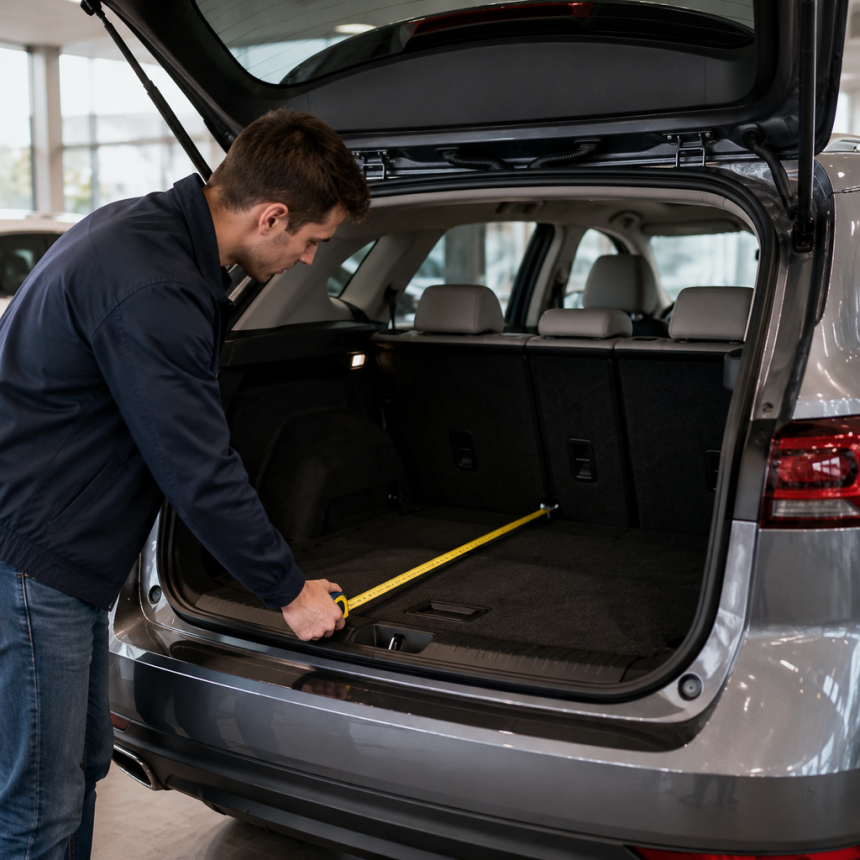
A tape measure is one of the most useful tools to bring to a dealership. Record the dimensions of your largest regular cargo at home, then use those measurements to evaluate trunk space in each vehicle.
Measure the Cargo Opening
An item must pass through the opening before the interior volume matters. As you evaluate trunk space, check:
- Opening width at its narrowest point
- Opening height
- Height from the ground to the loading lip
- Distance from the loading lip to the cargo floor
- Clearance beneath the open hatch or trunk lid
A wide compartment behind a narrow opening may be difficult to use. Sedan trunks sometimes have broad floors but restricted openings, while hatchbacks and wagons generally provide better access for tall or awkward objects.
Loading height matters as well when you evaluate trunk space. A high sill can make heavy groceries, luggage, mobility devices, or pet crates harder to lift. A low opening is usually more convenient, but check whether the vehicle’s rear bumper projects far enough to force you to reach forward.
Measure the Interior at Its Narrowest Points
The widest part of the cargo area may not determine whether your item fits. To evaluate trunk space realistically, measure between the wheel arches and inspect any protruding speakers, trim panels, latches, or storage bins.
For rectangular objects, take three measurements:
- Usable width
- Floor depth
- Height to the lowest obstruction
Repeat these measurements with the rear seats folded if that configuration matters. Do not assume the closed hatch will clear an item merely because it sits inside the opening. Curved liftgates and sloping rear glass reduce space near the top and rear of the compartment, so evaluate trunk space with the hatch fully closed.
Check the Loading Lip and Floor
When you evaluate trunk space, inspect the step between the opening and floor. A trunk with a large step down may hold plenty, but lifting heavy objects back over the lip can be awkward. A nearly level load floor makes sliding luggage and boxes easier.
Some vehicles have adjustable-height floors. These can create a flat loading surface in one position and additional depth in another. Check how much weight the movable panel can support according to the owner’s manual, and determine where the panel can be stored when removed.
Bring Representative Items to the Dealership
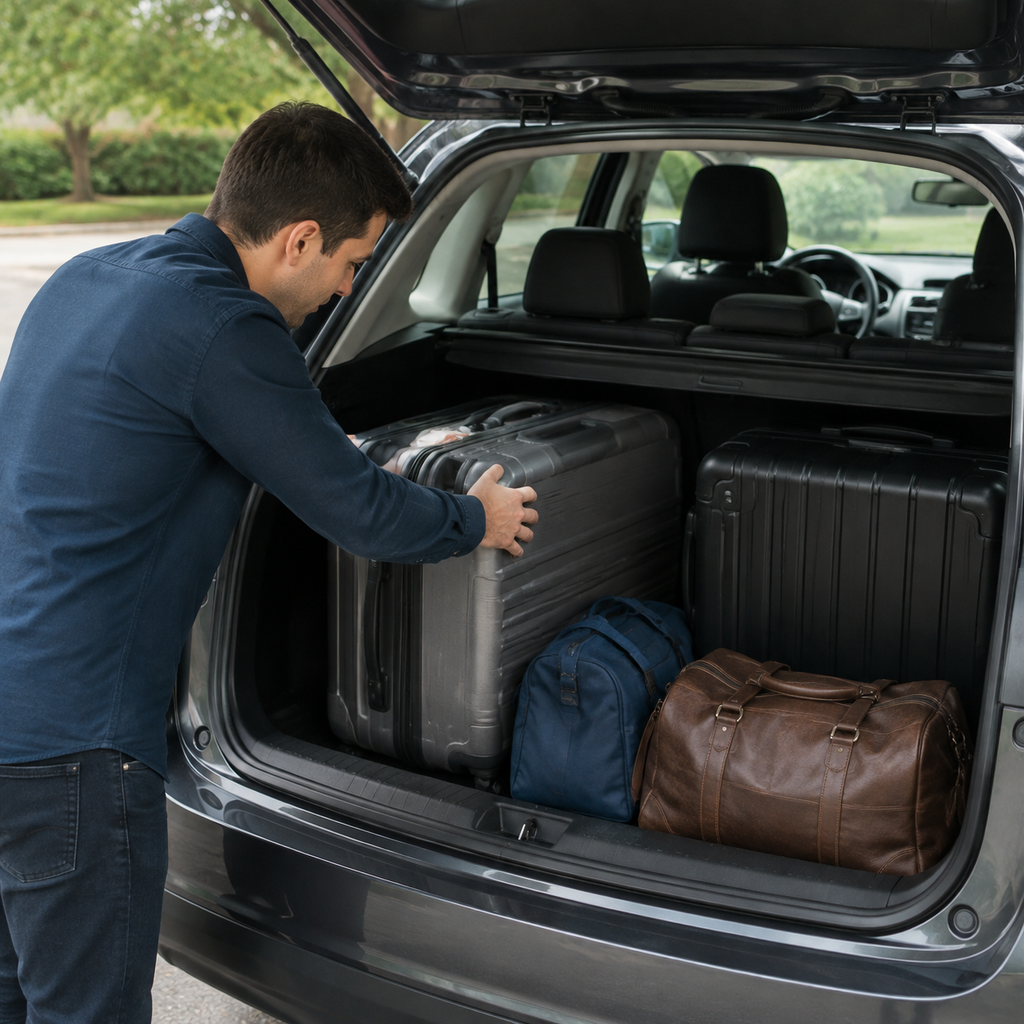
The most reliable way to evaluate trunk space is to load the actual equipment you regularly carry. Ask the dealership before bringing bulky or potentially dirty items, and protect the vehicle’s trim during the test.
Useful test items include:
- A folded stroller
- Your largest suitcase
- Golf clubs or other sports equipment
- A wheelchair or walking aid
- A child’s bicycle
- A pet crate
- Storage boxes with known dimensions
- A cooler or camping container
When bringing the real item is impractical, make a cardboard template or use taped-together boxes matching its outer dimensions. A template makes it easier to evaluate trunk space than estimating by sight.
Load the object through the opening without forcing or scraping it. Close the lid or hatch carefully while someone watches from the side. Never assume there is clearance around the rear glass, wiper mechanism, or powered liftgate.
Try the full routine, not just the final fit. Can you lift the object to the loading height? Is there room to turn it through the opening? Can you remove it without unloading everything else? Can the cargo cover remain installed? These practical steps help you evaluate trunk space for daily use, because a technically successful fit may still become a recurring annoyance.
Evaluate the Rear Seats and Load-Floor Flexibility
Modern cargo areas depend heavily on seat design. When you evaluate trunk space, check how folding rear seats transform the compartment and whether the arrangement works in practice.
Split-Folding Seatbacks
A 60/40 split is common and allows one portion of the rear seat to remain available while the other carries longer cargo. Other arrangements, such as 40/20/40 folding, can be more flexible because the narrow center section may accommodate skis or similar items while preserving two outboard passenger positions. Include these passenger options when you evaluate trunk space.
Consider your normal passenger arrangement. A wider folding section may be on the wrong side for your child seat, curbside loading routine, or local driving position. In some vehicles, folding the desired section may also require moving a front seat.
Flat Does Not Always Mean Flat
Manufacturers may describe rear seats as folding flat even when the resulting floor has a slope, step, or gap. To evaluate trunk space beyond the marketing claim, inspect the surface from the hatch and run your hand across the transition.
A slight incline may be irrelevant for soft luggage but inconvenient for boxes, pet crates, sleeping platforms, or furniture. Also check whether the rear head restraints must be removed and where they can be stored.
Seat Adjustment Changes Cargo Space
Sliding rear seats let owners trade passenger legroom for trunk depth. This can be useful for families because a few centimeters of seat movement may allow a stroller to fit without folding a backrest.
Test the seats in realistic positions when you evaluate trunk space. Set the driver’s seat for an adult, place the rear seats where passengers would actually use them, and then measure the remaining cargo area. Maximum figures based on seats pushed forward may not represent daily conditions.
Inspect Features That Make the Space Easier to Use
Capacity is only one part of cargo practicality. To evaluate trunk space completely, inspect the small design details that determine whether items stay organized, protected, and accessible.
Look for:
- Strong tie-down points
- Bag hooks that can support normal grocery loads
- Side pockets for small items
- Underfloor storage for tools or charging cables
- A removable or retractable cargo cover
- Interior lighting that reaches the full compartment
- A 12-volt outlet where relevant
- Washable or reversible flooring
- A spare wheel or tire-repair kit
- A powered hatch with adjustable opening height
- Hands-free hatch access, if useful for your routine
Test these features as you evaluate trunk space rather than simply confirming that they exist. Some hooks are poorly positioned, underfloor bins may be too shallow for useful items, and a cargo cover may have no dedicated storage location when removed.
For a used vehicle, evaluate trunk space while inspecting the floor panel, seat releases, hatch struts, seals, latches, and powered liftgate operation. Damp carpets, odors, staining, or corrosion around the spare-wheel well may indicate water intrusion. Confirm that removable panels and cargo covers are present, because replacing missing parts can add cost.
Match the Body Style to Your Cargo Pattern
Different vehicle types package luggage in different ways. When you evaluate trunk space, focus on your cargo pattern because no single body style is automatically best.
Sedans
Sedans provide an enclosed trunk that keeps belongings out of sight and physically separated from the passenger compartment. Their cargo floors may be long and deep, making them suitable for suitcases and grocery bags.
The trade-off is a smaller opening. Tall boxes, bicycles, and bulky strollers may be difficult to load even when the stated volume appears adequate. Trunk hinges can also intrude into the load area on some designs.
Hatchbacks and Liftbacks
A large rear opening makes hatchbacks easy to load, and folding rear seats can accommodate tall or awkward objects. However, the sloping hatch may reduce usable height near the rear, so evaluate trunk space beneath the glass rather than judging only the floor area.
When comparing hatchbacks, check the parcel shelf. It may lift with the hatch, need to be detached for tall items, or lack a convenient storage location.
Wagons
Wagons often combine a low loading height, a long cargo floor, and a relatively upright rear opening. They can be particularly practical for dogs, luggage, and long-distance family travel.
They may not offer the elevated seating position or ground clearance some buyers want, and availability varies by market. Evaluate the actual packaging rather than assuming a wagon is larger than every crossover.
SUVs and Crossovers
Crossovers and SUVs often offer tall cargo spaces and wide hatch openings. Their upright bodies can work well for strollers, pet crates, and stacked luggage. You should still evaluate trunk space in person because exterior size does not guarantee a useful interior.
The floor may sit higher above the ground, however, making heavy objects harder to load. Wheel-arch intrusions, a spare tire, or third-row seating can reduce usable room. In three-row models, test the cargo area with every seat configuration you expect to use.
Coupes and Convertibles
These vehicles commonly prioritize styling, roof mechanisms, or structural bracing over cargo versatility. A convertible’s available trunk space can change depending on whether the roof is raised or stowed.
If touring or weekend travel is part of the plan, test luggage with the roof in its intended position. Published maximum capacity may not describe the configuration you will use most often.
Pickup Trucks
A pickup bed offers a different type of carrying capacity. It can handle dirty, tall, or oversized items, but weather protection and theft resistance may require a tonneau cover, cap, or lockable storage solution.
Check bed length with the tailgate closed, width between the wheel wells, tie-down locations, payload limits, and whether your cargo can be secured safely. Open-bed volume is not directly comparable with an enclosed trunk.
Test Family, Pet, and Travel Scenarios
The right way to evaluate trunk space changes according to the buyer’s lifestyle and the items carried most often.
Family Use
Parents should test the stroller alongside groceries, school bags, or travel luggage rather than by itself. Consider whether a child seat prevents a rear seatback from folding and whether the stroller can be removed without disturbing other cargo.
If the vehicle has a third row, check whether it can be raised or folded while child seats remain installed in the second row. Access and flexibility may matter more than total volume.
Pets
For dogs traveling in the cargo area, floor length and standing height are more relevant than raw volume. Check ventilation, direct sunlight through the rear glass, tie-down points for an appropriate restraint system, and the height of the jump into the vehicle.
Cargo barriers, liners, and crates consume space, so include them in the calculation. Never rely on a loose pet occupying an otherwise empty cargo compartment.
Road Trips
For long trips, evaluate trunk space with the full expected luggage load because loading order matters. Frequently needed items such as medication, charging cables, snacks, coats, or emergency supplies should remain accessible without removing every suitcase.
Check whether luggage blocks rearward visibility. Cargo stacked above the rear seatbacks can become hazardous during sudden braking if it is not properly restrained. A larger vehicle does not eliminate the need to secure the load.
Work and Hobby Equipment
Tradespeople, musicians, cyclists, golfers, and outdoor enthusiasts should evaluate trunk space using their longest and least flexible equipment. Confirm whether folding seats creates enough uninterrupted floor length and whether the interior trim can withstand repeated loading.
Roof racks, tow-mounted carriers, and trailers may provide additional capacity, but they bring cost, weight, security, parking, and fuel or energy-consumption considerations. They should not be used to excuse an unsuitable cargo area for equipment carried every week.
Do Not Ignore Payload and Weight Limits
As you evaluate trunk space, remember that cargo volume tells you what may fit while payload tells you how much weight the vehicle can carry. These are separate limits.
Payload generally includes occupants, luggage, accessories, and other weight added to the vehicle. A large cargo compartment can be filled with dense materials long before it runs out of physical space. Tools, construction supplies, water containers, batteries, and camping equipment can be especially heavy.
Consult the vehicle’s labels and owner’s manual for applicable limits, along with relevant NHTSA tire and vehicle-loading guidance. Do not assume that folding the seats increases the permitted payload. Distribute weight appropriately, avoid blocking the driver’s view, and use suitable restraints. For unusually heavy or specialized loads, obtain guidance from the manufacturer or a qualified professional.
Consider Safety and Visibility Alongside Cargo Space
When you evaluate trunk space with a realistic load, check how that load affects rearward visibility, headlamp aim, handling, acceleration, and braking response. Heavy objects should be placed low and secured so they cannot move during cornering or sudden stops. Do not allow cargo to interfere with seat latches, airbags, emergency equipment, or the closing mechanism.
The vehicle’s camera and sensor arrangement also deserves attention. Confirm that a bike rack, cargo carrier, trailer, or frequently open liftgate will not obstruct a reversing camera, parking sensor, rear light, or license plate. Local equipment and load-security requirements vary, so check the rules that apply where the vehicle will be used.
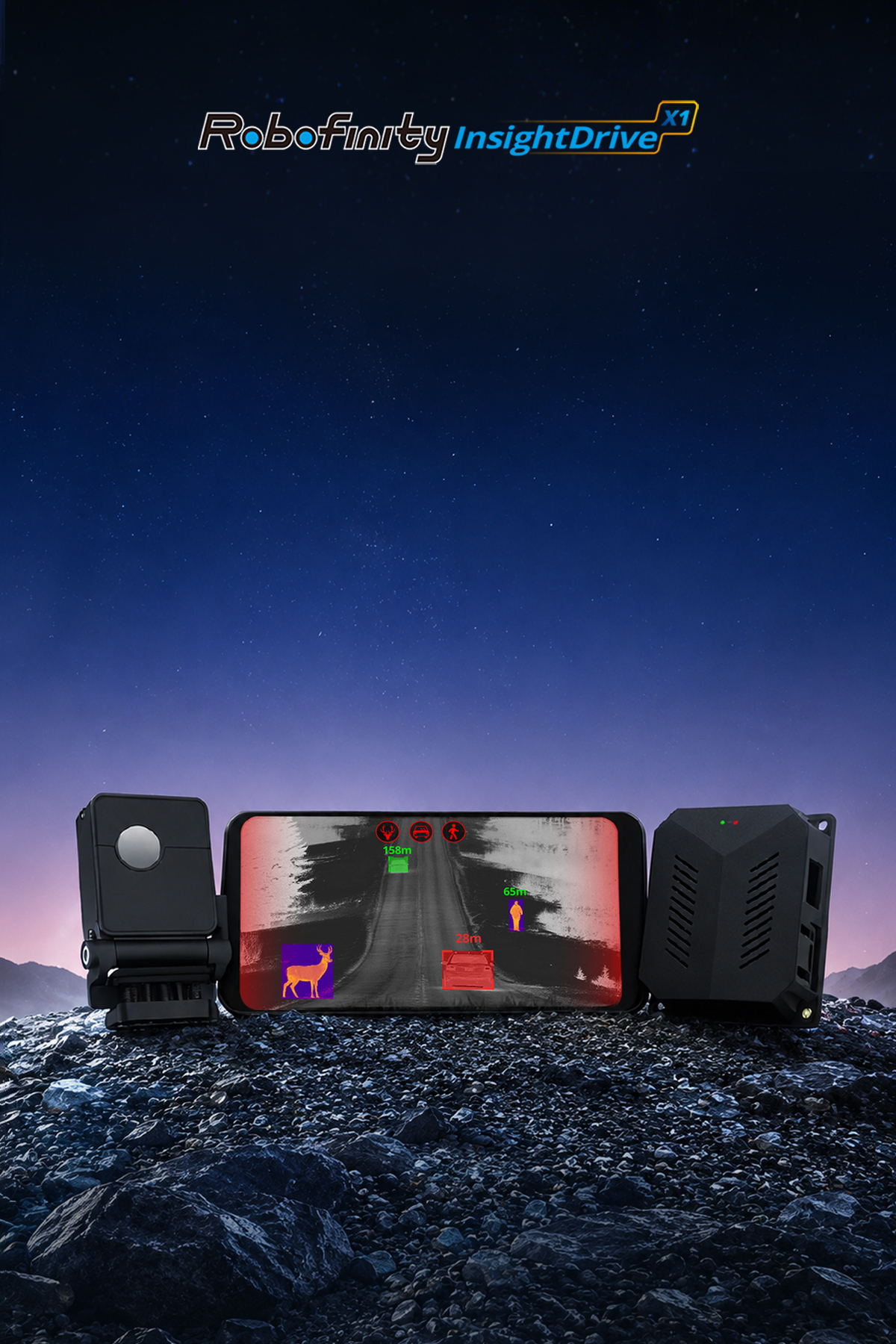
Cargo practicality is only one part of a broader car buying guide. Drivers should also assess headlights, mirrors, cameras, active safety systems, and visibility from the driver’s seat. Those who frequently drive after dark can learn more about thermal imaging at night and vehicle trail safety. An aftermarket system such as Robofinity InsightDrive may help identify pedestrians, animals, vehicles, and obstacles in low-light or poor-visibility conditions. Such driver-assistance technology supports road awareness but does not replace headlights, mirrors, safe speed, adequate braking distance, traffic laws, or attentive driving.
Use a Repeatable Dealership Checklist
Comparing vehicles is easier when you evaluate trunk space with the same test for every candidate. Use this sequence:
- Set all passenger seats to realistic positions.
- Record cargo volume behind the seats you will normally use.
- Measure the opening’s narrowest width and usable height.
- Measure floor depth and width between the wheel arches.
- Check clearance under the cargo cover.
- Load a representative bulky item or dimensional template.
- Close the hatch or lid carefully to verify clearance.
- Fold each seat section and inspect the resulting floor.
- Test releases, hooks, lights, storage bins, and the cargo cover.
- Check rear visibility with a realistic load in place.
- Locate the spare wheel, repair kit, charging cables, or tools.
- Confirm payload and relevant load limits in official documentation.
Take photos and notes with permission. After viewing several cars, details such as loading-lip height and seat-folding steps are easy to confuse.
Common Trunk-Space Buying Mistakes
One frequent mistake when buyers evaluate trunk space is choosing the vehicle with the largest advertised figure without checking how that volume is distributed. Another is testing an empty demonstration vehicle while ignoring the accessories used in daily life.
Other avoidable errors include:
- Measuring with the rear seats farther forward than passengers can tolerate
- Forgetting that child seats may prevent seat folding
- Ignoring the space consumed by a spare wheel or charging cables
- Assuming a powered hatch will stop before touching tall cargo
- Failing to test the opening, not just the interior
- Treating roof-level volume as fully usable for unsecured luggage
- Overlooking payload limits
- Comparing different measurement standards as though they were identical
- Buying for one rare event while accepting daily inconvenience
A balanced decision prioritizes routine use while leaving reasonable flexibility for occasional needs. Renting a larger vehicle or adding an appropriate carrier for an annual trip may be more sensible than driving an oversized car every day. Conversely, relying on accessories every weekend suggests the vehicle itself may be too small.
Frequently Asked Questions
How much trunk space is enough for a family?
There is no universal minimum. The right amount depends on stroller size, number of passengers, grocery habits, sports equipment, and travel frequency. To evaluate trunk space for a family, test the largest regular items together while all required seats remain usable.
Are cubic feet and liters reliable for comparing cargo space?
They are useful starting points, especially between similar vehicles measured under the same standard. They do not fully describe the opening, shape, loading height, seat arrangement, or accessibility, so physical measurements and a loading test remain important.
Should cargo space be measured to the roof?
Roof-level capacity may be relevant for secured, carefully arranged cargo, but everyday usability is often better judged below the cargo cover or rear seatback height. Loading above that level can obstruct visibility and requires suitable restraint.
Is an SUV always more practical than a sedan?
No. An SUV may have a larger opening and greater height, while a sedan may offer a long, secure trunk with a lower floor. The better option depends on the size, shape, and weight of the items being carried.
What should I bring when testing a trunk?
Bring a tape measure, the dimensions of your largest cargo, and one representative item if practical. A stroller, suitcase, mobility aid, pet crate, or cardboard template can reveal fit problems that specifications do not show.
Does folding the rear seats increase payload capacity?
Not necessarily. Folding the seats increases available volume, but it does not automatically raise the vehicle’s permitted payload. Check the vehicle label and owner’s manual, and include occupants and accessories when considering total load.
Conclusion
A useful cargo area is defined by more than a headline capacity. When you evaluate trunk space, the opening must be large enough, the interior shape must suit your belongings, the seats must fold in a practical arrangement, and the vehicle must carry the load within its weight limits.
Before committing to a car, evaluate trunk space by measuring your largest regular items, reproducing your normal passenger setup, and performing a complete loading test. Include the small details: lifting height, cargo-cover storage, tie-down points, rear visibility, and access to frequently needed bags. Ten careful minutes at the trunk can expose compromises that might otherwise affect every shopping trip, family journey, and holiday drive throughout ownership.