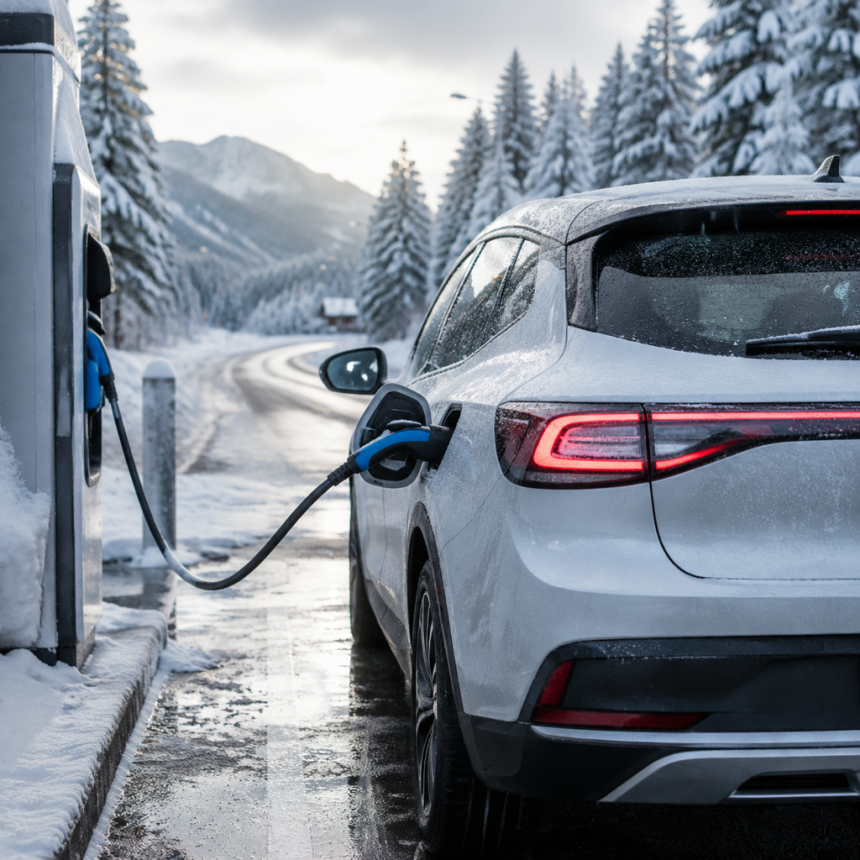
- Why EV Range Drops in Winter: Supply and Demand
- What Cold Does Inside an EV Battery
- Cabin Heating Is a Major Winter Energy Load
- Battery Thermal Management Also Uses Energy
- Winter Roads Increase Driving Resistance
- Cold Air Is Denser
- Tire Pressure Falls
- Winter Tires May Use More Energy
- Snow, Slush, and Water Add Resistance
- Why the Estimated Range Can Change So Quickly
- How Much Winter Range Should You Expect to Lose?
- Practical Ways to Preserve Electric-Car Range in Winter
- Precondition While Connected to a Charger
- Use Seat and Steering-Wheel Heating Strategically
- Combine Errands When Practical
- Drive Smoothly and Moderate Highway Speed
- Maintain the Tires
- Stay Plugged In When Appropriate
- Plan Charging Stops With a Reserve
- Cold Weather Also Affects Charging
- Winter Range Planning for Common Driving Scenarios
- When Winter Range Loss May Indicate a Problem
- What to Consider When Buying an EV for a Cold Climate
- Look at Your Hardest Regular Journey
- Check Thermal Features
- Evaluate Charging Access
- Focus on Consumption, Not Only Battery Size
- Winter EV Range FAQ
- Does cold weather permanently damage an EV battery?
- Should I charge my EV to 100 percent in winter?
- Does an EV lose charge while parked in the cold?
- Is a heat pump worth having in a cold climate?
- Why is fast charging slower in winter?
- Should I turn off the heater to extend range?
- Plan Around Winter Efficiency, Not the Advertised Maximum
Electric vehicle owners often notice that a full charge does not carry them as far once temperatures fall. EV range drops in winter because cold weather slows the battery’s internal chemical processes, increases energy use for cabin and battery heating, and creates less efficient driving conditions. This loss is usually temporary rather than a sign that the battery has suddenly degraded.
How much range you lose depends on temperature, trip length, vehicle design, charging habits, road conditions, and heating use. Although EV range drops in winter for several unavoidable reasons, a well-prepared driver can reduce the impact. The practical goal is to understand the vehicle’s winter behavior, plan with an appropriate reserve, and use heat and charging more efficiently.
- Why EV Range Drops in Winter
- What Cold Does Inside an EV Battery
- Cabin Heating and Winter Energy Use
- Winter Roads and Driving Resistance
- How Much Winter Range Can You Lose?
- Ways to Preserve Winter EV Range
- Cold-Weather EV Charging
- Winter EV Range FAQ
Why EV Range Drops in Winter: Supply and Demand
An EV battery faces two winter challenges at the same time. First, a cold lithium-ion battery cannot deliver and accept energy as efficiently as a warm one. The vehicle may temporarily restrict power, regenerative braking, or charging to protect the battery.
Second, winter driving requires more electricity. Heating the cabin, warming the battery, defrosting the windshield, running heated mirrors, and pushing through snow or slush all consume energy. Unlike a combustion vehicle, an EV cannot rely on abundant engine waste heat to warm the cabin.
The result is a simple energy-budget problem: less of the battery’s stored energy is readily usable, while more energy is needed to travel each mile or kilometer. This combination explains why EV range drops in winter even when the battery remains healthy.
What Cold Does Inside an EV Battery
Most modern electric cars use lithium-ion battery packs. Electricity moves through the battery by means of chemical reactions and the movement of lithium ions between internal components. Lower temperatures slow these processes and increase internal resistance, so EV range drops in winter partly because the pack cannot operate at peak efficiency.
Think of the battery less as an emptying fuel tank and more as an active chemical system. Its performance depends partly on temperature. When the pack is cold, the vehicle’s battery management system may limit energy flow until the cells warm up.
Cold Range Loss Is Not Necessarily Permanent Degradation
Temporary winter range loss and long-term battery degradation are different issues. Although EV range drops in winter, much of the lost capability returns when temperatures rise and the battery reaches a more favorable operating temperature.
Permanent degradation is the gradual reduction in storage capacity associated with age, use, charging patterns, temperature exposure, and battery chemistry. A lower dashboard estimate on a freezing morning does not by itself mean the pack has suffered permanent damage. The estimate may reflect current temperature, recent driving efficiency, heater demand, and the vehicle’s prediction of upcoming energy use.
Regenerative Braking May Be Limited
Regenerative braking turns the drive motor into a generator during deceleration, returning some energy to the battery. A very cold battery may not be able to accept that energy at its normal rate. This reduced energy recovery is another reason EV range drops in winter.
The car may reduce regeneration until the pack warms. Some vehicles show this limitation on the instrument panel. Drivers may notice weaker one-pedal deceleration and greater use of the friction brakes.
This matters for both efficiency and vehicle feel. Leave more space, pay attention to changing pedal response, and do not assume maximum regenerative braking will always be available immediately after a cold start.
Cabin Heating Is a Major Winter Energy Load
Passenger heating can have a substantial effect on winter efficiency, particularly during short trips. In many vehicles, EV range drops in winter more noticeably when the cabin heater and defroster operate continuously.
A gasoline or diesel engine produces a great deal of waste heat, which can be redirected into the cabin. An electric motor is much more efficient and produces far less excess heat. An EV must deliberately use electricity to create or move heat.
Resistive Heaters and Heat Pumps
A resistive heater creates heat directly from electricity. It is straightforward and effective, but its energy use can be significant. When resistive heating draws power directly from the traction battery, EV range drops in winter more quickly during cold journeys.
A heat pump moves heat rather than generating all of it directly. Under suitable conditions, this can reduce the energy required to warm the cabin. Its real-world advantage varies with outdoor temperature, humidity, system design, trip length, and vehicle programming. In severe cold, some systems may need supplementary resistive heating.
A heat pump can be a valuable feature for drivers in colder climates, but it does not make winter range loss disappear. The battery still needs temperature management, and tires, air density, wind, and road conditions still affect consumption.
Short Journeys Can Look Especially Inefficient
Heating energy is front-loaded. The vehicle may use considerable power to warm a cold cabin and battery during the first part of a trip. This helps explain why EV range drops in winter most visibly during repeated short journeys.
On a long drive, that initial heating demand is spread across many miles. On repeated short journeys, the car may have to warm itself again and again. A school run, brief commute, or series of errands can therefore produce worse displayed efficiency than a continuous highway journey, even if the total distance is similar.
Battery Thermal Management Also Uses Energy
An EV works to keep its high-voltage battery within an appropriate temperature range. In cold weather, the thermal management system may warm the pack for driving, regenerative braking, or faster charging. Because this conditioning consumes electricity, EV range drops in winter even before road resistance is considered.
That energy has to come from somewhere. If the vehicle is plugged in while preconditioning, it may draw at least some of the required power from the charging source. If it is unplugged, battery warming reduces the energy available for driving.
Thermal management is not wasted energy. It helps protect the battery and supports performance. It simply becomes another part of winter consumption that drivers need to account for.
Winter Roads Increase Driving Resistance
The battery and heater receive most of the attention, but physical driving conditions also reduce range. Even after the cabin and pack are warm, EV range drops in winter when the car encounters dense air, wind, snow, slush, and increased rolling resistance.
Cold Air Is Denser
Air becomes denser as temperature falls. A vehicle must use more energy to push through it, particularly at highway speeds where aerodynamic drag is a major factor. At sustained high speeds, this added drag helps explain why EV range drops in winter.
A strong headwind adds to that burden. Two outwardly similar winter highway trips can produce very different consumption if one is driven into the wind and the other with it.
Tire Pressure Falls
Tire pressure typically decreases when ambient temperature falls. Underinflated tires increase rolling resistance and can affect handling, braking, tire wear, and efficiency. If pressures are not corrected, EV range drops in winter by more than cold battery chemistry alone would cause.
Check pressures when the tires are cold and follow the vehicle manufacturer’s specified pressure, usually found on a label in the driver’s door area or in the owner’s manual. Do not inflate tires to the maximum pressure printed on the tire sidewall unless that happens to match the vehicle specification.
Winter Tires May Use More Energy
Proper winter tires can materially improve traction in cold, snowy, or icy conditions. Their tread design and rubber compounds may also create more rolling resistance than some efficiency-focused summer or all-season tires. This is one smaller reason EV range drops in winter.
The modest efficiency trade-off may be worthwhile where winter tires are appropriate or legally required. Maximizing range should never take priority over suitable grip, steering control, and braking performance.
Snow, Slush, and Water Add Resistance
Driving through standing water, slush, or accumulating snow requires more energy than rolling on a clear, dry road. Snow packed into wheel wells can add drag, while ice or snow on the vehicle adds weight and may disturb airflow. Under these conditions, EV range drops in winter regardless of battery chemistry or heater design.
Always clear the windshield, windows, mirrors, lights, roof, hood, charging area, sensors, and cameras before driving. Removing snow is a visibility and road-safety requirement, not merely an efficiency measure.
Why the Estimated Range Can Change So Quickly
An EV’s range display is an estimate, not a measurement of a fixed distance stored in the battery. The vehicle calculates it using some combination of battery state of charge, recent efficiency, current accessory use, temperature, route information, and expected driving conditions.
For example, a car used for low-speed local trips may initially show an optimistic estimate. After entering a fast motorway or interstate in freezing weather with the cabin heater running, the predicted range may fall more quickly because the calculation now reflects higher consumption. Drivers often first notice that EV range drops in winter through this rapidly changing estimate.
Conversely, the estimate can stabilize or improve after the battery and cabin warm, speed decreases, or the route begins descending.
For trip planning, the state-of-charge percentage and the navigation system’s predicted arrival charge can be more useful than treating the displayed distance as guaranteed. Build in a reserve, especially when chargers are widely spaced or weather is deteriorating.
How Much Winter Range Should You Expect to Lose?
There is no single percentage that applies to every EV. Although EV range drops in winter across many models, a universal figure would ignore too many variables, including:
- Outdoor temperature and wind
- Battery chemistry and pack size
- Battery thermal-management strategy
- Heat-pump availability and performance
- Cabin temperature and defrost use
- Trip length and frequency
- Vehicle speed and route elevation
- Tire choice and tire pressure
- Snow, rain, slush, and road surface
- Whether the car was preconditioned while plugged in
- Battery age and state of health
The most useful benchmark is your own vehicle under repeatable conditions. Compare energy consumption on a familiar route across seasons, accounting for wind, speed, traffic, and heater use. Record consumption in the unit your vehicle displays, such as kilowatt-hours per 100 miles or kilowatt-hours per 100 kilometers.
This creates a realistic winter baseline for route planning. It also shows how much EV range drops in winter for your particular car without relying on a generic number that may not fit it. For broader context, the U.S. Department of Energy’s cold-weather fuel economy guidance explains how low temperatures affect electric and combustion vehicles.
Practical Ways to Preserve Electric-Car Range in Winter
Winter efficiency is best managed through preparation rather than extreme measures. While EV range drops in winter to some degree, the following steps can reduce unnecessary consumption. Comfort, visibility, and safety must remain priorities.
Precondition While Connected to a Charger
If your vehicle supports scheduled departure or remote climate control, warm the cabin before leaving while it is still connected to charging power. Some models also warm the battery. This can reduce how sharply EV range drops in winter after departure.
Preconditioning does not make energy use vanish, and the charging source may not always supply the full load. It can, however, reduce the amount taken from the battery after departure and make the car comfortable without beginning the trip in an ice-cold cabin.
Check the owner’s manual or vehicle app to understand whether your model preconditions only the cabin or also prepares the battery.
Use Seat and Steering-Wheel Heating Strategically
Heated seats and a heated steering wheel warm occupants directly. They may allow you to select a more moderate cabin-air temperature without sacrificing comfort. Because cabin heat is one reason EV range drops in winter, direct occupant heating can help reduce demand.
Do not reduce heat to the point that windows fog or occupants become uncomfortably cold. Windshield defogging and clear visibility take priority over efficiency.
Combine Errands When Practical
A warm battery and cabin generally make the next leg of a journey more efficient than starting again after the vehicle has fully cooled. Combining errands can reduce repeated warm-up demand and limit how much EV range drops in winter during local driving.
This is especially useful for households whose winter driving consists mainly of short trips.
Drive Smoothly and Moderate Highway Speed
Aggressive acceleration increases energy use, while high cruising speed sharply increases aerodynamic demand. Smooth inputs and a moderate, traffic-appropriate speed can limit how quickly EV range drops in winter.
Use an efficiency mode if it provides predictable power delivery and adequate climate control. Never drive unusually slowly in a way that disrupts traffic or creates a hazard.
Maintain the Tires
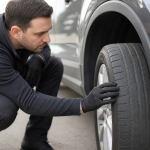
Check cold tire pressure regularly, inspect tread depth, and use tires suited to local conditions. Correct pressure reduces avoidable rolling resistance, one of the factors that makes EV range drops in winter more pronounced.
Avoid overinflating tires in an attempt to improve efficiency. It can affect ride, grip, and wear, and may exceed the vehicle manufacturer’s recommendation. Adequate winter grip is more important than maximizing range.
Stay Plugged In When Appropriate
When practical, leaving the car connected before a planned departure may allow it to manage cabin and battery temperature using external power. That can reduce the degree to which EV range drops in winter at the beginning of a journey.
Follow the automaker’s charging guidance, including any recommended daily charge limit. For extended parking in severe weather, consult the owner’s manual because storage advice can differ by model and battery system.
Plan Charging Stops With a Reserve
Do not plan a winter journey around arriving at a charger with almost no battery remaining. Because EV range drops in winter, cold weather, headwinds, detours, road closures, queues, charger faults, and slower-than-expected charging can all affect the schedule.
Use the vehicle’s route planner where available, verify charger access through current network information, and identify a backup location. Longer winter trips are easier when decisions are based on conservative arrival estimates rather than maximum advertised range. See this guide to electric cars and long-distance driving for additional trip-planning considerations.
Cold Weather Also Affects Charging
A cold battery may charge more slowly, especially during DC fast charging. The battery management system can limit incoming power until the pack warms sufficiently. Charging delays often accompany the same cold-battery conditions that make EV range drops in winter.
Many EVs offer battery preconditioning for fast charging. In some vehicles, this starts automatically when a compatible fast charger is entered as the destination in the built-in navigation system. Merely driving toward a charger without selecting it in the correct system may not trigger preparation.
The details vary significantly by model. Consult the manual for three points:
- Whether the vehicle supports battery preconditioning
- What conditions activate it
- Whether it works with all chargers or only selected navigation destinations
Home charging may also take longer if energy is being divided between battery charging, cabin heating, and pack conditioning. Charging equipment has a limited power output, so not every load can necessarily run at full power simultaneously.
Winter Range Planning for Common Driving Scenarios
Daily Commuting
For a predictable commute, observe the battery percentage used on the coldest normal days, not just during mild weather. Measuring how much EV range drops in winter on your regular route gives you a more useful benchmark than the advertised maximum.
Scheduled preconditioning is particularly useful because departure times are consistent. Drivers without home charging should identify reliable charging options near work, shopping areas, or frequently used routes.
Family Trips
A family journey often involves a fully occupied cabin, luggage, repeated door opening, and higher comfort demand. These loads can increase how much EV range drops in winter. Roof boxes can also add substantial aerodynamic drag, especially at highway speeds.
Start with a comfortably warm cabin, remove external carriers when they are not needed, and plan charging stops around realistic breaks. Do not compromise cabin heat for children, older passengers, or anyone with medical needs merely to improve the range estimate.
Rural Driving
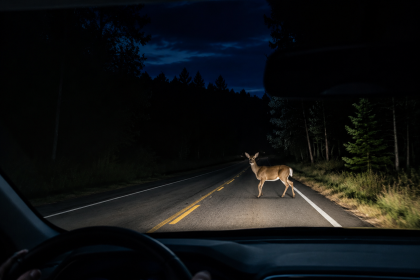
Rural routes may have fewer charging options and more exposure to snow, wind, wildlife, darkness, and unlit roads. Since EV range drops in winter, plan a larger energy reserve and confirm that intended chargers are accessible.
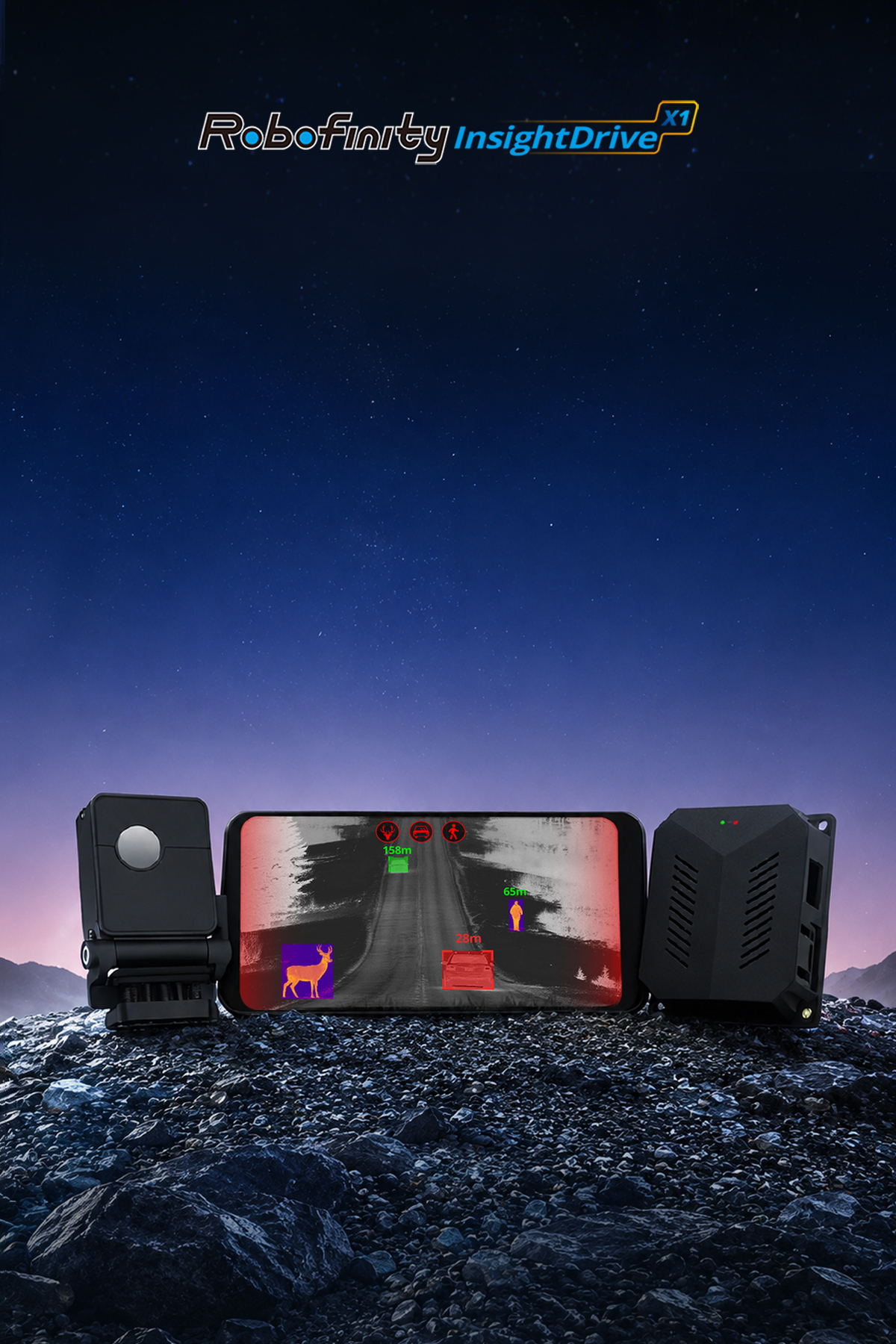
Road awareness is also important during long winter nights. Drivers who frequently travel on dark rural roads may consider an aftermarket awareness aid such as Robofinity InsightDrive, a vehicle thermal imaging night vision system designed to support detection of pedestrians, animals, vehicles, and obstacles in low-light or poor-visibility conditions. Such driver-assistance technology may supplement awareness, but it does not replace headlights, clear windows, mirrors, safe speed, adequate braking distance, or attentive driving.
Highway Travel
Winter highway consumption can rise quickly because dense air, wind, cabin heating, and sustained speed occur together. These combined demands explain why EV range drops in winter particularly quickly at motorway or interstate speeds.
Watch the navigation system’s predicted arrival charge and respond early if it declines. Reducing speed moderately, adding an earlier charging stop, or choosing a closer charger is generally more practical than continuing until the margin becomes critical.
When Winter Range Loss May Indicate a Problem
Some reduction is normal because EV range drops in winter, but a sudden or unusually severe change deserves investigation.
Start with straightforward checks:
- Confirm tire pressures against the manufacturer’s specification.
- Look for snow or ice buildup around the wheels and underbody.
- Check whether a roof box or other accessory is increasing drag.
- Review recent energy-use data for climate-control consumption.
- Confirm that no brake is dragging and the vehicle rolls normally.
- Check for battery, charging, thermal-system, or drivetrain warnings.
- Compare the result with similar temperatures and routes, not summer driving.
Contact a qualified service center if range or efficiency changes dramatically without a clear explanation, the vehicle displays a high-voltage or thermal-management warning, charging behavior becomes abnormal, cabin heating fails, or usable battery capacity appears reduced in all temperatures.
Owners should not attempt to inspect or repair high-voltage components themselves. EV battery and thermal-management work requires appropriate training and equipment.
What to Consider When Buying an EV for a Cold Climate
Winter suitability involves more than selecting the largest advertised range. Because EV range drops in winter, buyers should compare realistic cold-weather needs with charging access and vehicle features.
Look at Your Hardest Regular Journey
Estimate the longest routine winter drive between dependable charging opportunities. Include a reserve for wind, traffic, road conditions, battery aging, and schedule changes. A vehicle that barely covers the route under ideal conditions may not be a comfortable ownership fit once EV range drops in winter.
Check Thermal Features
Ask whether the vehicle has:
- Active battery heating and cooling
- Cabin and battery preconditioning
- A heat pump
- Heated seats and a heated steering wheel
- Heated mirrors and an effective defrost system
- Navigation-based battery preparation for fast charging
Feature availability may vary by market, trim, model year, and software version. Verify the exact vehicle rather than relying on a general model description.
Evaluate Charging Access
Reliable home or workplace charging can matter more than a small difference in official range. When EV range drops in winter, convenient access to charging provides more flexibility than depending entirely on distant public stations.
Consider parking arrangements, electrical capacity, public charging coverage, and the reliability of stations along frequent routes. For apartment residents or drivers who park on the street, winter charging logistics deserve careful attention before purchase.
Focus on Consumption, Not Only Battery Size
A larger battery can provide more range, but vehicle efficiency still matters. Weight, aerodynamics, tires, drivetrain design, and heating systems all influence how much distance the car obtains from each kilowatt-hour and how sharply EV range drops in winter.
Realistic cold-weather route planning should consider both usable battery capacity and energy consumption.
Winter EV Range FAQ
Does cold weather permanently damage an EV battery?
Ordinary temporary exposure to cold does not automatically mean permanent damage. Cold mainly reduces available performance and efficiency until the battery warms. The fact that EV range drops in winter is not, by itself, evidence of permanent degradation. Follow the manufacturer’s guidance for charging, storage, and operation in extreme temperatures.
Should I charge my EV to 100 percent in winter?
Not necessarily. Use the manufacturer’s recommended daily charge limit. A full charge may be appropriate before some long trips, but routinely holding a battery at 100 percent may not be recommended for every vehicle or battery chemistry.
Does an EV lose charge while parked in the cold?
It can. The vehicle may use energy for battery protection, connectivity, security monitoring, or scheduled climate functions. The amount varies by model, settings, temperature, and parking duration.
Is a heat pump worth having in a cold climate?
It can improve cabin-heating efficiency under many conditions, making it useful when EV range drops in winter. Its benefit varies by design and temperature, and it cannot eliminate all winter range loss.
Why is fast charging slower in winter?
A cold battery may not safely accept maximum charging power. The vehicle limits the rate until the pack warms. Battery preconditioning before arrival can help when the model supports it and the feature is activated correctly.
Should I turn off the heater to extend range?
Reducing cabin temperature slightly and using heated seats can save energy, but do not sacrifice windshield clearing, occupant well-being, or safe driving. If the remaining charge is becoming critical, reduce speed safely and navigate to a suitable charger rather than relying only on turning off heat.
Plan Around Winter Efficiency, Not the Advertised Maximum
Cold-weather range reduction comes from several effects working together: slower battery chemistry, energy used for cabin and pack heating, limited regenerative braking, denser air, tire changes, and difficult road surfaces. Together, these factors explain why EV range drops in winter and why the size of the reduction varies from one journey to another.
Precondition while plugged in, maintain correct tire pressure, use direct occupant heating sensibly, moderate highway speed, and plan charging stops with a reserve. Most importantly, treat the dashboard range as a changing estimate rather than a promise. Even though EV range drops in winter, a conservative plan based on your vehicle’s actual cold-weather consumption provides a reliable foundation for comfortable electric driving.